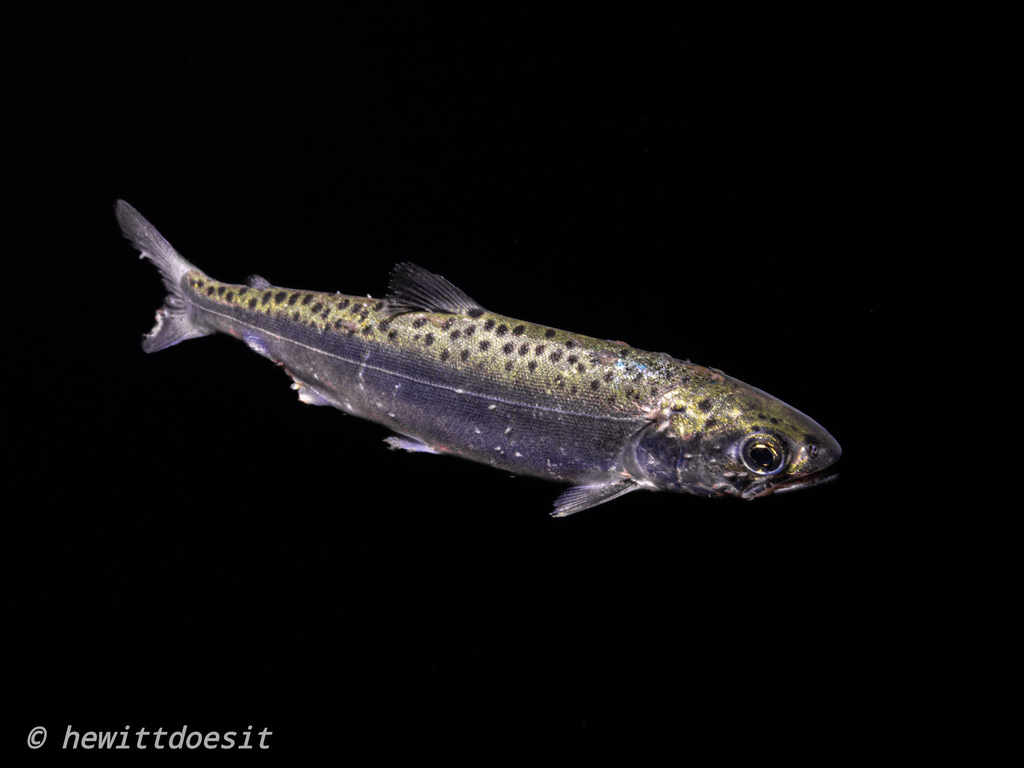
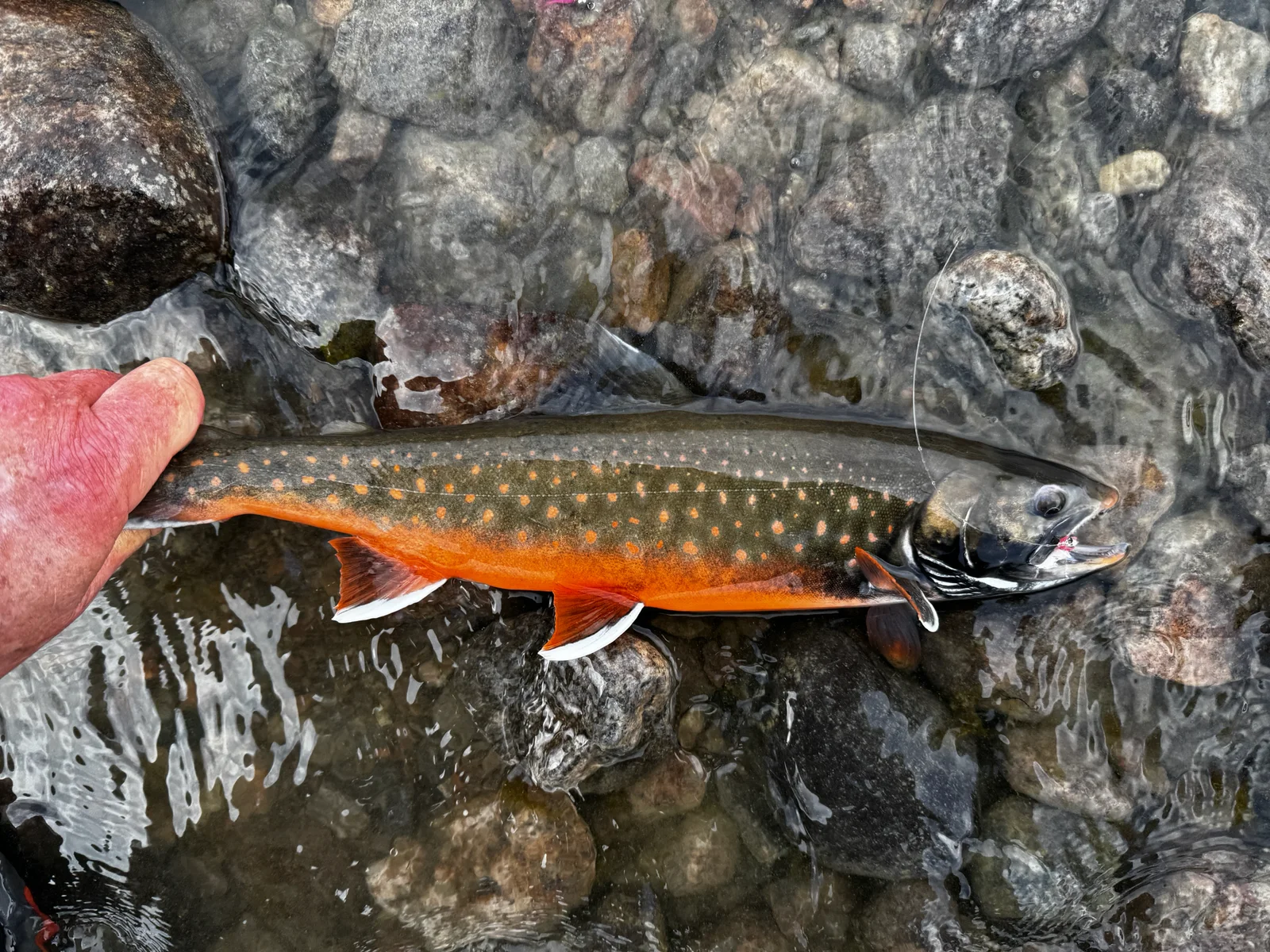
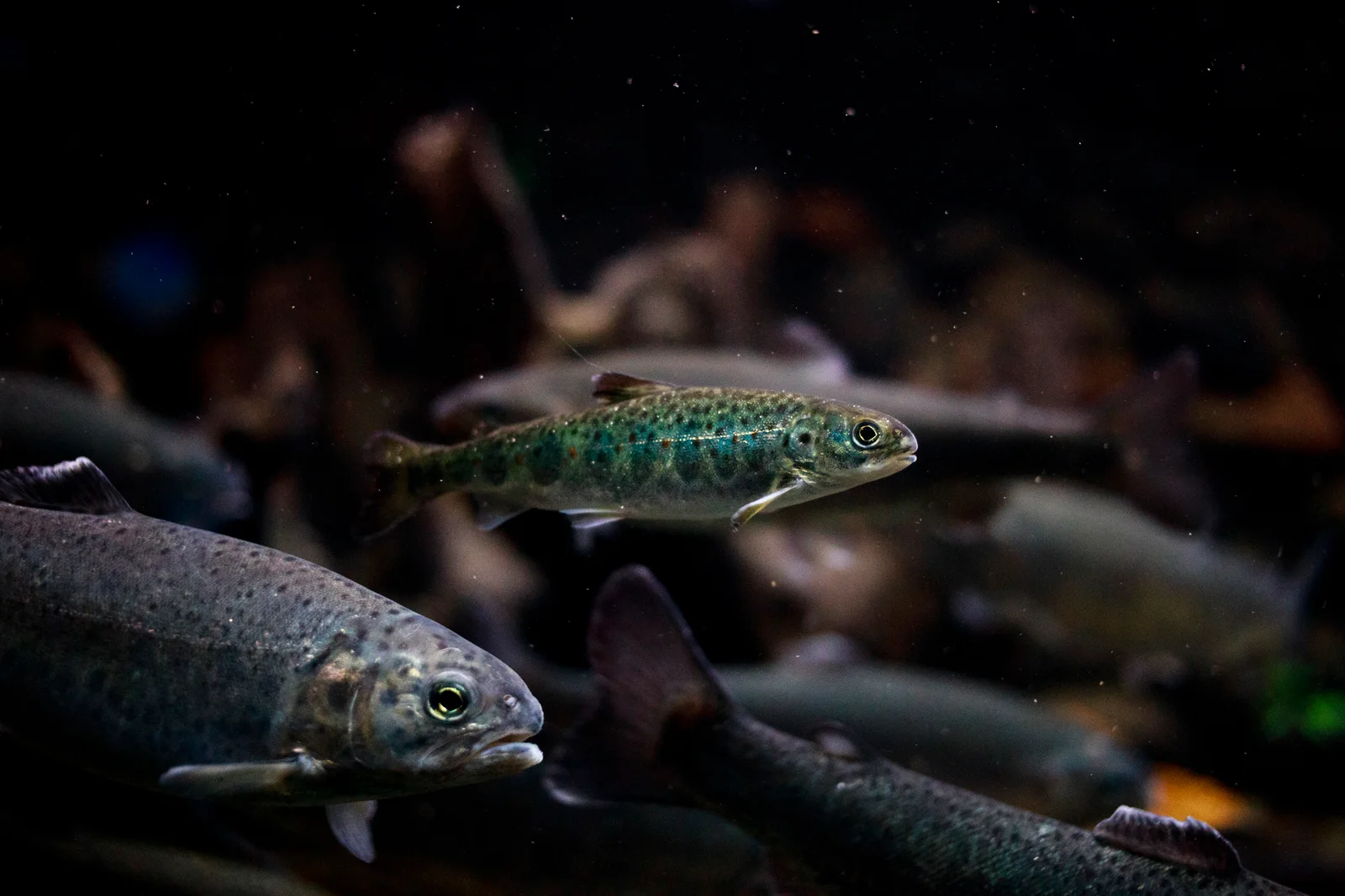
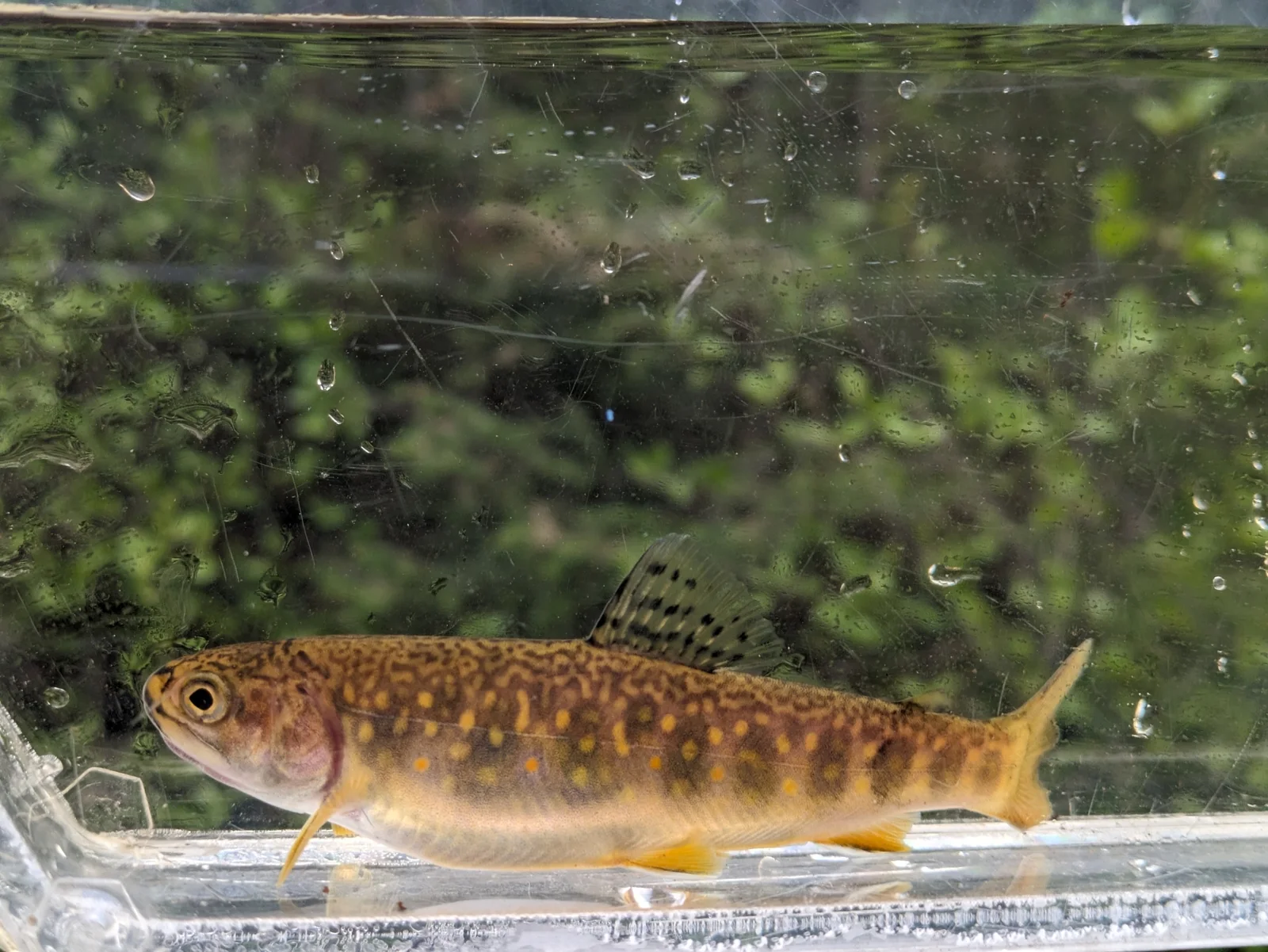
Chinook salmon (Oncorhynchus tshawytscha) is a fish of the family Salmonidae. FishBase gives its range as: Arctic, Northwest to Northeast Pacific: drainages from Point Hope, Alaska to San Joanquin and King rivers in California, USA. Also in Honshu, Japan, Sea of Japan, Bering Sea and Sea of Okhotsk. It is recorded from 0 to 375 m, in temperate water at 0–25 °C. The recorded maxima are 150 cm TL, 61.4 kg, 9 years. Common length is recorded at 70 cm. Diet includes crustaceans and fishes. IUCN status: Least Concern (LC). Chinese name: .
Identification
The species belongs to the family Salmonidae. FishBase's morphology record gives 10-14 soft dorsal rays; 13-19 soft anal rays; 67-75 vertebrae; a fusiform / normal body; a compressed cross-section. These are identification aids rather than a complete diagnosis; the accompanying photographs show the live colour pattern.
Habitat and behaviour
It is recorded in marine and brackish and freshwater water, with a benthopelagic mode, a recorded depth range of 0-375 m and a temperate climate. Habitat notes mention coastal, open-water. Diet records mention crustaceans, fishes. These are source records, not a guarantee that the same habitat exists at every local mark.
Seasonal window
FishBase's spawning table lists records in Mar, Apr, May, Jul, Aug, Sep, Oct, Nov for Canada, US of America. This is a spawning record, not a fishing-season forecast; check the local season, weather and regulations before planning a trip.
Gear and approach
Match hook, leader and drag to a fish that can reach 150 cm and 61.4 kg. Use tackle that can present the bait or lure at the deeper end of the recorded range. No exact gear ratings are published here because they are equipment choices, not source facts. Adjust the terminal tackle to the bait or lure you can obtain locally.
Edibility and regulations
FishBase's human-use record lists Fisheries use: highly commercial; aquaculture: commercial; gamefish: yes; aquarium: public aquariums. The species is marketed as food. The IUCN Red List category is LC (Least Concern), assessed 18 September 2020. Threat to humans: Threat to humans Potential pest (Ref. 12257 ). CITES: Not Evaluated; CMS: Not Evaluated. No official regulation text was verified for this draft. Check the current national and local fisheries rules, size limits and closed seasons before keeping catch.
Where to look
For trip planning: GBIF holds 259,433 preserved occurrence records for the matched taxon; the largest country counts are US (167,741), CA (89,944), NZ (1,029), CL (194), AU (167); FishBase territories include Alaska, Argentina, Australia, Canada, Chile, Japan, Kerguelen Islands, New Zealand; the sea regions represented are United States coastal waters, Canadian coastal waters, Mexican coastal waters, New Zealand waters, Australian waters; habitat keywords point to coastal, open-water. These are distribution and habitat signals, not spot coordinates; use them to narrow the search, then check local access and conditions.
How to catch it
Trolling
Trolled from a moving boat; suits roaming or pelagic species.
Fly fishing
Fly fishing; a regional or specialist approach for this species.
Regulations before you keep it
These are the published regulations for this fish. Read the number first. The notice below it is the actual regulation.
Minimum size1
22 in north of Cape Falcon · 24 in south of Cape Falcon
United States — Oregon · US-OR
Oregon's ocean Chinook salmon minimum length is 22 inches north of Cape Falcon and 24 inches south of Cape Falcon.
Minimum lengths: Chinook (north of Cape Falcon) = 22 inches, Chinook (south of Cape Falcon) = 24 inches: coho = 16 inches: steelhead = 20 inches: no minimum length for pink, chum or sockeye salmon in the ocean fishery.
Bag limit2
1 fish per fisher per day
New Zealand — South East · NZ-SE
New Zealand allows 1 quinnat (chinook) salmon per fisher per day.
MPI uses the common name quinnat salmon; species.json lists the species as Chinook salmon.
Quinnat salmon | 1 | — | —
Residents 3 fish over 28 in per day · nonresidents 2 fish per day, annual limit 4 fish over 28 in
United States — Alaska · US-AK
In Southeast Alaska, resident anglers may keep three Chinook salmon over 28 inches per day, while nonresidents may keep two per day under an annual limit of four fish over 28 inches.
These are the Southeast Alaska regional ceilings and can be reduced in season by emergency order. Anglers fishing in the EEZ (3–200 nautical miles) follow the nonresident limits.
The resident daily bag limit is three fish over 28 inches;
- The nonresident daily bag limit is two fish with an annual harvest limit of four fish over 28 inches.
Every record above names its source and the date it was retrieved. See the regulation register for the full list, or how to read these regulations.
Where these facts come from
Check these pages before you rely on a size, range or protection status.
-
FishBase — Oncorhynchus tshawytscha
— FishBase · T2
-
GBIF — Oncorhynchus tshawytscha occurrence records
— GBIF · T2
-
IUCN Red List — Oncorhynchus tshawytscha
— IUCN · T1
-
Photo record — iNaturalist
— iNaturalist · T3