
Pigfish
Pigfish is a small western Atlantic grunt, recorded from New York and Bermuda south to Mexico, including the Gulf of Mexico. It reaches 46 cm SL with a common length of 30 cm TL, 900 g and a maximum age of four years, and matures at about 20 cm. January to July is the season. Shore casting, boat bottom fishing and small hook rigs are the methods listed.
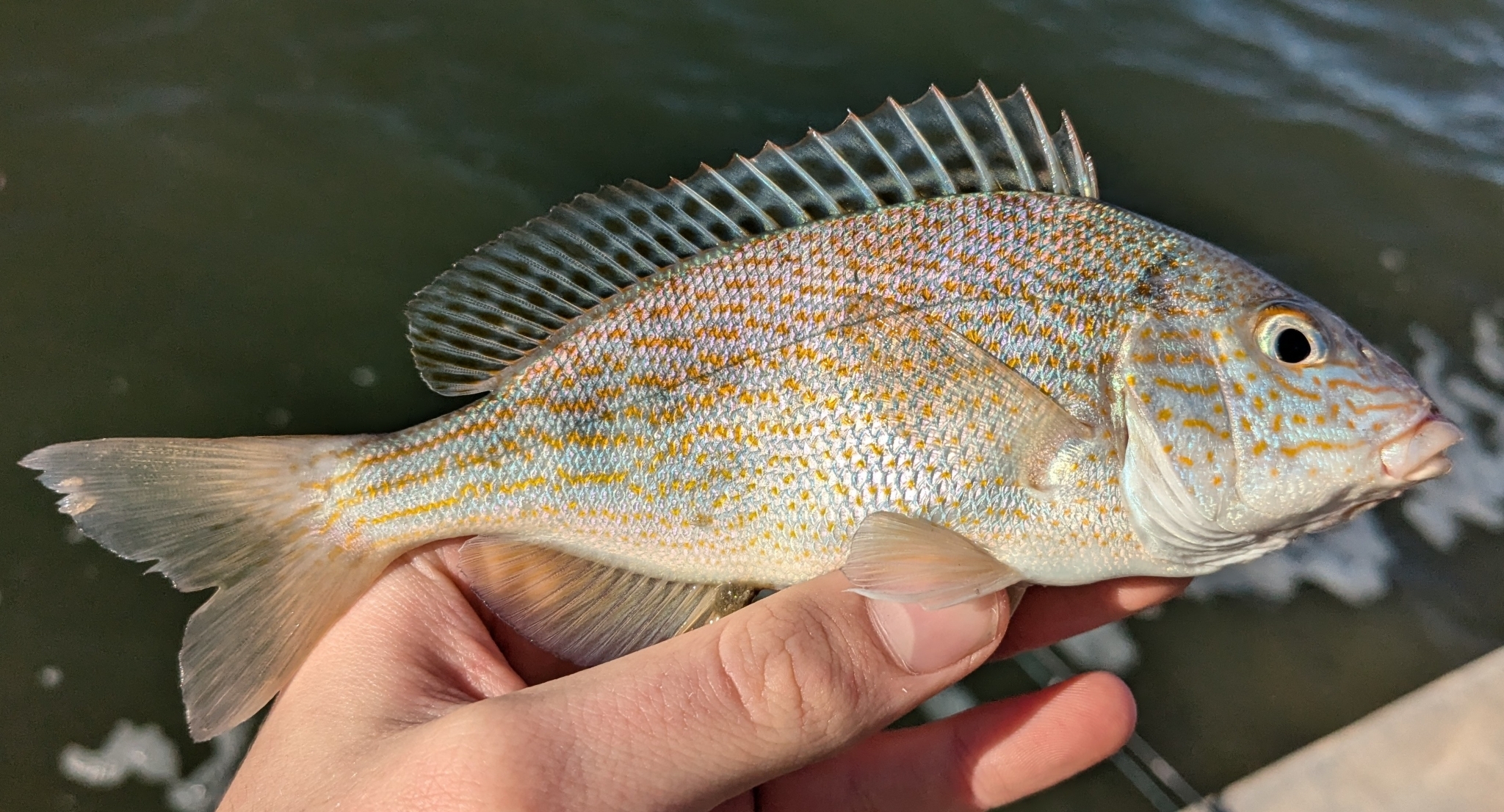
The pigfish is a small grunt of the western Atlantic, recorded by FishBase from New York and Bermuda south to Mexico, including the Gulf of Mexico. It reaches 46 cm SL, with a common length of 30 cm TL, a maximum published weight of 900 g and a maximum reported age of four years; length at first maturity is about 20 cm. The recorded depth range starts at 10 m. It is a coastal, brackish-tolerant bottom fish that migrates seasonally; most anglers meet it from shore or small boats over shallow structure.
Identification
The body is deep and compressed, with an elevated back, a long tapering snout and a small, slightly oblique mouth. The family is named for the chattering sound the fish make by rubbing pharyngeal teeth together, and a hooked pigfish often grunts on deck. FishBase publishes a full fin formula, but on a moving boat the shape is more useful than counting spines; check the long snout and deep body against photographs and a regional guide.
The practical field mark is that combination of a deep, compressed body and a long, tapering snout. Most fish landed are near the 30 cm common length rather than the 46 cm maximum.
Habitat and distribution
Pigfish live in coastal water over sand and mud, form schools, and are mainly nocturnal and non-burrowing. The recorded diet is crustaceans and smaller fishes. FishBase notes both seasonal migration and local day-night feeding movements, so the same flat fishes differently at dusk and noon. The species tolerates brackish water, and its range runs from New York and Bermuda to Mexico.
GBIF holds 13,221 occurrence records for the matched taxon, dominated by the United States (12,597), with 191 from Mexico and 27 from Bermuda. These figures show where records accumulate, not an even spread.
Season and fishing approach
FishBase's spawning table runs from January to July, and the records differ by region: January to May in the eastern Gulf of Mexico, March to May at Tampa Bay, March and April at St. Andrew Bay, March to June at Beaufort, May and June in Chesapeake Bay, and July in Delaware Bay. That is a spawning signal, not a promise of action, but it places the warm months at the centre of the active season.
The fish is mainly nocturnal, so low light and moving water beat midday slack. Work the last of the ebb and the first of the flood around inlets and channels. The approved methods for this line are shore casting, a small-hook rig and boat bottom fishing. Small hooks and small baits — shrimp, squid strip or worm — fished close to the bottom suit the small mouth.
Edibility and regulations
FishBase lists pigfish as a minor commercial species, as a bait species and as an aquarium fish for public aquariums. Much of the catch is bait rather than food, so return unwanted fish quickly.
The IUCN Red List category is LC (Least Concern), assessed on 1 March 2011. FishBase records no CITES or CMS listing and describes the species as harmless to humans. The federal species table carries no size, season or bag entry for pigfish; state limits can add all three, so confirm the rule where you land the fish.
How to catch it
Shore casting
Fished with the listed approach, matched to the recorded depth and size.
Boat bottom fishing
Fished with the listed approach, matched to the recorded depth and size.
Small hook rig
Fished with the listed approach, matched to the recorded depth and size.
Where these facts come from
Check these pages before you rely on a size, range or protection status.
- FishBase — Orthopristis chrysoptera — FishBase · T2
- GBIF — Orthopristis chrysoptera occurrence records — GBIF · T2
- IUCN Red List — Orthopristis chrysoptera — IUCN · T1
- Photo record — iNaturalist — iNaturalist · T3
Fish in the same water
These fish live in the same place.
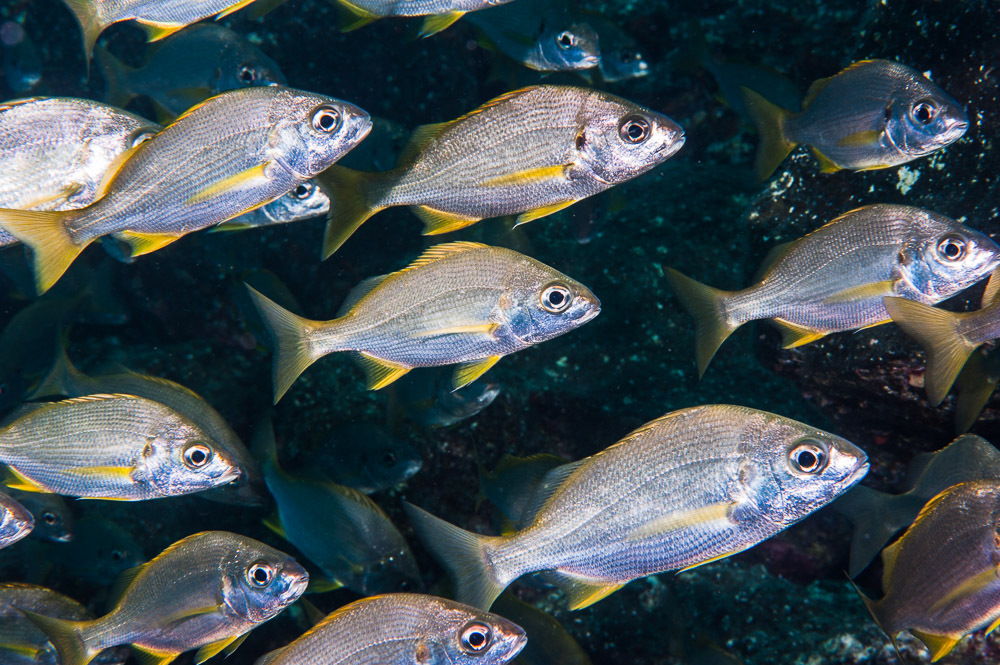
Bastard grunt
- Family
- Haemulidae
- Depth
- 10–100 m
- Season
- Jun, Jul, Aug
Cabinza grunt
- Family
- Haemulidae
- Depth
- 0–50 m
- Season
- Jan, Oct, Nov, Dec
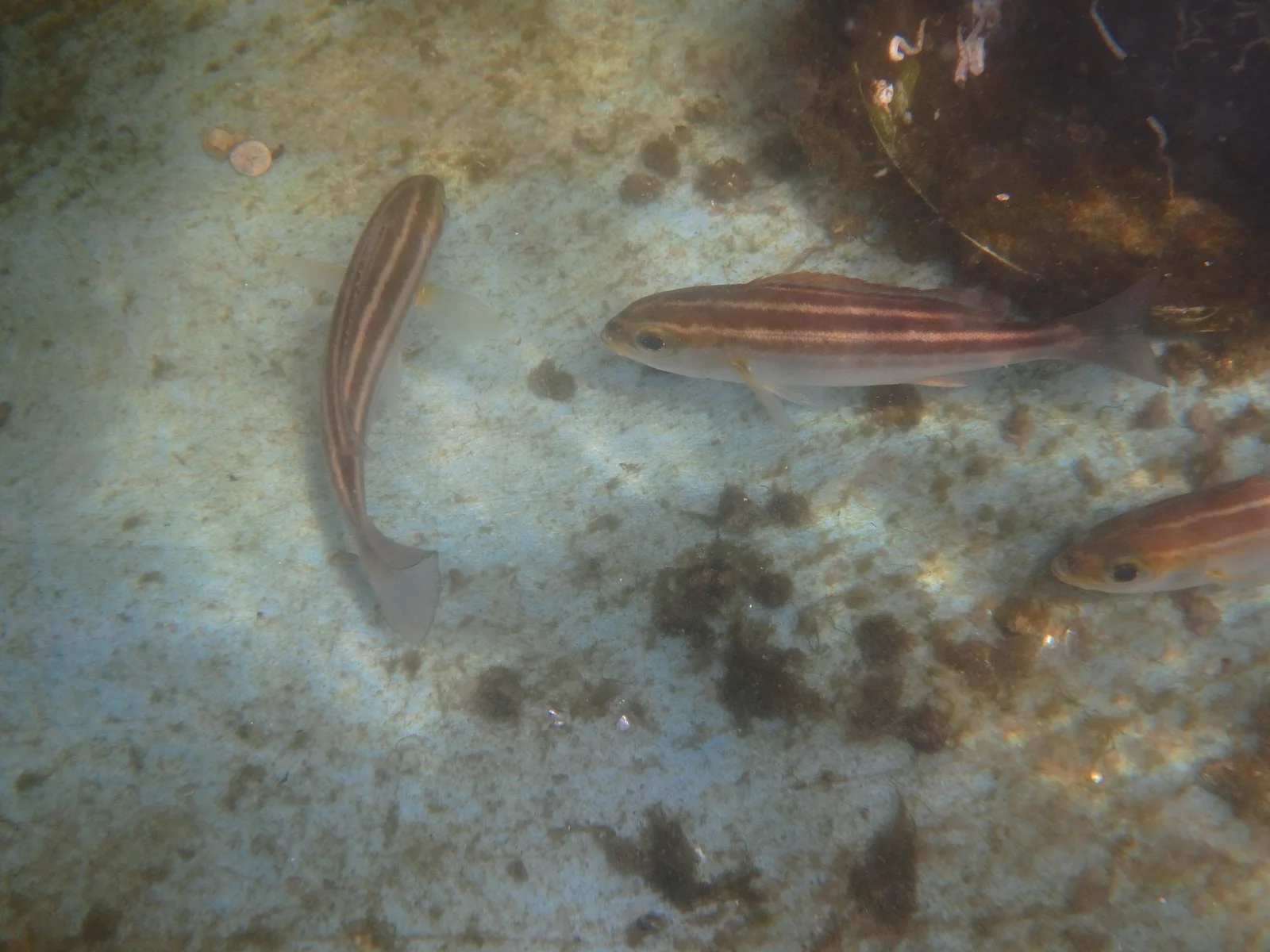
Chicken grunt
- Family
- Haemulidae
- Season
- Jun, Jul, Aug
Guides for this water
Technique, gear and safety guides that fit Pigfish.