
Kelp bass
The identification key for a kelp bass sits on its back, not in its colour: the third, fourth and fifth dorsal spines are close to equal length, which is what separates it from a barred sand bass. It is also the longest-lived and most heavily fished of the three, and a 34-year record means one large fish may have lived through several rounds of regulation.
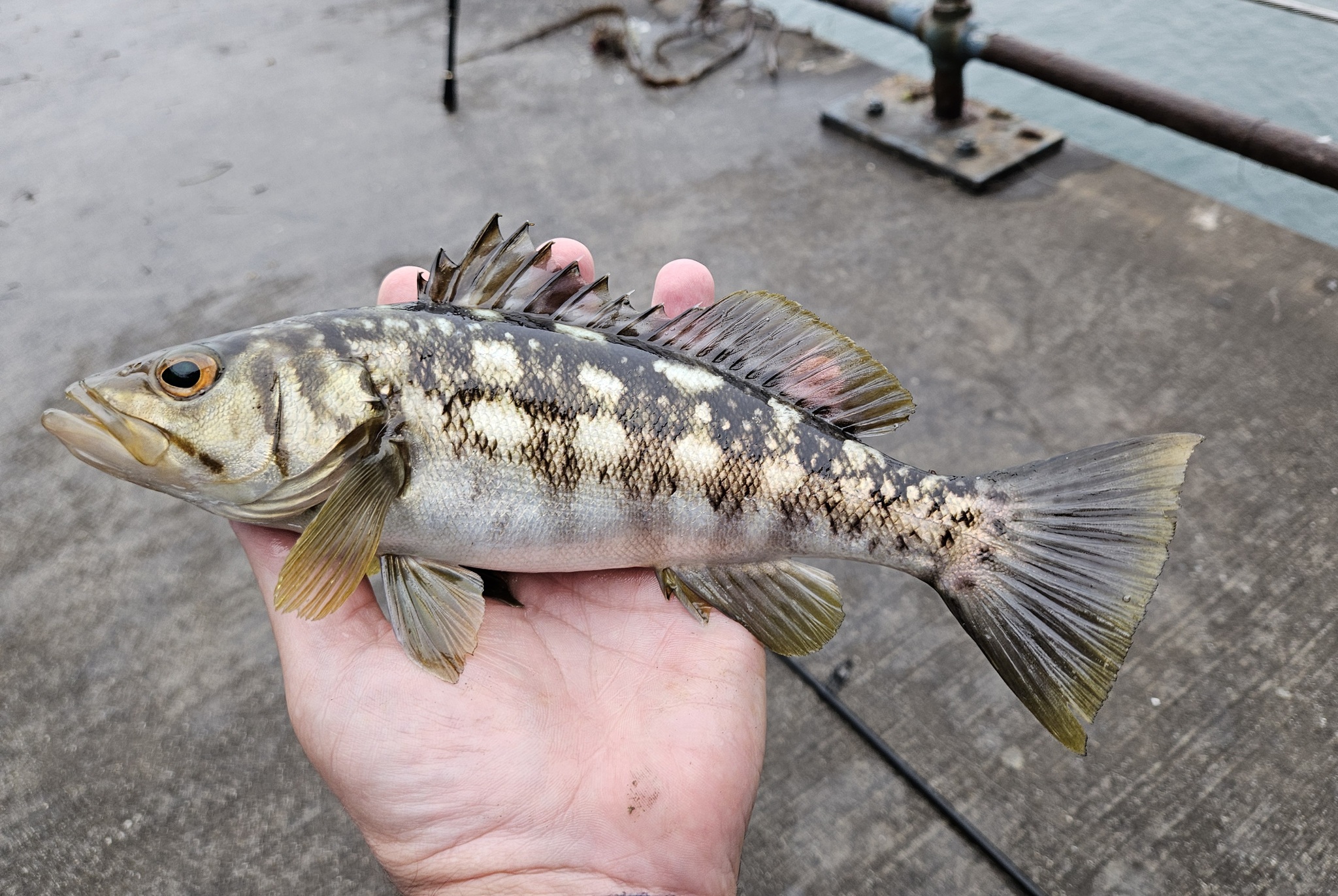
The identification key for a kelp bass sits on its back, not in its colour: the third, fourth and fifth dorsal spines are close to equal length, which is what separates it from a barred sand bass. It is also the longest-lived and most heavily fished of the three, and a 34-year record means one large fish may have lived through several rounds of regulation.
The third, fourth and fifth dorsal spines are near equal
Lay the fish flat and count from the front of the dorsal fin. The third, fourth and fifth spines are close to the same length, and the membrane between them is low, so the front of the fin reads as a level edge. A barred sand bass carries a third spine roughly twice the length of the fourth, and that one spine is visible from a boat. The colour is brown-olive with pale blotches and no vertical bars, while a spotted sand bass is covered in small dark spots on the upper body and fins, also without bars, at a smaller maximum size. With three fish in a bucket, check spines first, then decide whether the body is blotched, spotted or barred. Do not reverse that order.
Kelp, rock and the water column around them
FishBase runs the range from the Columbia River in Washington to southern Baja California. The fish sits in or beside kelp beds from shallow water to about 50 m, mostly between 2.4 and 21 m, and can appear anywhere in the water column; large individuals tend toward deeper structure. In Southern California the productive water is the kelp edge, the outside of a breakwater, pier pilings and inshore rock. The range reaches Washington, but that is not a consistent fishery. Find the kelp first, then look for the drop along its edge.
A thirty-four-year fish with no spawning table
FishBase describes the species as a pelagic spawner and gives no month-by-month spawning table and no preferred temperature. Southern California catches improve as the water warms in late spring, hold through summer and early autumn, and fall away in winter when fish move to deeper structure and shore fishing becomes hard. The 34-year maximum age says something the length record does not: growth is slow, and a large fish has accumulated both years and hook marks. Spawning and good fishing overlap in summer, but that overlap is not evidence of cause, and the sources here do not establish one.
Live bait on the weed line, plastics in the rocks
On a boat, live bait is the steadier method: a live sardine or anchovy on a 2/0 to 3/0 hook, slow-trolled or drifted so the bait chooses its own depth. With lures, a 4 to 6 inch swimbait on a 1/4 to 1/2 oz head cast just outside the weed line and paused over structure draws the strike on the fall. From a breakwater, a float-fished live bait or a strip of squid dropped between piling shadow and rock covers the same fish from shore. It eats fish and cephalopods and also crustaceans, so bait size matters more than bait colour.
Gear that stops a bass before it reaches the kelp
Use a 7 foot 6 inch to 8 foot medium-heavy rod with a 4000 or 5000 size spinning reel, 30 to 40 lb braid, a 20 to 25 lb fluorocarbon leader and a 2/0 to 3/0 circle or J hook. Once a fish is hooked in the kelp, the first job is to stop it turning back into the weed: keep the rod low and pull sideways. Fish landed from depth need a release tool, and a fish with a swollen belly should go back down on a descending device rather than be dropped at the surface. Where release rates are high, that matters more than one extra fish in the bag.
Five bass in total, measured against fourteen inches
FishBase calls it an excellent food fish and an important game fish. The flesh is white and firm, good for pan frying, grilling or soup, and bleeding it into ice keeps the flavour clean. California's three Paralabrax basses share a five-fish limit, with a 14 inch total length minimum or the 10 inch alternate length (14 CCR § 28.30), and there is no closed season. The five fish are shared across the three species, not five of each, and that is where counts go wrong on a boat. Much of the Southern California kelp and rock lies inside marine protected areas, so check the CDFW MPA map and the current year's notice before keeping fish. A licence is required from 16, plus the Ocean Enhancement Validation south of Point Arguello.
What the record supports and what it leaves out
Length, weight, age, depth, distribution and diet come from FishBase, with the family taken from GBIF's Serranidae. The IUCN listing is Least Concern, assessed in 2008. Spawning months, juvenile habitat and local catch statistics are all missing; the month-by-month strength here is arranged from Southern California sportfishing reports. The separation from the other two basses follows the project's identification notes and uses no fin-ray counts. The regulation paragraph quotes only the shared limit and the minimum size in 14 CCR § 28.30, with annual adjustments left to the CDFW notice.
How to catch it
Drift fishing
A live sardine on a 2/0 circle hook, with the boat drifting slowly so the bait swims outside the weed line; set the hook when the bait stops.
Lure fishing
A 5 inch swimbait on a 3/8 oz head, cast to the outside edge and paused every couple of metres so it slides down over structure.
Float fishing
A float set a metre or two above the piling, letting the bait circle the structure where shadow meets rock.
Where these facts come from
Check these pages before you rely on a size, range or protection status.
- FishBase — Paralabrax clathratus — FishBase · T2
- GBIF — Paralabrax clathratus occurrence records — GBIF · T2
- IUCN Red List — Paralabrax clathratus — IUCN · T1
- Photo record — iNaturalist — iNaturalist · T3
Fish in the same water
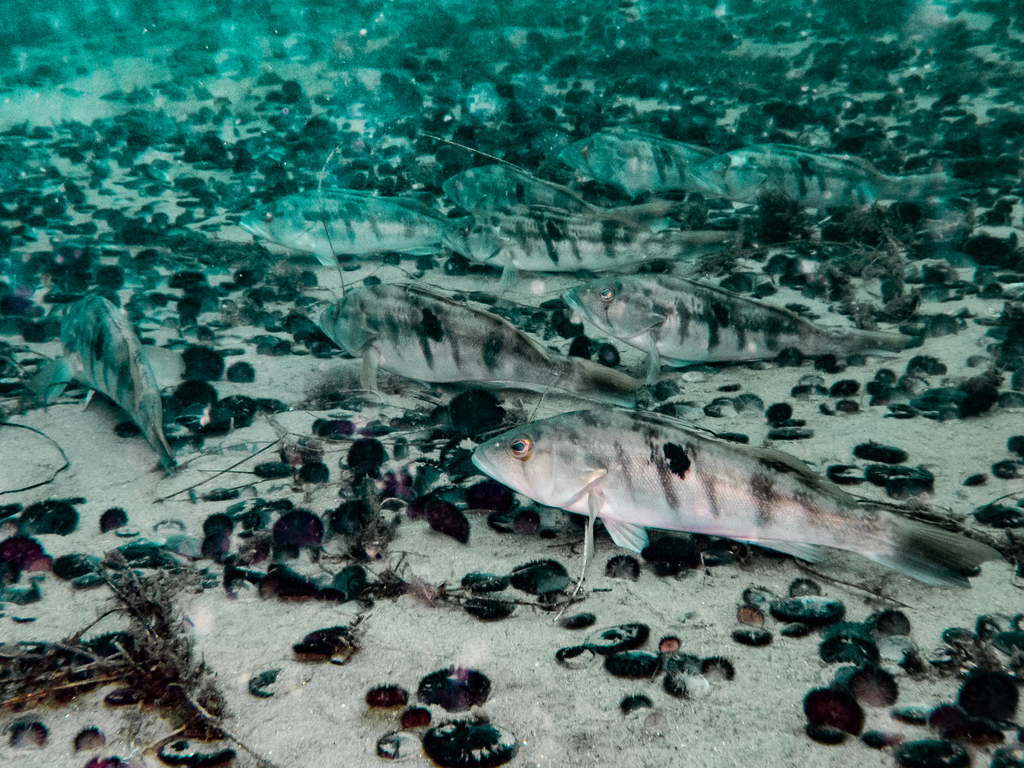
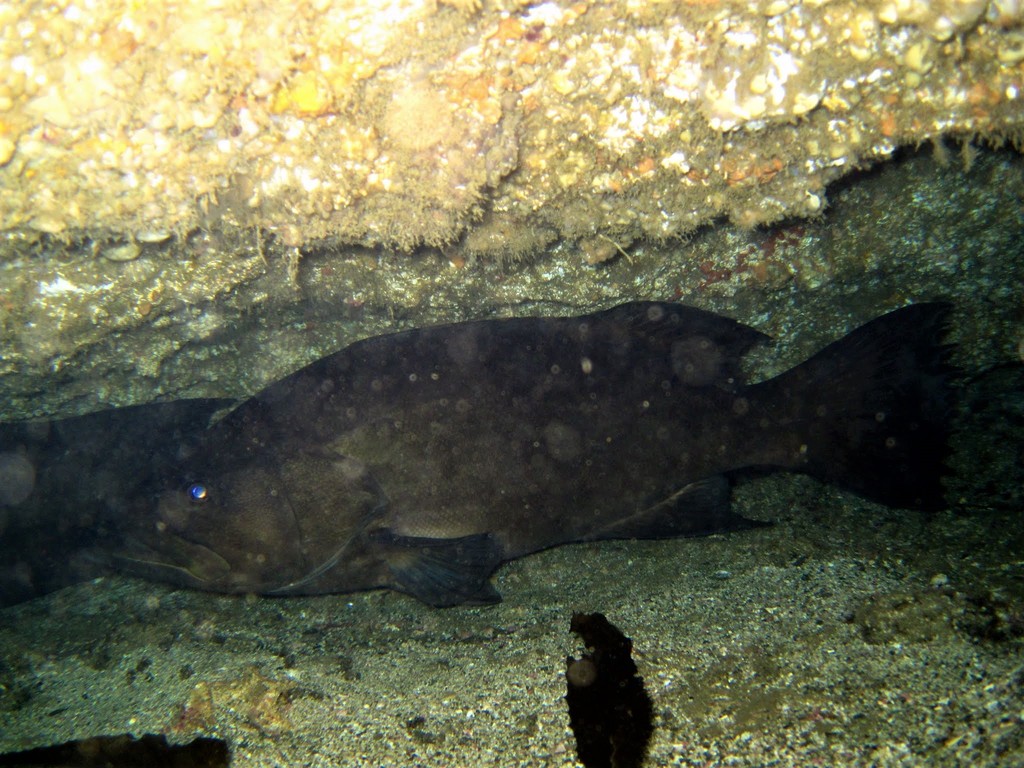
These fish live in the same place.

Guides for this water
Technique, gear and safety guides that fit Kelp bass.