
Pacific bass
The Pacific bass is a 54.5 cm serranid that lives between 60 and 180 m, schools in 14–16 °C water, and is rated Data Deficient. The depth floor is the number that decides how it is fished. The season runs January to December.
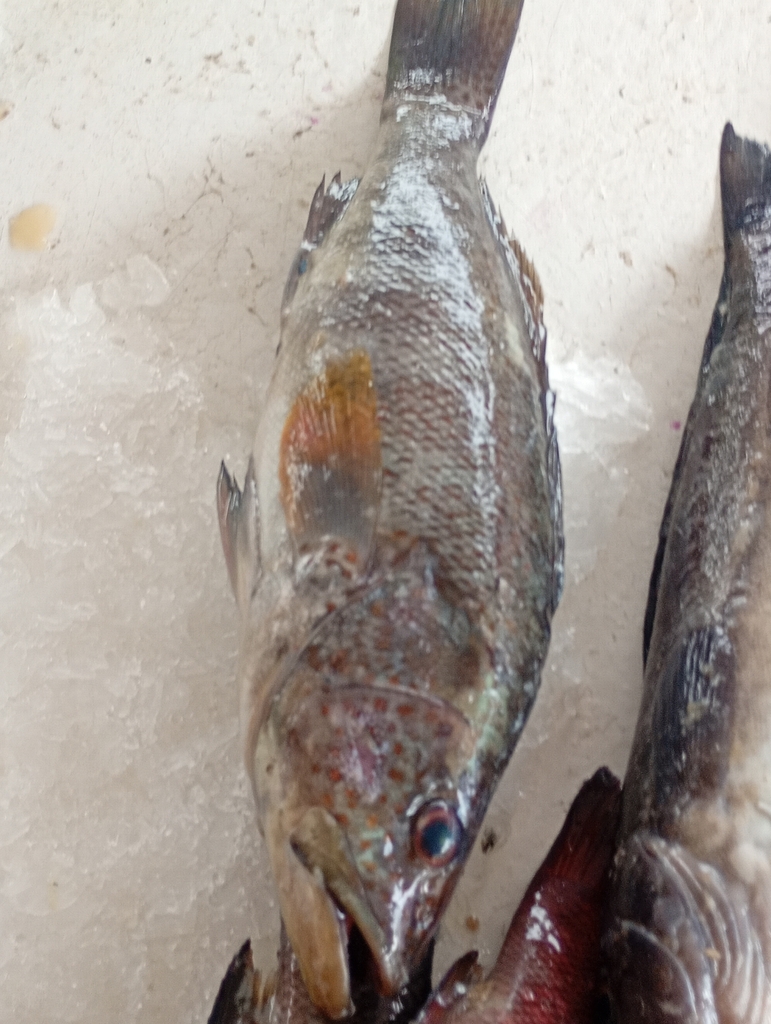
The Pacific bass is a 54.5 cm serranid that lives between 60 and 180 m, schools in 14–16 °C water, and is rated Data Deficient. The depth floor is the number that decides how it is fished.
54.5 cm, 2.5 kg, mature at 26.9 cm
The maximum published length is 54.5 cm TL and the maximum published weight is 2.5 kg. The maturity estimate is 26.9 cm, which is just under half the maximum length. No common length and no maximum age are published.
A 26.9 cm maturity length is the only biological size line on the page. It is a reference point for release decisions, not a legal minimum; the legal figure comes from the current national rule. At 2.5 kg for 54.5 cm, the record fish is a solid, deep-bodied serranid, and a 26.9 cm fish is a small fraction of that mass.
The depth floor is 60 metres
The documented depth range is 60–180 m, and the species is described as benthopelagic. The climate is tropical and the coordinates run from 31°N to 34°S. The northern coordinate is far outside the South American range and should be read as a record, not as a fishing destination.
The terrain fields are rocky shore, reef and coastal, which describes structure rather than depth. Combining those fields with a 60 m floor produces a specific plan: boat fishing over rocky ground, not beach casting.
Two countries hold almost all the records
FishBase gives the range as Costa Rica and Colombia south to the extreme south of Chile. Records from Juan Fernández are called incidental, and records from Baja California, Mexico, Nicaragua and the Galápagos are called doubtful. GBIF holds 2,714 records: 1,482 from Chile and 1,157 from Peru, followed by 29 from Ecuador, 7 from Panama, 4 from Mexico, 2 from the United States, and one each from Cyprus and Samoa.
Chile and Peru together account for almost the whole dataset, which matches the core range. The two national counts are close enough that neither country can be called the centre of the range from GBIF alone. The one-off records match the "doubtful" note in the distribution text and should not be used to extend the range. iNaturalist carries 52 observations.
A schooling fish in 14–16 °C water
The biology note says the species occurs in schools and is known from a temperature range of 14–16 °C. That two-degree window is the only water-temperature figure on the page and the most useful seasonal number it contains. The same note says the species is also caught with trammel nets.
The diet keyword is fishes. There is no diet study on the page, so "fishes" is a category rather than a description of prey size.
Boat bottom fishing first, and why shore casting is secondary
Boat bottom fishing is the mainstream method, with shore casting and jigging as secondary. The terrain is rocky shore, reef and coastal. The 60 m depth floor explains the ranking: a shore rod cannot reach the documented range, so shore casting can only be an edge method.
Jigging is listed as secondary, which fits a schooling fish that can be worked in the water column. The page gives no jig weight and no retrieve style, so the method is recorded but not described.
Spawning runs September to March in Paita
The spawning table has two rows, both from Paita, Peru: one marks January to March, and one marks January to March plus September to December. The union is January, February, March, September, October, November and December.
The two rows overlap, and the page does not explain why one is longer. Read as a single record, the spawning window covers seven months and leaves April to August outside it. September to December and January to March are adjacent across the new year, so the two rows describe one long window rather than two separate ones. No spawning temperature is published.
A Peruvian food fish with a Data Deficient rating
Human uses record a commercial fishery. The biology note calls it an appreciated food fish in Peru. The conservation entry is Data Deficient, assessed on 1 May 2008, with no CITES or CMS evaluation and no threat to humans.
Data Deficient is not a healthy-stock label. For a schooling, commercially caught serranid, the missing assessment is the main data gap on the page. It also means no biological closed month can be read out of this account.
Chilean and Peruvian rules, and a protected-area check
Chile: SUBPESCA writes the recreational rules and SERNAPESCA enforces them; a recreational licence is required, with daily limits, minimum sizes and closed seasons. Marine protected areas include AMCP-MU sites and Parque and Reserva Marina designations, where the rules differ.
Peru: PRODUCE writes the fisheries rules and IMARPE supplies the assessment; management relies on minimum sizes, closed seasons and area measures. SERNANP reserves such as Paracas and San Fernando bar recreational fishing inside their boundaries.
No bag number, size limit or closed-season date is restated here. Both countries separate the recreational rule from the artisanal rule, so the same fish can be legal for one sector and closed for the other. Check the current rule before the trip, and check the protected-area map as well.
Where these facts come from
Check these pages before you rely on a size, range or protection status.
- FishBase — Paralabrax humeralis — FishBase · T2
- GBIF — Paralabrax humeralis occurrence records — GBIF · T2
- IUCN Red List — Paralabrax humeralis — IUCN · T1
- Photo record — iNaturalist — iNaturalist · T3
Fish in the same water
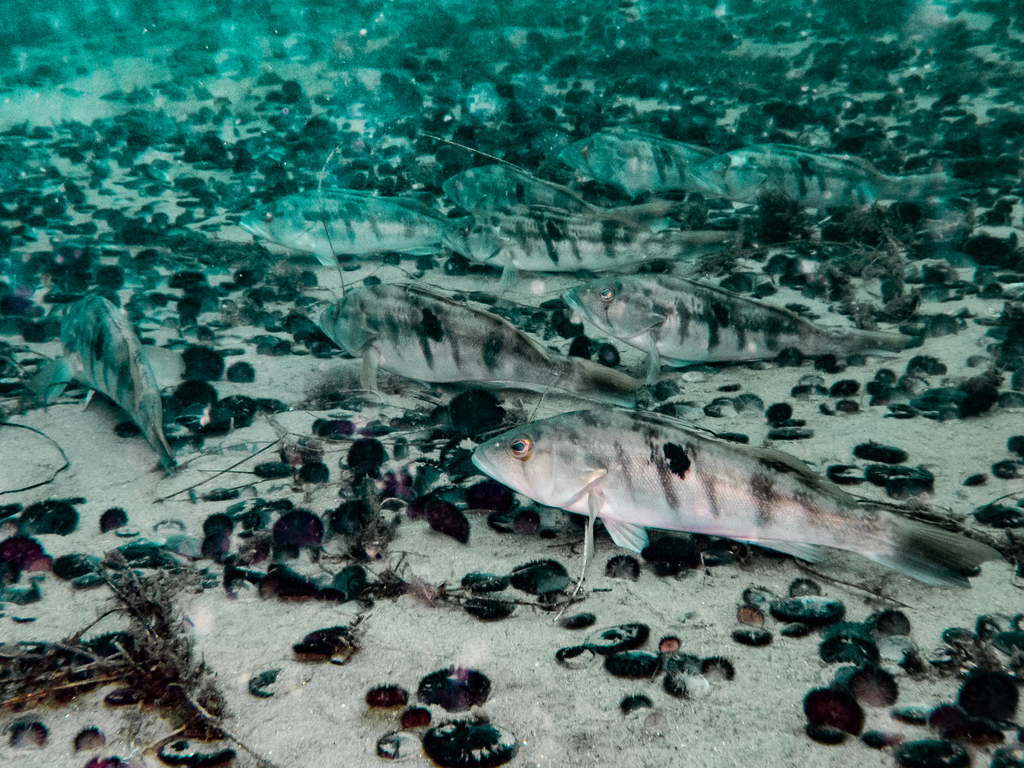
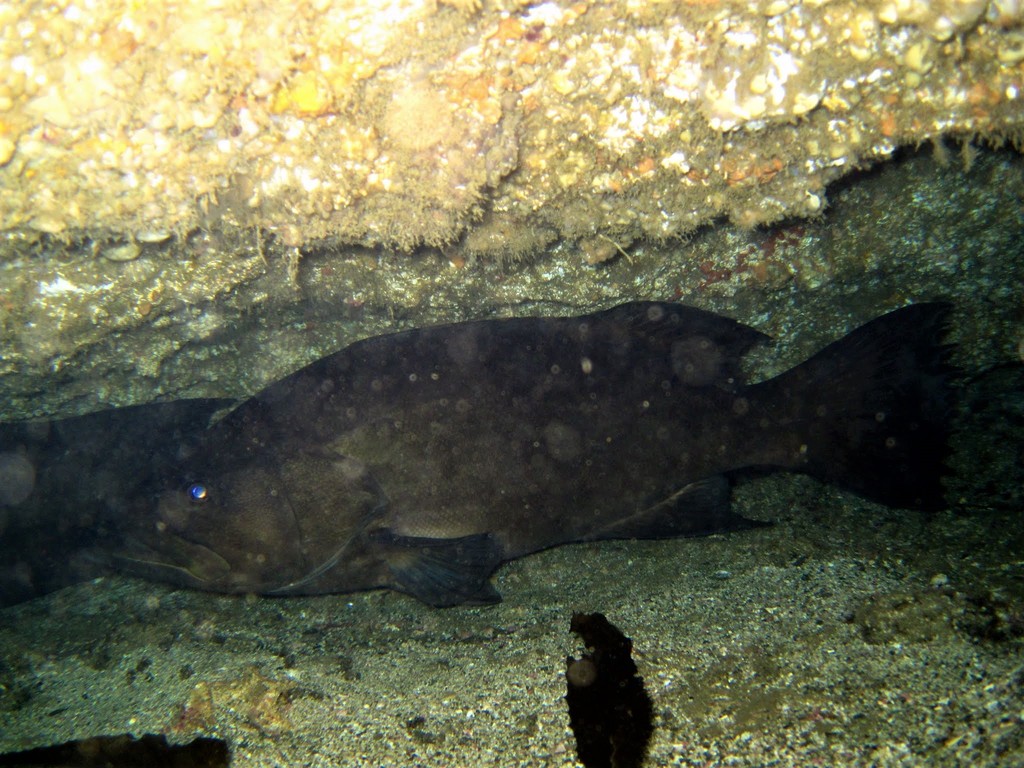
These fish live in the same place.

Guides for this water
Technique, gear and safety guides that fit Pacific bass.