
Sri Lanka sweetlips
Sri Lanka sweetlips is an Indian Ocean haemulid recorded from Sri Lanka and the Andaman Islands. It lives from 5 to 20 m in tropical water and reaches 44 cm TL. Almost nothing else is published: no common length, no weight, no age, no maturity length and no spawning months. Boat bottom fishing and handlines are the methods listed.
FishBase has a maximum length for this sweetlips, 44 cm total length, and almost nothing else: no common length, no weight, no age, no length at maturity. No spawning months are listed, the environment line gives Tropical without a temperature range, and the distribution is two words long. A page built on that record could spend its space complaining about data. The more useful move is to treat the blank as a boundary: it tells you which questions have no published answer and forces the fishing plan onto the two facts that are hard, fringing reef and aggregations. A blank column is information, not permission to guess. None of that is a licence to stop reading. The four hard numbers, 44 cm, 5 to 20 m, fringing reef and aggregation, are enough to plan a day, and the rest is what you write down in your own notes.
Fourteen spines before anything else
The fin formula is D XIV, 19 and A III, 7. Fourteen dorsal spines is a high count for a sweetlips and the most reliable character on the page; body colour in this genus shifts with age, mood and light, so a photograph alone is a weak identification. The body is fusiform. If a fish does not show the spine count, the identification is provisional, and provisional identifications should not drive a decision to keep.
Sri Lanka and the Andamans, nothing more
The distribution is given as the Indian Ocean: Sri Lanka and the Andaman Islands. That is the entire stated range. Depth is 5 to 20 m, and the species is benthopelagic. No habitat beyond coastal fringing reef is described. For a travelling angler, this is a fish you meet on a Sri Lankan or Andaman reef or you do not meet at all; catches reported under this name from elsewhere need checking.
Small to large aggregations
The one behavioural note in the record is that the fish forms small to large aggregations on coastal fringing reefs. Aggregation is a search instruction. Instead of spreading baits along a kilometre of reef, find the corner where the fringing reef turns, or the point where a sand channel cuts the reef edge, and fish it properly. A group that is present tends to stay for the tide; two or three fish from one corner is a better signal than one fish from each of ten.
Tackle without a weight figure
With a 44 cm ceiling and no weight record, the sensible build is a medium reef outfit: PE 1.0, a 14 to 18 lb leader, 40 to 80 g of lead. Sweetlips fight with the reef rather than in open water, and the first run goes toward the nearest hole. Set the drag before the cast. A hook with a short shank and an open gap comes out quickly, which matters when the fish is going back.
Least Concern on three observations
FishBase lists commercial fishing as the use, Least Concern as the status with an assessment date of 28 June 2018, and harmless in the threat-to-humans field. No ciguatera report appears there; a large sweetlips from a reef is still treated on local advice. iNaturalist holds three observations for the species, and the photographs on the taxon page are all rights reserved, so this page carries no image. Three observations is not a population estimate; it is a measure of how little the species is photographed, which is consistent with a narrow range and a low profile in the recreational literature.
Two sets of rules, one narrow range
In Sri Lanka, the no-take cores are Hikkaduwa, Pigeon Island and Bar Reef, and minimum lengths are not set nationally. The Maldives, the only other range state, shuts spawning aggregations for part of the year, licenses exports, and bars the sale of tourist catch. Neither jurisdiction publishes a size limit specific to this sweetlips, and this page does not invent one.
What is left to measure
The local name Boraluwa appears in Sri Lankan common-name lists for this species. Everything else, weight, age, maturity and spawning, remains unrecorded. A kept fish is therefore also a data point: length, date, depth and whether it came from a group are worth writing down, because the published record will not answer those questions for you. A species with three iNaturalist observations and no weight or age data is not necessarily rare; it is under-observed. Sweetlips are caught on reef lines and sold locally, and a fish that is not a sport-fishing target rarely attracts the sampling that produces growth curves. That is an explanation, not a licence to guess: the 44 cm maximum is a measurement, the 5 to 20 m depth is a range, and the aggregation note is behaviour.
How to catch it
Boat bottom fishing
Fished with the listed approach, matched to the recorded depth and size.
Handline
Fished with the listed approach, matched to the recorded depth and size.
Where these facts come from
Check these pages before you rely on a size, range or protection status.
- FishBase — Plectorhinchus ceylonensis — FishBase · T2
- GBIF — Plectorhinchus ceylonensis occurrence records — GBIF · T2
- IUCN Red List — Plectorhinchus ceylonensis — IUCN · T1
- Photo record — iNaturalist — iNaturalist · T3
Fish in the same water
These fish live in the same place.
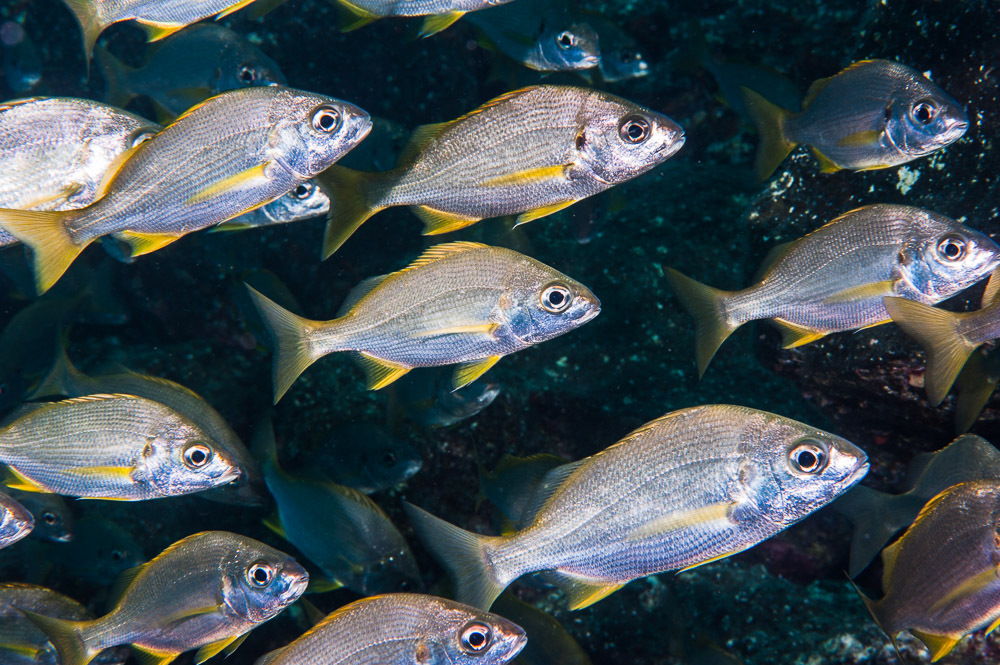
Bastard grunt
- Family
- Haemulidae
- Depth
- 10–100 m
- Season
- Jun, Jul, Aug
Cabinza grunt
- Family
- Haemulidae
- Depth
- 0–50 m
- Season
- Jan, Oct, Nov, Dec
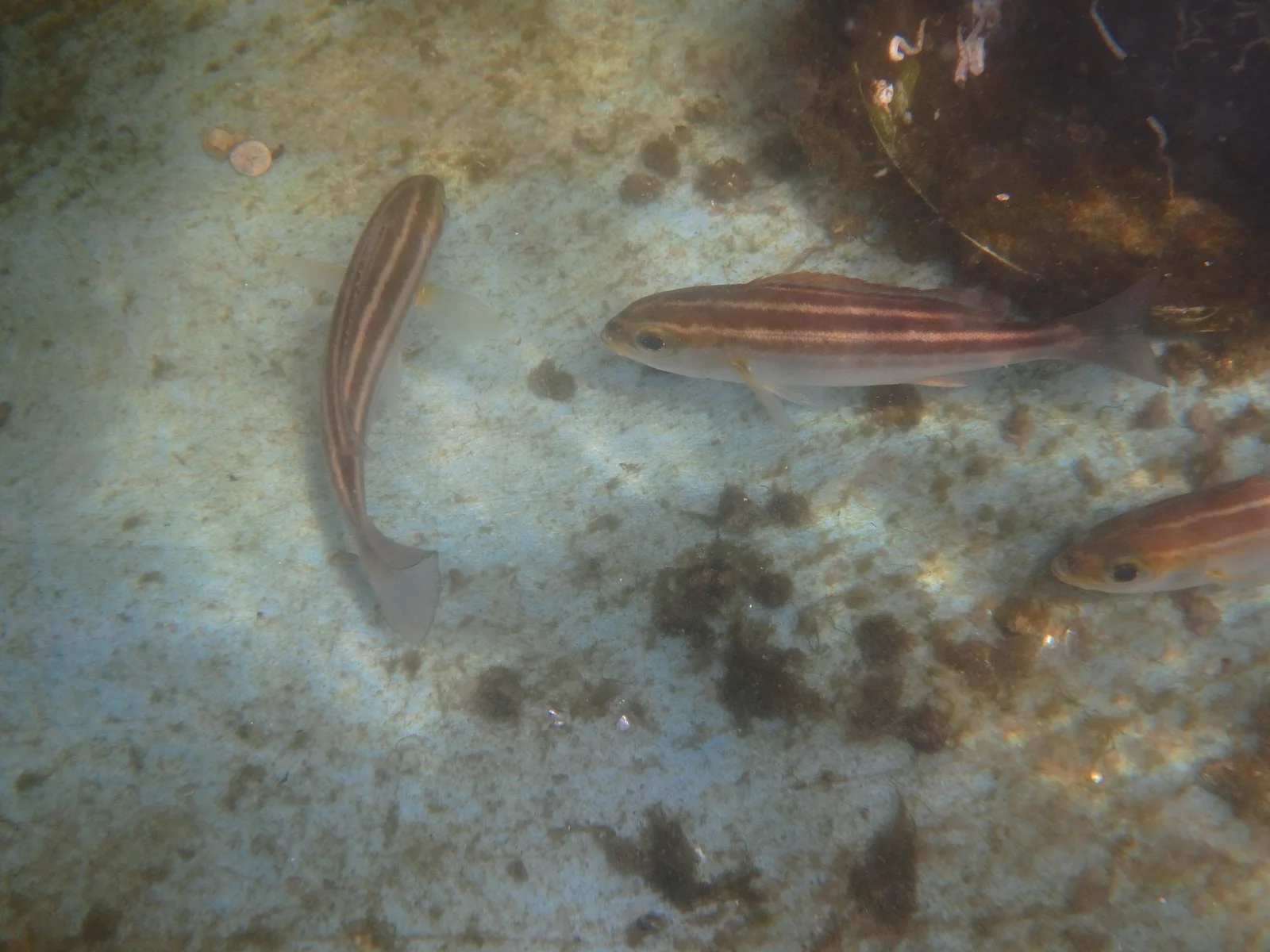
Chicken grunt
- Family
- Haemulidae
- Season
- Jun, Jul, Aug
Guides for this water
Technique, gear and safety guides that fit Sri Lanka sweetlips.