
Diagonal-banded sweetlips
Diagonal-banded sweetlips is a western Pacific reef haemulid, from the Ryukyu and Ogasawara islands to the Great Barrier Reef and New Caledonia. It lives at 1 to 50 m on lagoon and seaward reef slopes, where adults gather along coral slopes and juveniles stay on shallow protected reef. It is nocturnal, feeding over sand flats and seagrass at night and resting by day. It reaches 72 cm TL, and bottom fishing and lures are the methods listed.
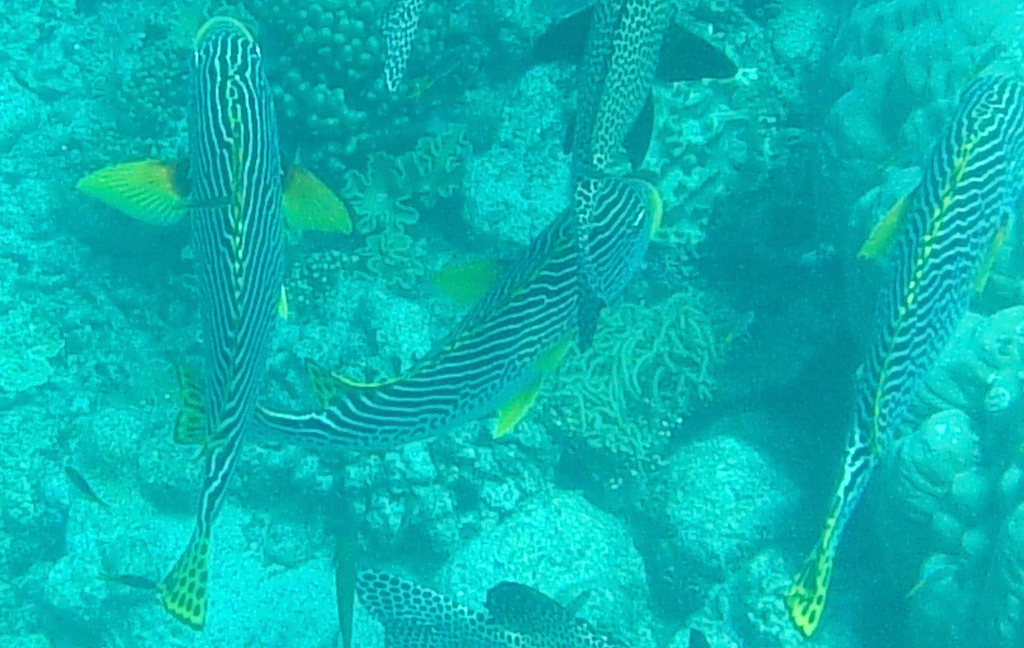
Diagonal-banded sweetlips is a western Pacific reef haemulid, from the Ryukyu and Ogasawara islands to the Great Barrier Reef and New Caledonia. It lives at 1–50 m on lagoon and seaward reef slopes; adults are solitary or aggregate along coral slopes, juveniles are solitary on shallow protected reefs. It is nocturnal, feeding on benthic invertebrates over sand flats and seagrass at night and resting conspicuously by day. FishBase gives a maximum of 72 cm total length. IUCN lists it as Least Concern, assessed in 2023.
Reading the spines
The dorsal fin has 12–13 spines and 18–20 soft rays; the anal fin has 3 spines and 7–8 soft rays. The chin has 6 pores and no median pit. Gill rakers on the first arch are 7–11 + 1 + 17–19, total 26–30. The third to fifth dorsal spines are longest. The lips are fleshy and become more swollen with age. Scales are ctenoid and rough; lateral-line tubed scales number about 54–58; body depth is 2.6–2.9 times in standard length; the caudal fin is slightly rounded in juveniles and truncate in adults. Juveniles have a few horizontal to slightly oblique dark brown bands that subdivide with age until the upper body looks dark chocolate brown with a network of fine white lines running up and back, the lower bands break into small spots, the belly is white, and the lips and fins are bright yellow. The 6 chin pores, 26–30 gill rakers and white-line network are the reliable checks; count rakers rather than trusting colour alone.
A reef-slope sweetlips
FishBase's range is the western Pacific: the Ryukyu and Ogasawara islands to the Great Barrier Reef and New Caledonia. The country table includes Australia, China, Guam, Hong Kong SAR, India, Indonesia, Japan, Malaysia, the Maldives, Micronesia, New Caledonia, Niue, the Ogasawara Islands, Palau, Papua New Guinea, the Philippines, the Ryukyu Islands, the Solomon Islands, Sri Lanka, Taiwan region, Timor-Leste, Vanuatu and Vietnam. GBIF's 1,790 records are led by Indonesia (467), Australia (403), New Caledonia (368), the Philippines (138), Micronesia (70) and Japan (65). It is found in deep inner to outer reef habitats; adults occur singly or in aggregations along coral slopes of clear lagoons and seaward reefs, while juveniles are solitary on shallow protected reefs. Fish the lower reef slope, coral gullies and the sand edge; by day the fish rests under coral, and at night it moves onto sand.
The blanks are information
FishBase gives no spawning months, only a Palau aggregation around the new moon. The species is tropical and catchable all year; in Taiwan region, Hong Kong SAR and Southeast Asia, late spring to autumn is the main window, while monsoon winters reduce offshore trips. No temperature number is published, so follow local reef temperature. It is nocturnal, so night fishing beats daytime; tide and slack water concentrate food along the reef-slope and sand edge. Daytime fish can be found resting under coral, but they are wary and feed less.
Where to start looking
The GBIF pattern is Indonesia, Australia and New Caledonia first, with the Philippines and Micronesia secondary. Fish the reef base and the sand gutter at night, not the shallow reef top. The source gives no coordinates; local knowledge of ledges and current lines is the real map.
Tackle and baits
Night bottom fishing is the standard: a medium-heavy rock or boat rod, a single hook or short dropper rig, and prawn, crab meat, fish chunk or sandworm. The thick mouth takes bait firmly, so a sharp, wide-gap hook helps; after the hookset the fish dives for crevices, so an abrasion-resistant leader and a fast lift matter. Soft plastics, jigheads and slow-pitch jigs dragged along the reef base work. Scented bait is better at night; daytime lure fishing needs long casts and a soft entry.
Eating, handling and the rules
The species supports minor commercial fisheries and the aquarium trade; the flesh is fine, good steamed, braised or in soup. Bleed, gut and ice it promptly. Ciguatera is mainly a reef-predator issue, so sweetlips are lower risk, but large individuals and organs should not be eaten often. Rules vary: Taiwan region manages inshore fishing and reef species through closed areas, seasons and protected zones, and recreational fishing must follow Fisheries Agency and local government notices; Hong Kong SAR's Fisheries Protection Ordinance regulates methods, with no angling or collecting in marine parks and reserves; Southeast Asian states differ widely, with Malaysia, Indonesia, the Philippines and Thailand issuing size and closed-season rules and usually prohibiting take in marine protected areas. Check the current local notice.
What the record leaves open
The page is built from FishBase taxonomy, morphology, distribution, environment, biology, use and IUCN entries, with the country table for range and GBIF/iNaturalist for occurrence. Spawning months, water temperature and local size limits are not standardised, so the text stays conservative. and are synonyms or local aliases; the formal name remains .
How to catch it
Bottom fishing
Fished with the listed approach, matched to the recorded depth and size.
Lure fishing
Fished with the listed approach, matched to the recorded depth and size.
Where these facts come from
Check these pages before you rely on a size, range or protection status.
- FishBase — Plectorhinchus lineatus — FishBase · T2
- GBIF — Plectorhinchus lineatus occurrence records — GBIF · T2
- IUCN Red List — Plectorhinchus lineatus — IUCN · T1
- Photo record — iNaturalist — iNaturalist · T3
Fish in the same water
These fish live in the same place.
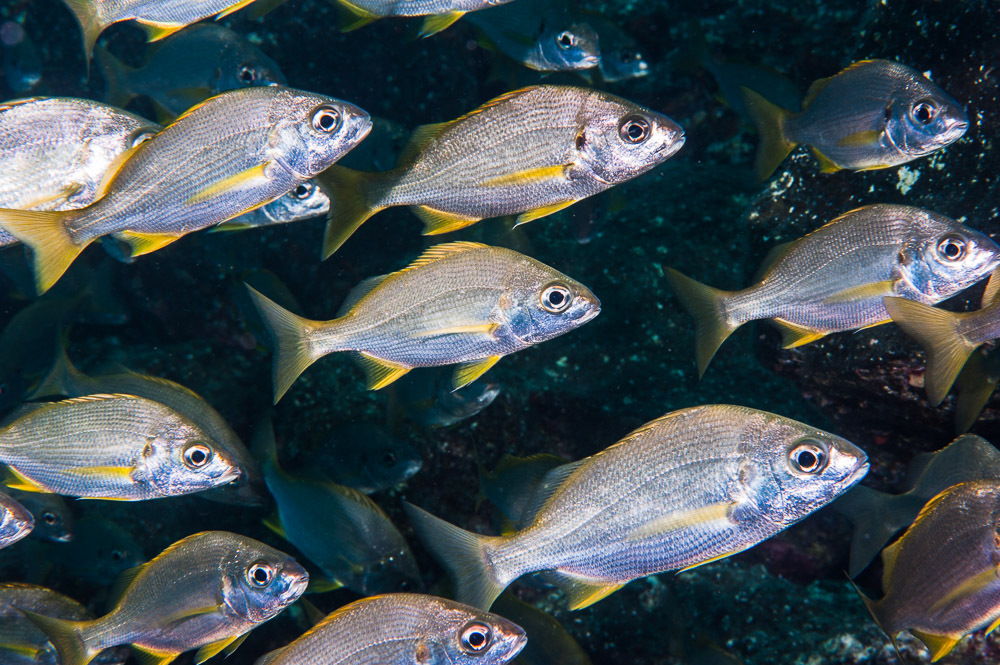
Bastard grunt
- Family
- Haemulidae
- Depth
- 10–100 m
- Season
- Jun, Jul, Aug
Cabinza grunt
- Family
- Haemulidae
- Depth
- 0–50 m
- Season
- Jan, Oct, Nov, Dec
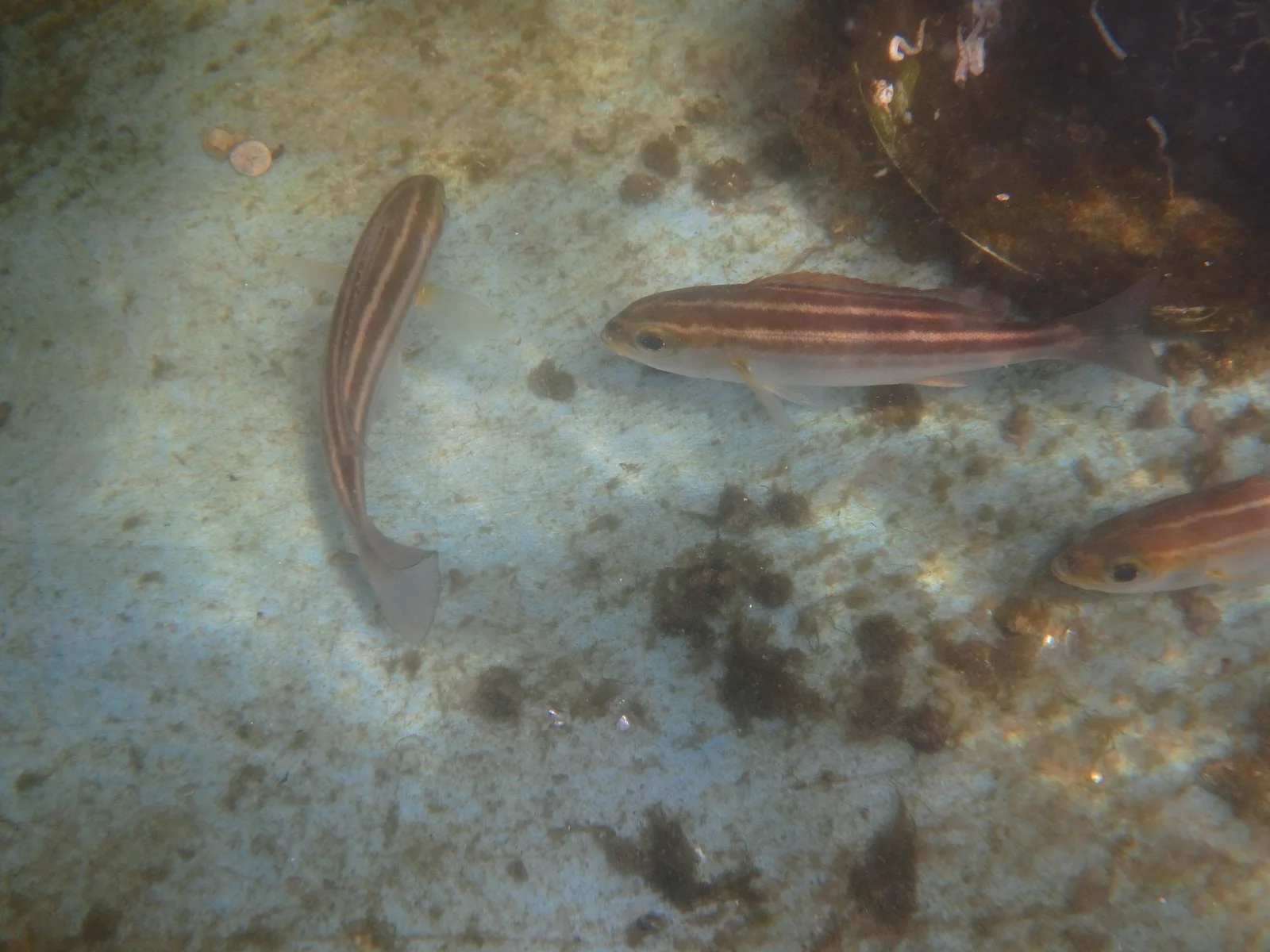
Chicken grunt
- Family
- Haemulidae
- Season
- Jun, Jul, Aug
Guides for this water
Technique, gear and safety guides that fit Diagonal-banded sweetlips.