
Trout sweetlips
The painted sweetlips is an Indo-West Pacific grunt, recorded by FishBase from the Persian Gulf to Sri Lanka and eastward to China. It is marine and reef-associated, at 20–200 m, in tropical water. The maximum is 83 cm total length, the maximum published weight 6.9 kg, and the maturity length 53.6 cm, with a range starting at 40 cm.

The painted sweetlips is an Indo-West Pacific grunt, recorded by FishBase from the Persian Gulf to Sri Lanka and eastward to China. It is marine and reef-associated, at 20–200 m, in tropical water. The maximum is 83 cm total length, the maximum published weight 6.9 kg, and the maturity length 53.6 cm, with a range starting at 40 cm. IUCN lists it as Least Concern, assessed on 28 June 2018. FishBase explicitly calls it “not common”, and that single word shapes the fishing plan: this is not a fish to target by numbers but an occasional deep-boat catch.
A short, deep outline and very little else
FishBase's morphology section gives only “body shape: short and/or deep”; there are no fin-ray counts, scale rows or colour-pattern details. The usable information is body form and the genus's colour direction: juvenile Plectorhinchus often carry dark longitudinal to oblique bands that break into fine white lines and spots with growth, with a white belly and yellowish lips and fins; adults darken. The English name “trout sweetlips” comes from a trout-like flank pattern, but FishBase gives no verifiable pattern description, so field identification should combine the short deep body, the sweetlips head and the deep-water locality rather than colour alone. It differs from the diagonal-banded sweetlips in range and depth: that species is a western Pacific reef-slope fish at 1–50 m, while this one runs from the Persian Gulf to China and is recorded to 200 m.
Persian Gulf to China, 20–200 m
FishBase's range is the Indo-West Pacific: the Persian Gulf to Sri Lanka, then east to China. The country table includes Australia, Bahrain, Bangladesh, China, Hong Kong SAR, Indonesia, Iran, Kenya, South Korea, Kuwait, Malaysia, Mayotte, Oman, Pakistan, the Philippines, Qatar, Saudi Arabia, Socotra, Sri Lanka, Taiwan region, Thailand, the UAE, Vietnam and Yemen. It lives in coastal waters and is caught throughout its range but is not common; the record does not separate adult and juvenile habitat. GBIF's 420 records are led by Australia (187), the Philippines (46), Japan (36), Taiwan region (32), mainland China (26), Thailand (11), Indonesia (8) and Sri Lanka (7); iNaturalist has a taxon for the species. The 20–200 m span is wide: the shallow end is boat-accessible reef slope, the deep end needs deep tackle, and because the record does not state everyday depth, 200 m is a boundary, not a recommendation.
No diet is recorded; sweetlips generally feed on benthic crustaceans, molluscs and small fish, which matches the prawn, crab and fish-bait approach used in deep water.
No spawning table
FishBase records no spawning months and no water temperature. Only the tropical label and the 20–200 m depth range are given. Its reproductive biology is blank in FishBase, so any “spawning season” claim would lack a basis; no months are asserted here. Plan around local temperature and sea state; deep boat fishing depends on current and wind, with the change of tide as the main working window. Juveniles are used in the aquarium trade, so small fish encountered in shallow water should be released.
Deep bottom, slow current
Because it is uncommon, rig for a large deep-water fish: boat bottom fishing, heavy lead to the bottom, baits of fish chunk, squid strip, prawn and crab. From 20 m down to 200 m, use the thinnest main line that still handles the current and an abrasion-resistant leader; choose lead by flow, and prefer a slow sink over a bait that never reaches bottom. There is no lure record and FishBase does not describe it chasing lures, so fast soft-plastic retrieves should not be the main method. Juveniles in shallow water are an occasional shore catch and should be released.
Rigging for 83 cm and 6.9 kg
With an 83 cm maximum, 6.9 kg and a 53.6 cm maturity, tackle is a step heavier than for small sweetlips: a medium to medium-heavy boat rod, a 5000–8000 reel, 2–3 braid and a 40–60 lb fluorocarbon leader. In deep water a thinner line reaches bottom more easily, but the leader cannot be skipped because reef slope and deep structure abrade it. Maturity is 53.6 cm, and fish below that have not spawned and should go back. The species is uncommon, so the bag should be conservative; an 80 cm fish may have spawned for many years.
Eating and the rules
Recorded uses are commercial fisheries and the commercial aquarium trade; adults are marketed fresh and juveniles enter the aquarium trade. The flesh suits steaming, braising and soup; bleed, gut and ice promptly. The threat field says harmless and there is no ciguatera report, but large reef fish should still follow local advice. Rules are regional: in Taiwan region the Fisheries Agency and local governments manage closed areas, closed seasons, gear restrictions and minimum sizes; Hong Kong SAR's Fisheries Protection Ordinance regulates methods, and marine parks and reserves prohibit angling and collecting; mainland China has a summer closed season and minimum catch sizes; Southeast Asian states differ widely, with Malaysia, Indonesia, the Philippines and Thailand setting size and closed-season rules and core protected-area zones usually no-take. Check the current local notice.
What the record leaves open
The page uses FishBase taxonomy, morphology, distribution, environment, size, use, IUCN and threat entries, with the country table for range and GBIF/iNaturalist for occurrence. FishBase gives only “short and deep” for morphology, with no fin-ray or pattern detail, and its ecology and reproduction are nearly blank; only verifiable material is used and no estimates are added. is the master-plan name; FishBase's Chinese table lists and , kept as aliases, with “ ” separating it from the spotted sweetlips (D. pictum).
How to catch it
Bottom fishing
Fished with the listed approach, matched to the recorded depth and size.
Lure fishing
Fished with the listed approach, matched to the recorded depth and size.
Where these facts come from
Check these pages before you rely on a size, range or protection status.
- FishBase — Plectorhinchus pictus — FishBase · T2
- GBIF — Plectorhinchus pictus occurrence records — GBIF · T2
- IUCN Red List — Plectorhinchus pictus — IUCN · T1
- Photo record — iNaturalist — iNaturalist · T3
Fish in the same water
These fish live in the same place.
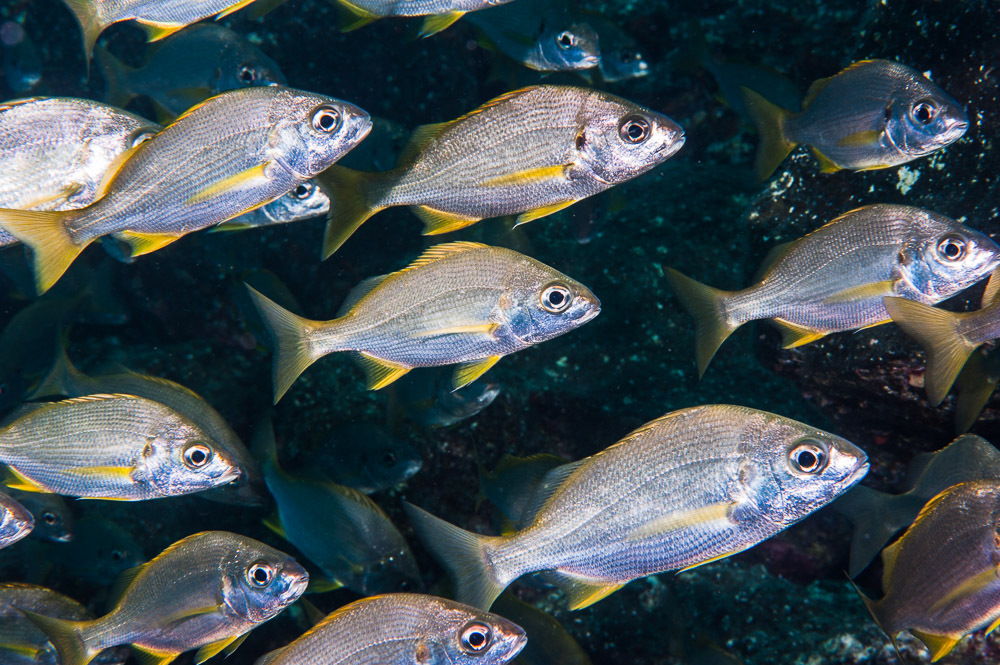
Bastard grunt
- Family
- Haemulidae
- Depth
- 10–100 m
- Season
- Jun, Jul, Aug
Cabinza grunt
- Family
- Haemulidae
- Depth
- 0–50 m
- Season
- Jan, Oct, Nov, Dec
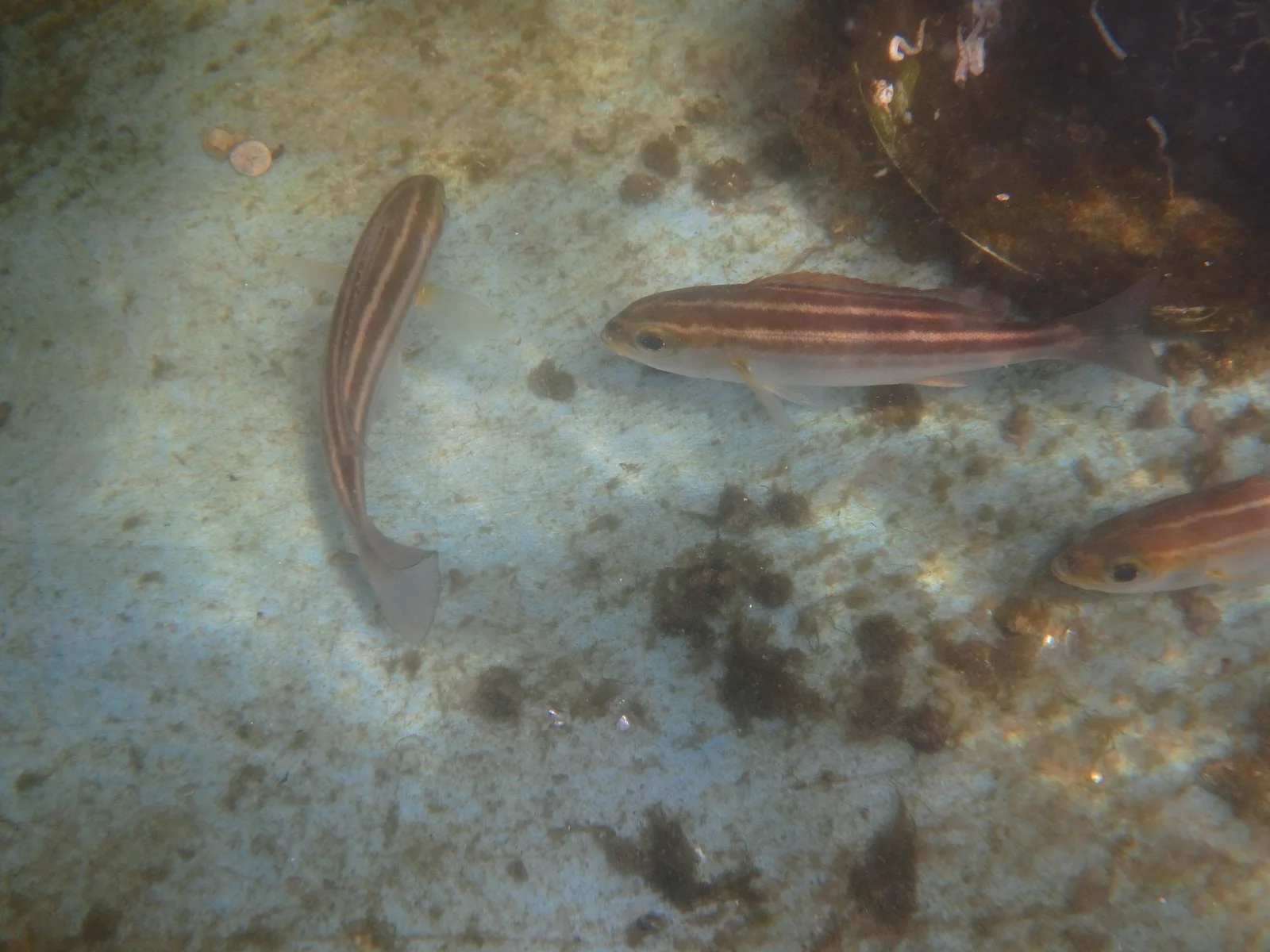
Chicken grunt
- Family
- Haemulidae
- Season
- Jun, Jul, Aug
Guides for this water
Technique, gear and safety guides that fit Trout sweetlips.