
Sordid grunt
Plectorhinchus sordidus is a haemulid grunt with 12 dorsal spines and 17 to 18 soft rays, three anal spines and 7 to 8 soft rays. Adults are dark slate grey with thick orange-red lips; juveniles are paler and less distinctive. FishBase gives a maximum of 60 cm total length, maturity at about 26 cm and a maximum age of 14 years.
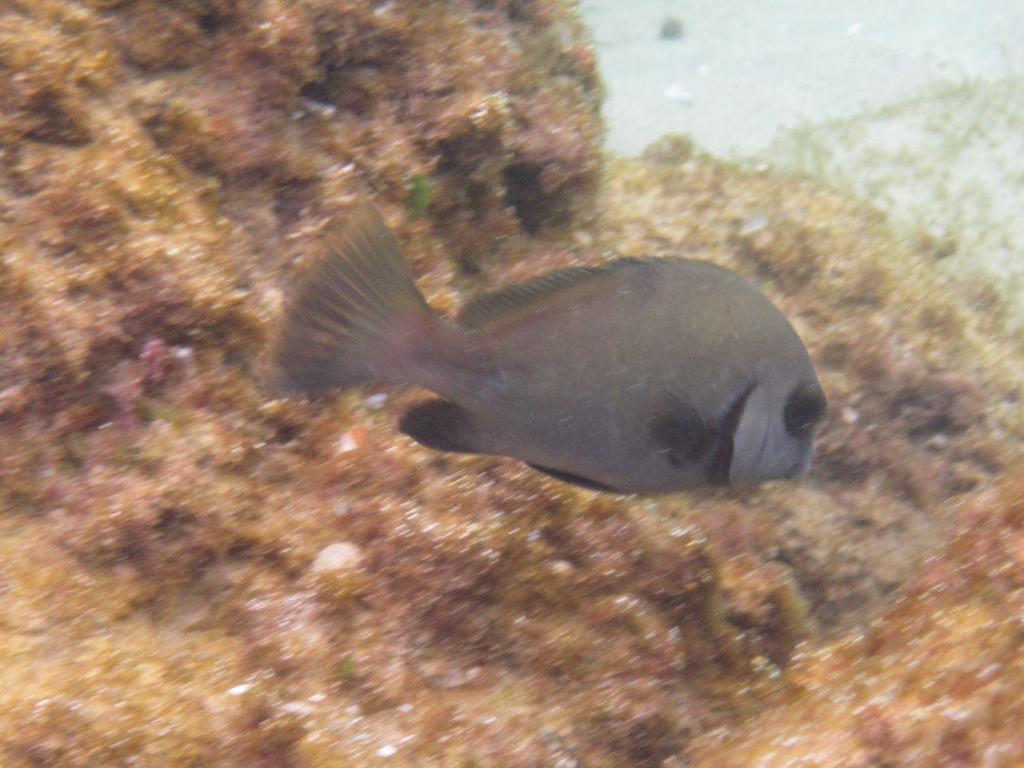
Plectorhinchus sordidus is a haemulid grunt with 12 dorsal spines and 17 to 18 soft rays, three anal spines and 7 to 8 soft rays. Adults are dark slate grey with thick orange-red lips; juveniles are paler and less distinctive. FishBase gives a maximum of 60 cm total length, maturity at about 26 cm and a maximum age of 14 years. It ranges from the Persian Gulf and the Red Sea south to Transkei in South Africa, and also occurs in the Seychelles and Mauritius, living on reef from 2 to 80 m.
Identification
A heavy-bodied grunt with 12 dorsal spines and 17 to 18 soft rays, and three anal spines with 7 to 8 soft rays. The head is large, the mouth small and the lips thick.
Adults are dark slate grey to brownish over the body, with thick orange-red lips that give the fish its common name. Juveniles are paler and lack the strong lip colour, which is why small fish are often misidentified.
FishBase gives 60 cm total length, maturity at about 26 cm and a maximum age of 14 years. The lip colour and the heavy build separate adults from other sweetlips in the Gulf.
Distribution and Habitat
Persian Gulf and Red Sea, south along the East African coast to Transkei in South Africa, with records from the Seychelles and Mauritius.
It lives on reef and rocky ground from 2 to 80 m. Adults shelter in caves and under ledges by day and are most often seen out in the open at dusk.
That cave habit is the key to finding it: fish the structure, not the open sand around it.
Habits and Diet
Feeds on benthic crustaceans, taken at night when the fish leave cover to work the reef and adjacent sand.
Adults are usually solitary or in small groups rather than dense schools, and they retreat quickly to the nearest hole when hooked or disturbed.
FishBase does not publish monthly spawning data for this species. Maturity at 26 cm means fish below that size should go back.
Fishing Methods and Gear
Night bottom bait is the standard approach: a whole prawn, crab or squid bait on a 4/0 to 6/0 hook, fished close to reef structure with just enough lead to hold.
Fish at dusk and into the night, keep the drag locked down and pull hard from the first run, because a sweetlip that reaches its cave is gone.
A 7 ft boat rod, 5000 to 8000 reel, 40 to 50 lb braid and a 50 lb leader are the right scale. Heavy jigs work at dusk but bait is more reliable.
Seasonal Window
Present year-round. The warm months produce the most consistent night fishing on shallow reef, while the coolest weeks push fish deeper.
The middle of the flood tide is the best window on shallow ground, and the first of the ebb also produces as fish move off the flats.
Bright moonlit nights make the fish cautious; fish tighter to structure and use fresh bait.
Edibility and Handling
A good food fish with firm white flesh that holds up in curry, soup or the pan. It is sold fresh in Gulf markets.
Large sweetlips carry a well-documented ciguatera risk in this region. Keep small fish, release or avoid the largest individuals, and never assume a fish is safe because it looks healthy.
Bleed and ice promptly, and gill and gut before the fish goes into the cooler.
Regulations and Conservation
United Arab Emirates: this species is not on the Abu Dhabi prohibited list; that list names the painted sweetlips, Plectorhinchus pictus, which is a different fish. MD 580/2015 does not set a species-specific minimum for it. A recreational licence is required, and Abu Dhabi charges AED 120 per year or AED 30 per week.
Oman: a recreational licence costs OMR 2 per day or OMR 30 per year. Ministerial Decision 67/2020 sets minimum sizes for five species, none of them this grunt, so no species-specific size is published.
IUCN: Least Concern, assessed in 2018.
How to catch it
Boat bottom fishing
Reef edge soak
Jigging
80–120
Where these facts come from
Check these pages before you rely on a size, range or protection status.
- GBIF — Plectorhinchus sordidus occurrence records — GBIF · T2
- IUCN Red List — Plectorhinchus sordidus — IUCN · T1
- Photo record — iNaturalist — iNaturalist · T3
Fish in the same water
These fish live in the same place.
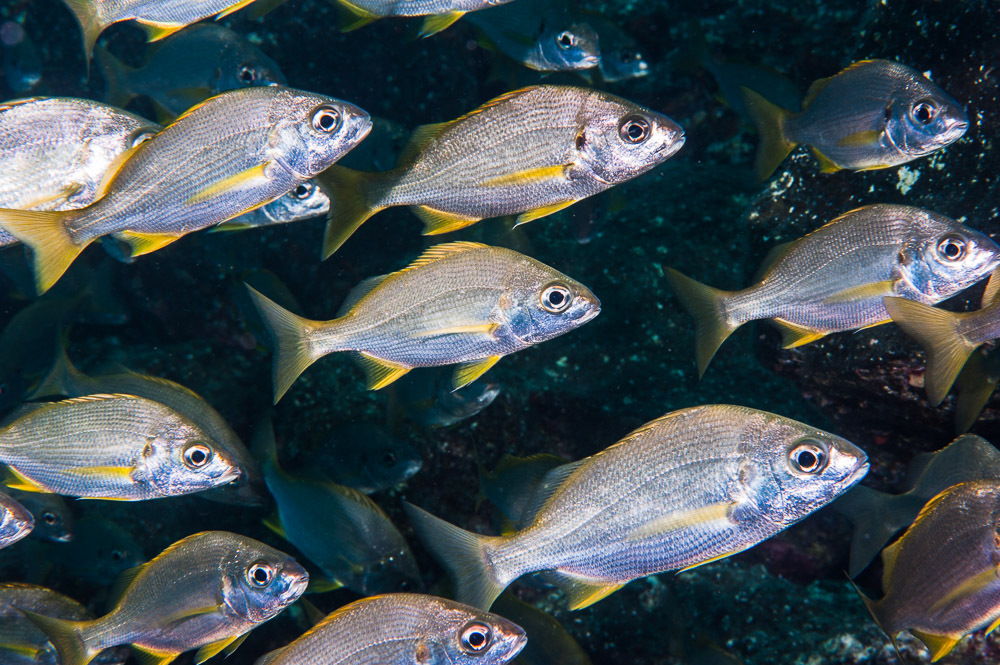
Bastard grunt
- Family
- Haemulidae
- Depth
- 10–100 m
- Season
- Jun, Jul, Aug
Cabinza grunt
- Family
- Haemulidae
- Depth
- 0–50 m
- Season
- Jan, Oct, Nov, Dec
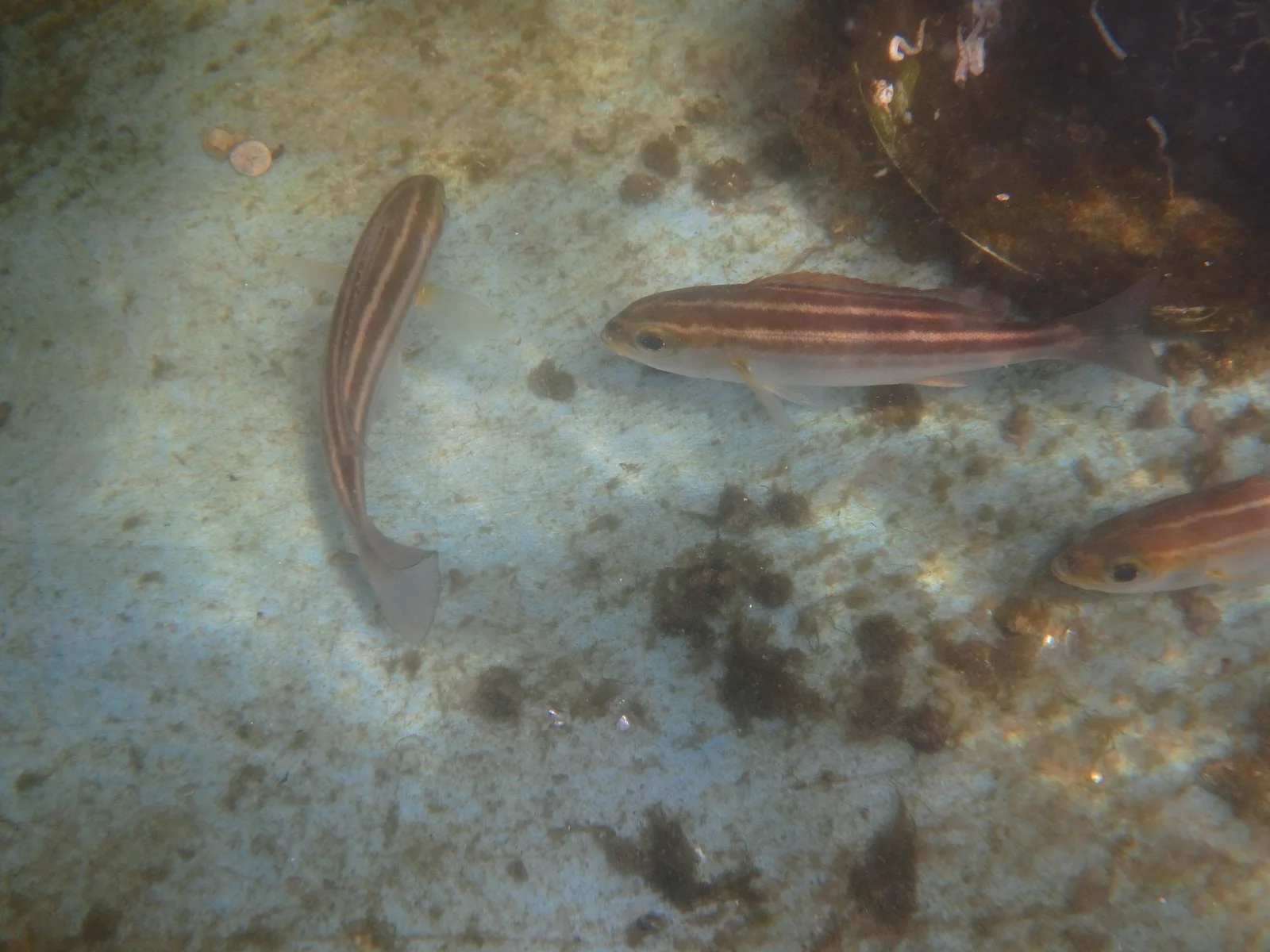
Chicken grunt
- Family
- Haemulidae
- Season
- Jun, Jul, Aug
Guides for this water
Technique, gear and safety guides that fit Sordid grunt.