
Okhotsk atka mackerel
Okhotsk atka mackerel is a greenling of the northwest Pacific, found from Primorsky Krai and the Sea of Okhotsk through the Kuril Islands to Ibaraki and Tsushima in Japan and into the Yellow Sea. It works the top 240 m of temperate water. Adults reach 62 cm TL and 1.8 kg and can live 12 years. The season splits into two blocks, January to February and August to December.
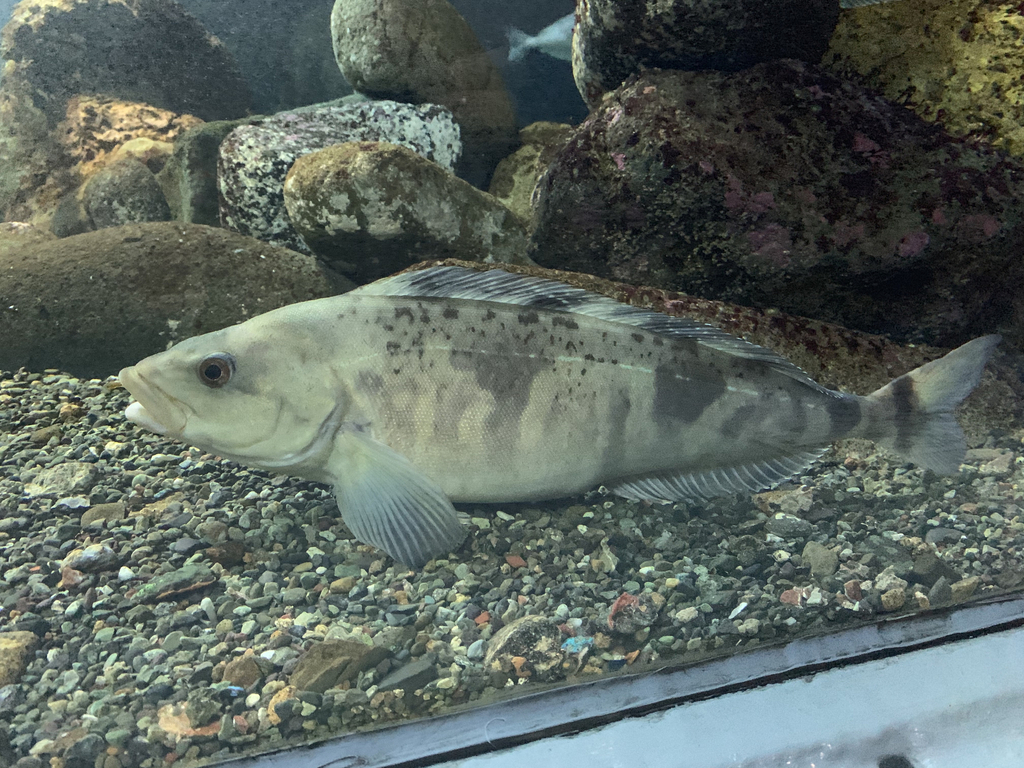
Okhotsk atka mackerel (Pleurogrammus azonus) is a fish of the family Hexagrammidae. FishBase gives its range as: Northwest Pacific: Primorskii Krai in Russia, the Sea of Okhotsk and the Kuril Islands to Ibaraki Prefecture and Tsushima in Japan to the Yellow Sea. It is recorded from 0 to 240 m, in temperate water. The recorded maxima are 62 cm TL, 1.8 kg, 12 years. IUCN status: Not Evaluated (NE). Chinese name: .
A commercial fish with an empty conservation file
FishBase marks this species as highly commercial, commercially cultured and a gamefish, with a maximum length of 62 cm TL and a maximum weight of 1.8 kg. The same page records the IUCN category as Not Evaluated. Those two facts are usually printed side by side and read as a contradiction. They are not. Commercial value is a market fact; Not Evaluated means nobody has assessed the species, not that it is safe. The practical consequence for a reader is that no international status will tell you whether to keep a fish. The document that does is the domestic stock assessment.
The catch is capped, and the stock is low
The 2024 national assessment for the Nemuro Strait, eastern Hokkaido, Hidaka and Iburi stock puts the 2023 catch at 1,654 tonnes, down from 6,134 tonnes in 2021. It classifies the stock level as low and the recent trend as flat. For 2025 it sets a target catch of 990 tonnes and a limit of 1,240 tonnes. That ceiling, not a conservation label, is what governs the commercial removal. A recreational catch comes out of the same stock even when no angler is named in the quota. The useful reading is not "990 tonnes means plenty of fish"; it is that the fleet is fishing under a ceiling precisely because the stock is assessed as low.
What the market fish actually is
The assessment also publishes the age and length structure of the Rausu gillnet catch. Spring landings are dominated by two-year-old fish at roughly 28 to 35 cm, autumn landings by one-year-old fish at roughly 25 to 34 cm. Females off Kunashiri Island reach about 30 percent maturity at age two and nearly 100 percent at age three. Read together, a 30 cm hokke in the autumn catch is more likely an immature one-year-old than a spawned adult. The length that decides "keep" is therefore not one line on a card; the season tells you which year class is in front of you.
Three names, one fish
The same animal travels under several labels. Japanese buyers know it as hokke; the current FAO name is Okhotsk atka mackerel, older FAO lists used Atka mackerel, and Russian records use Arabesque greenling. Chinese sources split between and . That matters when you search. A catch report, a regulation or a market listing may use any of these strings, and a query on one will miss the others. When you check a rule or a price, search the Japanese name and the FAO name together, not just the English common name on the page.
The season moves along the coast
FishBase's spawning table lists January, February and August through December, with separate rows for Japan, the northern Sea of Japan and Primorye. The Hokkaido prefectural page narrows the local spawn to mid-September through mid-December. It also gives landing seasons by region: year-round in Ishikari, Shiribeshi and Hiyama; March to January off Abashiri; year-round in Soya; May to November in Nemuro. The point is that "hokke season" is not one date. On the Okhotsk side the autumn spawn and the autumn landing coincide; in Nemuro the season ends in November, before the northern spawn is over.
The bottom decides the gear
The fish is demersal, recorded from the surface down to 240 m. The assessment puts the fished stock shallower than 200 m and notes that zero-year fish live near the surface before settling into shallow water in autumn. Adults are described as strongly resident around rocky reefs. That combination is the whole terrain brief: fish the rock edge and the drop beside it, not the flat sand between reefs. The Hokkaido page lists bottom gillnet, set net, bottom trawl and purse seine as the commercial gears. Where set nets and gillnets are working the same reef, an angler's line is the least visible gear in the water; keep clear of marked ends and give the net a wide berth.
Keep and season are separate questions
The Hokkaido page does not quote a national length for hokke; it sends the reader to the prefectural fishery adjustment regulation, which is where the binding text lives. That regulation answers two unrelated things, and they are easy to blur. One is whether the port you are fishing from lets you take fish home this month, and how many. The other is whether the water in front of you is open, because a spawning closure can shut a reef even when the length and count would pass. A hokke that measures up in a closed area is not a legal fish, and a short fish in open water is not made legal by the season. Check the hokke entry in the current rulebook for the port you launch from, and do not borrow another species' number.
Where to look
The native range runs from Primorye and the Sea of Okhotsk through the Kurils to Ibaraki and Tsushima, with a Yellow Sea record. iNaturalist holds only 20 observations, which is what a cold-water, commercially landed fish looks like in a citizen-science database: records cluster where divers and shore anglers meet it, not across the whole range. Fish the rocky coast of Hokkaido and the northern Sea of Japan in autumn for the spawn, and the same reefs in spring for feeding fish. In the south, Ibaraki and Tsushima are the edge of the range, not the centre. Check the local rulebook before you keep anything; the stock is assessed as low, and the ceiling is set for the commercial fleet, not for you.
Where these facts come from
Check these pages before you rely on a size, range or protection status.
- FishBase — Pleurogrammus azonus — FishBase · T2
- GBIF — Pleurogrammus azonus occurrence records — GBIF · T2
- IUCN Red List — Pleurogrammus azonus — IUCN · T1
- Photo record — iNaturalist — iNaturalist · T3
Fish in the same water
These fish live in the same place.
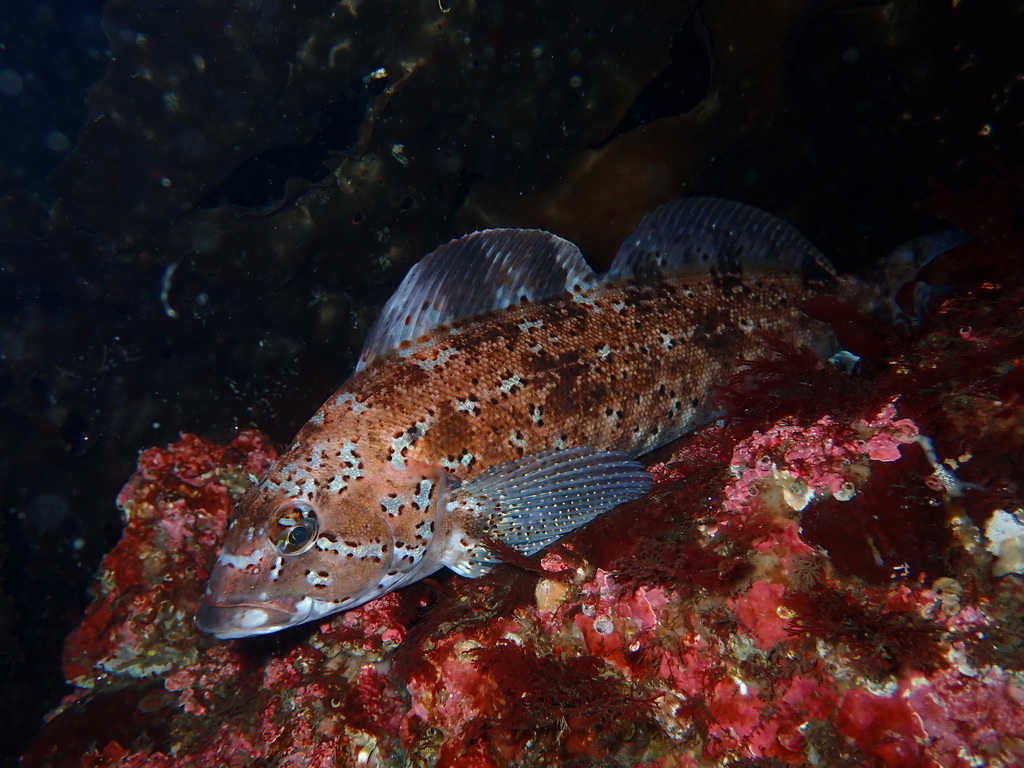
Kelp greenling
- Family
- Hexagrammidae
- Depth
- ≤ 46 m
- Season
- Oct, Nov
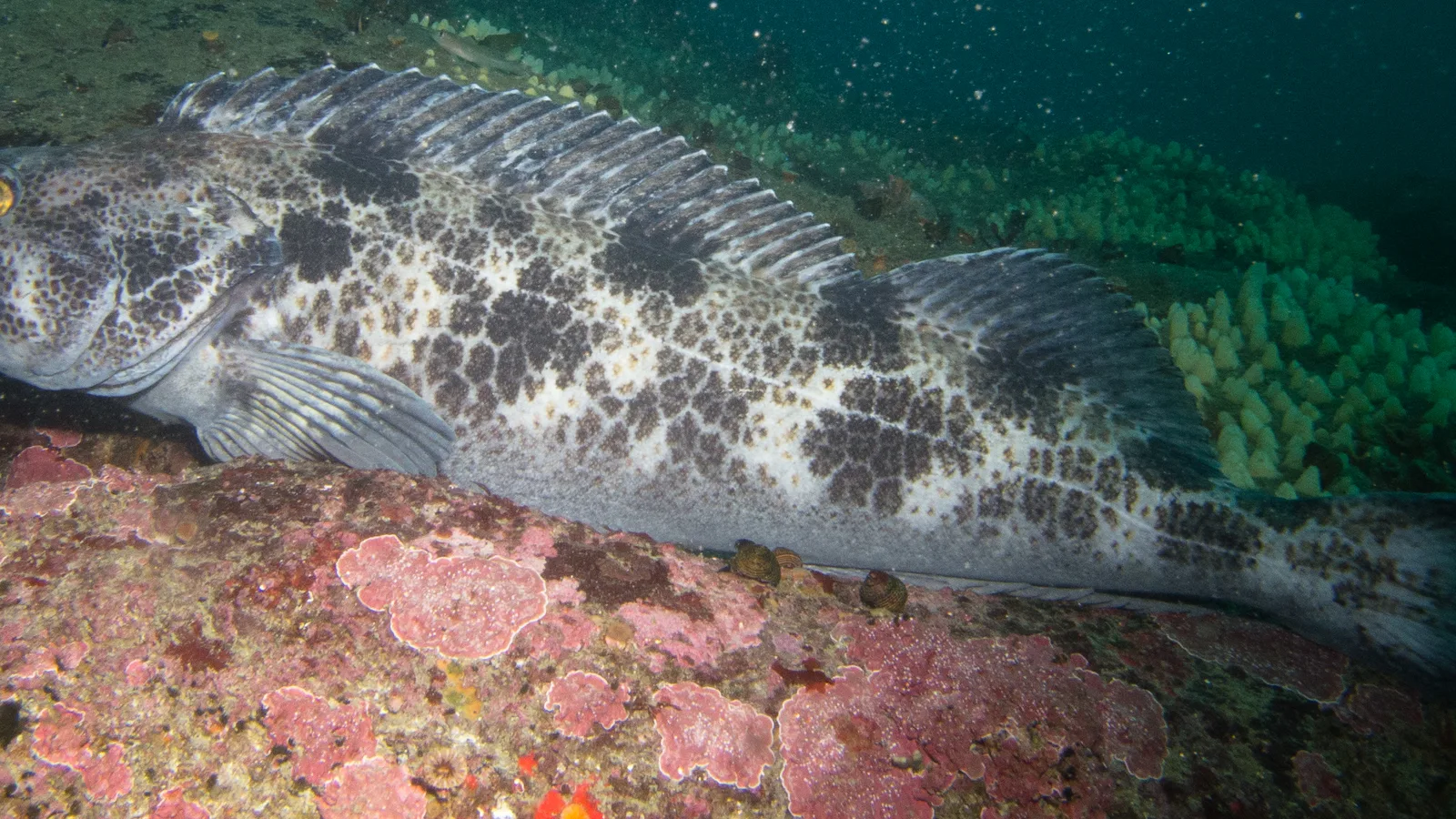
Lingcod
- Family
- Hexagrammidae
- Depth
- 0–475 m
- Season
- Jan, Feb, Mar, Dec
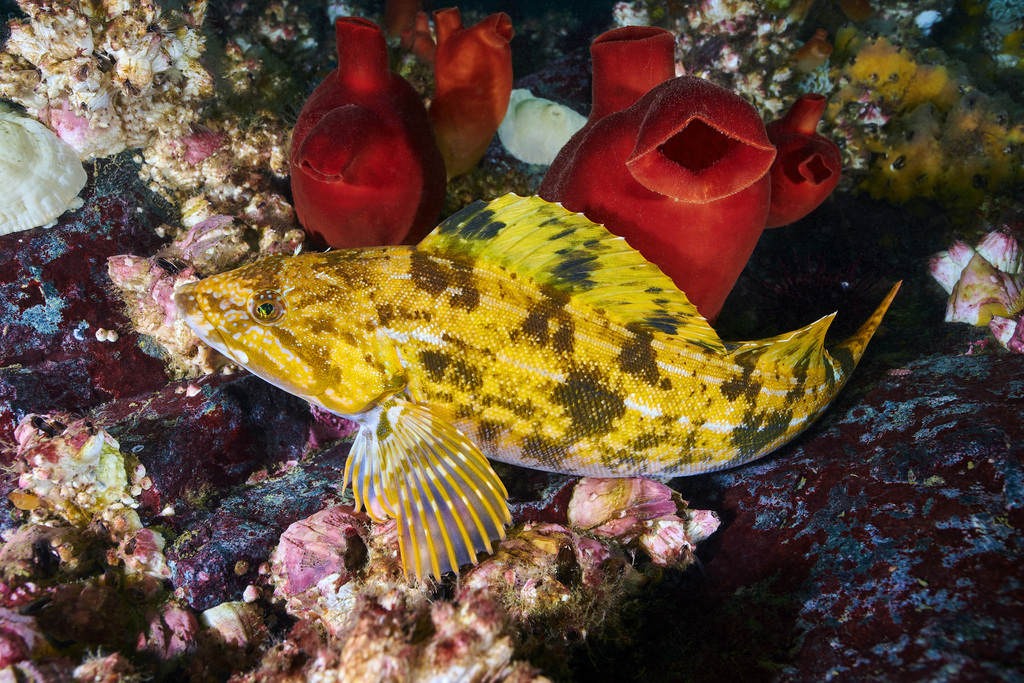
Okihime greenling
- Family
- Hexagrammidae
- Depth
- 4–155 m
- Season
- Jan, Feb, Aug, Sep, Oct, Nov, Dec
Guides for this water
Technique, gear and safety guides that fit Okhotsk atka mackerel.