
Silver grunt
Silver grunt is a haemulid with 12 dorsal spines and 13 to 14 soft rays, and three anal spines with seven soft rays. It is recorded from the United Arab Emirates and Oman, from 15 to 115 m in tropical water. It reaches 70 cm TL with a common length of 25 cm and a maximum age of 19 years. Boat bottom fishing and surf fishing are the methods listed.
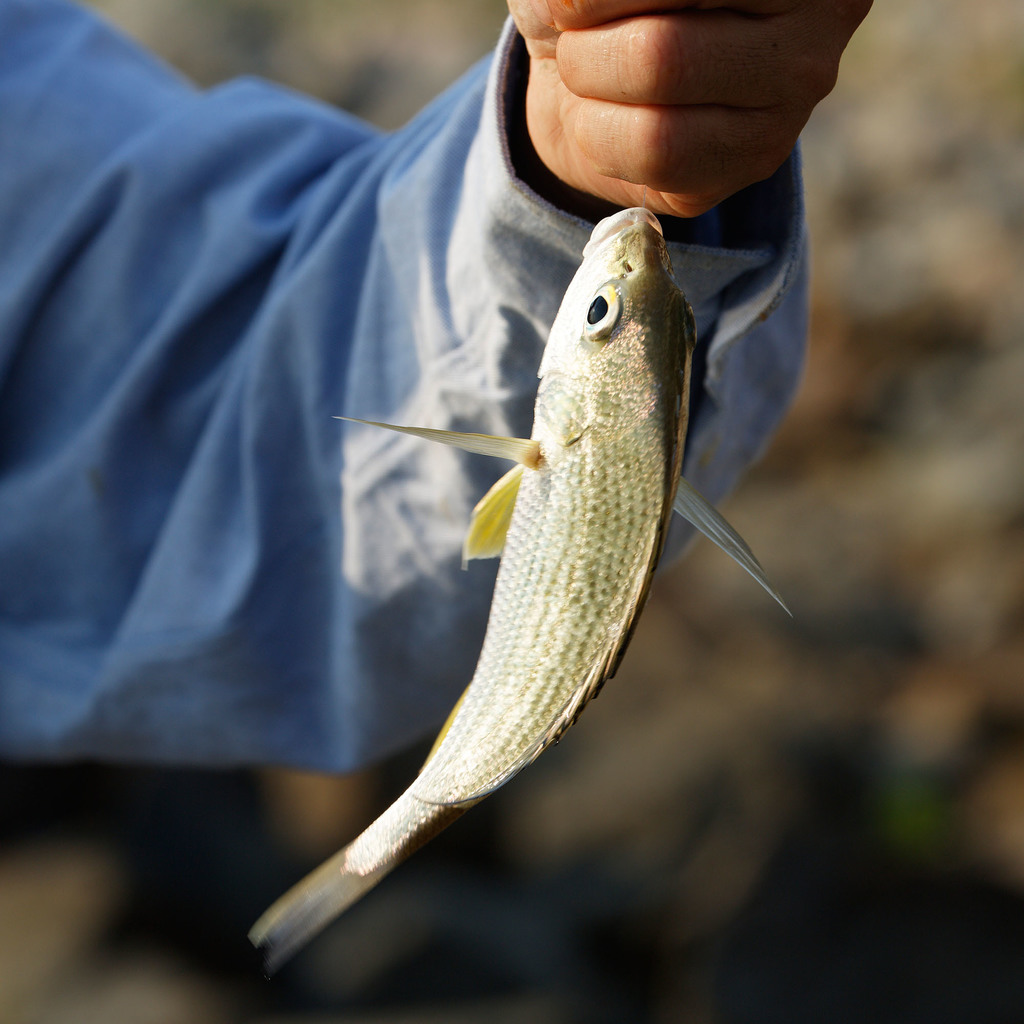
Pomadasys argenteus is a haemulid grunt with 12 dorsal spines and 13 to 14 soft rays, and three anal spines with seven soft rays. FishBase gives a maximum of 70 cm total length, a common length of 25 cm and a maximum age of 19 years. It ranges from the Red Sea and East Africa east to the Philippines, with records from Oman and Kuwait, living on sand and mud from 15 to 115 m and entering estuaries and fresh water. It feeds on benthic invertebrates and small fishes.
Identification
A grunt with 12 dorsal spines and 13 to 14 soft rays, and three anal spines with seven soft rays. The body is moderately deep and silvery, with small dark spots scattered over the upper half.
The head is blunt, the mouth small and the lips not as thick as in the sweetlips. The dorsal fin has a notch between the spiny and soft sections, which is visible when the fin is raised.
FishBase gives 70 cm total length, a common length of 25 cm and a maximum age of 19 years. Large fish are old; a 70 cm specimen will not be replaced quickly.
Distribution and Habitat
Red Sea and East Africa east through the Indian Ocean to the Philippines, with records from Oman and Kuwait. It is a coastal species, not a reef specialist.
It lives on sand and mud from 15 to 115 m and tolerates low salinity, entering estuaries and even fresh water. That is why it appears in inshore and estuarine catches where reef grunts do not.
The practical ground is sand, muddy sand and estuary mouths, especially where current carries food along the bottom.
Habits and Diet
Feeds on benthic invertebrates and small fishes. It is a bottom feeder that picks up what the current exposes rather than hunting over open ground.
It is often found in loose groups and can be locally abundant in estuaries and shallow coastal water, particularly after rain when the water is coloured.
FishBase does not give monthly spawning data for this species. Maturity is reached well below the common length, so most caught fish are adults.
Fishing Methods and Gear
Estuary and inshore bottom bait is the most consistent approach: shrimp, squid or a strip of fish on a 2/0 to 4/0 hook, fished on the bottom as the tide moves.
From a boat, a slow drift over sand in 15 to 60 m with a fresh bait works well; from the shore, a long cast over the first sand bank and a slow retrieve covers the same ground.
A 7 to 9 ft rod, a 3000 to 5000 reel, 20 to 30 lb braid and a 30 lb leader are enough. The mouth is small, so avoid oversize hooks.
Seasonal Window
Present year-round. It is most consistent in the warmer months, when fish move into estuaries and shallow coastal water, and after rain when the water is coloured.
Tide matters more than clock time in estuaries: the middle of the flood brings fish inshore, and the ebb takes them back out.
Early morning and evening are the best light on open sand; night fishing works in estuaries and around lights.
Edibility and Handling
A good food fish with white flesh, well suited to frying, steaming or soup. It is marketed fresh and is a common inshore catch.
Bleed and ice promptly. Estuarine fish can carry a muddy taste, so gilling and gutting soon after capture improves the flesh.
Ciguatera risk is lower for inshore sand and estuary fish than for reef predators, but large individuals from reef-adjacent ground still deserve caution.
Regulations and Conservation
United Arab Emirates: no species-specific minimum size or bag limit for this grunt was located in MD 580/2015 or on the Abu Dhabi prohibited list. A recreational licence is required, and Abu Dhabi charges AED 120 per year or AED 30 per week for applicants aged 18 and over.
Oman: a recreational licence costs OMR 2 per day or OMR 30 per year. Ministerial Decision 67/2020 sets minimum sizes for five species, none of them this grunt, so no species-specific size is published.
IUCN: Least Concern, assessed in 2011. The assessment is old, and the species is heavily fished across its range, so the listing should be read as a historical benchmark rather than a current assurance.
How to catch it
Boat bottom fishing
Boat bottom fishing
15–60
Surf fishing
Where these facts come from
Check these pages before you rely on a size, range or protection status.
- GBIF — Pomadasys argenteus occurrence records — GBIF · T2
- IUCN Red List — Pomadasys argenteus — IUCN · T1
- Photo record — iNaturalist — iNaturalist · T3
Fish in the same water
These fish live in the same place.
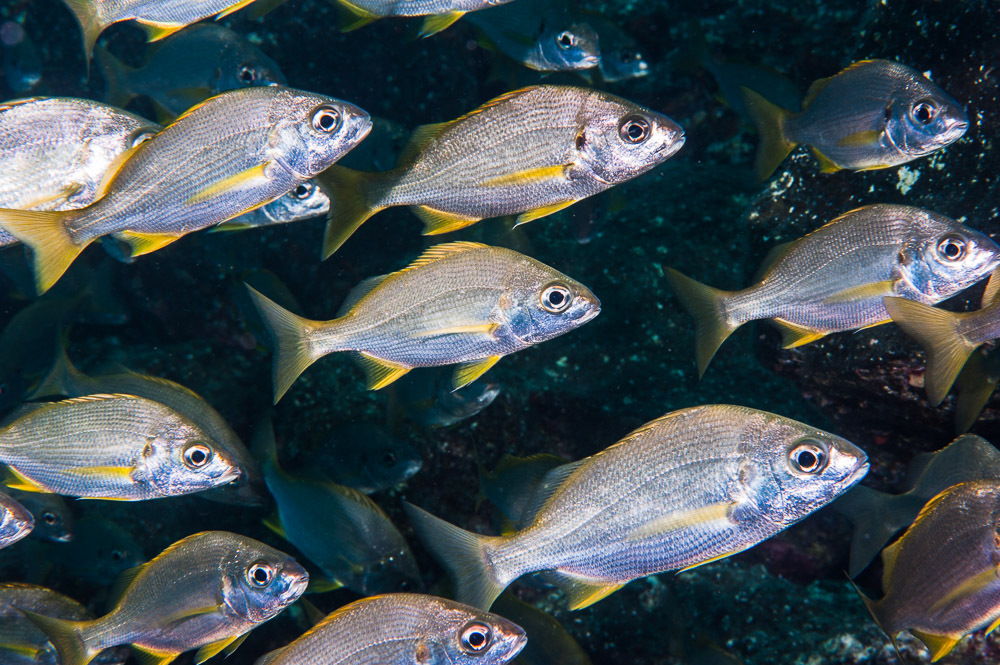
Bastard grunt
- Family
- Haemulidae
- Depth
- 10–100 m
- Season
- Jun, Jul, Aug
Cabinza grunt
- Family
- Haemulidae
- Depth
- 0–50 m
- Season
- Jan, Oct, Nov, Dec
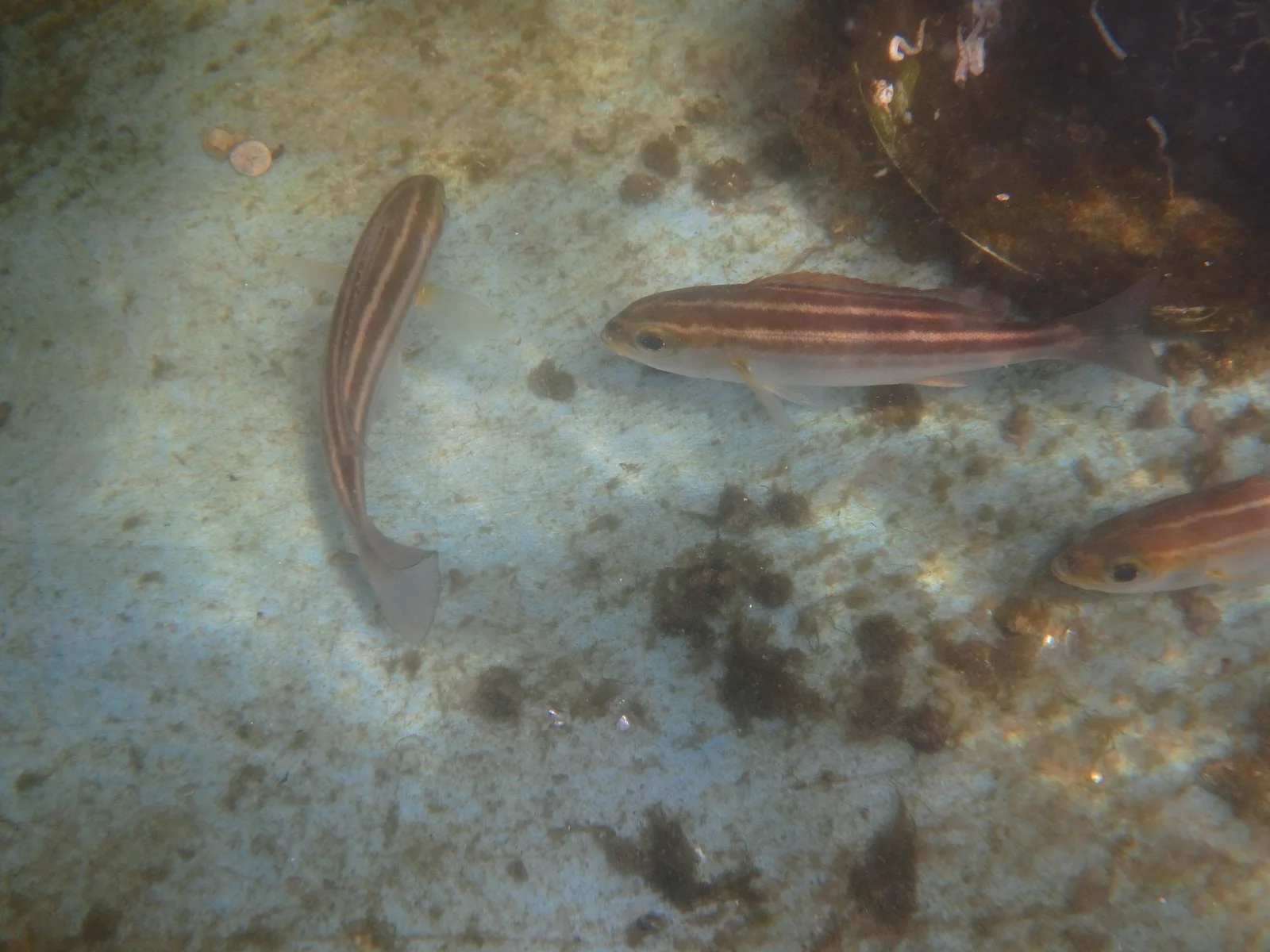
Chicken grunt
- Family
- Haemulidae
- Season
- Jun, Jul, Aug
Guides for this water
Technique, gear and safety guides that fit Silver grunt.