
Spotted grunter
Pomadasys commersonnii is the spotted grunter, a haemulid recorded to 80 cm TL with maturity from 38 cm. Its range runs from the Western and Eastern Cape through East Africa and the Persian Gulf to Madagascar and the north-west coast of India. South Africa allows 5 fish per person per day at 40 cm TL.
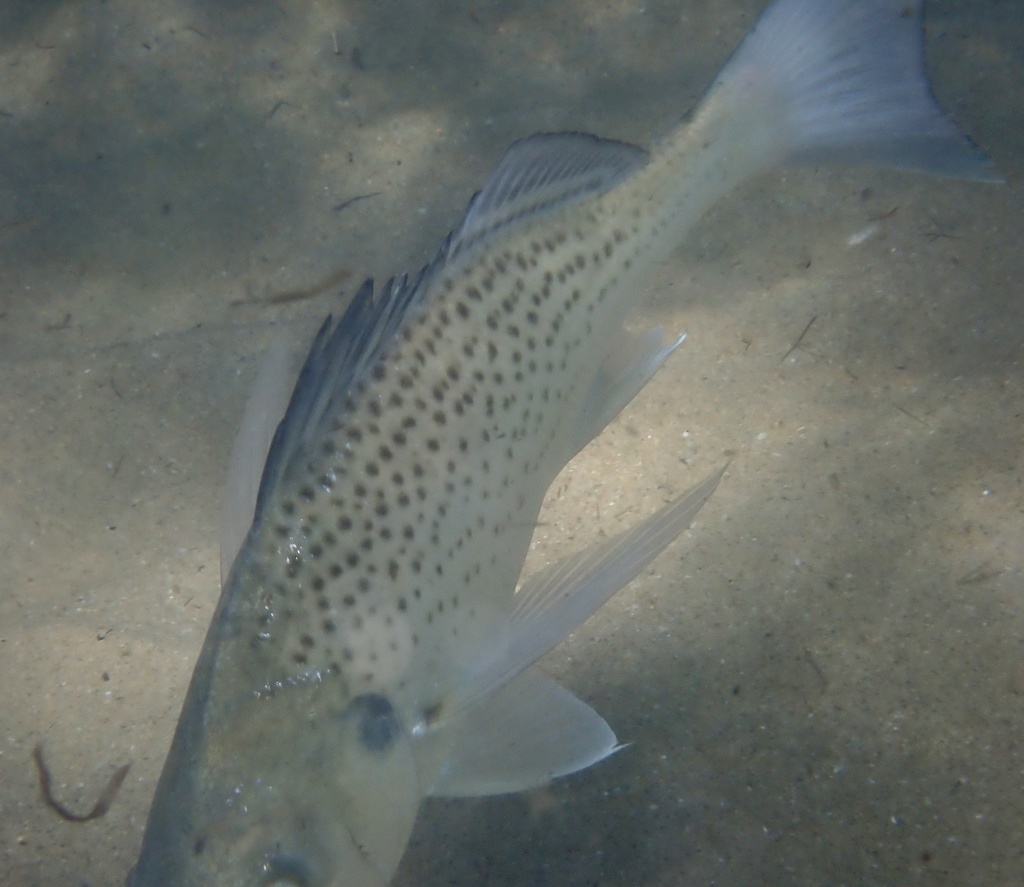
Pomadasys commersonnii is the spotted grunter, a haemulid recorded to 80 cm TL with maturity from 38 cm. Its range runs from the Western and Eastern Cape through East Africa and the Persian Gulf to Madagascar and the north-west coast of India. South Africa allows 5 fish per person per day at 40 cm TL. This page covers identification, the 0–49 m habitat, the mud-jetting feeding method, the single recorded Natal spawning window, shore technique, kitchen use and the rules in the two countries where the fish is taken.
Identification
FishBase gives 10–11 dorsal spines, 14–15 dorsal soft rays, 3 anal spines and 9–10 anal soft rays, and calls the body fusiform. The same entry adds a note that juveniles carry no spots. That note matters more than the meristics on a wet fish: a young grunter without spots belongs to this species, and the common name describes the adult only.
The source's title field reads “Smallspotted grunter”, while the South African vernacular it records is “Spotted grunter”. The common-name page adds “Gespikkelde-knorder” in Afrikaans and, for Mozambique, “Roncador”, “Hlanguane” and “Khokho”. Grunter is a family word here and is applied to other Pomadasys, so the label alone fixes nothing; the spotted flanks of an adult and the plain flanks of a juvenile fix nothing either, without the spine counts.
The page records no maximum weight, no common length and no age. Those three blanks stay blank.
Range and habitat
The distribution text runs from the Western and Eastern Cape in South Africa through East Africa, the Persian Gulf, Socotra, the Seychelles and Madagascar to the north-west coast of India. The coordinates given are 31°N–37°S and 18°E–77°E. GBIF returns 732 present records: 603 from South Africa, 40 from Pakistan, 25 from Mozambique, 12 from Namibia, 9 from Madagascar, 5 from Oman, 3 from Mayotte and 2 from Yemen, with single records from Colombia, India, Kenya, the Philippines and Tanzania. South Africa holds about 82 per cent of the set, and the western Indian Ocean outside South Africa is thinly covered. iNaturalist carries 140 observations.
The habitat line reads marine, brackish, reef-associated, oceanodromous, 0–49 m. The biology text puts the fish in coastal waters, estuaries and tidal fissures. The working band is therefore shallow; below 50 m the page has nothing. One internal disagreement is worth flagging: the environment field marks freshwater as absent, while the biology text says the fish can tolerate freshwater. Tolerating it and living in it are different claims, and the page does not settle which one applies.
Habits and diet
The feeding method is the distinctive record. The fish jets a stream of water into the mud to expose crustaceans, worms and small bivalves, and it also takes fish. That is a bottom technique aimed at buried prey, which places the fish over soft sediment even though the environment line calls it reef-associated. Both records can hold at once: reef and estuary edges with mud between them.
Nothing on the page describes a daily feeding rhythm, a tidal preference or a prey size. The oceanodromous note records that the species moves, without a route, distance or season. Freshwater tolerance is recorded, use of freshwater is not, and the page does not say whether the species breeds in estuaries or only feeds there.
Season and time of day
FishBase's spawning table carries one entry: Natal, South Africa, August to December. That is one area and one window, with no second entry for Mozambique, Madagascar or India. August to December is late winter into early summer in the southern hemisphere, and the record sits in the province that holds most of the occurrence data.
The page records no time-of-day pattern. An inference, and only an inference: a fish that jettisons water into mud in estuaries and tidal fissures is working ground that is most accessible on moving water, so the hours around a tide change are worth planning around. The source supports the habitat, not the timing. No closed season for this species appears in the sources checked.
Tackle and techniques
The source describes no rig, bait or hook size. What it gives is a 0–49 m depth band, estuarine and tidal-fissure habitat, a diet of buried crustaceans, worms and bivalves plus fish, a 38 cm maturity point, an 80 cm maximum and gamefish status.
Read together, those point to a bottom presentation on soft ground beside structure. The fish is grubbing in mud, so a bait held mid-water is fishing the wrong layer. Estuary current sets the lead weight, and the 0–49 m band puts most of the water within reach of a shore rod or a small boat.
Size sets the gear. A 40 cm fish is the South African legal minimum and sits just above the 38 cm maturity point; 80 cm is the recorded maximum and is not the size to build a rod around. The page gives no weight for an 80 cm fish, so no kilogram figure can be matched to a rod rating.
Bait choice is inference. The recorded prey are crustaceans, worms, bivalves and fish; that list points to bottom baits rather than lures worked in the column, and the page cannot narrow it further.
Kitchen and handling
The page's only culinary statement is “Tasty food fish”. The species is recorded as commercial and as a gamefish. There is no flesh description, no fat figure, no weight-to-yield conversion and no price.
Handling advice therefore stops where the source stops: the fish is eaten, it is sold, and it is taken both commercially and on rod. The page does not record how long it keeps, whether it reaches market fresh or iced, or how it is prepared in Mozambique or KwaZulu-Natal. One consequence of the missing weight data: a 40 cm fish cannot be costed from this page.
Regulations and conservation
IUCN lists the species as Least Concern, assessed on 28 June 2018, with no population trend and no stock estimate on the page. That is a global label from one date, not a statement about any one estuary.
South Africa requires a recreational fishing permit and limits the catch to own use, with no sale. The species rule is 5 per person per day at 40 cm TL, which replaces the general daily bag of 10. The 40 cm line sits 2 cm above the recorded 38 cm maturity point. Marine protected areas, estuarine closures and provincial rules sit on top, and the brochure directs the reader to current permit conditions and MPA zoning rather than listing every closure.
Mozambique: the species is recorded in the country's waters, but no Mozambican recreational bag limit or minimum size for it appears in the sources checked. No number is given here because none was located. The 732 GBIF records and the 2018 assessment are the only population-scale material in the file.
How to catch it
Shore casting
Fished with the listed approach, matched to the recorded depth and size.
Boat bottom fishing
Fished with the listed approach, matched to the recorded depth and size.
Where these facts come from
Check these pages before you rely on a size, range or protection status.
- FishBase — Pomadasys commersonnii — FishBase · T2
- GBIF — Pomadasys commersonnii occurrence records — GBIF · T2
- IUCN Red List — Pomadasys commersonnii — IUCN · T1
- Photo record — iNaturalist — iNaturalist · T3
Fish in the same water
These fish live in the same place.
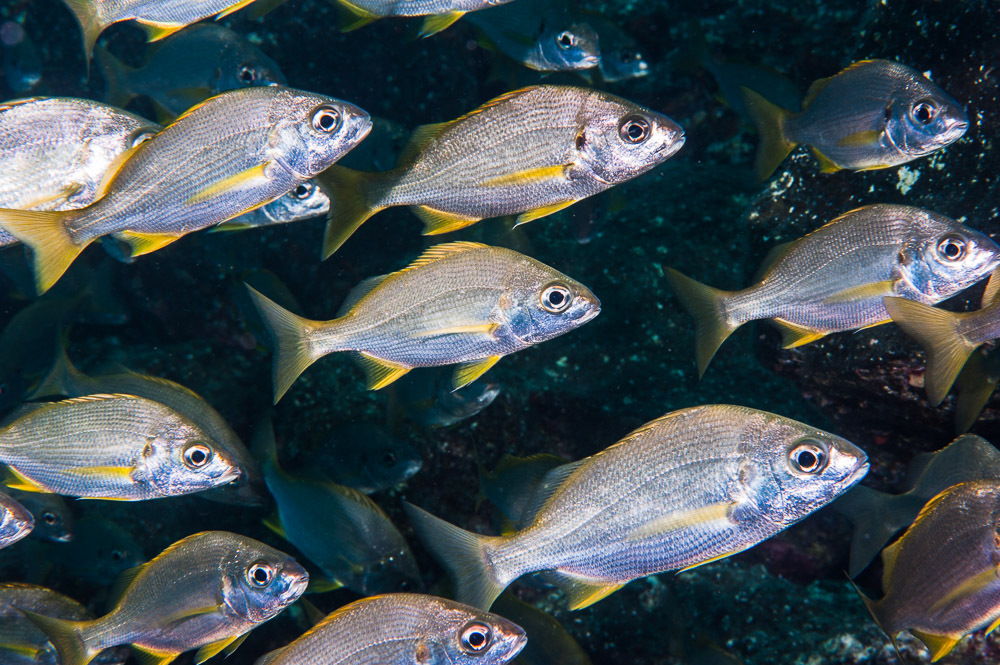
Bastard grunt
- Family
- Haemulidae
- Depth
- 10–100 m
- Season
- Jun, Jul, Aug
Cabinza grunt
- Family
- Haemulidae
- Depth
- 0–50 m
- Season
- Jan, Oct, Nov, Dec
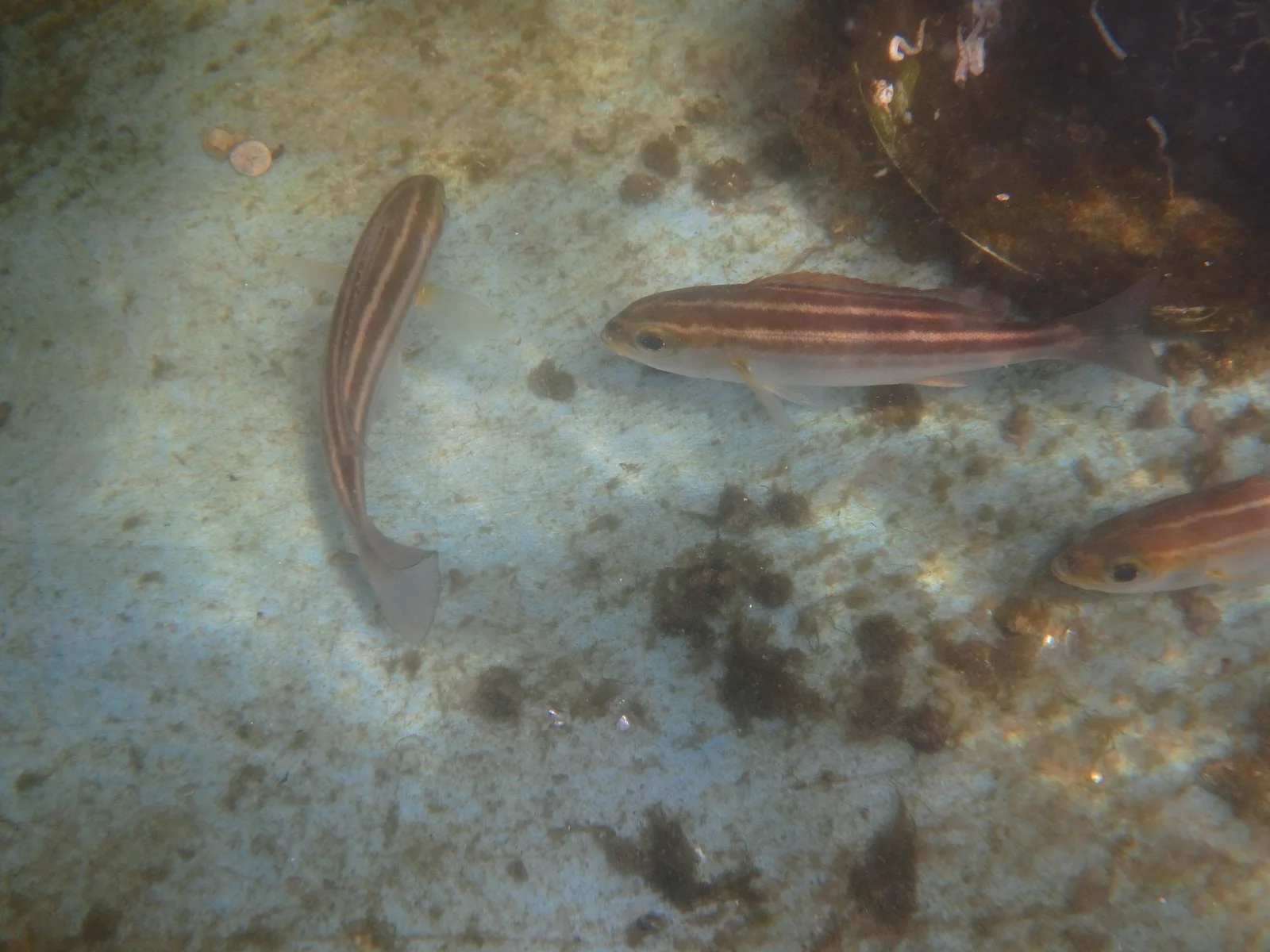
Chicken grunt
- Family
- Haemulidae
- Season
- Jun, Jul, Aug
Guides for this water
Technique, gear and safety guides that fit Spotted grunter.