
Saddle grunt
Saddle grunt is a tropical haemulid of the Indo-West Pacific, spread across the Indian Ocean and the western Pacific from China south to Australia. It works 20 to 110 m and feeds on crustaceans and small fish. Adults reach 59.3 cm TL and 3.2 kg.
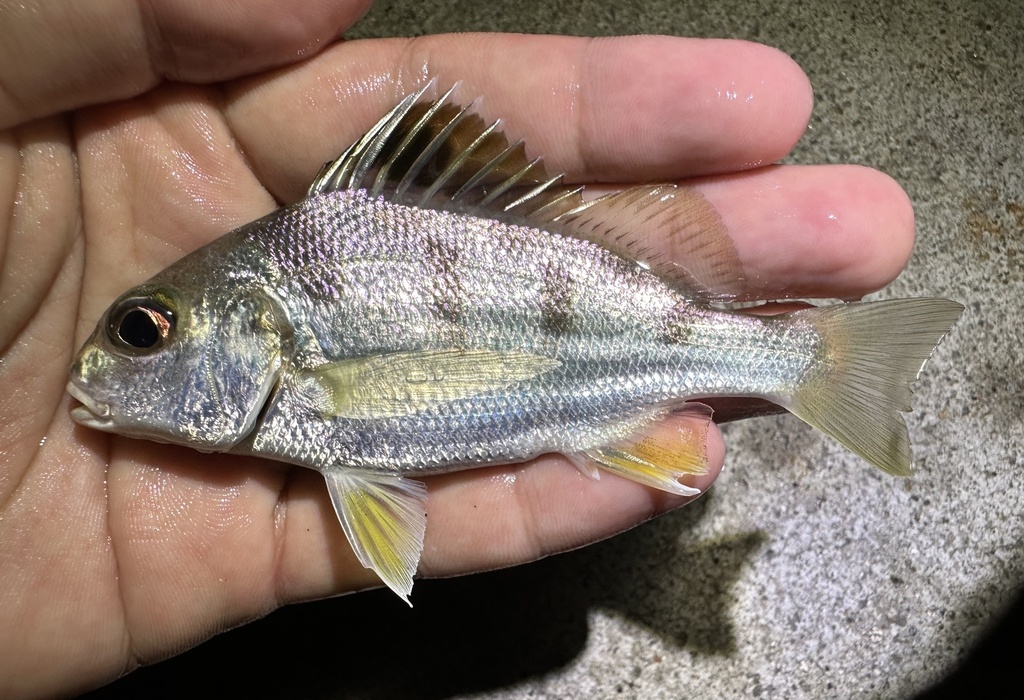
Saddle grunt (Pomadasys maculatus) is a fish of the family Haemulidae. FishBase gives its range as: Indo-West Pacific: throughout the Indian Ocean and the western Pacific, north to China, south to Australia. The body is fusiform to oval, with 13–14 dorsal soft rays and III + 7 anal rays; the record gives a 59.3 cm TL maximum, a 30 cm TL common length and 3.2 kg maximum weight. It is recorded from 20 to 110 m, in tropical water. The recorded maxima are 59.3 cm TL, 3.2 kg. Diet includes crustaceans and fishes. IUCN status: Least Concern (LC). Chinese name: .
Identification
The naming is the identification problem. FishBase lists the species as "Blotched grunt"; its English alias list includes "Saddle grunt", "Blotched javelin", "Banded grunt" and "Spotted silver grunter", and its Chinese list splits between , and . Wikipedia's summary uses "saddle grunt, blotched grunt or blotched javelin". iNaturalist's preferred common name is "Blotched Javelin". The body is fusiform to oval, with 13–14 dorsal soft rays and III + 7 anal rays; the record gives a 59.3 cm TL maximum, a 30 cm TL common length and 3.2 kg maximum weight. iNaturalist holds 73 observations under taxon 110031. The Wikipedia page's own lead image file is named Pomacanthus maculatus, an angelfish genus, not Pomadasys. That is a filename, not proof of what the photo shows, but it is exactly the kind of label drift a reader will meet when searching images.
Habitat and distribution
FishBase places the species in the Indo-West Pacific, throughout the Indian Ocean and the western Pacific, north to China and south to Australia; the country table lists 39 territories from the Andaman and Nicobar Islands to Yemen. Wikipedia gives the Bay of Bengal, Indian and western Pacific Oceans, from China to Australia. FishBase labels it marine and brackish, reef-associated and amphidromous, 20–110 m, with habitat keywords sand and coastal. The 20–110 m band and the "reef-associated" label do not sit comfortably with the sand/coastal keywords; the source does not explain the combination. The three names describe the same fish, but "javelin" suggests a different body outline from "grunt", and the batch list's is not the phrase used on FishBase's Chinese list. A name is not a collection record.
Season and fishing approach
No spawning month is recorded, so the season cannot be built from a spawning calendar. The working facts are the 20–110 m band, the sand/coastal keywords and the 59.3 cm maximum with a 30 cm common length. The name problem has a practical consequence: if a local rule, market list or identification guide uses "saddle grunt" or "blotched javelin", confirm the scientific name before applying a size limit or a closed season. Fishing should start on sand near coastal structure within the upper part of the band, with a bottom bait; the record gives no diet list beyond crustaceans and fishes, so the bait is a local experiment. Because the species is amphidromous, an estuary mouth is worth trying as well as the open coast, but the source gives no salinity or depth split between the two.
Edibility and regulations
Only commercial landings are recorded on the uses line, with no gamefish, aquaculture or aquarium entry. The Red List entry, dated 4 February 2009, is Least Concern. What the entry does not carry is a harvest rule: the 39-entry country table gives no legal floor, harvest cap or seasonal closure, and the name drift makes the binomial the only reliable key when a local rule is checked. Which common name is correct is not something this article can settle; the scientific name is the field all three libraries share.
Where these facts come from
Check these pages before you rely on a size, range or protection status.
- FishBase — Pomadasys maculatus — FishBase · T2
- GBIF — Pomadasys maculatus occurrence records — GBIF · T2
- IUCN Red List — Pomadasys maculatus — IUCN · T1
- Photo record — iNaturalist — iNaturalist · T3
Fish in the same water
These fish live in the same place.
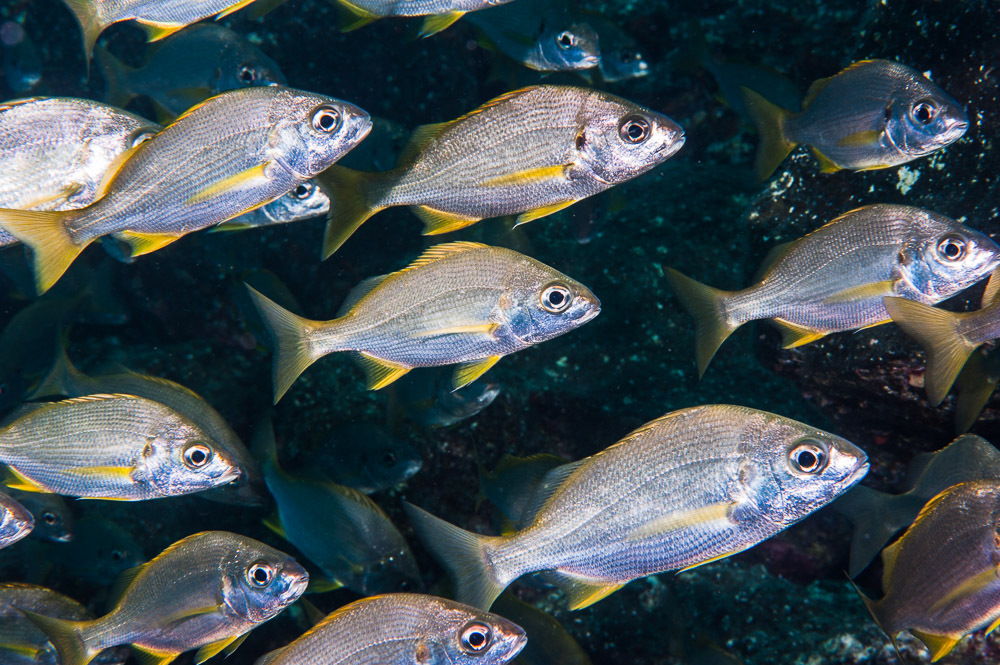
Bastard grunt
- Family
- Haemulidae
- Depth
- 10–100 m
- Season
- Jun, Jul, Aug
Cabinza grunt
- Family
- Haemulidae
- Depth
- 0–50 m
- Season
- Jan, Oct, Nov, Dec
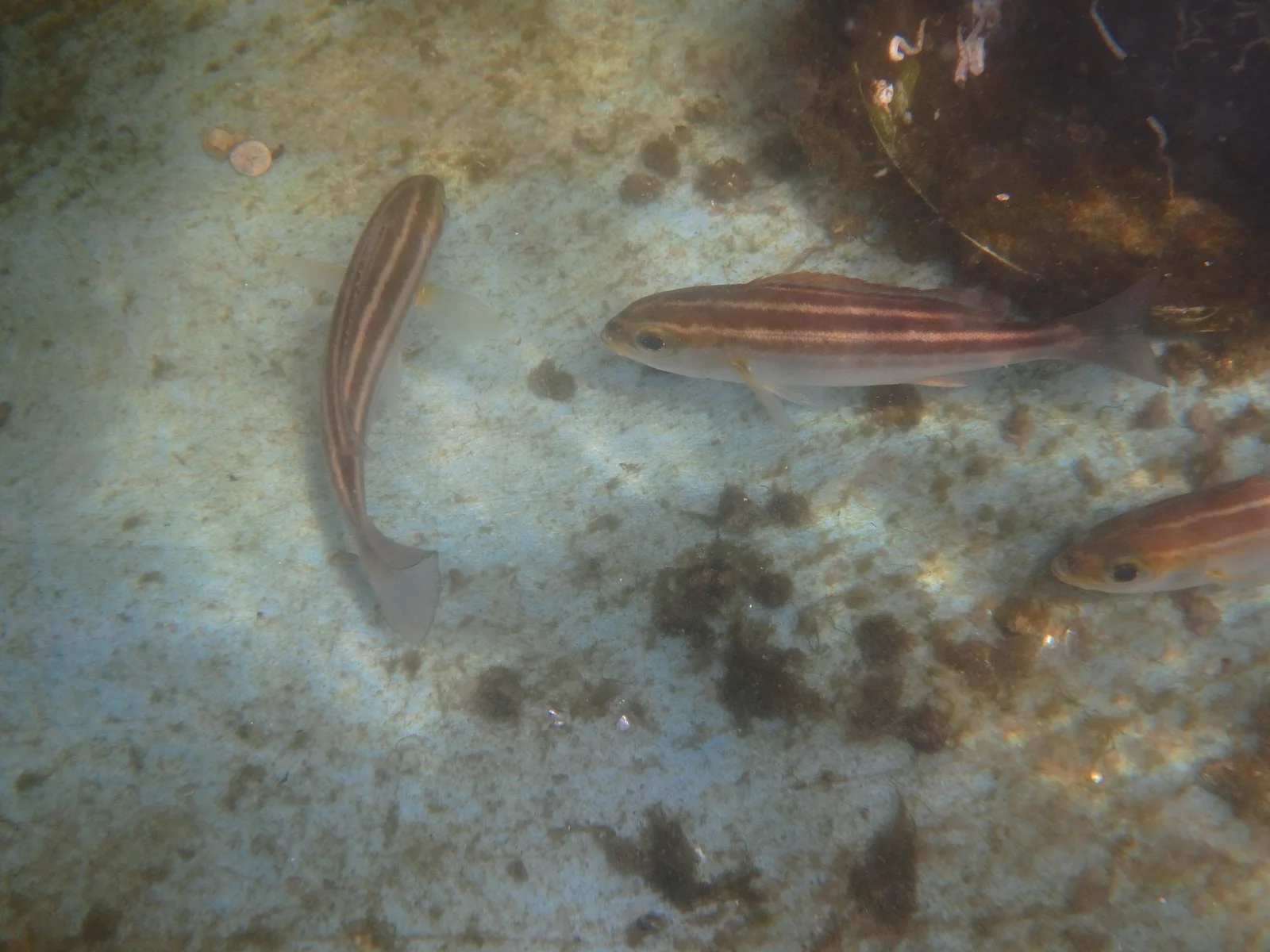
Chicken grunt
- Family
- Haemulidae
- Season
- Jun, Jul, Aug
Guides for this water
Technique, gear and safety guides that fit Saddle grunt.