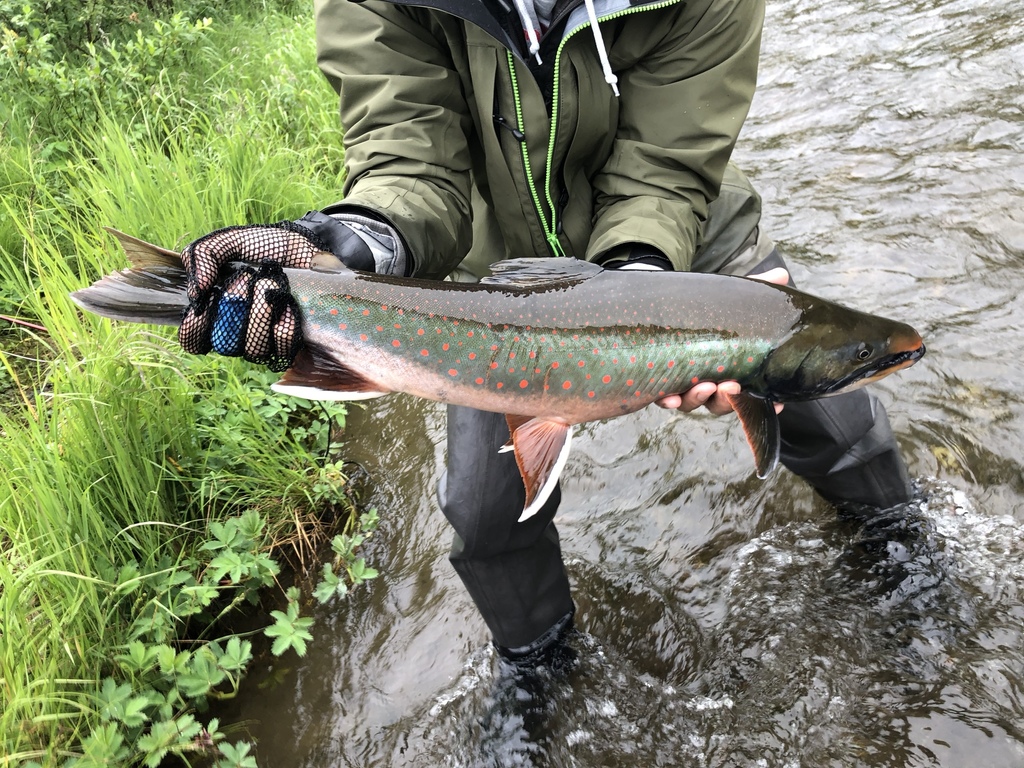
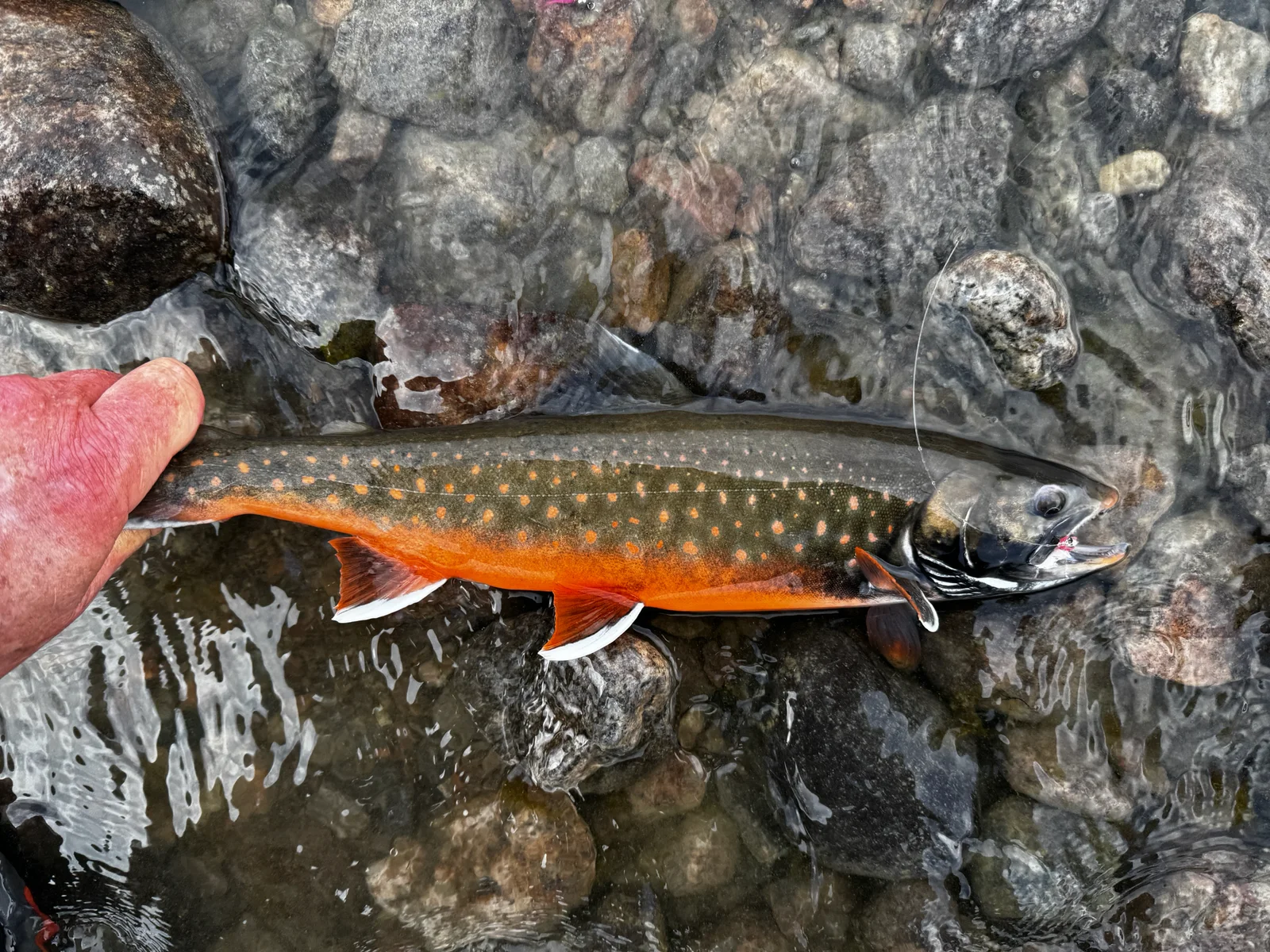
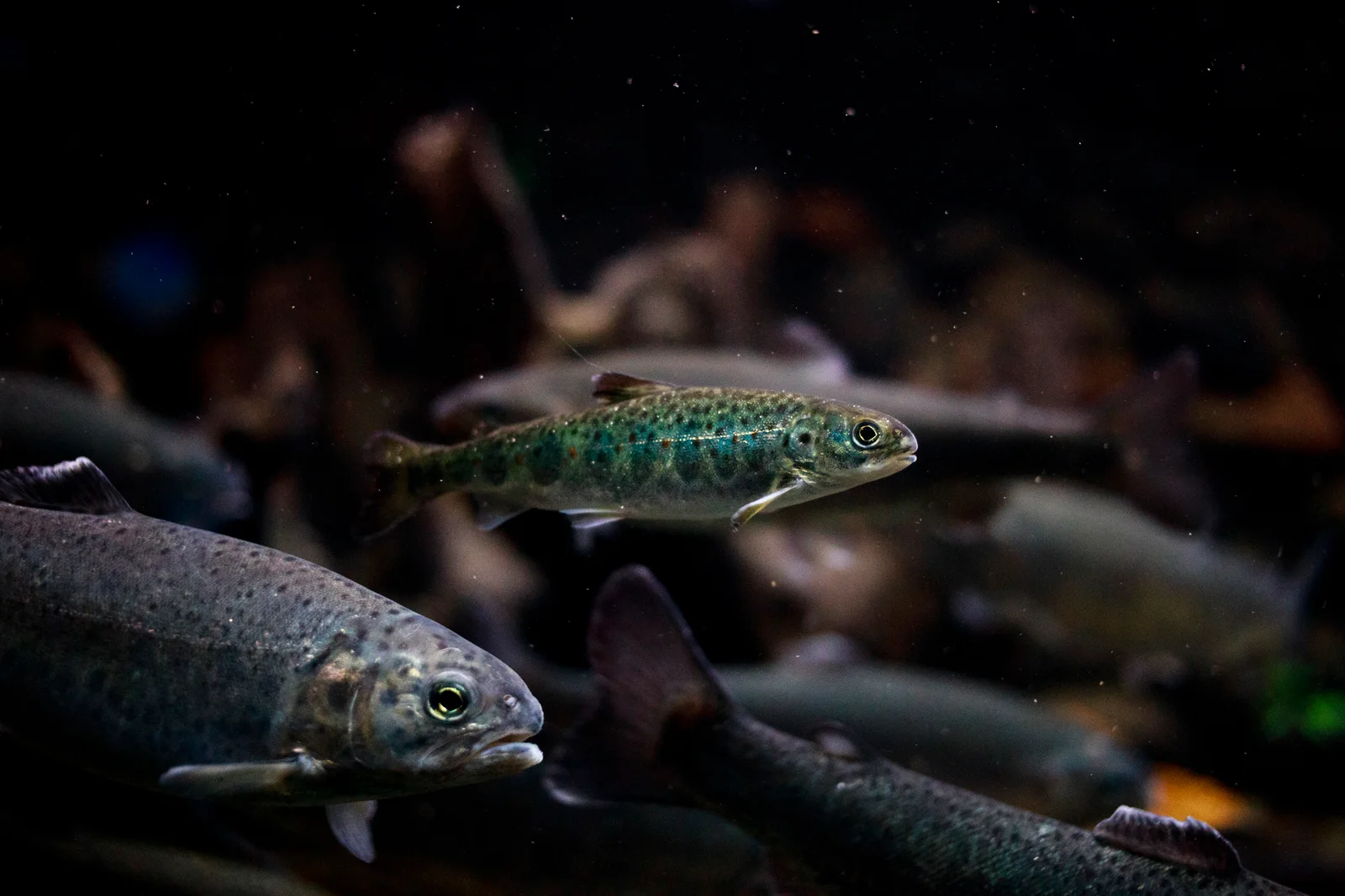
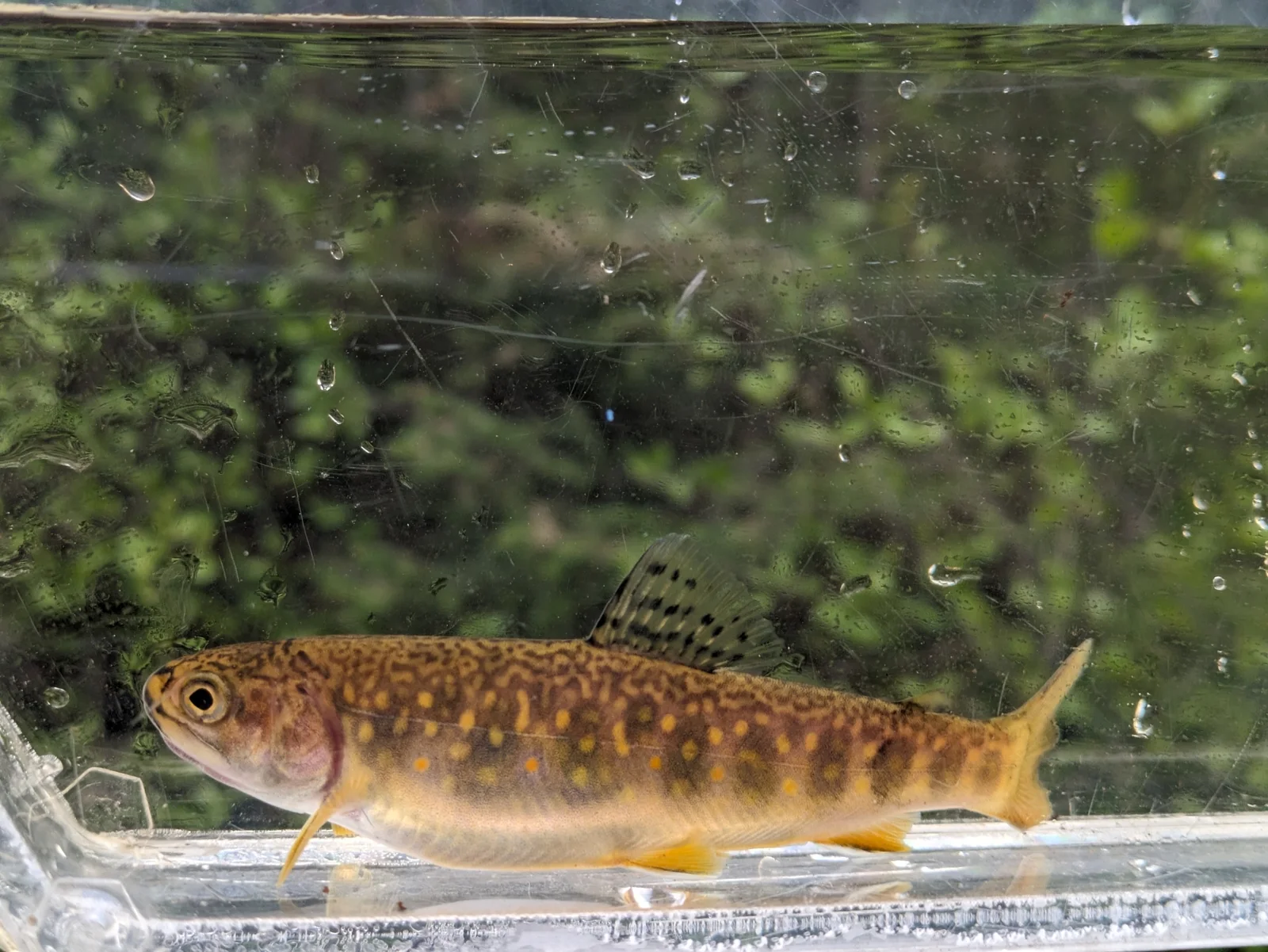
The dorsal fin has 10–16 soft rays, the anal fin 10–15 soft rays, and the vertebral count is 14–22. A free-tipped fleshy appendage above the pelvic-fin insertion and a slightly emarginate caudal fin are useful against other local salmonids. Sea-run adults are dark blue on the back and upper head with silvery to white flanks; freshwater fish are olive green to brown above and paler at the side. Yellow, orange or red spots mark the back and flanks, with the spots along the lateral line smaller and denser. Spawning males turn red on the belly and snout tip, black on the lower jaw, operculum and parts of the head, olive-brown on the back, with brighter spots and red-black pectoral and anal fins edged in white.
Habitat and behaviour
The North American range runs through Arctic and Pacific drainages from the lower Mackenzie River in the Northwest Territories, through British Columbia, to Puget Sound and the Quinault River in Washington. In the northwest Pacific it occurs from Korea to the Bering Sea. The species has both resident and sea-run life histories; sea-run fish feed in estuaries and along the coast and ascend tributaries to spawn in autumn. GBIF holds 4310 records, 1571 from the United States, 1554 from Canada, 828 from Russia and 74 from Japan. The concentration in western North America and the Russian Far East marks a cold-water river fish.
Seasonal window
FishBase spawning records fall in August to November, with the Canadian records coming from tributaries of Thutade Lake in north-central British Columbia. The saltwater window runs from late summer into early autumn, when fish enter estuaries and the shoreline on the rising tide; the freshwater window opens with the spawning run. Alaska is open year round at 10 per day; British Columbia allows two trout in total with a 30 cm minimum, and the hatchery and wild rules differ between Area 1 and Area 23. Washington provisions were not obtained.
Gear and approach
For saltwater, use a medium-light spinning rod, fine braid, a fluorocarbon leader and lures heavy enough to reach the current seam; a small jig suits a slightly stiffer tip for controlling the drop. For freshwater, use a light-to-medium fly rod with a floating or intermediate line and streamers matched to the depth, or a light spinning rod for spoons worked slowly. The mouth is soft, so do not lock the drag; let the rod absorb the surge and avoid tearing the hook hold. A short, stiff butt section helps when casting a small jig into wind, and felt soles are safer on wet gravel. Carry a soft-release tool for fish that are not kept.
Edibility and regulations
Flesh is orange-red and fine, good fried, grilled or smoked; bleed and ice the fish promptly. IUCN status is LC, assessed in 2020, and CITES has not evaluated the species.
Alaska: 10 per day, 10 in possession, no size limit.
British Columbia: two trout in total with a 30 cm minimum; Area 1 allows two hatchery fish, or two wild fish under 50 cm with zero wild fish over 50 cm; Area 23 allows two hatchery fish and zero wild fish.
Washington: the current text was not obtained; check the current notice.
Where to look
Morphology, distribution and spawning months come from FishBase, occurrences from GBIF and images from iNaturalist. The two fishing approaches are split by life history and habitat and are editorial advice, without local catch data. The British Columbia hatchery and wild rules are listed by area, and the Area 1 and Area 23 figures are confirmed; Washington remains a gap.
How to catch it
Shore spinning
Fished with the listed approach, matched to the recorded depth and size.
Fly fishing
Fished with the listed approach, matched to the recorded depth and size.
Regulations before you keep it
These are the published regulations for this fish. Read the number first. The notice below it is the actual regulation.
Bag limit1
2 fish per person per day · 2 in possession · no size limit
United States — Alaska · US-AK
In the Juneau area, Dolly Varden may be kept at two fish per day and two in possession with no size limit.
Dolly Varden limits are 2 daily, 2 in possession, no size limit.
Every record above names its source and the date it was retrieved. See the regulation register for the full list, or how to read these regulations.
Where these facts come from
Check these pages before you rely on a size, range or protection status.
-
FishBase — Salvelinus malma
— FishBase · T2
-
GBIF — Salvelinus malma occurrence records
— GBIF · T2
-
IUCN Red List — Salvelinus malma
— IUCN · T1
-
Photo record — iNaturalist
— iNaturalist · T3