
Eastern Pacific bonito
Eastern Pacific bonito is a scombrid of the southeast Pacific, from northern Peru down to Talcahuano in Chile. It is a surface and mid-water fish, recorded from 0 to 100 m in subtropical seas, and it feeds on fish. Adults reach 102 cm TL and 11.3 kg. The season here is split, covering January and February and then September through December.
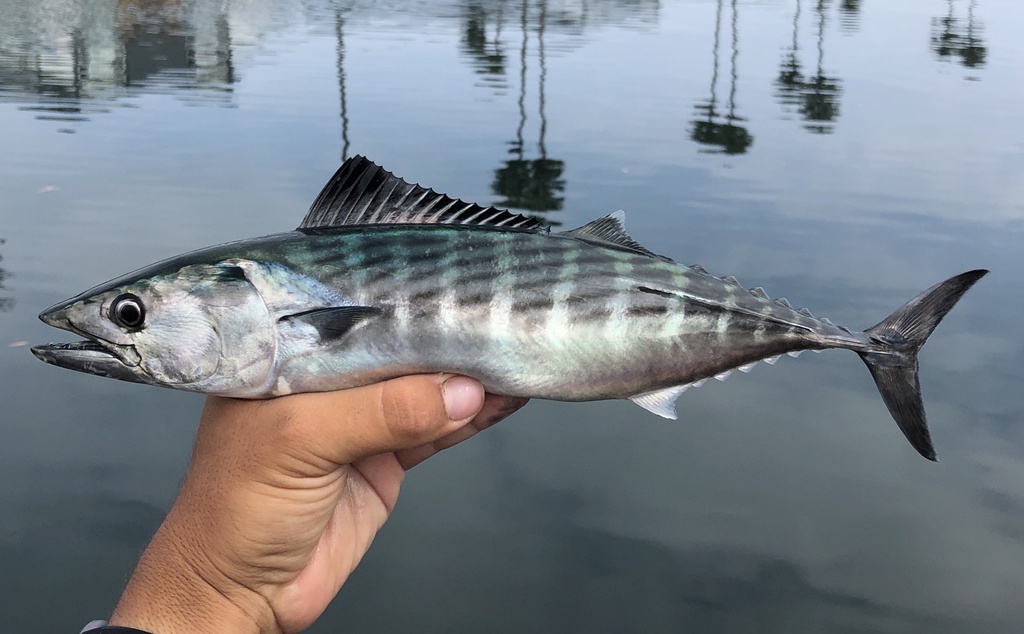
Eastern Pacific bonito (Sarda chiliensis) is a fish of the family Scombridae. FishBase gives its range as: Southeast Pacific: northern Peru to Talcahuano, Chile. The northern subspecies Sarda chiliensis lineolata occurs from off the coast of Alaska, southward to Cabo San Lucas at the tip of Baja California, and in the Revillagigedo Islands. It is recorded from 0 to 100 m, in subtropical water. The recorded maxima are 102 cm TL, 11.3 kg. Diet includes fishes. IUCN status: Least Concern (LC). Chinese name: .
The market sees a hundred thousand tonnes
Peru's production ministry publishes an annual report on this fishery, and the numbers are not small. Landings have averaged 98,000 t a year since 2015, with a record of 124,000 t in 2020. Every tonne reported went to direct human consumption. That is the fish as an industry: cans, fresh fish, a supply chain with a landing statistic attached.
The same report gives the other side. Twenty-four management measures were applied in 2024, including a reproductive closure in November, and capture limits have been exceeded repeatedly since 2018. So the market figure and the management figure describe different things about the same animal, and neither one tells you what a 60 cm bonito does off a headland.
Two ranges, one species name
FishBase puts the species in the southeast Pacific, from northern Peru to Talcahuano in Chile, and then adds a northern subspecies, Sarda chiliensis lineolata, running from Alaska to Cabo San Lucas and the Revillagigedo Islands. iNaturalist's own summary notes that treating the northern form as a subspecies makes the species geographically disjunct.
That is not a naming quibble if you are booking a trip. A bonito caught off California and a bonito caught off Chimbote may carry the same species name and different subspecies names, and the management that applies to one has nothing to do with the other. The Latin name is the only string that will retrieve both, and even then you have to read the second line.
47 cm is where the market and the spawning meet
FishBase records a maximum of 102 cm TL and 11.3 kg; the common-length and age fields are blank. Length at first maturity is 47 cm. That single number matters most, because it sits well below the size a market wants. A 40 cm bonito is a fish that has not spawned; a 47 cm bonito is the smallest one that has.
The maximum is more than twice the maturity length. Between 47 and 102 cm there is no extra rule, only a difference in how old the fish is and how much of the spawning stock it represents. If you are releasing fish, the maturity figure does the work; if you are buying, the market figure does. They are not the same line.
November is closed
The Peruvian report names a reproductive closure in November. That is a "cannot fish" rule, separate from any size or bag limit, and it exists because the spawning season is known well enough to protect a month of it. FishBase records spawning in September–December off Chile and Peru, with January–February added in Peru. The closure sits inside that window.
The seasonal peak in availability is spring and summer, when the fish concentrates in surface coastal water. A November closure and a spring–summer peak therefore overlap at the edges: the month you cannot fish is close to the months when the fish are easiest to find.
Anchoveta is the address
The Peruvian report states that the diet is mainly anchoveta. FishBase describes the species as pelagic-neritic and oceanodromous, living in the top hundred metres. Combining the two, the search pattern is not "find deep structure": it is "find the bait school in the upper water column".
That also explains why the fishery is a purse-seine fishery and why a recreational boat meets the fish as a surface school rather than as a bottom mark. The bonito is not following a reef; it is following the anchoveta, and the anchoveta is following upwelling. A day with no bird activity and no bait on the sounder is a day when the whole chain is somewhere else.
A hundred metres, and mostly the top of it
FishBase gives 0–100 m, which is a shallow envelope for a fish that reaches 102 cm. There is no usual-depth figure in the record, and no temperature band, so the page cannot tell you which part of that 100 m the fish prefers. What it does say is "pelagic-neritic", which excludes the slope and the offshore basin.
The practical reading is a surface-to-30 m search over shelf water, with the deeper half of the range treated as a fallback rather than a target. A deep drop is not wrong, but it is not where the report puts the schools. If the bait is on top, the bonito is on top.
Twelve GBIF rows, two flags and nine blanks
GBIF's distributions endpoint returns twelve rows for the species: two Canadian records, one Mexican record and nine rows with no country at all. The Canadian rows come from marine-region records in the northeast Pacific, which is where the northern subspecies lives, not where the nominal species is listed. The nine blank rows are the usual marine-region and FAO-area entries.
Read this as a lesson in what a distribution file is. It records assertions by other databases, not a survey of where the fish swims. iNaturalist holds 367 observations, a much larger photographic sample, and that number still measures observers rather than fish. Neither file supports a claim about abundance, and neither contradicts the Peruvian landing statistics.
Least Concern, and a cap that gets exceeded
The IUCN assessment is Least Concern, dated 15 November 2021. The Peruvian report, published for the 2025 season, says capture limits have been exceeded repeatedly since 2018. Both can be true: a species can be globally secure and still be fished above its local limit in one part of its range.
For the angler the useful hierarchy is local first. The global category tells you the species is not about to disappear; the Peruvian closure and the landing cap tell you what is allowed in the water where most of the commercial catch comes from. A gamefish listing on FishBase does not add a rule; it only says people chase this fish for sport as well as for cans.
Where these facts come from
Check these pages before you rely on a size, range or protection status.
- FishBase — Sarda chiliensis — FishBase · T2
- GBIF — Sarda chiliensis occurrence records — GBIF · T2
- IUCN Red List — Sarda chiliensis — IUCN · T1
- Photo record — iNaturalist — iNaturalist · T3
Fish in the same water
These fish live in the same place.

Albacore
- Family
- Scombridae
- Depth
- 0–600 m
- Season
- Jan, Feb, Mar, Apr, May, Jun, Jul, Aug, Oct, Nov, Dec
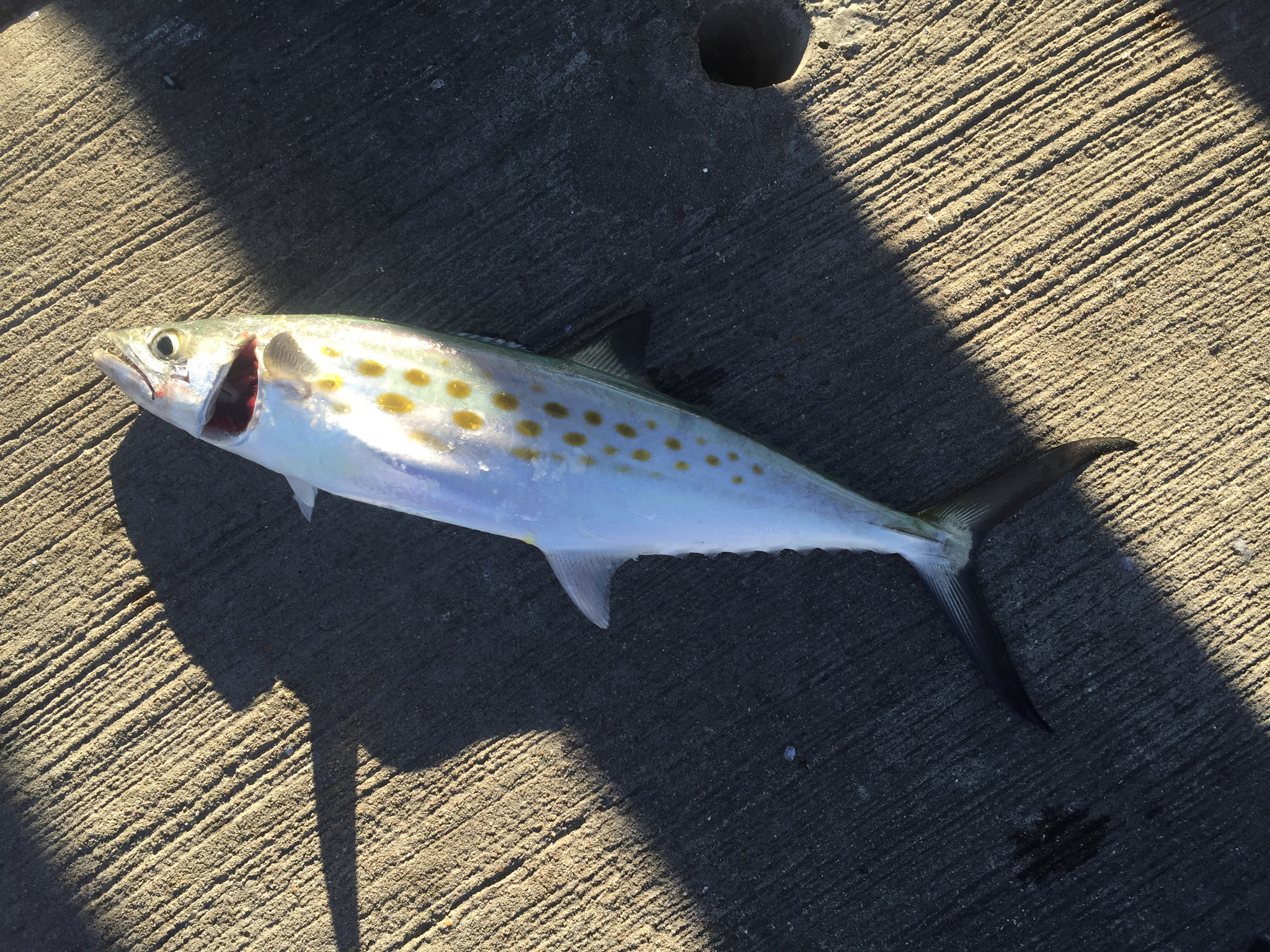
Atlantic Spanish mackerel
- Family
- Scombridae
- Depth
- 10–35 m
- Season
- Jan, Feb, Mar, Apr, May, Jun, Jul, Aug, Sep, Oct, Nov, Dec
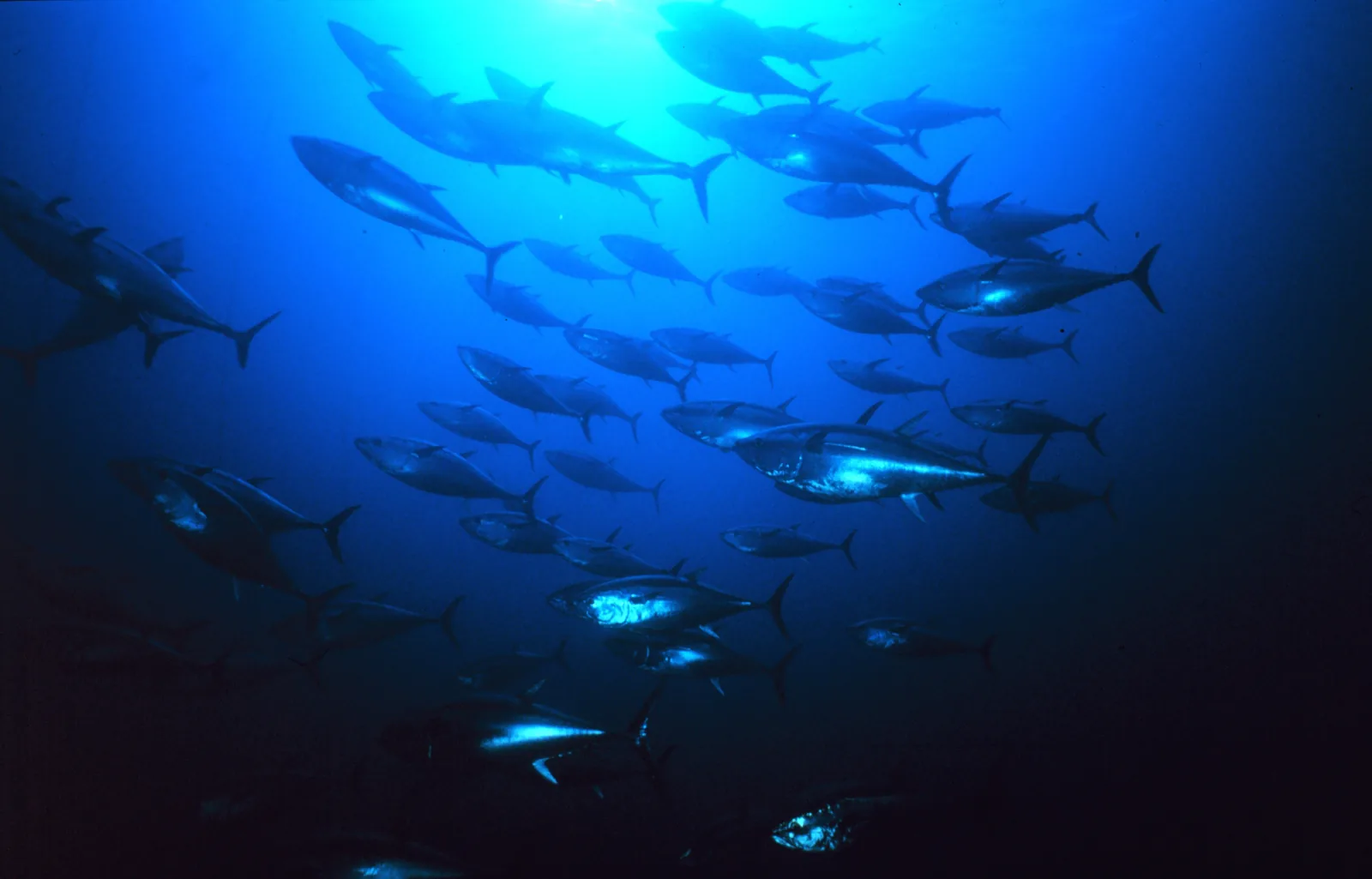
Atlantic bluefin tuna
- Family
- Scombridae
- Depth
- 0–985 m
- Season
- Jun
Guides for this water
Technique, gear and safety guides that fit Eastern Pacific bonito.