
Oriental bonito
Oriental bonito is an Indo-Pacific scombrid with a wide but gap-filled range; in the eastern Pacific it runs from Hawaii to southern Baja California, Peru in El Nino years and the Galapagos. It lives at 1 to 167 m in 14 to 23 degrees C, often schooling with small tunas, and feeds on clupeoids, other fish, squid and decapod crustaceans. It reaches 102 cm FL and 10.7 kg, and trolling, lures and jigging are the methods listed.

Oriental bonito is an Indo-Pacific coastal scombrid with a wide but gap-filled range; in the eastern Pacific it runs from Hawaii and the US Pacific coast to southern Baja California, Peru (especially in El Niño years), the Galápagos and the Gulf of Guayaquil. It lives at 1–167 m in 14–23°C subtropical water, often schooling with small tunas and feeding on clupeoids, other fishes, squid and decapod crustaceans. FishBase gives a maximum of 102 cm fork length and 10.7 kg, a common length of 55 cm and maturity at about 47.8 cm. IUCN lists it as Least Concern, assessed in 2021.
Reading the spines
The dorsal fin has 17–19 spines; there are no anal spines and 14–16 anal soft rays; there are 44–45 vertebrae. The mouth is moderately large. The olfactory rosette has 21–39 laminae. The interpelvic process is small and bifid. The body is completely covered with very small scales posterior to the corselet. The swim bladder is absent. The spleen is large and prominent in ventral view. The liver has elongate left and right lobes and a short middle lobe. The back has narrow oblique stripes. The narrow oblique stripes and the small scales behind the corselet are the practical checks; dorsal-spine count, stripes and body shape separate it from bonito and skipjack. Neither the 44–45 vertebrae nor the missing swim bladder can be seen at the rail; both belong to the key and to dissection, while the stripes do the field work. The back is dark blue and the belly silvery, with the stripes clearer after death.
A coastal school fish
FishBase's range is the Indo-Pacific, widespread but with many gaps; in the eastern Pacific it runs from Hawaii and the US Pacific coast to southern Baja California, Peru, the Galápagos and the Gulf of Guayaquil. The country table includes the Andaman and Nicobar Islands, Australia, Bahrain, China, Colombia, the Comoros, Costa Rica, Djibouti, Ecuador, Egypt, Eritrea, the Galápagos, Guatemala, Hawaii, Honduras, India, Indonesia, Japan, Jordan, Kenya, Korea, Kuwait, Madagascar, Malaysia, Mexico, Mozambique, Nicaragua, the Ogasawara Islands, Oman, Panama, Papua New Guinea, Peru, the Philippines, Qatar, Réunion, the Ryukyu Islands, El Salvador, Saudi Arabia, Seychelles, Singapore, Somalia, South Africa, Taiwan region, Tanzania, Thailand, Timor-Leste, Tonga, the UAE, Vietnam and Yemen. GBIF's 816 records are led by Ecuador (157), Japan (127), Australia (98), Taiwan region (78), Mexico (57) and South Africa (45). It is a coastal species, often schooling with small tunas and also found around islands.
The blanks are information
FishBase gives several spawning windows: May–July in the East China Sea off Japan, January–February and September–December off southern and southwestern Sri Lanka, and May–September off southwestern India; spawning varies with the monsoon. It lives at 14–23°C and is catchable all year; in Taiwan region, Japan and Southeast Asia, late spring to autumn is the main window, while monsoon winters reduce offshore trips. No finer local season table is published, so follow local temperature and sea state. It is a schooling fish, so birds, dolphins and bait balls locate it better than a fixed mark; dawn, dusk and current lines are the usual windows.
Where to start looking
The GBIF pattern is Ecuador, Japan, Australia and Taiwan region first. Find the bait school and the current break, not the reef. The source gives no coordinates; local boat knowledge of temperature fronts and bird activity is the real map.
Tackle and baits
Trolling, jigging and light lure fishing all work. Troll small fish-shaped lures, feathers or live bait at 5–8 knots; jig 40–100 g, sinking fast and retrieved fast; light lure fishing uses minnows, pencils and poppers around bait schools. The teeth are sharp, so a 30–50 lb fluorocarbon or wire leader helps. It often mixes with small tunas, so carry quick-change clips and several depths.
Eating, handling and the rules
Oriental bonito is a minor commercial and game fish, sold mainly fresh and also dried-salted, canned and frozen; the flesh is dark, good grilled, baked, braised or in soup. Bleed, gut and ice it promptly; scombrids spoil fast. Ciguatera is mainly a reef-predator issue, so bonito is lower risk, but organs should not be eaten in quantity. Rules vary: Taiwan region manages inshore fishing through closed areas, seasons and gear restrictions, and recreational fishing must follow Fisheries Agency and local government notices; Hong Kong SAR's Fisheries Protection Ordinance regulates methods, with no angling or collecting in marine parks and reserves; Japan, Korea and Southeast Asian states manage scombrids separately. Check the current local notice.
What the record leaves open
The page is built from FishBase taxonomy, morphology, distribution, environment, biology, reproduction, use and IUCN entries, with the country table for range and GBIF/iNaturalist for occurrence. Local seasons and size limits are not standardised, so the text stays conservative. and are local aliases; the formal name remains .
How to catch it
Trolling
Fished with the listed approach, matched to the recorded depth and size.
Lure fishing
Fished with the listed approach, matched to the recorded depth and size.
Jigging
Fished with the listed approach, matched to the recorded depth and size.
Where these facts come from
Check these pages before you rely on a size, range or protection status.
- FishBase — Sarda orientalis — FishBase · T2
- GBIF — Sarda orientalis occurrence records — GBIF · T2
- IUCN Red List — Sarda orientalis — IUCN · T1
- Photo record — iNaturalist — iNaturalist · T3
Fish in the same water
These fish live in the same place.

Albacore
- Family
- Scombridae
- Depth
- 0–600 m
- Season
- Jan, Feb, Mar, Apr, May, Jun, Jul, Aug, Oct, Nov, Dec
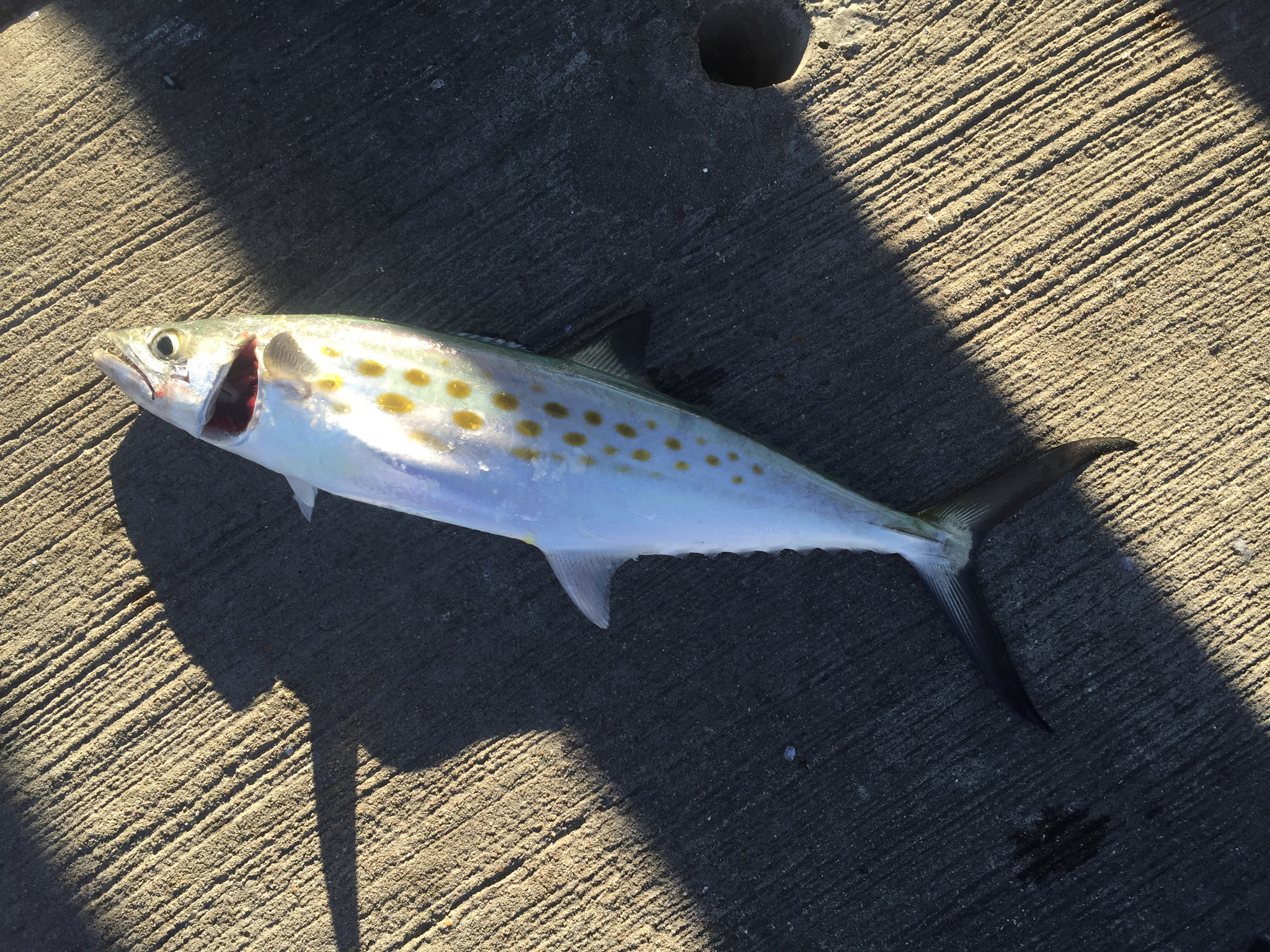
Atlantic Spanish mackerel
- Family
- Scombridae
- Depth
- 10–35 m
- Season
- Jan, Feb, Mar, Apr, May, Jun, Jul, Aug, Sep, Oct, Nov, Dec
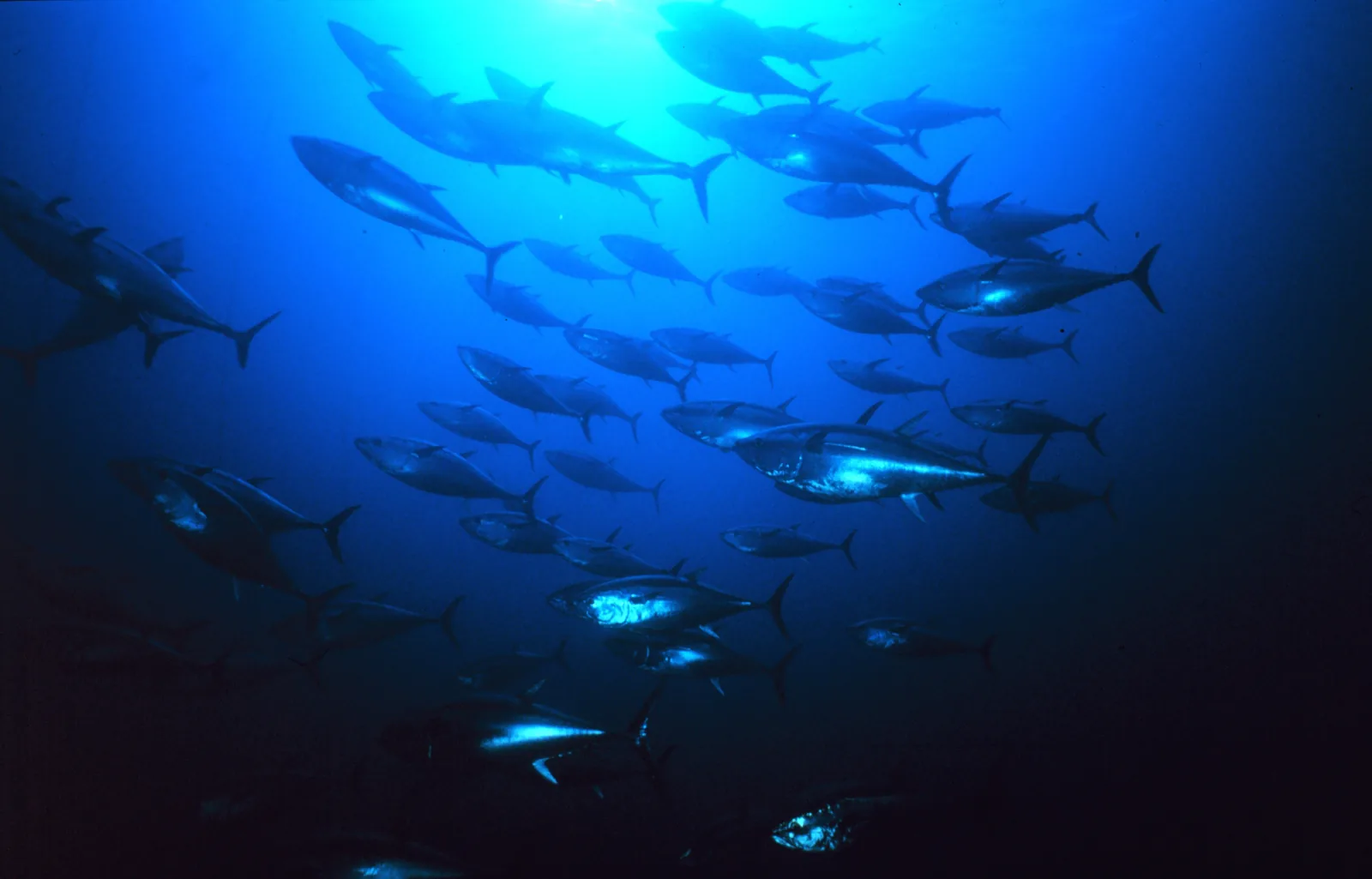
Atlantic bluefin tuna
- Family
- Scombridae
- Depth
- 0–985 m
- Season
- Jun
Guides for this water
Technique, gear and safety guides that fit Oriental bonito.