
Atlantic chub mackerel
The Atlantic chub mackerel's record stacks four labels on one line: marine, brackish, pelagic-neritic, temperate. Each is a different kind of statement, and one of them, the depth column, is empty. The entry's difficulty is not that any single label is wrong; it is that the labels are written as if they describe the same thing, and they do not.
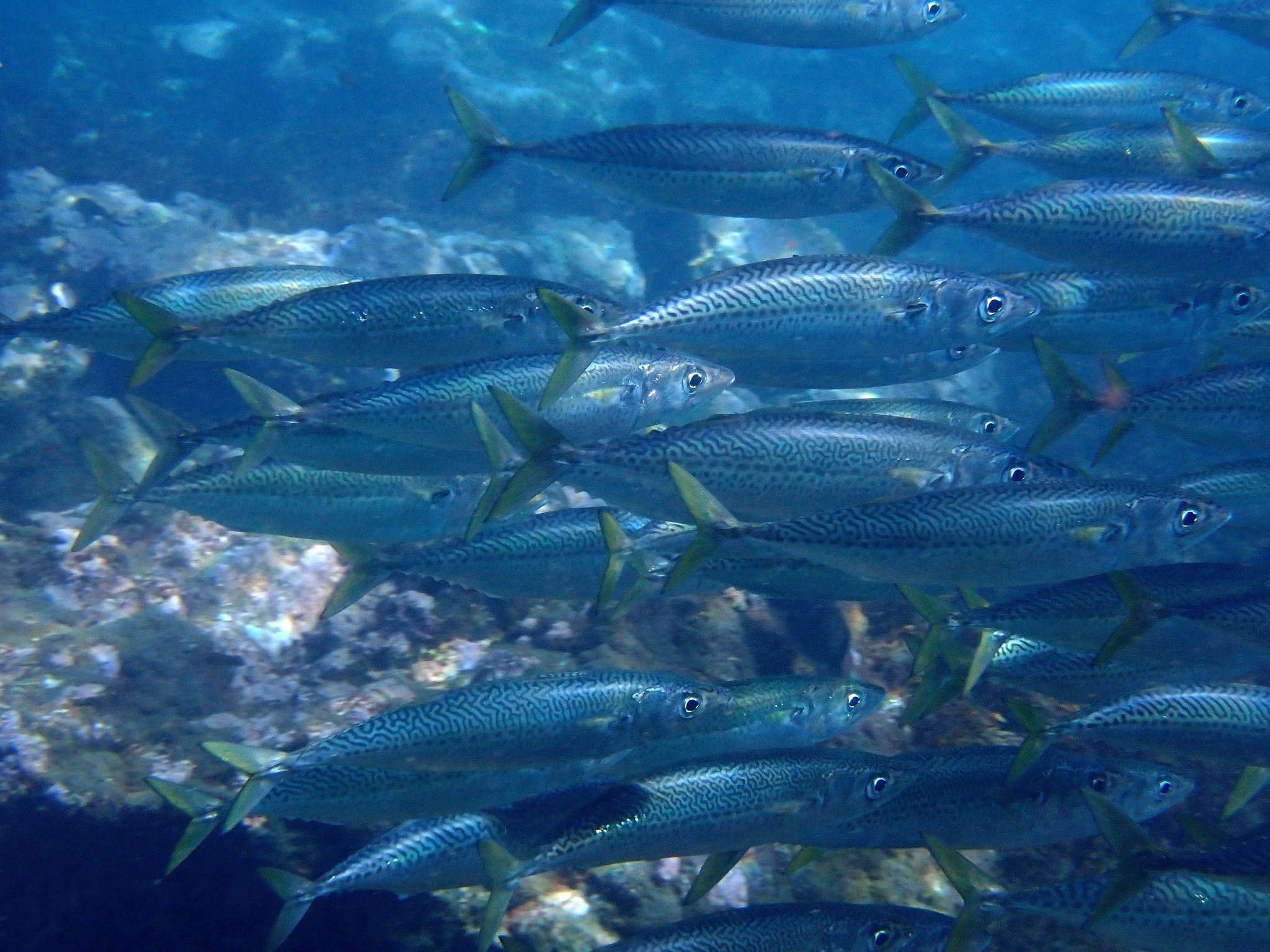
The Atlantic chub mackerel's record stacks four labels on one line: marine, brackish, pelagic-neritic, temperate. Each is a different kind of statement, and one of them, the depth column, is empty. The entry's difficulty is not that any single label is wrong; it is that the labels are written as if they describe the same thing, and they do not.
Four labels on one line
Marine and brackish describe salinity. Pelagic-neritic describes the water column and the distance from shore. Temperate describes climate. A reader can hold all four at once only by keeping them separate, because none of them implies the others.
A fish can be marine and pelagic-neritic; it can be brackish and pelagic-neritic; it can be temperate and either of those. Which combination applies where is not stated; the line lists them without ranking.
Pelagic-neritic, and the depth column is empty
"Pelagic-neritic" places the species in the upper water column over the shelf, as opposed to the open ocean beyond it. The environment line gives no depth minimum and no maximum. The label and the empty column are not a contradiction; the label is a zone, the column is a number that was never filled.
A zone without a number is still usable as orientation and unusable as a plan. A reader can take "upper water over the shelf" and decide to fish above a shelf, but cannot take it and decide to fish at 20 m rather than 40 m. This entry keeps the label and leaves the gap. The contrast with the oceanic label carried by other scombrids in this batch is also worth noting: "pelagic-oceanic" names water past the shelf edge, while "pelagic-neritic" names water over it. In practice, treat the label as a zone and the empty column as a gap, then let the sounder fill the gap. A figure borrowed from a related mackerel would describe a different fish.
Marine, brackish, and the missing line between
The species is recorded as both marine and brackish. No salinity figure accompanies either word, and no line is drawn between them. In this record, "brackish" means the fish has been recorded in water that is not fully saline; it does not mean a particular bay, a particular season, or a particular value.
The Atlantic distribution includes the Mediterranean and the southern Black Sea, which is where a brackish label becomes plausible. But plausible is not the same as specified, and the entry does not specify.
Temperate from 46°N to 65°S
The climate line reads temperate and gives a latitude span from 46°N to 65°S, with longitudes from 98°W to 42°E. A span that crosses the equator is not a single temperate band; it is a temperate label applied to two hemispheres, with the tropics in between.
The spawning table runs from December to April, with two records: Agadir Bay in Morocco in January, February and December, and Madeira in January to April. Both records lie in the span's northern half. The record gives no southern-hemisphere spawning entry, and this entry will not assume one.
55 cm total length and 21.3 cm maturity
Maximum length is 55 cm total length, male/unsexed. First maturity is 21.3 cm. Blank in the record are the common length, the weight and the age maximum. The maturity figure is less than half the maximum, which is a wide spread by the standards of the other mackerels in this batch.
The maturity length has no range and no attached length type. It is a single number, and it should be used as one. The 55 cm maximum is explicit about being TL, so the two figures are not necessarily on the same ruler.
The name on the list is not the name in the record
FishBase's English name is Atlantic chub mackerel; its Chinese name is . The approved list that placed this fish on the site used . The two Chinese strings do not translate each other: one is a chub mackerel, the other is a jack mackerel by name, and the families are different.
This is a label conflict of the ordinary kind. A site list and a database can each be internally consistent and still disagree. The article keeps as the record name and notes the list name; the slug is the stable address for both.
"Replaced by S. japonicus" is a note, not a border
The distribution line ends with the statement that the species is replaced by Scomber japonicus in the Indo-Pacific. That is a note about which species occupies the Indo-Pacific, not a line on a map where one species stops and the other starts. The record gives no coordinates for the replacement.
Wikipedia adds that the Atlantic chub mackerel was originally thought to be a subspecies of the chub mackerel, Scomber japonicus colias, and that it is also known as the tinker mackerel. The taxonomic history sits behind the distribution note: the two names have been merged and separated more than once, and the "replaced by" sentence is a summary of that history as much as of geography. GBIF's distributions layer lists 35 records across 17 countries and territories, all in the Atlantic, the Mediterranean or the Black Sea, with none in the Indo-Pacific. iNaturalist carries 286 observations for the taxon.
Which label to carry
Carry the label that carries a fact: pelagic-neritic, over the shelf, with no depth figure attached. Carry marine and brackish as a statement that the species enters estuarine water somewhere, without a salinity boundary. Carry temperate as a two-hemisphere description, not a single band. Carry 55 cm TL as the maximum and 21.3 cm as the maturity number, and do not convert one to the other. The name to carry is Scomber colias; and are search keys, and the record's own name is the first of them.
Where these facts come from
Check these pages before you rely on a size, range or protection status.
- FishBase — Scomber colias — FishBase · T2
- GBIF — Scomber colias occurrence records — GBIF · T2
- IUCN Red List — Scomber colias — IUCN · T1
- Photo record — iNaturalist — iNaturalist · T3
Fish in the same water
These fish live in the same place.

Albacore
- Family
- Scombridae
- Depth
- 0–600 m
- Season
- Jan, Feb, Mar, Apr, May, Jun, Jul, Aug, Oct, Nov, Dec
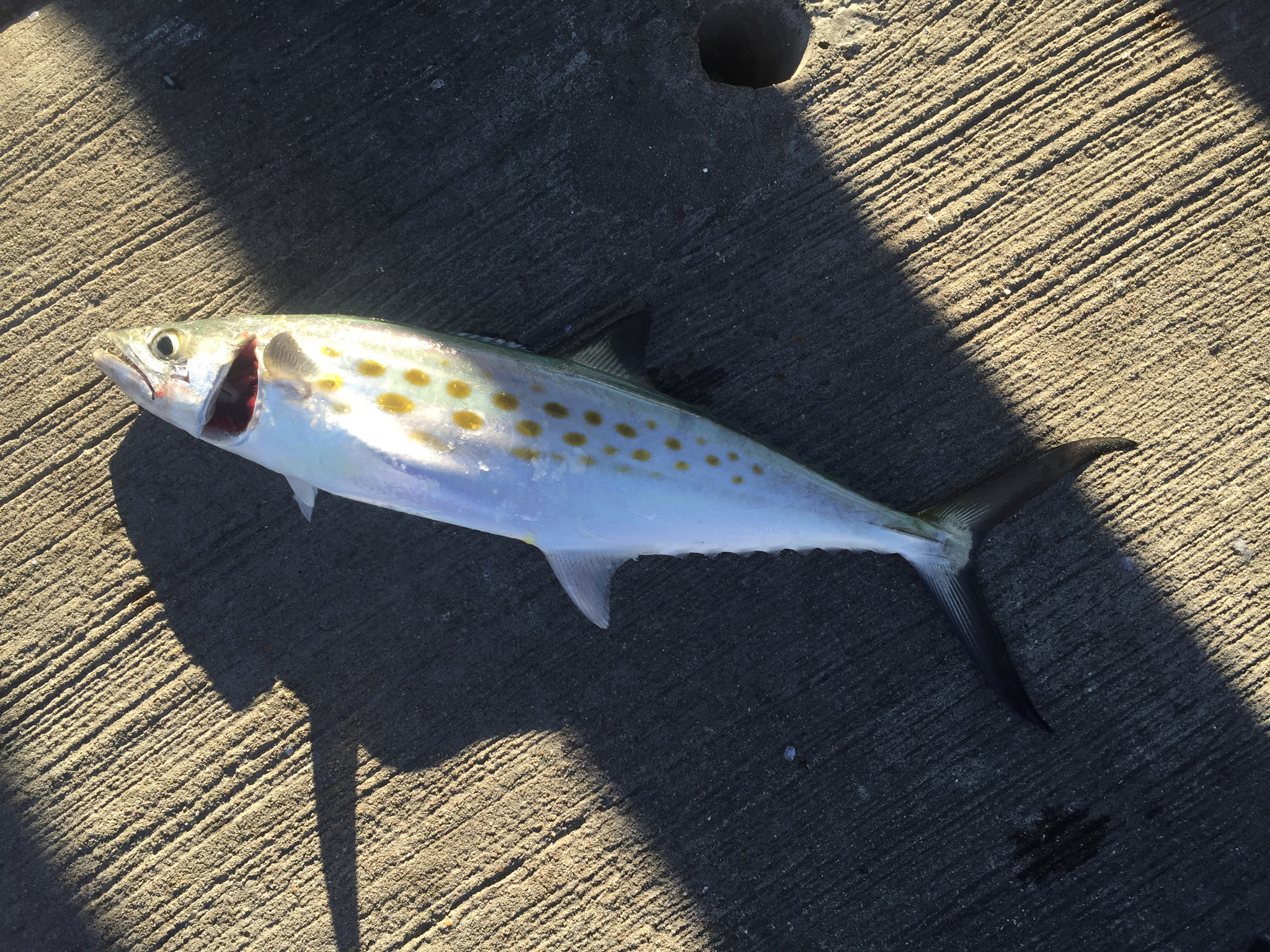
Atlantic Spanish mackerel
- Family
- Scombridae
- Depth
- 10–35 m
- Season
- Jan, Feb, Mar, Apr, May, Jun, Jul, Aug, Sep, Oct, Nov, Dec
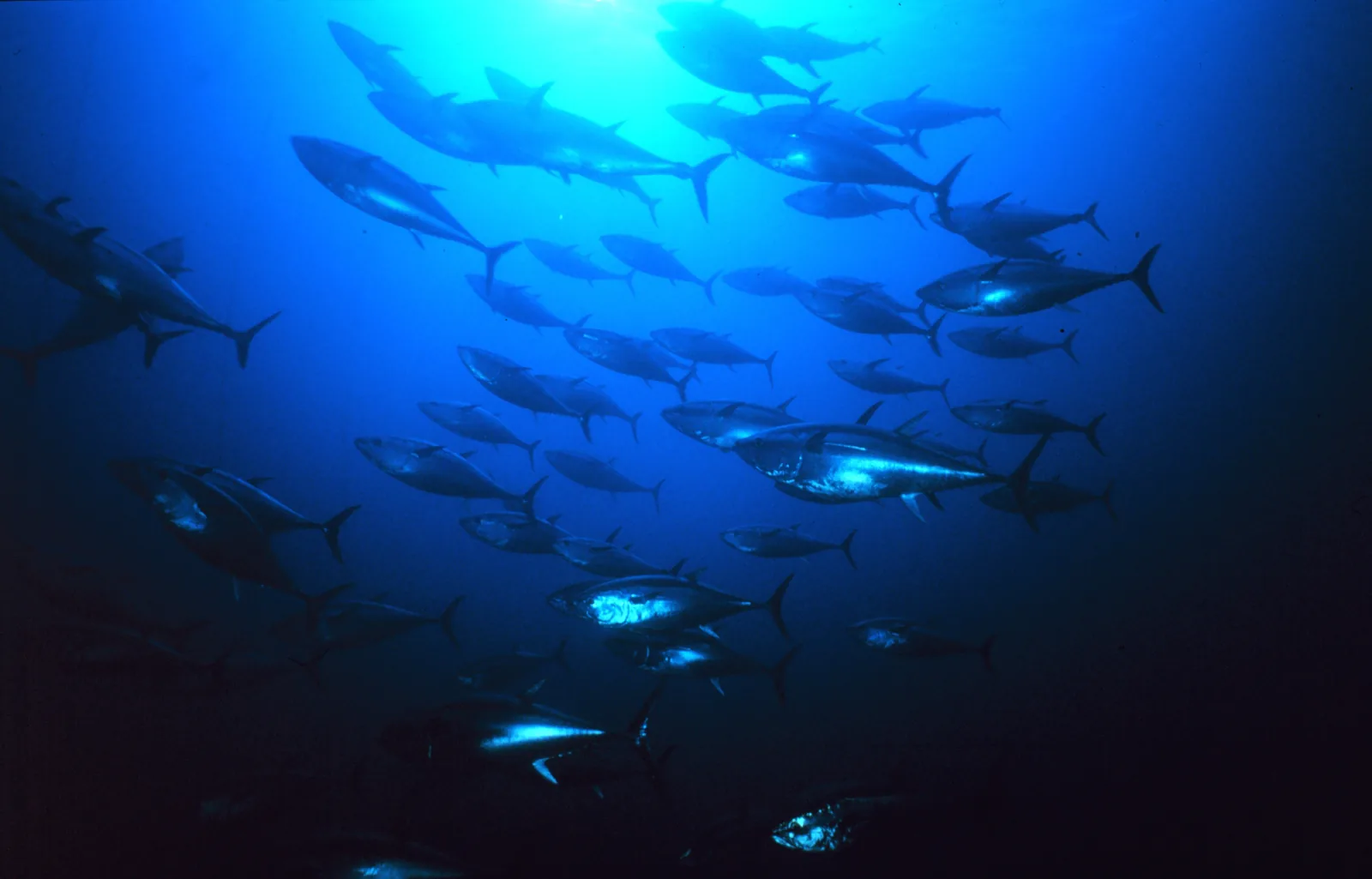
Atlantic bluefin tuna
- Family
- Scombridae
- Depth
- 0–985 m
- Season
- Jun
Guides for this water
Technique, gear and safety guides that fit Atlantic chub mackerel.