
Serra Spanish mackerel
Serra Spanish mackerel is a large western Atlantic mackerel, recorded through the Caribbean and along the tropical coast. Adults reach 125 cm FL and 6.7 kg. Two columns in the record are empty, depth and habitat keyword, so there is no band to plan around and no bottom type to read; what is left is a fish that is present year-round, with six rows of spawning data behind it.

Two columns in the record for the Brazilian sarda are empty: the depth range and the habitat keywords. Everything else is unusually complete, including a six-row spawning table and a note about a naming error that has followed the species through the literature. The empty columns are the subject here, not as an invitation to guess but as a boundary on what the record can be asked to say.
What the record leaves empty
The environment line gives marine, reef-associated, oceanodromous, tropical, from 21°N to 36°S. Neither a depth floor nor a depth ceiling is present, and no usual band is stated. The biology keywords that would normally name the substrate are absent. The size block has no maximum age.
An empty field in a database differs from a missing fact in the world. It means this record did not carry the value. The fish has a depth distribution; the entry does not state it. The distinction matters because a reader can easily turn an empty column into an assumption, and the assumption then sounds like information.
Why the empty columns stay empty
No source in this entry supplies the depth. FishBase's summary does not state it, and the other pages used here do not add one. Filling the gap from a similar species would produce a number about a different fish. Filling it from experience would produce a number about one boat on one day.
This entry therefore leaves both columns blank. It does not put a zero in them, and it does not put a range in them. The absence is recorded, and every statement below is written around it.
What reef-associated and oceanodromous do say
The two terms that remain are useful but not interchangeable. Reef-associated points to structure: the fish is found around reefs rather than in open blue water with no bottom reference. Oceanodromous describes movement: this is a fish that travels, and the record gives no further detail on the pattern.
Neither term carries a depth. "Reef-associated" does not say the fish sits on the reef; it says the association exists. "Oceanodromous" does not mean the fish moves without pause; it means the life cycle involves travel. A trolling plan can use both as orientation without turning either into a depth figure. iNaturalist holds only 35 observations for this taxon, a thin record.
The spawning table is a geography
The spawning table runs through the year overall, but its six rows are not one calendar. The Gulf of Paria in Venezuela is recorded in all twelve months. Maranhão in Brazil is split into January to April and June to November. Matinhos in Paraná is January to June and October to December. The northeastern coast is recorded in all twelve months, and Rio Grande do Norte is January to April and September to December.
Read as positions, the table spans the Caribbean coast, the northern Brazilian coast, and the southern Brazilian coast. Read as a single season, it says nothing useful because it covers every month somewhere. The record does not give a temperature trigger, and it does not explain why one locality has two separate windows.
125 cm fork length, 65 cm total length
FishBase gives 125 cm as the fork-length maximum and 65 cm as the total-length common size. Fork length is measured to the notch in the tail, while total length is measured to the far end of it, so the two figures are on different rulers as well as at different points in the size range.
The record gives no conversion between them. A 125 cm FL fish is not a 125 cm TL fish, and a 65 cm TL common length is not directly comparable to the maximum. This is the same measurement problem that appears in the wrasse entries, applied to a much larger fish.
37 cm maturity, 6.7 kg maximum
First maturity is 37 cm, with no range and no length type. Maximum published weight is 6.7 kg. Wikipedia repeats 125 cm and 6.71 kg, and adds a diet of small fish, squid or cuttlefish, shrimp or prawn and isopods. The two weight figures differ by 0.01 kg, which is a rounding difference rather than a disagreement.
There is no maximum age in the record. The 125 cm maximum and the 37 cm maturity length are the only two size landmarks in the entry, and neither is tied to an age, so this entry will not draw an age curve.
Choosing a trolling layer without a depth figure
How deep the fish runs is not in the record, so the layer has to be found from the water, not from the page. Start with the surface spread, because the species is oceanodromous and reef-associated rather than bottom-dwelling in the record's own terms. If the sounder marks fish below the spread, add one downrigger increment at a time and keep the increment only while marks and strikes agree. If the marks stay high, do not add depth merely because a mackerel "should" be deeper.
That procedure is a way to let the fish answer the question the record leaves open. It makes no claim that the species holds at any particular depth, and the entry does not make one.
The name a record carries
FishBase warns that literature records for Scomberomorus maculatus from the Caribbean and the Atlantic coasts of Central and South America apply to S. brasiliensis, which many authors treated as a synonym of S. maculatus. Wikipedia states the same point and adds that the species is found from Belize to Rio Grande do Sul.
This is why the empty columns should not be filled from a sister species' page. A depth range copied from S. maculatus would be a range for the fish that the older literature misnamed, not necessarily for this one. GBIF's distributions layer lists 30 records across 16 countries and territories, from Aruba and Belize to Brazil and Venezuela, matching the coastal range without adding a depth.
Where these facts come from
Check these pages before you rely on a size, range or protection status.
- FishBase — Scomberomorus brasiliensis — FishBase · T2
- GBIF — Scomberomorus brasiliensis occurrence records — GBIF · T2
- IUCN Red List — Scomberomorus brasiliensis — IUCN · T1
- Photo record — iNaturalist — iNaturalist · T3
Fish in the same water
These fish live in the same place.

Albacore
- Family
- Scombridae
- Depth
- 0–600 m
- Season
- Jan, Feb, Mar, Apr, May, Jun, Jul, Aug, Oct, Nov, Dec
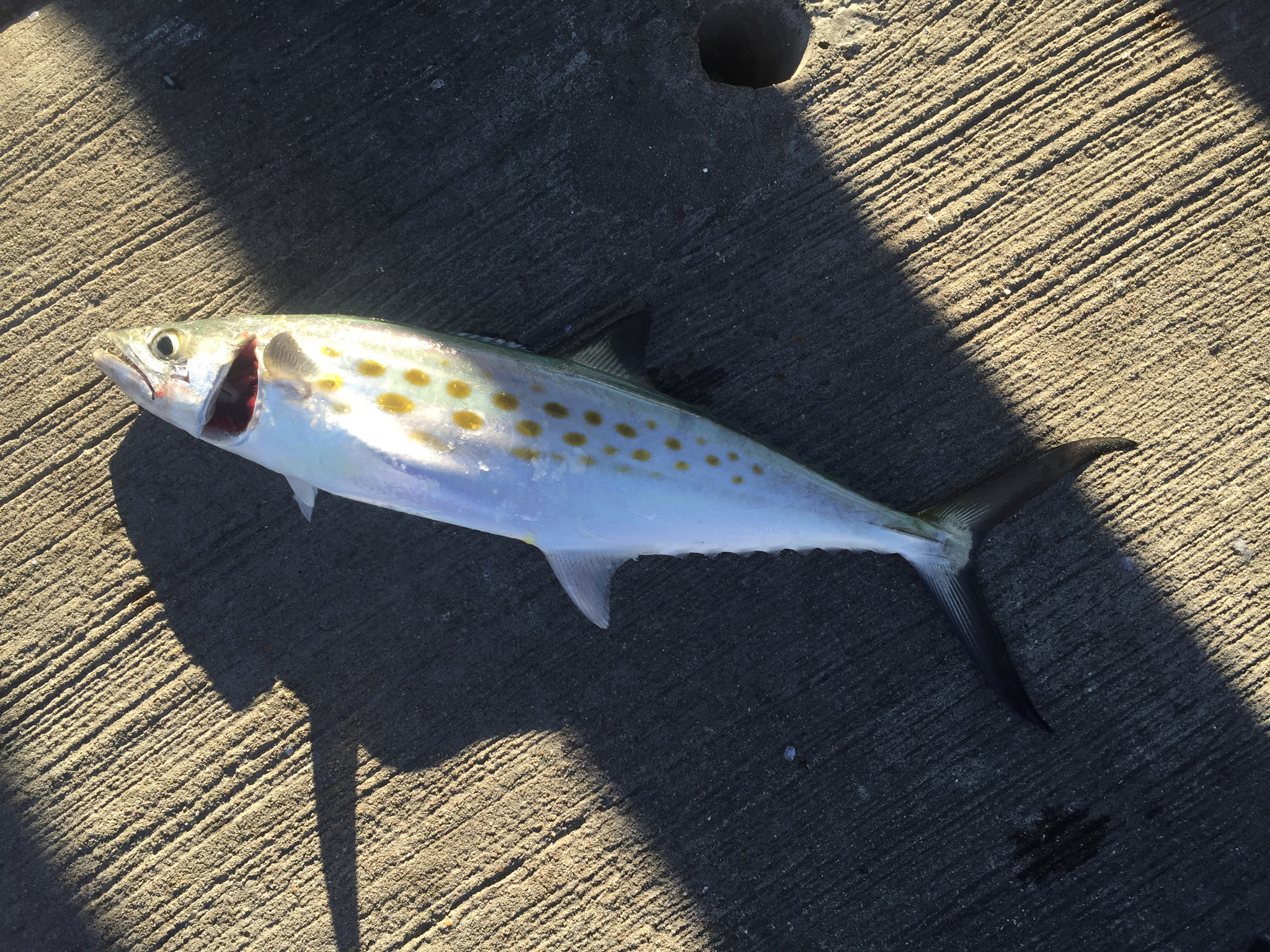
Atlantic Spanish mackerel
- Family
- Scombridae
- Depth
- 10–35 m
- Season
- Jan, Feb, Mar, Apr, May, Jun, Jul, Aug, Sep, Oct, Nov, Dec
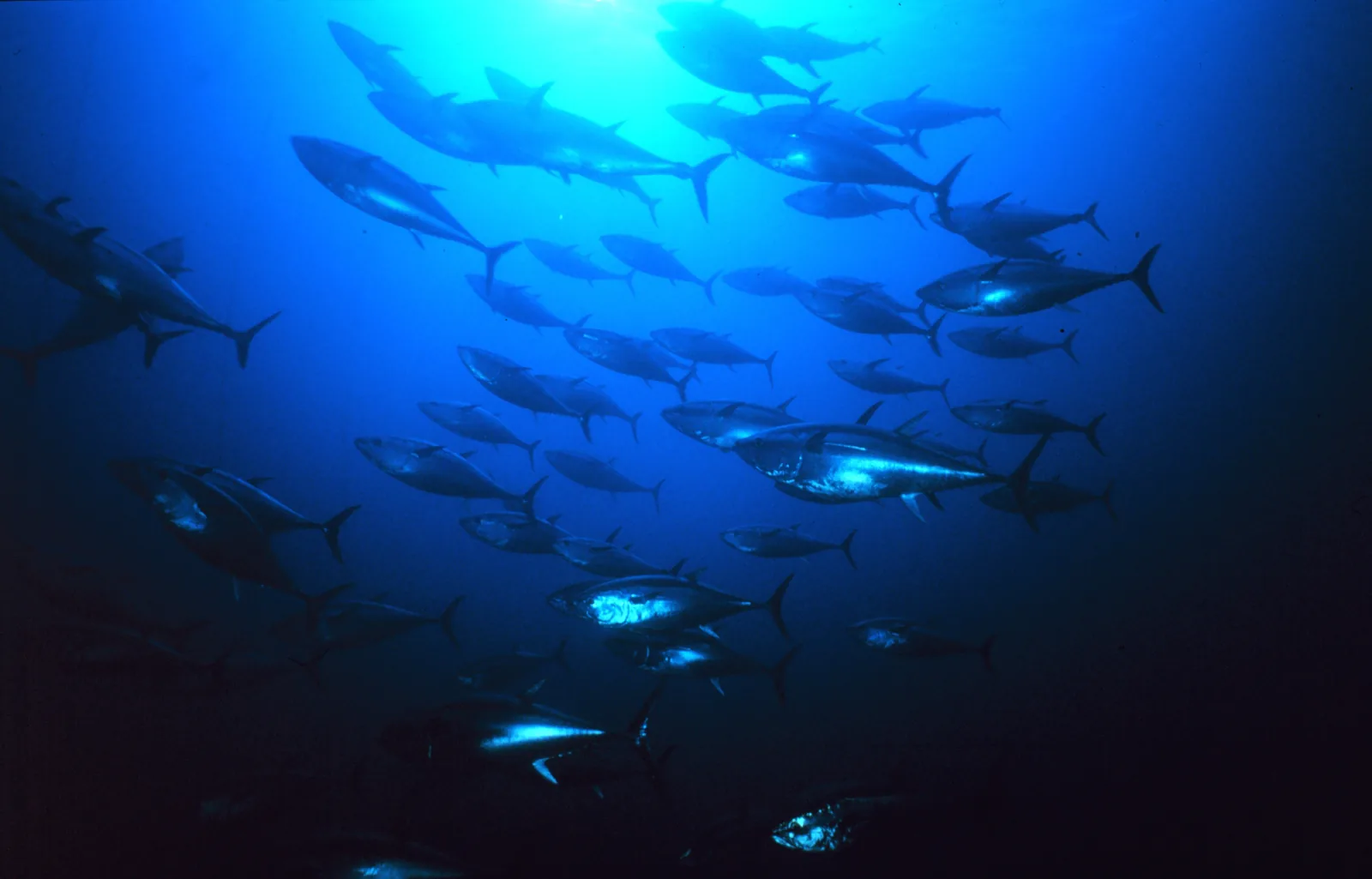
Atlantic bluefin tuna
- Family
- Scombridae
- Depth
- 0–985 m
- Season
- Jun
Guides for this water
Technique, gear and safety guides that fit Serra Spanish mackerel.