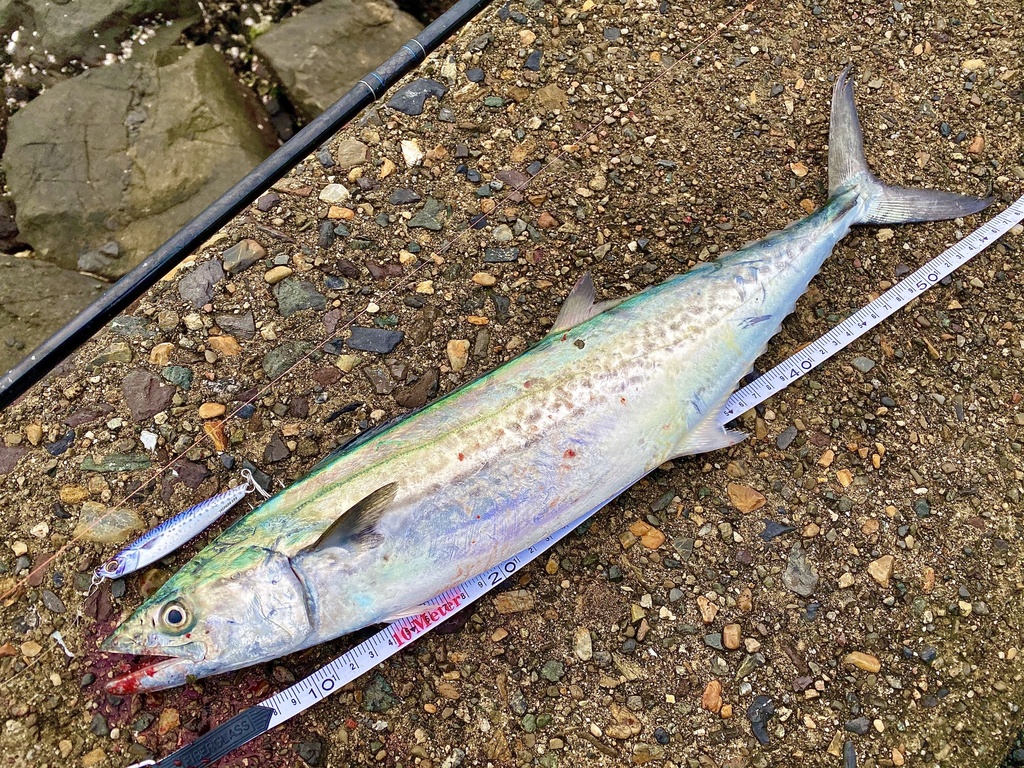
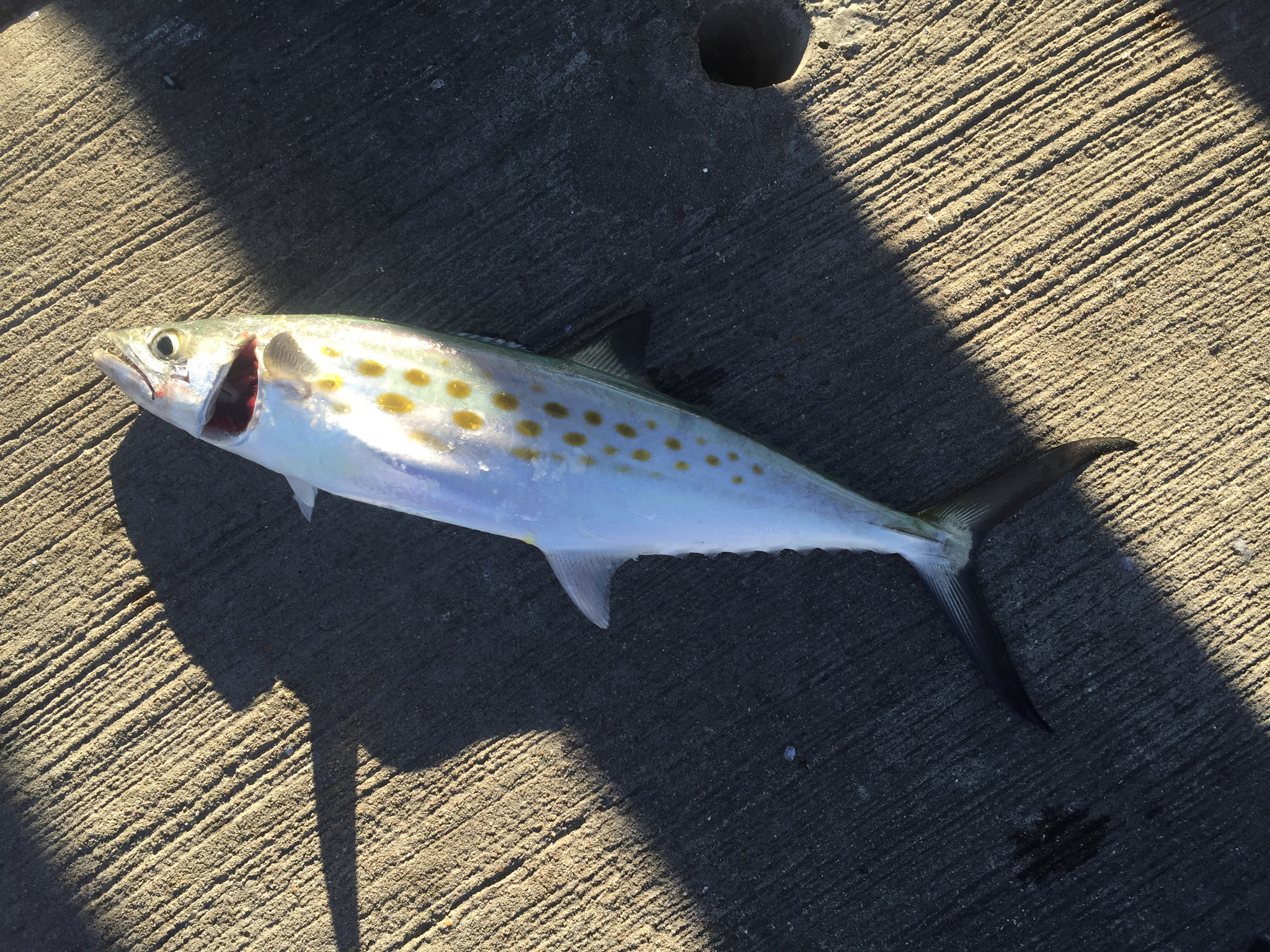
Japanese Spanish mackerel (Scomberomorus niphonius) is a fish of the family Scombridae. FishBase gives its range as: Northwest Pacific: confined to the subtropical and temperate waters of China, the Yellow Sea and Sea of Japan north to Vladivostok, former USSR. Often confused with Scomberomorus munroi. It is recorded from 0 to 200 m, in temperate water. The recorded maxima are 113 cm TL, 8 kg. Diet includes fishes. IUCN status: Near Threatened (NT). Chinese name: .
Identification
The species belongs to the family Scombridae. FishBase's morphology record gives 19-21 dorsal spines and 15-19 soft dorsal rays; 16-20 soft anal rays; 48-50 vertebrae; an elongated body; an oval cross-section. These are identification aids rather than a complete diagnosis; the accompanying photographs show the live colour pattern.
Habitat and behaviour
It is recorded in marine water, with a pelagic mode, a recorded depth range of 0-200 m and a temperate climate. Diet records mention fishes. These are source records, not a guarantee that the same habitat exists at every local mark.
Seasonal window
FishBase's spawning table lists records in Apr, May for Japan. This is a spawning record, not a fishing-season forecast; check the local season, weather and regulations before planning a trip.
Gear and approach
Match hook, leader and drag to a fish that can reach 113 cm and 8 kg. Use tackle that can present the bait or lure at the deeper end of the recorded range. A jigging rod and reel rated for the working depth is the practical choice. No exact gear ratings are published here because they are equipment choices, not source facts. Adjust the terminal tackle to the bait or lure you can obtain locally.
Edibility and regulations
FishBase's human-use record lists Fisheries use: highly commercial; aquaculture: commercial; gamefish: yes. The species is marketed as food. The IUCN Red List category is NT (Near Threatened), assessed 19 October 2022. Threat to humans: Harmless. CITES: Not Evaluated; CMS: Not Evaluated. No official regulation text was verified for this draft. Check the current national and local fisheries rules, size limits and closed seasons before keeping catch.
Where to look
For trip planning: GBIF holds 559 preserved occurrence records for the matched taxon; the largest country and territory counts are JP (132), CN (115), KR (107), TW (13), ZZ (4); FishBase territories include China, Hong Kong SAR, Japan, Korea (North), Korea (South), Russia / Russian Federation, Taiwan region / Chinese Taipei; the sea regions represented are Northwest Pacific, Yellow Sea. These are distribution and habitat signals, not spot coordinates; use them to narrow the search, then check local access and conditions.
How to catch it
Trolling
Trolled from a moving boat; suits roaming or pelagic species.
Shore casting
Cast from shore or a breakwater, within reach of the recorded inshore range.
Jigging
Vertical jigging over the recorded depth range.
Regulations before you keep it
These are the published regulations for this fish. Read the number first. The notice below it is the actual regulation.
Minimum size4
Fork length ≥25 cm
China — Hainan · CN-HI
Hainan commercial catch standard: the minimum catch size for Spanish mackerel is fork length ≥ 25 cm. This is a standard for commercial catches set by a provincial regulation, not a rule for recreational angling; whether an angler must release an undersized fish should be confirmed with the local fisheries authority.
The notice uses the general name “Spanish mackerel” without splitting species; recorded here as Japanese Spanish mackerel. Hainan's 25 cm is below the 38 cm national notice, so both tiers apply and the stricter one governs.
Fork length ≥380 mm
China — national · CN-NATIONAL
National standard (MOA Notice 2018 No. 3): the minimum catch size for Japanese Spanish mackerel in the Bohai, Yellow and East China Seas is fork length ≥ 380 mm; smaller individuals count as juveniles. This is a standard for commercial catches. The notice does not address recreational angling, so whether an undersized fish must be released by an angler depends on the local fisheries authority.
Fork length ≥45 cm
China — Shandong · CN-SD
Shandong commercial catch standard: the minimum catch size for Japanese Spanish mackerel is fork length ≥ 45 cm. This is a standard for commercial catches set by a provincial regulation, not a rule for recreational angling; whether an angler must release an undersized fish should be confirmed with the local fisheries authority.
Weight ≥430 g, or fork length ≥380 mm
China — Zhejiang · CN-ZJ
Zhejiang commercial catch standard (Zhejiang Fisheries Notice 2015 No. 7): the catch size for Japanese Spanish mackerel is ≥ 430 g, or fork length ≥ 380 mm, applied as either a weight or a length threshold. The notice does not address recreational angling, so whether an angler must release an undersized fish depends on the local fisheries authority.
Season / closure1
From 12:00 on May 1 to 12:00 on September 1, September 16 or August 16, depending on the area
China — national · CN-NATIONAL
All Chinese coastal waters (MAR Notice 2023 No. 1): the summer moratorium starts at 12:00 on 1 May and ends at 12:00 on 1 September, 16 September or 16 August depending on the sea area, and applies to capture operations. All gear types except hook-and-line are closed; rod-and-line fishing is outside the moratorium gear list, but hook-and-line vessels must still report port entry and exit, and coastal provinces may adopt stricter measures.
The closure has three area-based windows, all starting at 12:00 on May 1 and ending at 12:00 on September 1, September 16 or August 16.
Every record above names its source and the date it was retrieved. See the regulation register for the full list, or how to read these regulations.
Where these facts come from
Check these pages before you rely on a size, range or protection status.
-
FishBase — Scomberomorus niphonius
— FishBase · T2
-
GBIF — Scomberomorus niphonius occurrence records
— GBIF · T2
-
IUCN Red List — Scomberomorus niphonius
— IUCN · T1
-
Photo record — iNaturalist
— iNaturalist · T3