
Kanadi kingfish
Scomberomorus plurilineatus, the Kanadi kingfish or queen mackerel, is a neritic scombrid of the western Indian Ocean, recorded from Kenya and Zanzibar south to KwaZulu-Natal and along western Madagascar. It reaches 120 cm fork length and 12.5 kg, matures at 72 to 80 cm, and feeds mainly on small clupeids, anchovies, squid and mantis shrimps.
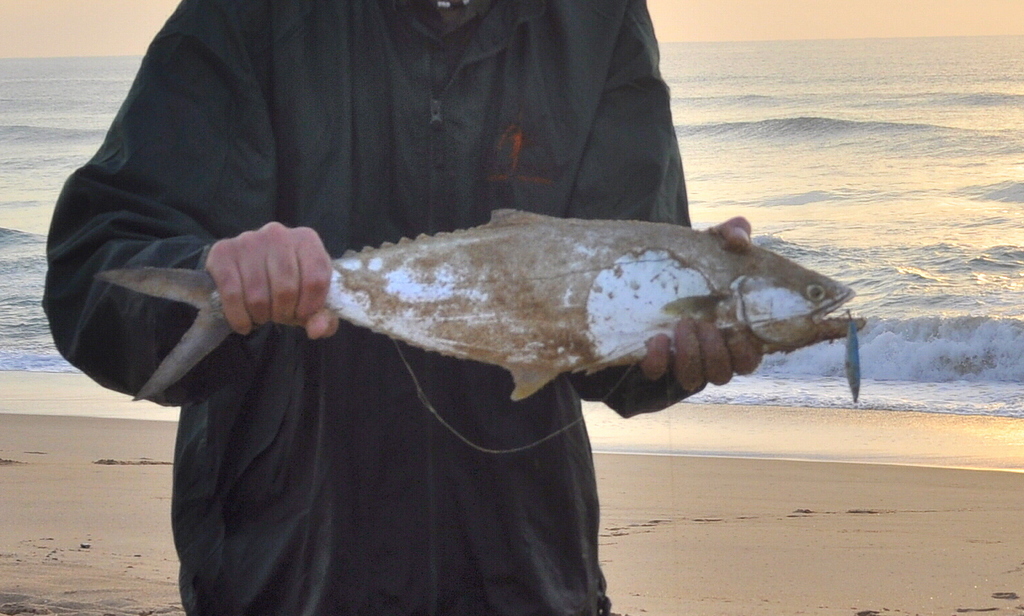
Scomberomorus plurilineatus, the Kanadi kingfish or queen mackerel, is a neritic scombrid of the western Indian Ocean, recorded from Kenya and Zanzibar south to KwaZulu-Natal and along western Madagascar. It reaches 120 cm fork length and 12.5 kg, matures at 72 to 80 cm, and feeds mainly on small clupeids, anchovies, squid and mantis shrimps. Adults migrate into KwaZulu-Natal waters in early summer and back to Mozambique in winter; spawning is thought to take place mainly along the Mozambique coast from August to November.
Identification
A fusiform Spanish mackerel with small scales and a small, bifid interpelvic process. The dorsal fin has 15 to 17 spines and 19 to 21 soft rays, the anal fin 19 to 22 soft rays, and there are 45 to 46 vertebrae; the lateral line curves down toward the caudal peduncle.
The pattern changes with size: juveniles are spotted and by about 40 cm develop the adult pattern of interrupted horizontal lines, so adults show broken lines rather than round spots.
FishBase gives 120 cm fork length and 12.5 kg with maturity near 80 cm; ORI puts maturity at 72 to 78 cm at about two years. Records confused with S. lineolatus and S. guttatus should be read with care.
Distribution and Habitat
Western Indian Ocean: Seychelles, Kenya and Zanzibar south to South Africa, and along western Madagascar; FishBase gives 1°S to 37°S and 23°E to 59°E.
It is neritic and pelagic over the shelf edge at 50 to 200 m, and oceanodromous; large schools form in the Zanzibar Channel from March to September.
The practical ground is the 50 to 100 m line off KwaZulu-Natal where warm Agulhas water meets the shelf, plus the deeper drop-offs off Mozambique. It is not a reef fish.
Habits and Diet
FishBase records anchovies, clupeids, small fishes, squid and mantis shrimps, trophic level 4.2. It is a fast mid-water predator that follows bait schools rather than hunting the bottom.
Adults migrate into KwaZulu-Natal from about October to November and return to Mozambique in winter, from May to September; few reproductively active fish are seen in the south, which supports a feeding migration.
That migration is the key planning fact: fish are in the south when the water warms and offshore and moving when it cools.
Fishing Methods
Trolling small to medium lures along temperature breaks and bird activity is the standard boat method. Shallow-running minnows, feathers and small skirted lures at 6 to 8 knots let the boat find the school.
A live sardine or small scad drifted slowly is deadly when fish are finicky; keep the boat moving and others often follow the hooked fish up.
From the shore, long casts with 40 to 60 g slim jigs from headlands work when fish come within range; retrieve fast and keep the lure near the surface.
Gear and Approach
A 7 ft medium-heavy boat rod with a 6000 to 8000 size reel, 30 to 40 lb braid and a 40 to 60 lb fluorocarbon leader handles most fish. Shore anglers can use a 9 to 10 ft rod and 4000 to 5000 size reel with 20 to 30 lb braid for distance.
Add a short wire or heavy mono bite trace if cut-offs are frequent; the teeth are sharp. Keep drags smooth rather than locked, because the first run is fast and the mouth is soft.
Handle with a wet towel or lip grip, support the body horizontally, and return unwanted fish quickly.
Seasonal Window
Spawning is thought to occur mainly from August to November along the Mozambique coast. The South African season is a feeding season: fish arrive from about October and stay through the warm months.
The reliable window is early summer, when the first warm water pushes south and boats start finding birds and surface activity; late summer is patchier.
Early morning and late afternoon are best; water temperature and bait matter far more than tide, so a colour break is a better starting point than a clock.
Edibility and Handling
An excellent table fish with firm, oily, pale flesh. It is good grilled, smoked or pan-fried and holds up in soup; the flesh is softer than tuna and should not be overcooked.
Bleed immediately and ice at once. Mackerel spoil quickly, and a fish left in the sun for an hour will taste strongly even after icing; gut and gill before storage.
No specific ciguatera warning applies, but large predatory mackerel deserve normal caution. Fillets freeze well for a few weeks; longer storage turns the oil rancid.
Regulations and Conservation
South Africa: the recreational linefish regulations list queen mackerel (kanadi, Scomberomorus plurilineatus) with no minimum size and a bag limit of 10 per person per day. A permit is required, boat-based anglers need a vessel licence, and recreational catch may not be sold.
Mozambique: recreational fishing requires a licence, but no species-specific minimum size or bag limit was located; treat that as unverified and check with the local maritime authority before travelling.
IUCN: Data Deficient, assessed 15 August 2022. South African assessments call the KwaZulu-Natal stock optimally exploited, with spawner biomass near 50 per cent of pristine, and SASSI lists it Green.
How to catch it
Trolling
5–9 6–8
Drift fishing
Shore casting
40–60
Where these facts come from
Check these pages before you rely on a size, range or protection status.
- GBIF — Scomberomorus plurilineatus occurrence records — GBIF · T2
- IUCN Red List — Scomberomorus plurilineatus — IUCN · T1
- Photo record — iNaturalist — iNaturalist · T3
Fish in the same water
These fish live in the same place.

Albacore
- Family
- Scombridae
- Depth
- 0–600 m
- Season
- Jan, Feb, Mar, Apr, May, Jun, Jul, Aug, Oct, Nov, Dec
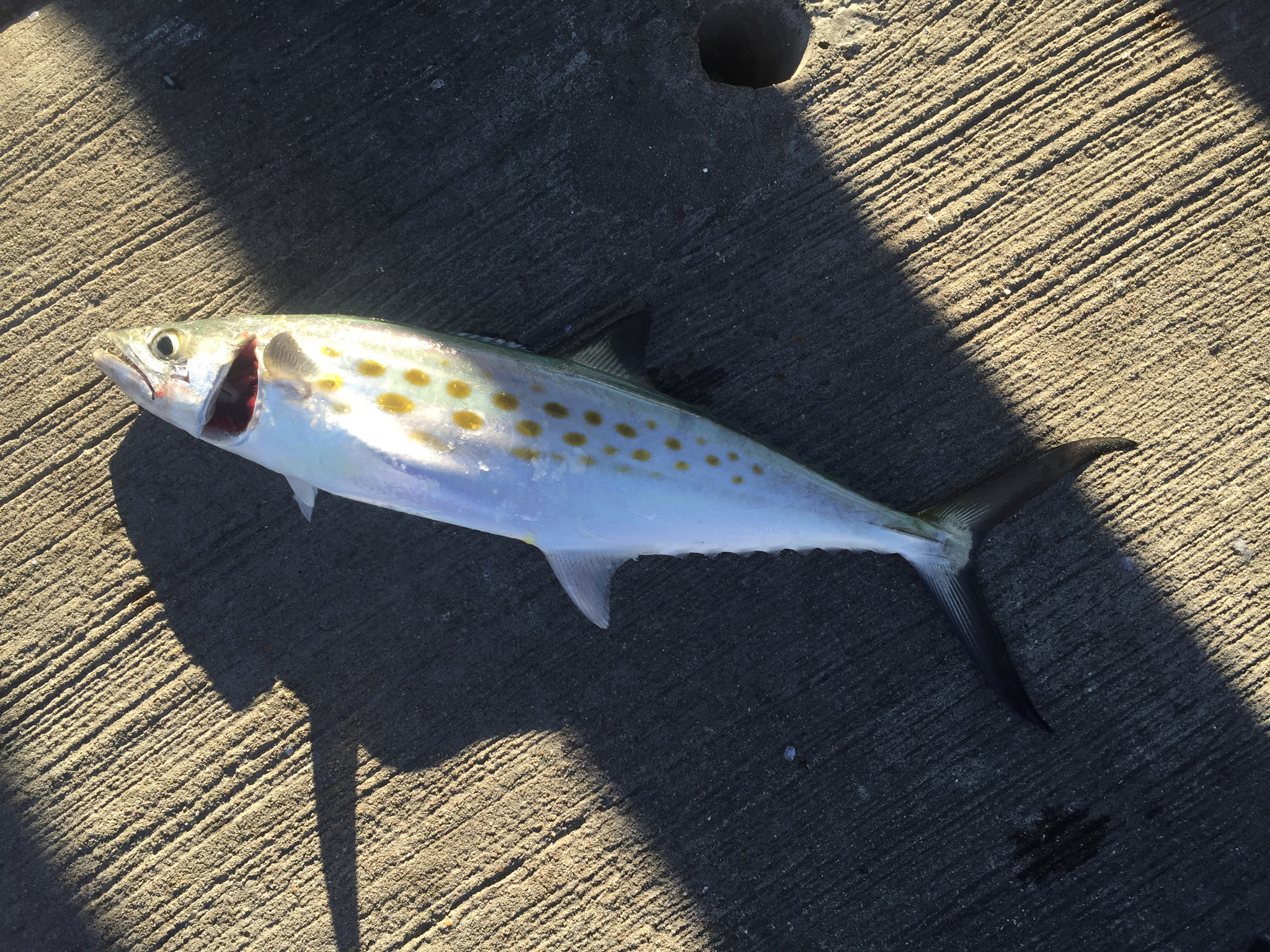
Atlantic Spanish mackerel
- Family
- Scombridae
- Depth
- 10–35 m
- Season
- Jan, Feb, Mar, Apr, May, Jun, Jul, Aug, Sep, Oct, Nov, Dec
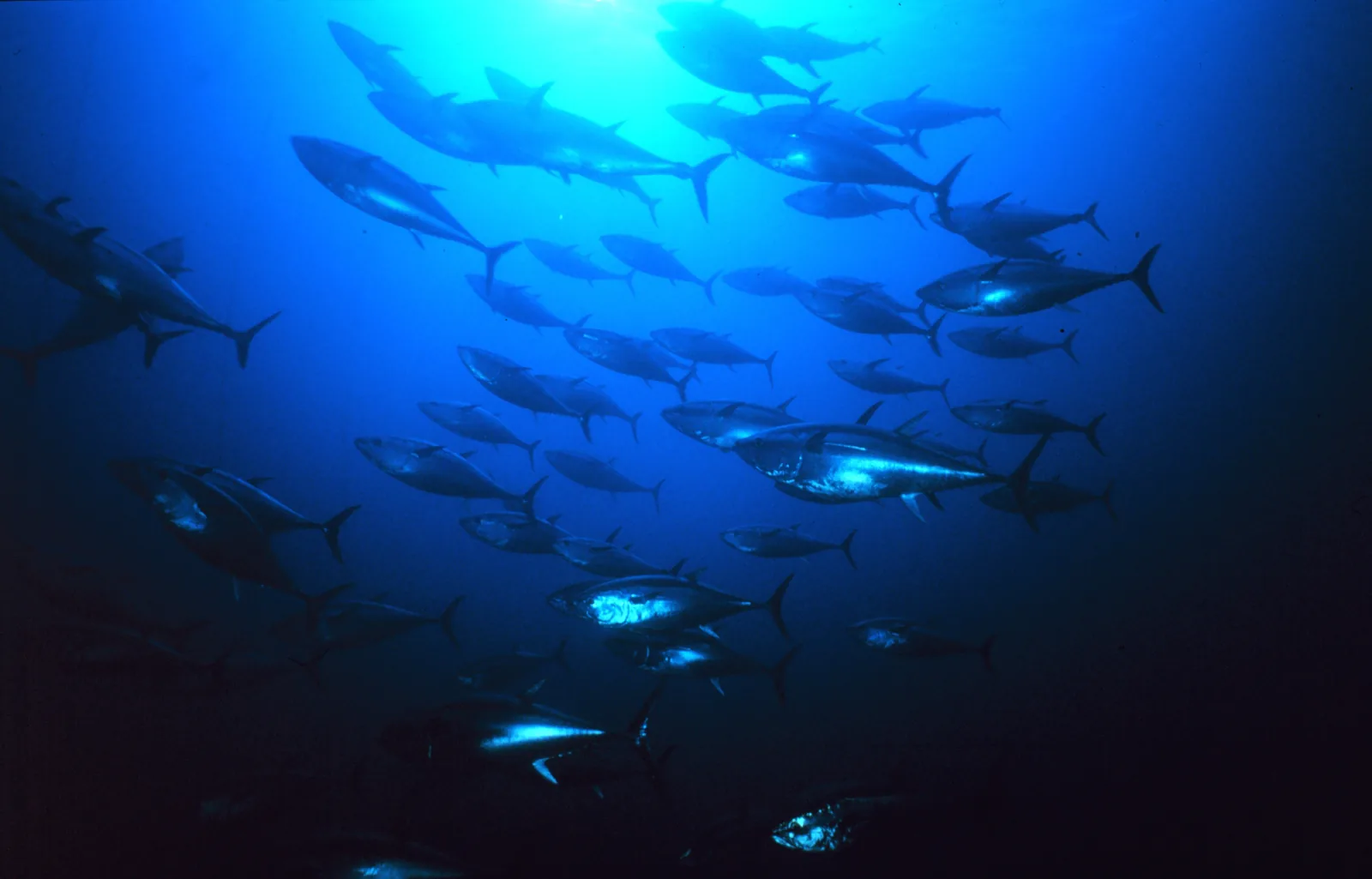
Atlantic bluefin tuna
- Family
- Scombridae
- Depth
- 0–985 m
- Season
- Jun
Guides for this water
Technique, gear and safety guides that fit Kanadi kingfish.