
Cero
Cero is a tropical scombrid of clear western Atlantic reefs, from Massachusetts to Brazil, found from 1 to 20 m. It reaches a recorded 183 cm and matures near 40.5 cm, and it feeds on herrings, silversides, squid and shrimp. It is a fast, hard-fighting game fish and a good table fish. Trolling, bait and lures are the methods listed.
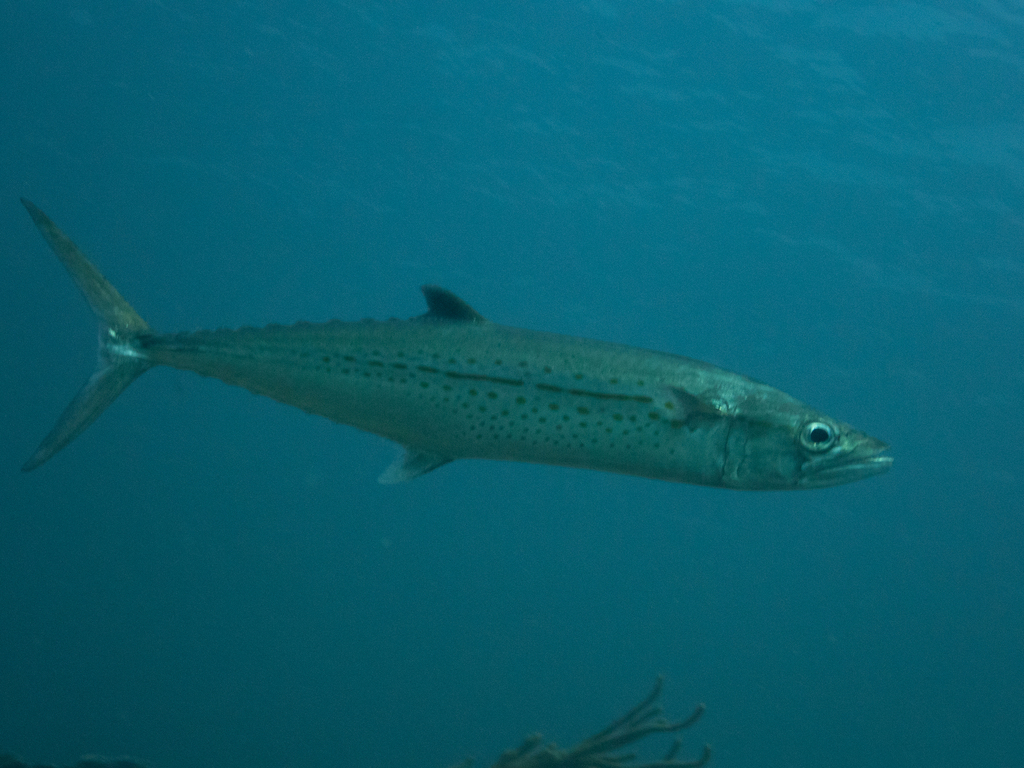
Cero is a tropical scombrid of clear western Atlantic reefs from Massachusetts to Brazil, found from 1 to 20 m. It reaches a recorded 183 cm, matures near 40.5 cm, and feeds on herrings, silversides, squid and shrimp. It is a fast, hard-fighting game fish and a good table fish.
Identification
Cero is a slender, fusiform mackerel with a pointed snout and a narrow caudal peduncle. The diagnostic mark is a bright yellow-orange stripe running from behind the pectoral fin to the tail, with no spots on the flank and a silvery belly.
FishBase gives 16 to 18 dorsal spines, 15 to 19 soft dorsal rays, 15 to 20 anal soft rays and 47 to 48 vertebrae. The maximum recorded length is 183 cm, and maturity is about 40.5 cm. Spanish mackerel has yellow spots and no continuous stripe; king mackerel is heavier, lacks the stripe, and is silver overall.
Distribution and Habitat
The range runs from Massachusetts through the Gulf of Mexico, the Bahamas and the West Indies to Brazil. It is a tropical species, and in the northern Gulf it is at the edge of its range, most reliable around south Florida and the clear-water reefs.
Depth is 1 to 20 m. Cero is reef-associated and oceanodromous, most abundant in clear water around coral and rock reefs, and it occasionally forms schools. It is not a deep-water fish; a lure fished below 20 m is usually below the fish.
Habits and Diet
The diet is small schooling fish, mainly clupeoids such as Harengula, Jenkinsia and Opisthonema, plus atherinids, squid and shrimp. Fish are chased to the surface around reef edges, and birds often mark the action.
Spawning records are broad: FishBase lists all months for South Florida and Puerto Rico, April to October for Jamaica and all months for Venezuela. Cero is a fast predator that stays close to structure rather than crossing open ocean.
Fishing Methods
Fast trolling is the classic approach: a small feather, spoon or soft lure at 5 to 8 knots along the reef edge, the color change or a current seam. Strike usually comes on the turn or when the lure crosses a bait school.
Live bait is more selective. Slow-troll or drift a live pilchard or sardine on a light wire trace near the reef, and let it swim naturally rather than dragging it. Casting a small metal jig at surface schools is the fastest way to convert a sighting.
Gear and Approach
A 7 ft medium rod with a 4000 to 5000 size reel, 20 to 30 lb braid and a 30 to 40 lb wire trace handles the teeth. Hooks should be small, 1/0 to 2/0, because the bait is slim and the strike is fast.
Set the drag before the first run and keep the rod tip low while the fish runs. Cero jumps and shakes its head; a tight line and steady pump beat a locked drag or slack reel.
Seasonal Window
Late spring through autumn is the main window, with south Florida holding fish year-round. In the northern Gulf, cero appear with warm clear water and disappear when it cools.
A flooding tide that pushes bait onto the reef edge is the best timing, and the first hour of moving water usually beats slack. Calm, blue water after a settled night is worth more than a windy day with green water.
Edibility and Handling
FishBase calls it a good food and game fish, utilized fresh, smoked and frozen and eaten pan-fried, broiled or baked. The flesh is pale, lean and mild, and spoils fast if left warm.
Bleed and ice it immediately, and keep the fillets cold and dry. FishBase reports ciguatera poisoning for the species, so large fish from tropical reef areas are best released or eaten sparingly.
Regulations and Conservation
Federal coastal migratory pelagic rules set bag limits for king mackerel at 3 and Spanish mackerel at 15, but cero is not listed and has no federal bag or size limit in the Gulf.
No Gulf state lists cero separately either. Florida applies its unlisted-species default of 100 lb or 2 fish per person per day, whichever is greater, and keeps Spanish mackerel at 12 inches fork length and 15 fish. Mississippi and Alabama use the same Spanish and king limits. Texas uses Spanish 15 and king 3 at 27 inches.
Reef and coastal fishing pressure is the main concern, but no stock is currently considered overfished, and the IUCN Red List lists cero as Least Concern, assessed 10 November 2022. Rules change yearly, so confirm the current notice and do not assume a cero limit from the Spanish mackerel rule.
How to catch it
Trolling
5 8
Bait fishing
Lure fishing
Where these facts come from
Check these pages before you rely on a size, range or protection status.
- FishBase — Scomberomorus regalis — FishBase · T2
- GBIF — Scomberomorus regalis occurrence records — GBIF · T2
- IUCN Red List — Scomberomorus regalis — IUCN · T1
- Photo record — iNaturalist — iNaturalist · T3
Fish in the same water
These fish live in the same place.

Albacore
- Family
- Scombridae
- Depth
- 0–600 m
- Season
- Jan, Feb, Mar, Apr, May, Jun, Jul, Aug, Oct, Nov, Dec
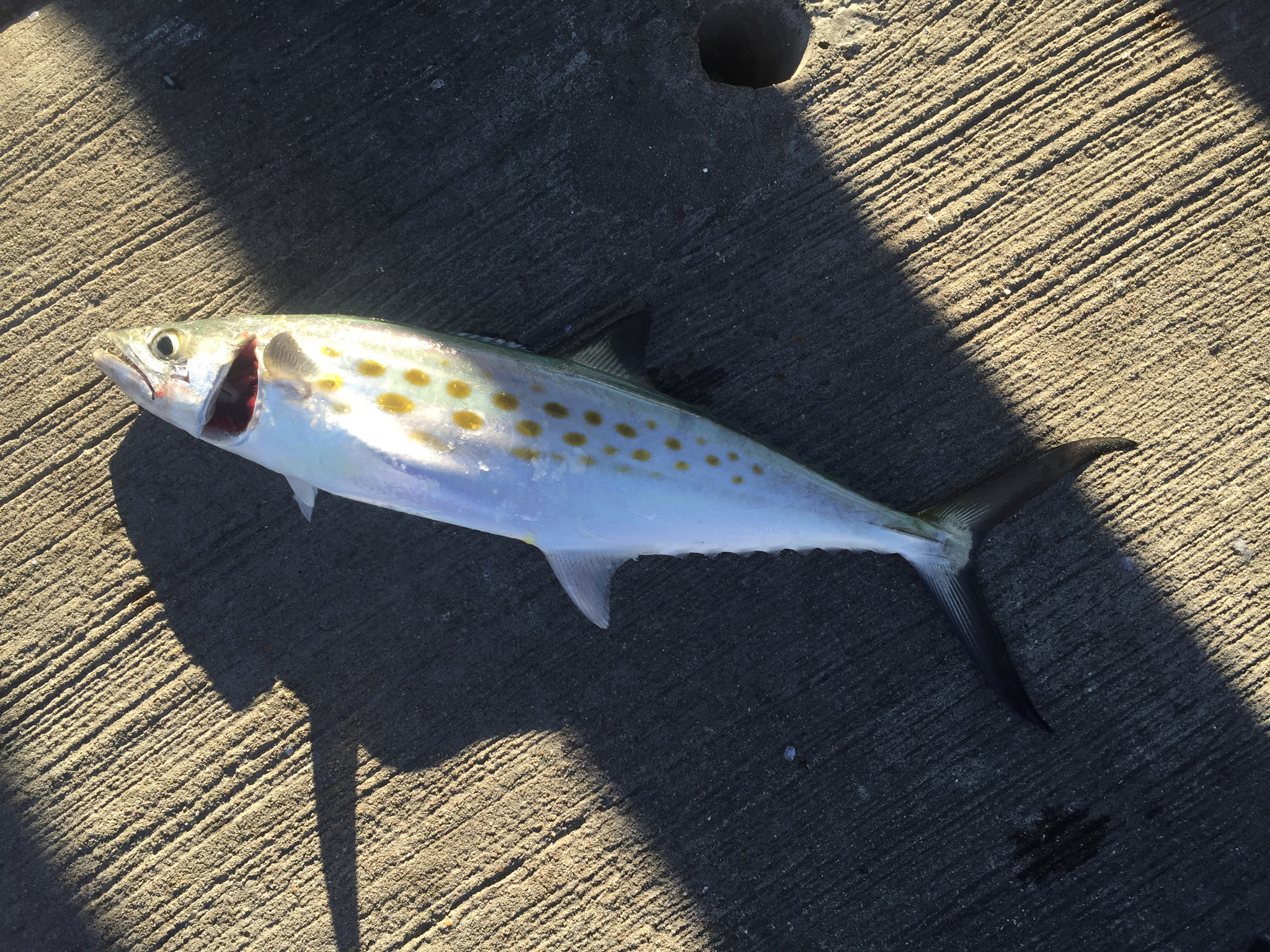
Atlantic Spanish mackerel
- Family
- Scombridae
- Depth
- 10–35 m
- Season
- Jan, Feb, Mar, Apr, May, Jun, Jul, Aug, Sep, Oct, Nov, Dec
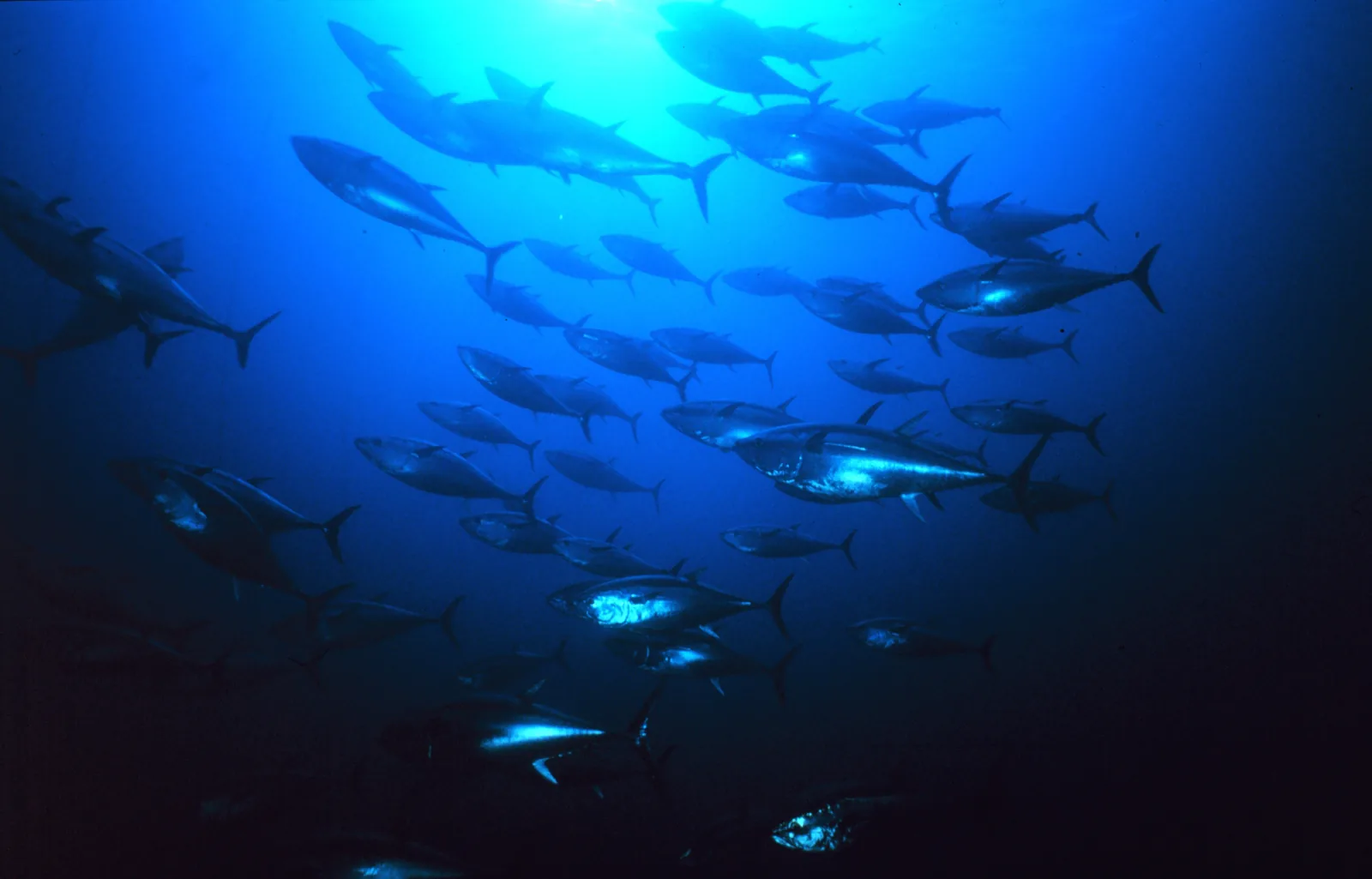
Atlantic bluefin tuna
- Family
- Scombridae
- Depth
- 0–985 m
- Season
- Jun
Guides for this water
Technique, gear and safety guides that fit Cero.