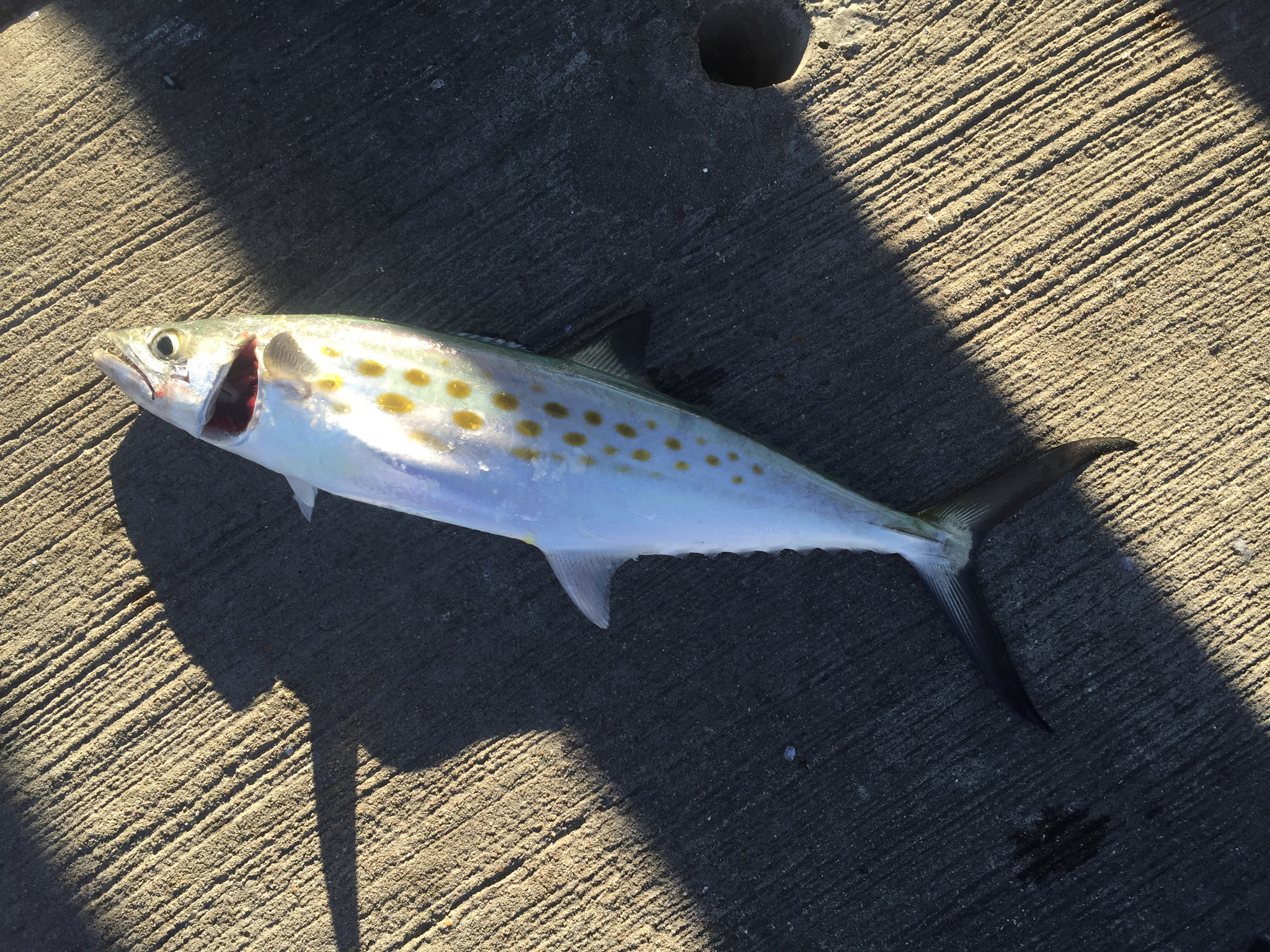
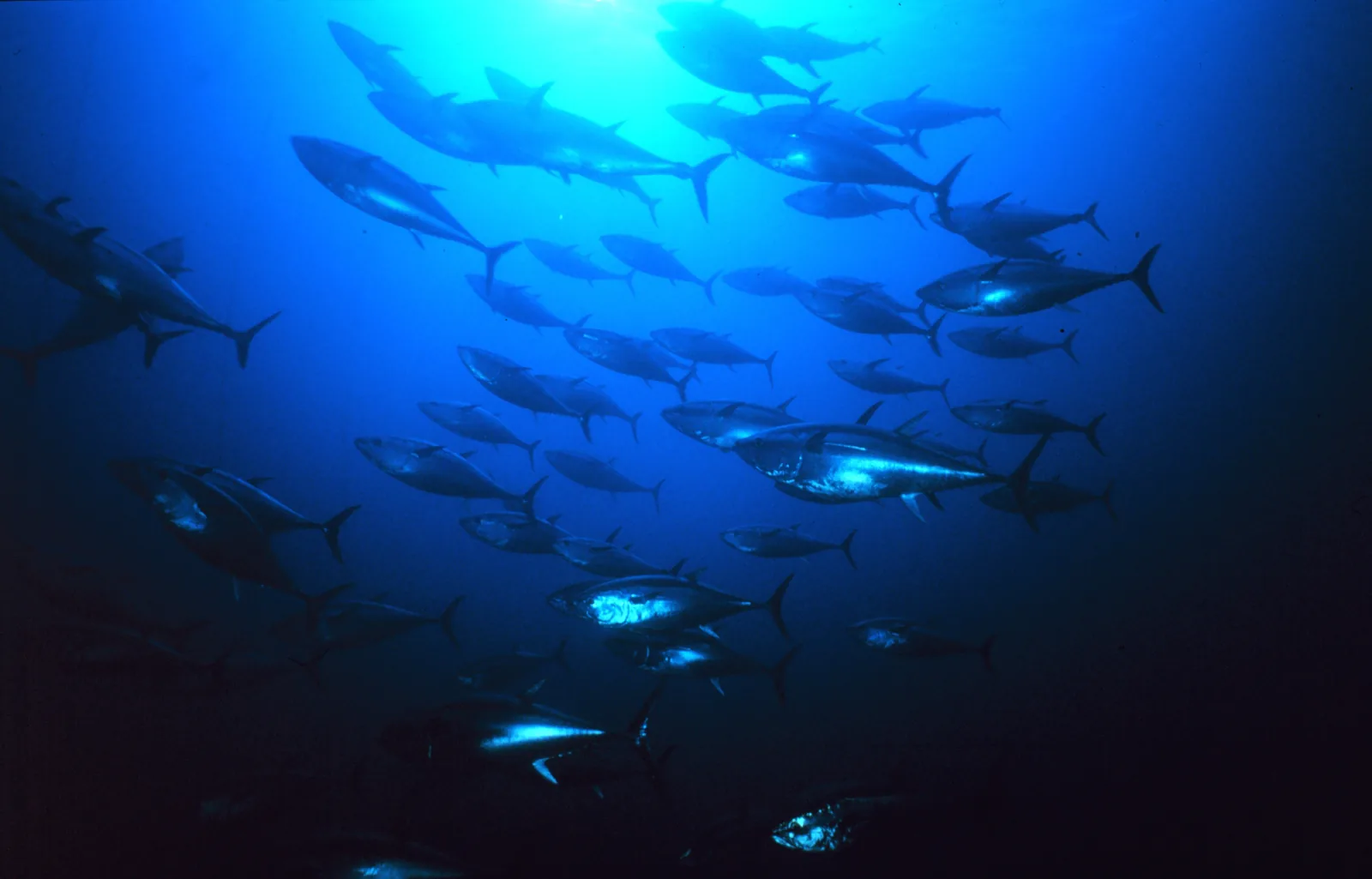
Broad-barred king mackerel (Scomberomorus semifasciatus) is a fish of the family Scombridae. FishBase gives its range as: Western Pacific: southern Papua New Guinea and northern Australia, from Shark Bay, Western Australia to northern New South Wales. Reports of this species from Thailand and Malaysia are based on misidentifications. It is recorded shallower than 100 m, in tropical water. The recorded maxima are 120 cm FL, 10 kg. IUCN status: Least Concern (LC). Chinese name: .
The Gulf is the estuary here
FishBase calls the species marine but also brackish, pelagic-neritic, with a depth range that runs from the surface to 100 m. The distribution is southern Papua New Guinea and northern Australia, from Shark Bay in Western Australia to northern New South Wales, and the same entry rules out Thailand and Malaysia: those reports were misidentifications. That correction matters before any planning, because a northern-hemisphere search returns a fish that does not occur there.
The salinity word is "brackish", but it does not mean a river mouth. In the Gulf of Carpentaria the fresh water arrives along hundreds of kilometres of coast in the wet season, and the useful gradient is the band where turbid runoff meets clearer shelf water. A boat working 2 km off a flooded river is not in the same water as one working 30 km out, even at the same depth.
Five stocks, four confirmed
The 2023 national stock report separates five management stocks across northern Australia: Western Australia, North West Northern Territory, Gulf of Carpentaria, East Coast North and East Coast South. Four are confirmed as genetically distinct biological stocks, and a sixth possible stock in the north-east Gulf has been suggested but not confirmed.
That structure explains why a good day at one place says nothing about the next. The report also notes that the Queensland effort footprint contracted between 2017 and 2021, with operations concentrating on the northern Gulf. If the stock boundaries are real, then concentration of effort is a local question, not a territory-wide one.
October to January in Queensland
FishBase marks spawning in January and October–December, from a single Queensland record. No month is recorded for Western Australia, the Northern Territory or Papua New Guinea. So the calendar is a Queensland statement, and even there it is one regional entry rather than a survey.
The national report describes the species as a broadcast spawner with a low age at maturity and high fecundity. Those traits make it productive, and productive fish can absorb more pressure. They do not make the aggregation predictable in your favour: the same report calls grey mackerel susceptible to hyperstability because they aggregate predictably.
120 cm, 10 kg, and a 75 cm maturity line
FishBase gives a maximum of 120 cm FL and 10 kg, with no common length and no age record. The maturity field is incomplete: no first-maturity length is stated, but the range begins at 75 cm. That is a large fish to be the smallest mature individual, and it means the breeding population is made of the upper end of the size range.
For handling, the practical line is not 120 cm. It is 75 cm: a fish below that range has no maturity record behind it, and a fish above it may be one of the few that spawn. The record fish is a different conversation from the fish you will release.
987 tonnes against a 657 tonne average
The Gulf of Carpentaria stock is mostly a commercial gillnet fishery, and more than 90% of reported catch in 2021–22 came from Queensland operations. Queensland's 2021–22 grey mackerel catch was 987 t, the highest recorded and above the ten-year average of 657 t for 2011–12 to 2020–21. Effort fell over the same period, from 1,276 to 827 annual fishing days, the lowest since 1995–96.
A rising catch on falling effort looks like a healthy stock, but the report refuses that shortcut. It notes that nominal catch rate is hard to interpret when grey mackerel are co-targeted with other species, and that the northward shift in effort could reflect economics, closures or regional biomass. The catch-MSY model found a declining biomass trend while keeping biomass above the limit reference point in 2021, and estimated that recent harvests exceeded FMSY. The stock is classified sustainable, with that caveat attached.
A 250 tonne cap and 33 tonnes of harvest
On the Queensland east coast the species is managed inside the East Coast Inshore Fishery, with a 250 t total allowable commercial catch and individual transferable quotas introduced on 1 September 2021. The most recent assessment, using 2018 data, put the North East stock at about 48% of unfished biomass, with a range of 37–58%. Current harvest there was 33 t, below the equilibrium MSY estimate of 227 t.
Those are the numbers a recreational angler is fishing beside, not inside. The report puts combined state-wide recreational catch of grey mackerel at 16 t, and Northern Territory charter vessels recorded less than 1 t in 2021–22. The commercial cap is the instrument doing the work; recreational rules sit on top of it.
Aggregations make a poor abundance index
Grey mackerel gather in predictable places, and the national report treats that as a vulnerability rather than a convenience. Targeted fishing on an aggregation can hold its catch rate steady while the surrounding stock falls, which is the definition of hyperstability. A good trip therefore is not evidence of abundance, and a bad trip is not evidence of collapse.
For the angler the consequence is local. If you find the school, you can catch several fish in a short time; if you miss it, the same water can look empty. The report's own warning is that concentrated fishing in one part of the Gulf could contribute to localised depletion over the long term. That is a reason to spread effort and to keep the count of fish kept low when the school is found.
Three GBIF rows and thirty-six photographs
GBIF's distributions endpoint returns three rows for the species: an Indo-West Pacific statement from ITIS, an Australasian record from a freshwater diversity assessment, and a global Least Concern entry from the IUCN Red List. None of the three carries a country-level record for Australia, even though the fish is Australian. This is a distribution table built from other databases, not a survey.
iNaturalist holds 36 observations. That is a small photographic sample for a fish that supports a gillnet fishery, and it says more about where people with cameras go than about where the stock is. The stock report's five-part structure is the only source here that divides the range into fishable units.
Regulations before you keep it
These are the published regulations for this fish. Read the number first. The notice below it is the actual regulation.
Minimum size2
≥60 cm
Australia — Queensland · AU-QLD
Queensland sets a 60 cm minimum size for grey mackerel.
Species.json lists Scomberomorus semifasciatus as Broad-barred king mackerel; grey mackerel is the Queensland common name.
Grey mackerel | Min: 60cm | Limit: 5 | -
≥750 mm
Australia — Western Australia · AU-WA
Western Australia sets a 750 mm minimum legal size for grey mackerel.
"Mackerel, grey Scomberomorus semifasciatus 750 mm"
Bag limit1
5 fish possession limit
Australia — Queensland · AU-QLD
Queensland sets a possession limit of 5 Broad-barred king mackerel.
A possession limit is the total number of fish you may keep at any time, including fish at home or in the freezer; it is not a daily take limit.
Grey mackerel | Min: 60cm | Limit: 5 | -
Every record above names its source and the date it was retrieved. See the regulation register for the full list, or how to read these regulations.
Where these facts come from
Check these pages before you rely on a size, range or protection status.
-
FishBase — Scomberomorus semifasciatus
— FishBase · T2
-
GBIF — Scomberomorus semifasciatus occurrence records
— GBIF · T2
-
IUCN Red List — Scomberomorus semifasciatus
— IUCN · T1
-
Photo record — iNaturalist
— iNaturalist · T3