
Pacific sierra
Pacific sierra is a slim scombrid of the eastern central Pacific, from La Jolla in southern California down to the Galapagos and Paita in Peru. It works 10 to 60 m in tropical water, moving in schools that chase bait, and feeds on fish. Adults reach 99 cm FL and 8.2 kg. The season runs January to April and July to December, with May and June the gap.
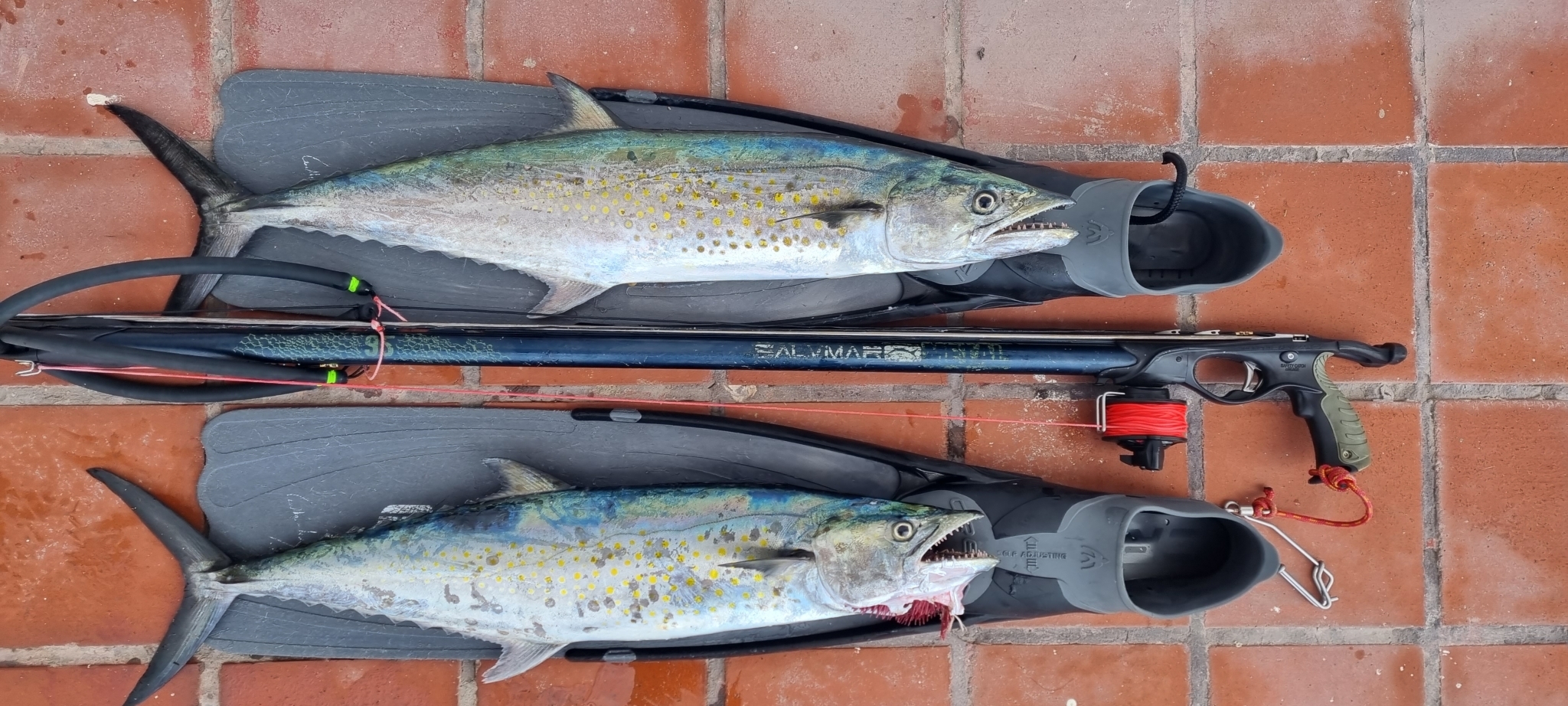
Pacific sierra (Scomberomorus sierra) is a fish of the family Scombridae. FishBase gives its range as: Eastern Central Pacific: La Jolla in southern California, USA to the Galapagos Islands and Paita, Peru. Recently reported from Antofagasta, Chile. Many authors have erroneously considered this species to be a synonym of Scomberomorus maculatus , or a subspecies of it. It is recorded from 10 to 60 m, in tropical water. The recorded maxima are 99 cm FL, 8.2 kg. Diet includes fishes. IUCN status: Least Concern (LC). Chinese name: .
Forty-three point nine, or twenty-six to thirty-two
FishBase's maturity field does not agree with itself. The length at first maturity is printed as 43.9 cm, and the range beside it is 26–32 cm. Those are not two ways of saying the same thing: 43.9 cm sits above the top of the stated range, not inside it. A reader who takes the first number will release fish that the second number says are mature.
The FAO species account adds a third version: first maturity at 26–32 cm fork length in Colombia. That matches FishBase's range and contradicts FishBase's headline value. Two sources agree on 26–32 cm, one prints 43.9 cm, and no source explains the gap. The working line has to be the lower band, because that is the one with two independent statements behind it.
Fork length is the only length here
Every length in these accounts is fork length. FishBase labels the 99 cm maximum as FL, the FAO account uses FL throughout, and the maturity figures are FL as well. Fork length stops at the notch of the tail, so it is shorter than total length by the caudal fin.
That sounds like bookkeeping until you compare a measurement on the boat with a regulation. A fish taped to the fork is being measured the way the sources measure it; a fish laid flat to the tail tip is not, and the difference is largest on a big specimen with a deep fork. If a rule quotes a number without naming the method, ask which one, because a 60 cm FL sierra and a 60 cm TL sierra are not the same fish.
Ninety-nine against ninety-seven
The maximum length is another disagreement. FishBase gives 99 cm FL; the FAO account gives about 97 cm FL. Two centimetres is inside the range of what different collections record, and neither figure is a measurement you can use to decide anything.
The useful agreement is the common length: both sources put it at 60 cm FL. That is the number you will actually meet. A 90 cm sierra is a fish at the top of the record, and the odds of meeting one are much lower than the odds of meeting a 60 cm fish. Fishing for the maximum is fishing for the exception.
Eight point two kilos against five point four
The weight records diverge more than the lengths. FishBase gives 8.2 kg; the FAO account says 5.4 kg and more. A 2.8 kg gap on a fish of this size is not rounding, and neither source says how the fish was weighed or whether it was gutted.
For handling, the weight is the least reliable number on the page. Length is measured on a board; weight depends on condition, roe, stomach contents and whether the fish was bled. If you need a number to compare your catch with, use fork length, because that is the measurement both sources actually define.
A sixty centimetre fish is the common one
The common length of 60 cm FL is the anchor for everything else. It sits well above the 26–32 cm maturity band, which means most of the fish an angler meets have already spawned at least once. It sits well below the 97–99 cm maximum, which means the big fish are a small tail of the distribution.
That shape changes the release decision. A 45 cm sierra is between the maturity band and the common size: legal in many places, mature by the lower estimate, and still below the size most people keep. A 60 cm fish is the ordinary catch, not a trophy. The trophy conversation starts near the maximum, where the records disagree.
Three spawning calendars
FishBase assembles spawning from three places: Colombia in January–April and November–December, Costa Rica's Gulf of Nicoya in August–November, and Mexico in July–September. The FAO account gives the same three windows in its own words. There is no single season for the species; there are three regional seasons.
For a trip, that means the month to avoid depends on the country. A July trip to Mexico is inside the spawning window; a July trip to Colombia is outside it. The consolidated FishBase month list, which runs January–April and July–December, is a union of the three records, not a statement that the fish spawns for ten months everywhere.
Six GBIF rows, two Colombian verdicts
GBIF's distributions endpoint returns six rows for the species: an East Pacific statement from ITIS, an IUCN global Least Concern assessment, a native record for Chile, two rows for Colombia and one for Mexico. The two Colombian rows carry different threat labels: one says Least Concern, the other Near Threatened, from two different national lists.
That is not a GBIF error. It is two databases answering different questions, one about fishing pressure and one about migratory species status, and the endpoint reports both. Read as a distribution, the file supports "present from Chile to Mexico". Read as a conservation label, it supports nothing until you know which list the label came from.
iNaturalist holds 283 observations. That is a larger sample than the six GBIF rows, but it is still a record of anglers with phones, and it clusters where people fish rather than where the stock is. It confirms the range; it does not measure the fish.
A sierra, a Spanish mackerel, and one synonym
FishBase notes that many authors treated this species as a synonym of Scomberomorus maculatus, or as a subspecies of it. The common name "sierra" is also used for other mackerels in the same region, and "Spanish mackerel" covers a different species complex. A regulation written for "sierra" may or may not mean this fish.
The practical rule is the one that applies to the whole genus: use the binomial. Scomberomorus sierra is the only string that separates this fish from the Atlantic S. maculatus and from the other eastern Pacific sierras. The common name is what the market says; the binomial is what the rulebook indexes.
Where these facts come from
Check these pages before you rely on a size, range or protection status.
- FishBase — Scomberomorus sierra — FishBase · T2
- GBIF — Scomberomorus sierra occurrence records — GBIF · T2
- IUCN Red List — Scomberomorus sierra — IUCN · T1
- Photo record — iNaturalist — iNaturalist · T3
Fish in the same water
These fish live in the same place.

Albacore
- Family
- Scombridae
- Depth
- 0–600 m
- Season
- Jan, Feb, Mar, Apr, May, Jun, Jul, Aug, Oct, Nov, Dec
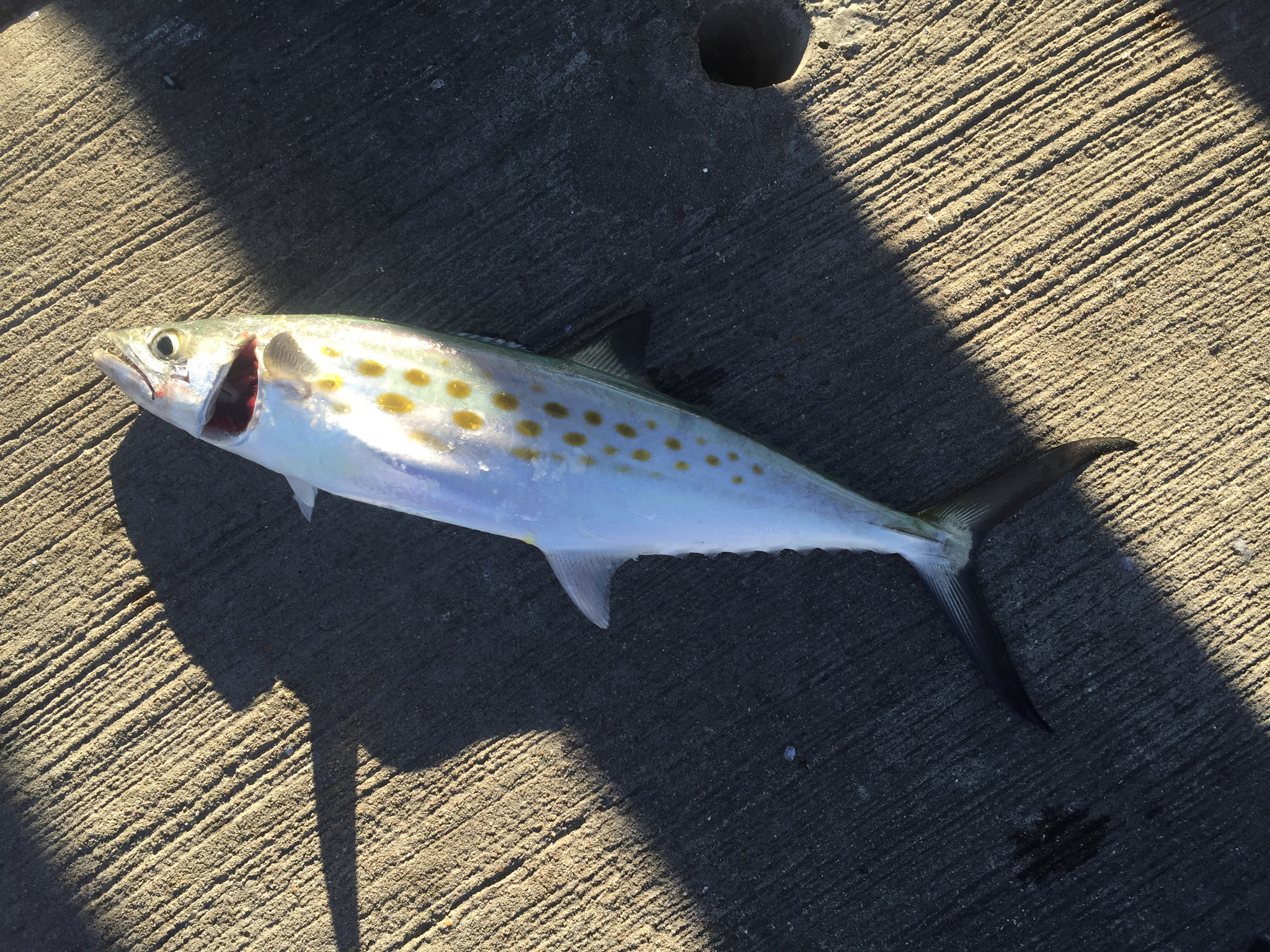
Atlantic Spanish mackerel
- Family
- Scombridae
- Depth
- 10–35 m
- Season
- Jan, Feb, Mar, Apr, May, Jun, Jul, Aug, Sep, Oct, Nov, Dec
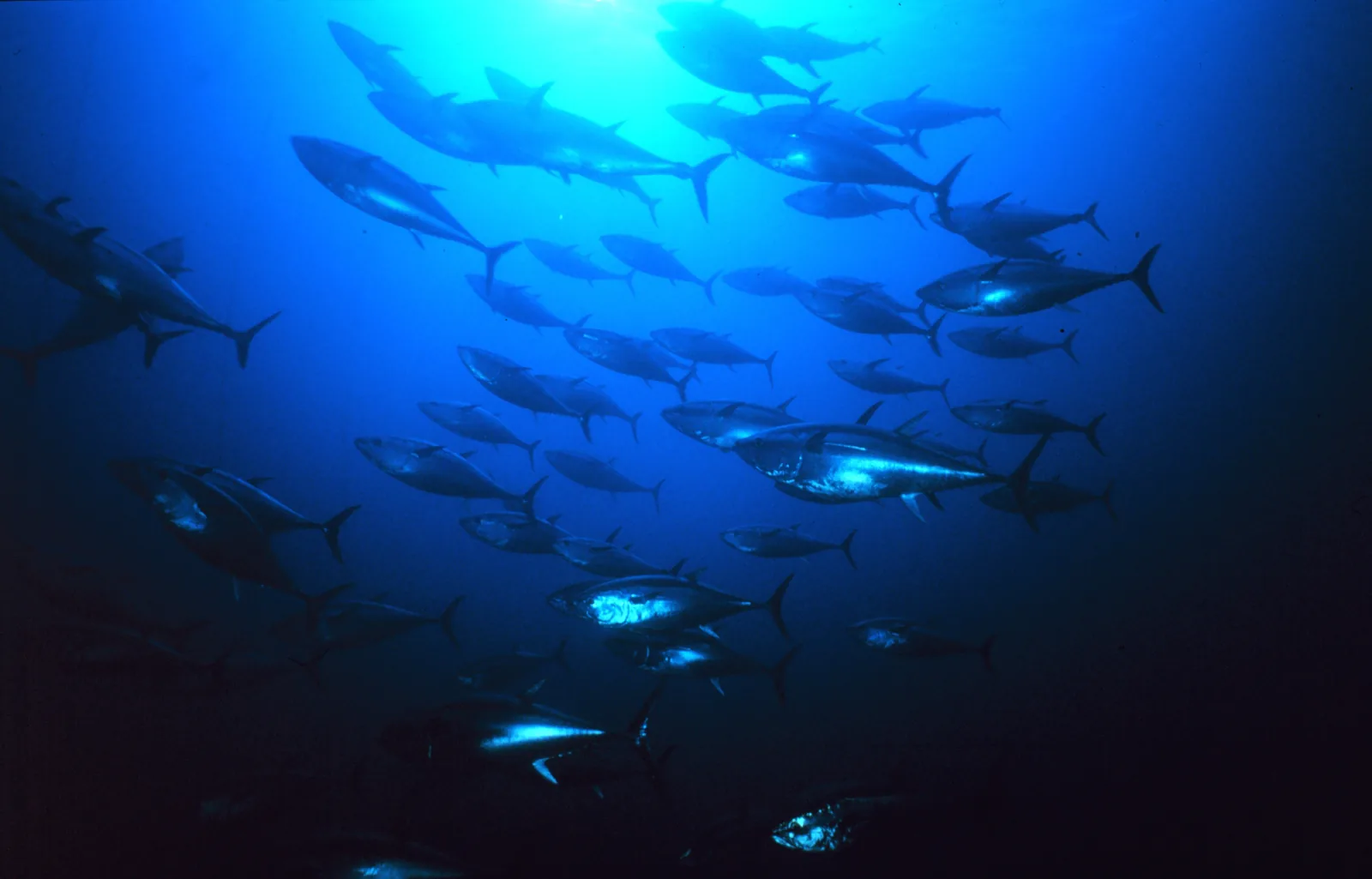
Atlantic bluefin tuna
- Family
- Scombridae
- Depth
- 0–985 m
- Season
- Jun
Guides for this water
Technique, gear and safety guides that fit Pacific sierra.