
Gnomefish
A large deep-water fish of the family Scombropidae, called mutsu in Japan. It has large eyes and a large mouth, adults live on rocky ground from 200 to 700 m, and juveniles stay on shallow reefs and in bays. It spawns from October to March and is a high-value fish for simmering and sashimi in Kanto.
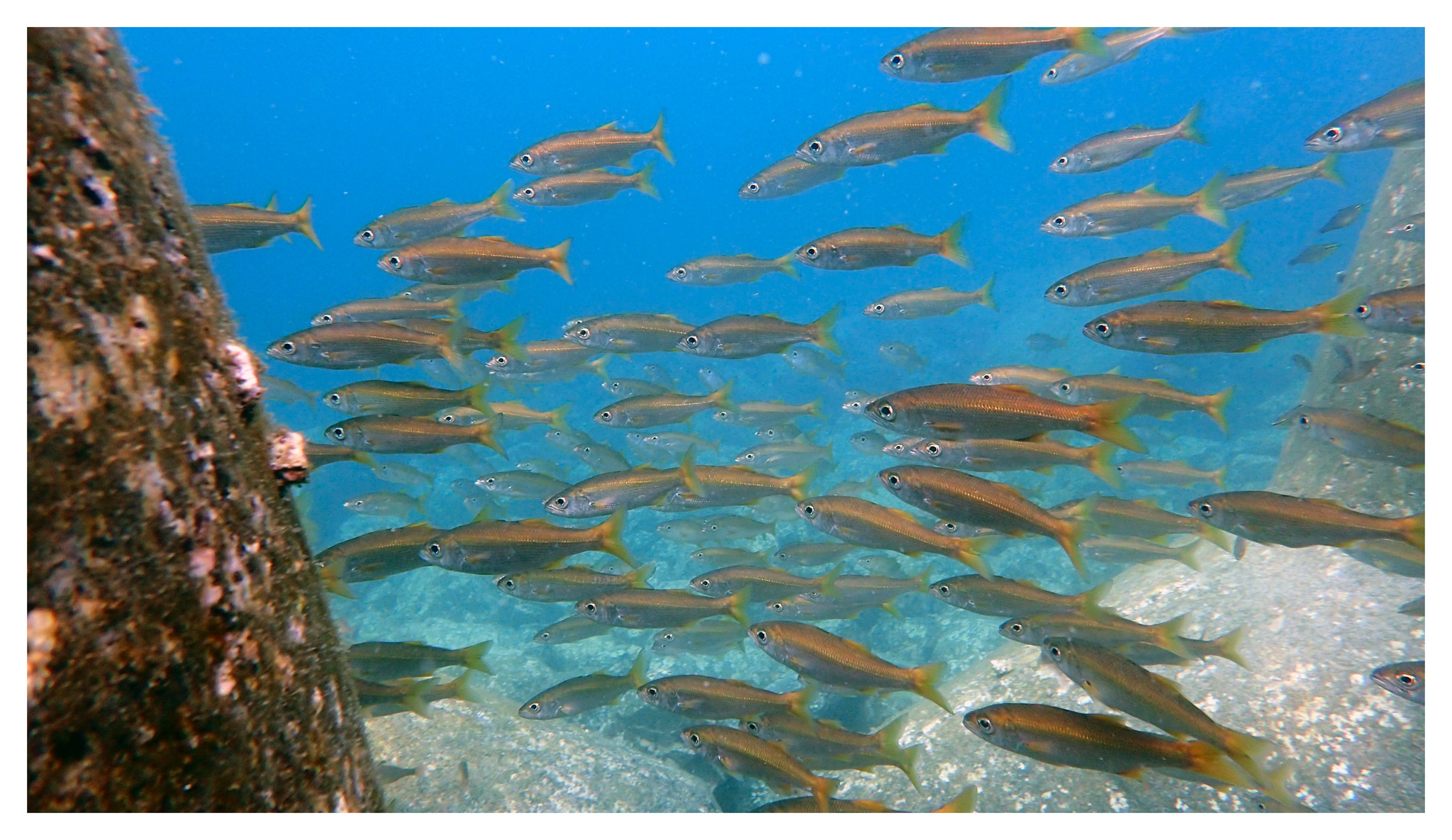
A large deep-water fish of the family Scombropidae, called mutsu in Japan. It has large eyes and a large mouth, adults live on rocky ground from 200 to 700 m, and juveniles stay on shallow reefs and in bays. It spawns from October to March and is a high-value fish for simmering and sashimi in Kanto.
Big eyes, big mouth, and a mouth colour that changes
The body is fusiform, the eye and mouth both large, with a single row of sharp teeth in each jaw and small canines on the tongue and pharyngeal bones. Two pairs of spines sit on the opercle. The dorsal fin is in two sections, the pectoral is long and slender, and the caudal is deeply forked.
Juveniles are reddish-brown or yellow-brown; adults turn purple-brown with a silver-grey belly and a yellow-brown caudal fin edged in pale black. The mouth cavity is white in juveniles and black in adults. Against Scombrops gilberti, the Japanese source points to mouth colour and body proportions; the market uses the two names loosely, and the word black in a trade name misleads more than it helps.
FishBase gives a maximum of 150 cm total length and 16.1 kg, with ordinary fish far smaller.
Deep rock for adults, shallow rock for juveniles
FishBase records the Indo-West Pacific: Mozambique and South Africa, Japan and the East China Sea, plus the Cape in the southeast Atlantic. The Japanese record is the Pacific coast from Hokkaido to southern Kyushu, the Sea of Japan and East China Sea from Hokkaido through Akita Oga and Yamagata Sakata to southern Kyushu, and Torishima, with additional records from Kyushu to the Palau Ridge, the East China Sea shelf edge and Taiwan.
Depth is where the sources part. FishBase gives 20 to 400 m; the Japanese guide gives 200 to 700 m for adults. The difference probably reflects a split between juveniles on shallow reefs and in bays and adults down on deep rocky ground. Fishing follows the size class, and the two figures are not averaged into one.
From zooplankton to sardines
Spawning runs from October to March, on the shelf edge of the East China Sea. Larvae live in the surface layer on zooplankton, switch to sardine larvae at 4 to 5 cm, and become piscivorous above 5 cm. Up to about 18 cm they feed mainly on sardines, then school on coastal rock. In autumn, juveniles around 20 cm move into deeper water and darken.
The adult season is October to February, with fat at its best before spawning; oversized gonads reduce flesh quality. Immature small fish can be eaten all year, and Kanto calls the shallow-reef stage onshirazu, which also commands a price.
Three depth bands for three sizes
Fish under 30 cm are fished at 150 to 200 m, fish under 60 cm at 200 to 300 m, and the method is almost always from a boat. The traditional Kanto marks are the Uraga Channel, South Boso, East Izu, South Izu and the Izu Seven Islands. Fishing is possible almost year-round, with the best period from September to March.
Baits are squid strips, mackerel chunks and sardines on a bottom rig or a tenbin rig. Deep water with a fast current demands a heavy sinker, otherwise the bait never settles in the target layer. The teeth are sharp and the leader takes damage, so it needs frequent inspection.
Heavy tackle for two hundred metres and more
A boat rod of 1.8 to 2.4 m, a manual or electric reel with the electric preferred in deep water, PE main line of 3 to 5, leader 4 to 6, and Maruseigo hooks in 14 to 16 or a dedicated mutsu hook. Sinkers run from 80 to 150 depending on depth and current.
Deep fishing needs enough line capacity and enough time for the ascent. An electric reel cuts the physical work, but the last stage of bringing the fish up still has to be controlled by hand, or fish are lost on the way to the surface.
A market name that hides the species
The flesh is white and fatty, and the Japanese guide calls it fattest in winter. Sashimi, simmering, teriyaki, hotpot, frying and deep-frying all suit it. The pre-spawning ovary, mutsuko, is treated as a delicacy, simmered or used in soup, and the head and bones give a good miso stock.
In the trade, much of what is sold as kuromutsu is in fact this species; the real kuromutsu is Scombrops gilberti, in a different genus.
Japan has no nationwide recreational size or closed season; sea fishing is governed by prefectural fishery adjustment regulations and cooperative rules. No species-level restriction was found, but the rules of Chiba, Kanagawa and Shizuoka were not checked line by line. That item is deferred.
Twenty to four hundred, or two hundred to seven hundred
Classification, distribution, maximum length and the 20 to 400 m depth come from FishBase. The 200 to 700 m figure, spawning period, life history, market confusion and eating assessment come from the market guide. Marks, method and the September to March window come from the angling encyclopedia. The Chinese name comes from the Taiwan fish database.
The two depth ranges are presented side by side. No average is taken, because the likely explanation is a difference between age classes, and averaging would describe neither the juvenile nor the adult habitat.
How to catch it
Boat bottom fishing
Fished with the listed approach, matched to the recorded depth and size.
Heavy boat fishing
Fished with the listed approach, matched to the recorded depth and size.
Where these facts come from
Check these pages before you rely on a size, range or protection status.
- FishBase — Scombrops boops — FishBase · T2
- GBIF — Scombrops boops occurrence records — GBIF · T2
- IUCN Red List — Scombrops boops — IUCN · T1
- Photo record — iNaturalist — iNaturalist · T3
Fish in the same water
These fish live in the same place.
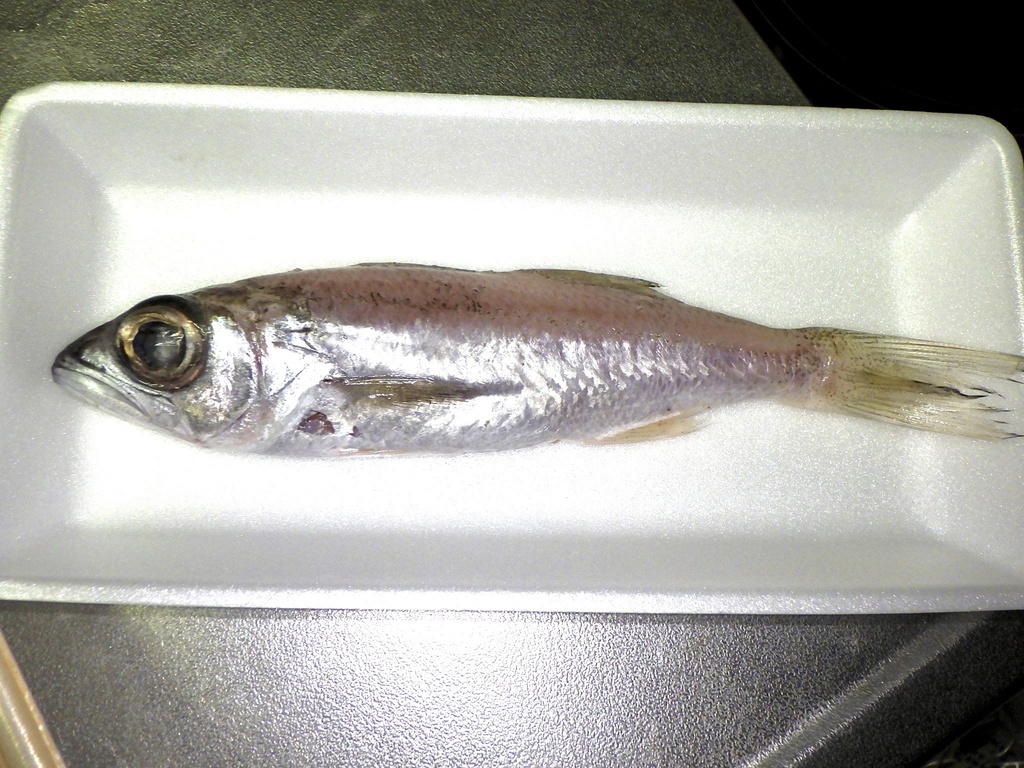
Japanese bluefish
- Family
- Acropomatiformes
- Depth
- 200–500 m
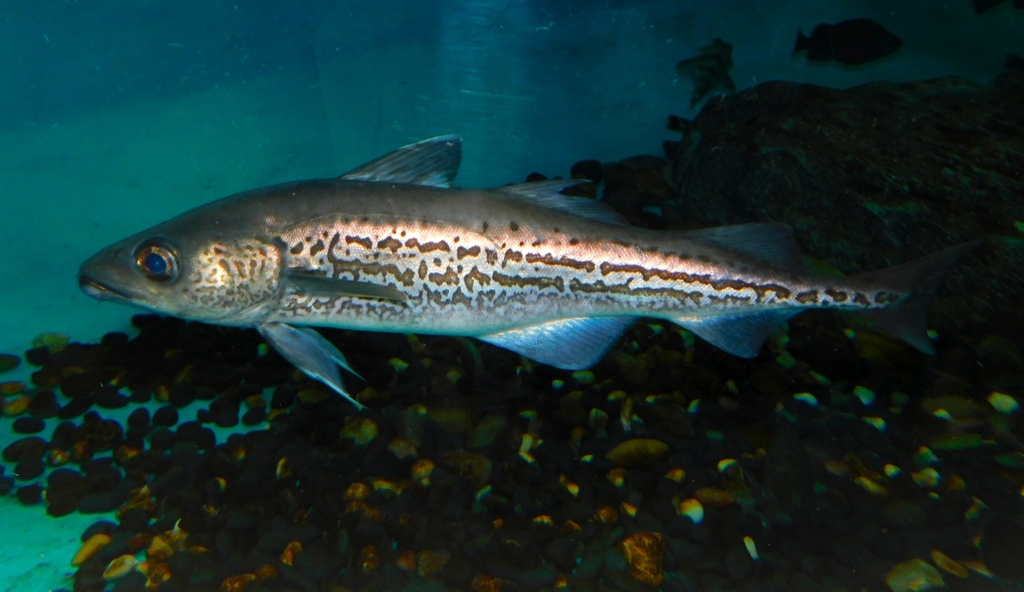
Alaska pollock
- Family
- Gadidae
- Depth
- 0–1280 m
- Season
- Jan, Feb, Mar, Apr, May, Jun, Jul, Aug

Albacore
- Family
- Scombridae
- Depth
- 0–600 m
- Season
- Jan, Feb, Mar, Apr, May, Jun, Jul, Aug, Oct, Nov, Dec
Guides for this water
Technique, gear and safety guides that fit Gnomefish.