
Japanese bluefish
A deep-water fish of the Kanto coast, sold separately from the closely related mutsu and at a higher price. Adults live at 200 to 500 m while juveniles are found further north, and the ovaries that swell in late winter are a Kanto speciality. No spawning season is recorded for the species.
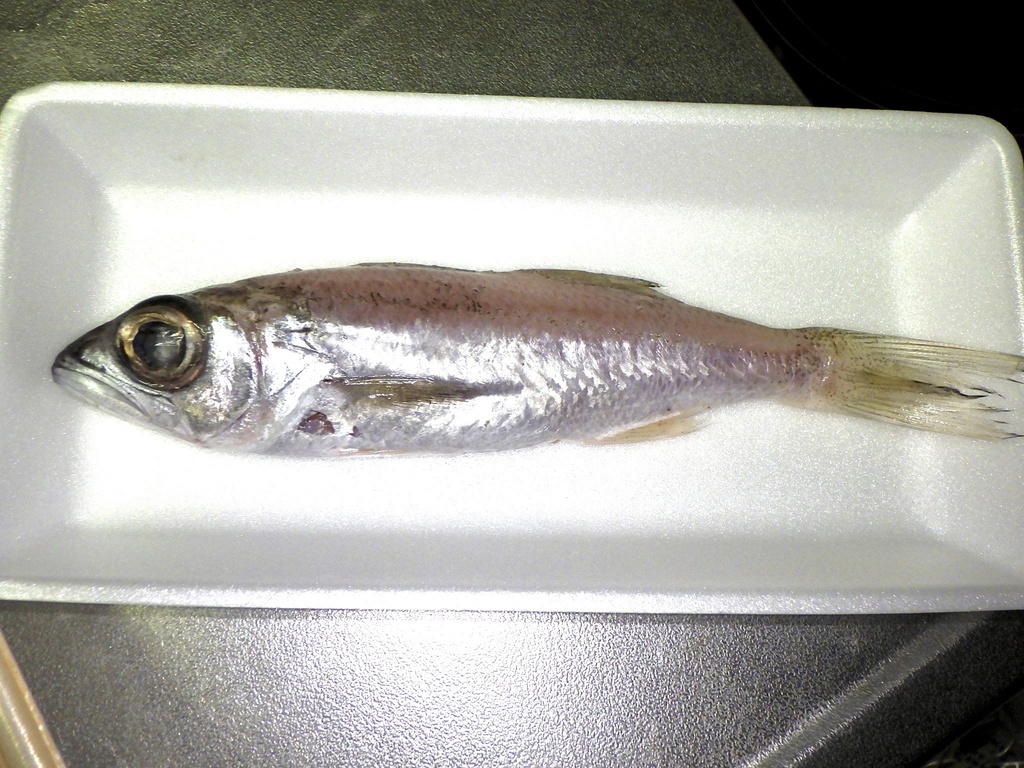
A deep-water fish of the Kanto coast, sold separately from the closely related mutsu and at a higher price. Adults live at 200 to 500 m while juveniles are found further north, and the ovaries that swell in late winter are a Kanto speciality. No spawning season is recorded for the species.
A black mouth and a name that misleads
Scombrops gilberti is elongate and compressed, with a slightly pointed head, a large mouth and a lower jaw that protrudes a little. The dorsal fin carries 9 to 10 spines and 12 to 13 soft rays, the anal fin 3 spines and 11 to 13 soft rays, and the caudal fin is forked. Adults are glossy blue-black with hard scales that do not come away easily; juveniles are browner and shed scales readily. The inside of the mouth is black, which is where a Japanese insult for this fish comes from. It is most often confused with Scombrops boops, the mutsu: this species is darker, its adults live deeper, and it fetches a higher price. Older literature treated it as the adult form of boops; the two are now separate species. The Chinese name suggests a mackerel relative, but the family is its own and has nothing to do with Scomber.
Small fish north, big fish south
FishBase records the species from southern Hokkaido to Suruga Bay. The Japanese account adds depth and a split by age: 200 to 500 m, juveniles off Iwate and Miyagi, adults off Rausu in Hokkaido, Fukushima, the southeast coast of the Boso Peninsula, Sagami Bay, Izu Oshima and the east coast of the Izu Peninsula. Adults appear only in the deep water around Kanto; juveniles are on the Tohoku Pacific side. That arrangement determines the fishing. A small fish taken from the shore is almost certainly a juvenile, and a genuinely large adult requires a boat over steep slope and seamount ground deeper than 200 m. The two are not the same fishery and should not be planned as one.
No spawning season on record
The encyclopedia gives no spawning period. It records only that the ovaries swell from winter into spring, and that Kanto calls them mutsuko: fine-grained, sweet and slightly sticky. The market season is autumn to winter, and fat content drops a little once the spring gonad swelling is past. For an angler the window is autumn and winter, with the egg-bearing fish of late winter and early spring the most valuable. Because the fish lives deep, surface temperature matters less to it than to a shallow species; the seasonal change shows in where the schools sit and in what reaches the market, not in the fish coming close to shore. No spawning temperature or spawning ground is given, and none is supplied here.
Two hundred metres down, with a squid strip
This is a boat fishery, worked at 200 to 500 m with a branch rig or a boom rig and short strips of squid as bait. The depth demands a heavy lead and an electric reel. Once the bait is at the indicated depth the rig is held steady so the bait can sway near the bottom, rather than being worked up and down. The mouth is large and the fish swallows deep; the bite usually shows as the rod tip pulling down hard or the line going suddenly slack, and the strike should wait until the fish has taken it properly. In deep water the strike needs a long sweep to drive the hook home. Fish are often mixed with mutsu, and the two should be separated by body colour and the black mouth, not by size alone.
Deep tackle and a long strike
Boat tackle is a 1.8 to 2.4 m rod rated 80 to 150, an electric reel, PE 3 to 5 main line, 5 to 8 leader, maruseigo 16 to 20 or dedicated deep-water hooks, and a sinker of 100 to 200 chosen for depth and current. The main line has to be heavy enough to avoid tangling with the next angler, and the leader abrasion-resistant nylon or fluorocarbon so rock does not cut it. Battery charge and drag setting are part of the preparation, because hauling from beyond 200 m is a real load and not a matter of a few turns of the handle.
Soft flesh, and a famous ovary
The flesh is fatty and soft. Simmering, a sake-and-salt hot pot, simmered frame, clear soup, steaming, sake-steaming, sashimi and kasuzuke all suit it, and the ovary, mutsuko, is an early-spring speciality in Kanto. The scales are soft and large and come off easily, the skin is thick, and the blood line is red enough that the white flesh clouds where fat has run into it. Japan has no nationwide recreational size or closed season; sea fishing follows prefectural fishery adjustment rules and cooperative angling rules. This is a deep-water boat target, and whether the rules of Tokyo, Kanagawa and Shizuoka, or the operators' own rules, set a size or bag limit was not checked one by one here. That is marked deferred.
Where each fact came from, and the range written twice
Taxonomy, distribution and the fin formula come from FishBase. The Japanese distribution, depth, the market separation from mutsu, the season, cooking and fishing method come from the market encyclopedia. FishBase stops at southern Hokkaido to Suruga Bay; the encyclopedia adds the juvenile and adult split and the depth band, and both statements are given rather than one being preferred.
How to catch it
Boat bottom fishing
Fished with the listed approach, matched to the recorded depth and size.
Heavy boat fishing
Fished with the listed approach, matched to the recorded depth and size.
Where these facts come from
Check these pages before you rely on a size, range or protection status.
- FishBase — Scombrops gilberti — FishBase · T2
- GBIF — Scombrops gilberti occurrence records — GBIF · T2
- IUCN Red List — Scombrops gilberti — IUCN · T1
- Photo record — iNaturalist — iNaturalist · T3
Fish in the same water
These fish live in the same place.
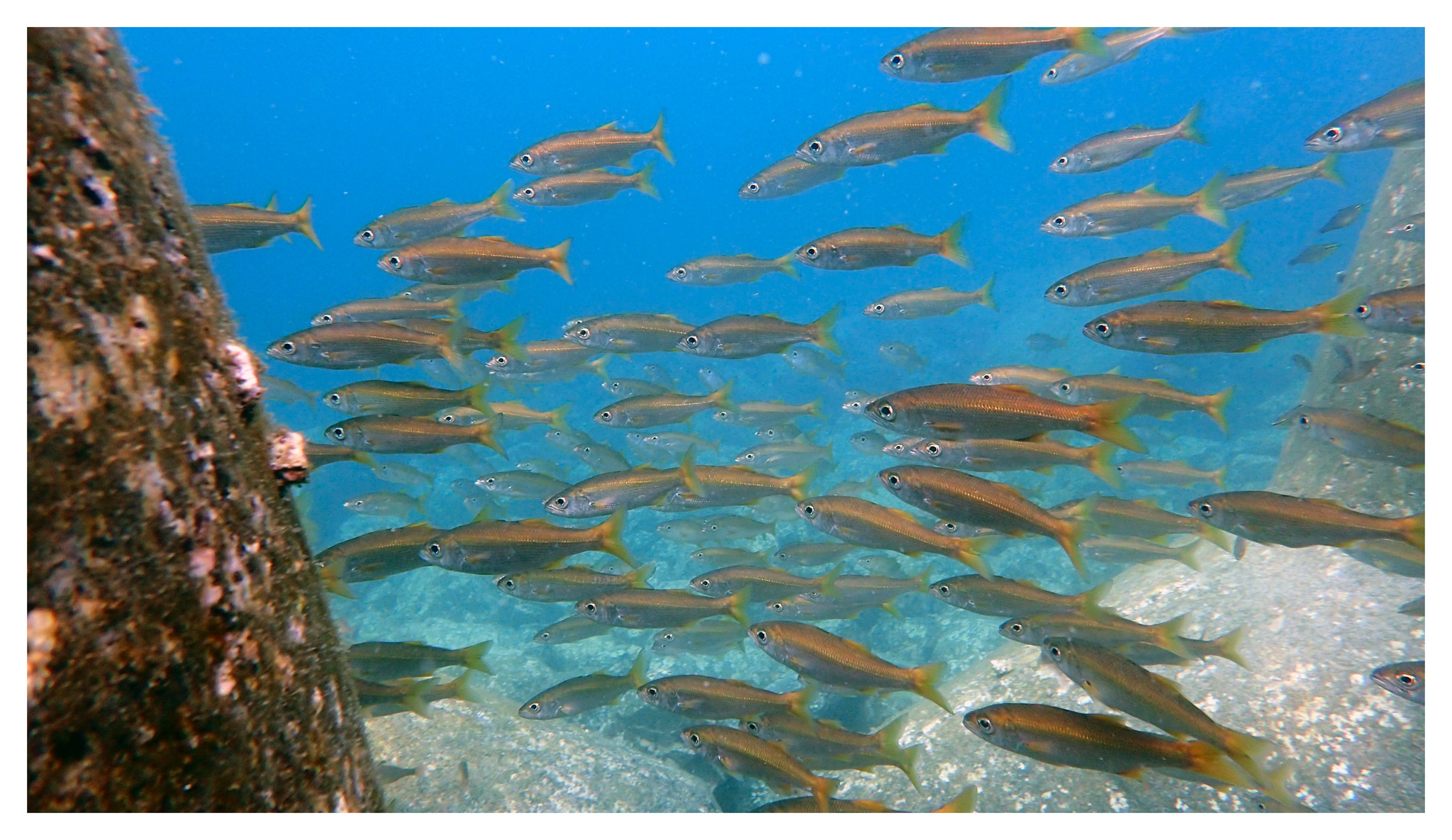
Gnomefish
- Family
- Acropomatiformes
- Depth
- 20–400 m
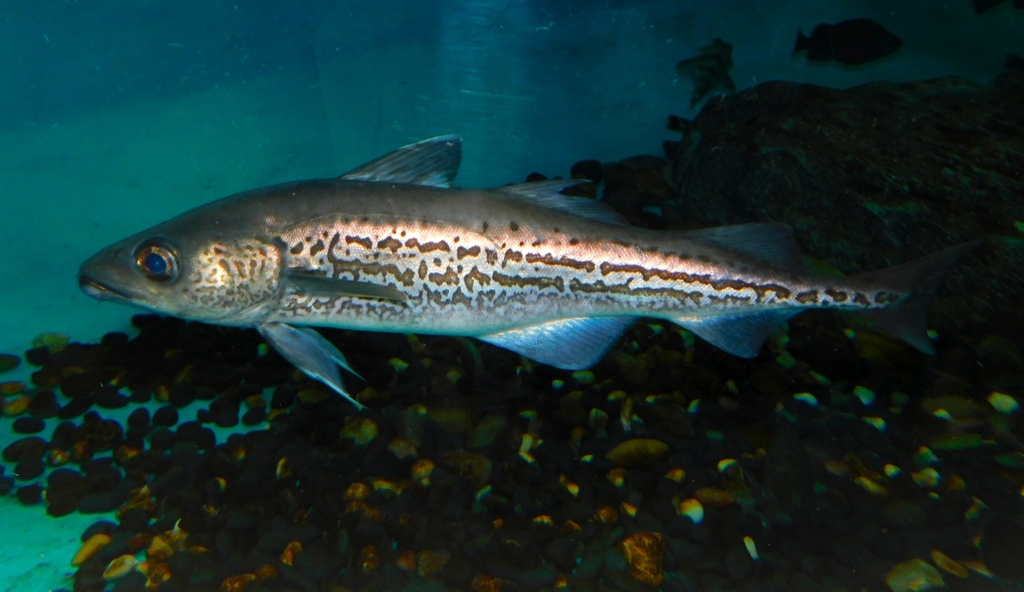
Alaska pollock
- Family
- Gadidae
- Depth
- 0–1280 m
- Season
- Jan, Feb, Mar, Apr, May, Jun, Jul, Aug

Albacore
- Family
- Scombridae
- Depth
- 0–600 m
- Season
- Jan, Feb, Mar, Apr, May, Jun, Jul, Aug, Oct, Nov, Dec
Guides for this water
Technique, gear and safety guides that fit Japanese bluefish.