
Nursehound
Nursehound is a large catshark of the northeast Atlantic and Mediterranean, from southern Scandinavia down through Morocco and Mauritania to Senegal. It is a thick-set fish with a broad, rounded head and rear-set dorsal fins, recorded from 1 to 400 m in subtropical water. It feeds on crustaceans and fish, reaches 170 cm TL and can live 19 years.
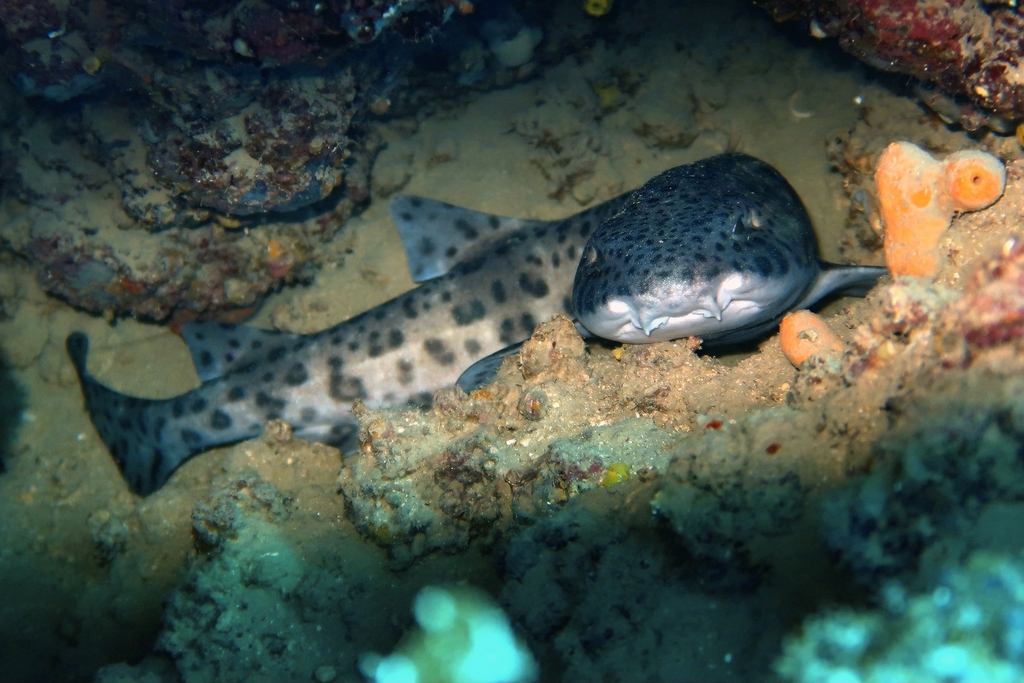
Nursehound (Scyliorhinus stellaris) is a fish of the family Scyliorhinidae. FishBase gives its range as: Northeast Atlantic: southern Scandinavia to Mediterranean, Morocco, Mauritania to Senegal. Records further south in the Atlantic, to Gulf of Guinea and Congo River mouth may be misidentifications of Scyliorhinus cervigoni. The animal is robust, with a broad rounded head and two dorsal fins set far back. It is recorded from 1 to 400 m, in subtropical water. The recorded maxima are 170 cm TL, 19 years. Diet includes crustaceans and fishes. IUCN status: Vulnerable (VU). Chinese name: .
Identification
The English name table is the first identification problem. The same catshark appears as nursehound, nurse-hound, bull huss, greater spotted dogfish, large-spotted dogfish, larger spotted dogfish, flake, hound and rigg. A reader who meets "dogfish" or "huss" in a catch report cannot recover the species from the word. The Chinese entries, and , are more specific, and iNaturalist uses Nursehound for taxon 112381, with 1,119 observations.
The animal is robust, with a broad rounded head and two dorsal fins set far back. It reaches 170 cm total length, with a common length of 125 cm and a maximum reported age of 19 years; first maturity is placed at 78 cm. Wikipedia separates it from the small-spotted catshark by the larger spots and by nasal skin flaps that do not reach the mouth. The word "nurse" in the English name does not move the fish out of the catsharks: the family line reads Scyliorhinidae.
Habitat and distribution
The species is reef-associated, with rocky and coastal keywords and a continental-shelf range; the depth band is 1–400 m, but the usual range is 20–63 m. Wikipedia describes it among rocks or algae at 20–60 m. The written range runs from southern Scandinavia through the Mediterranean to Morocco, Mauritania and Senegal. The country table carries 38 territories, from Norway and the UK through the Mediterranean to West Africa.
The southern end of that range is where names and records separate. FishBase notes that records farther south, to the Gulf of Guinea and the Congo River mouth, may be misidentifications of Scyliorhinus cervigoni. A map that accepts every record extends the nursehound into water where the fish may not occur. This is the name problem moved onto the chart: a label that fits several catsharks produces a range that fits several catsharks.
Season and fishing approach
The working number on a boat is the 125 cm common length, not the 170 cm maximum. Maturity at 78 cm means most fish above the common length are mature, and the 19-year maximum age points to an animal whose size is not replaced quickly. The 20–63 m usual band is the fishable slice of a 1–400 m range, and the rocky and reef keywords with a diet of crustaceans and fishes put baits on or near hard bottom rather than over clean sand.
A bottom rig that keeps the bait close to rock and algae is the natural presentation, and the same structure explains why the fish is more often a by-catch than a target drawn into open water. Because the species is assessed Vulnerable, the decision after the hook is set carries more weight than the choice of rod.
Edibility and regulations
FishBase records minor commercial fishing and public aquariums. The Red List category is Vulnerable, assessed 31 August 2020. That is the clearest statement in the record: a species whose decline has been formally reviewed.
The name list complicates regulation more than the biology does. If a market or a catch return uses "flake", "huss" or "dogfish", the entry cannot be matched to Scyliorhinus stellaris without a photograph or a landed specimen. The 38 territories in that table fall under separate jurisdictions, and the species is taken both by commercial gear and by anglers who meet it on rough ground. For a Vulnerable catshark, identification is part of compliance rather than a preliminary to it.
Where these facts come from
Check these pages before you rely on a size, range or protection status.
- FishBase — Scyliorhinus stellaris — FishBase · T2
- GBIF — Scyliorhinus stellaris occurrence records — GBIF · T2
- IUCN Red List — Scyliorhinus stellaris — IUCN · T1
- Photo record — iNaturalist — iNaturalist · T3
Fish in the same water
These fish live in the same place.

Lesser spotted dogfish
- Family
- Scyliorhinidae
- Depth
- 10–780 m
- Season
- Jan, Feb, Mar, Apr, May, Jun, Jul, Aug, Oct, Nov, Dec
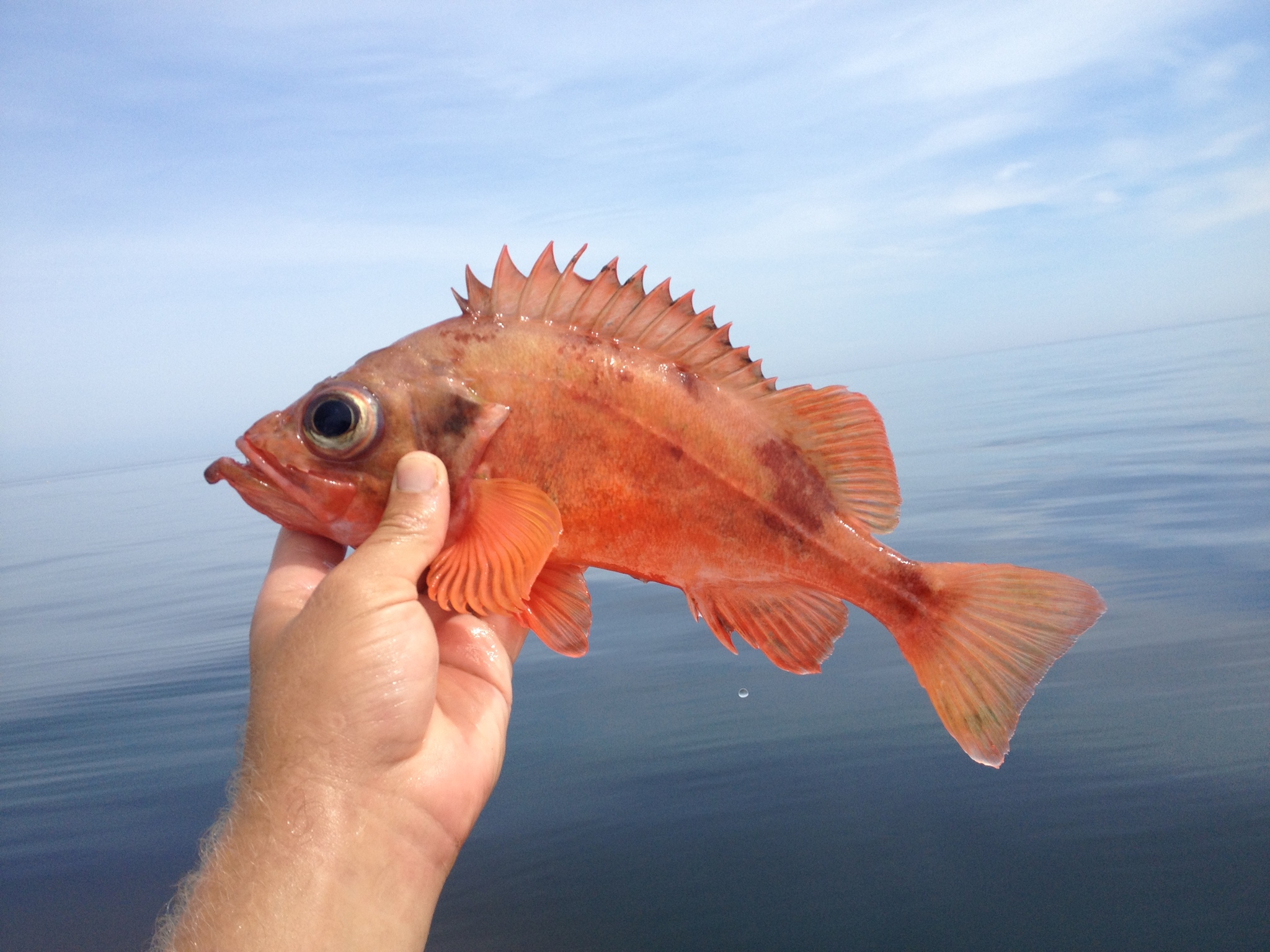
Acadian redfish
- Family
- Sebastidae
- Depth
- 70–592 m

African pompano
- Family
- Carangidae
- Depth
- 60–100 m
Guides for this water
Technique, gear and safety guides that fit Nursehound.