
Rougheye rockfish
Dorsal fin with 12–14 spines and 14 soft rays, anal fin with 3 spines and 6–8 soft rays, 27 vertebrae and 29–34 gill rakers. The head carries eight strong spines and at least two infraorbital spines, the most reliable way to separate it from S. The body is pale and the spinous dorsal membrane has no distinct spots; the first and fourth dorsal spines are short for the genus and the gill rakers are few and short.
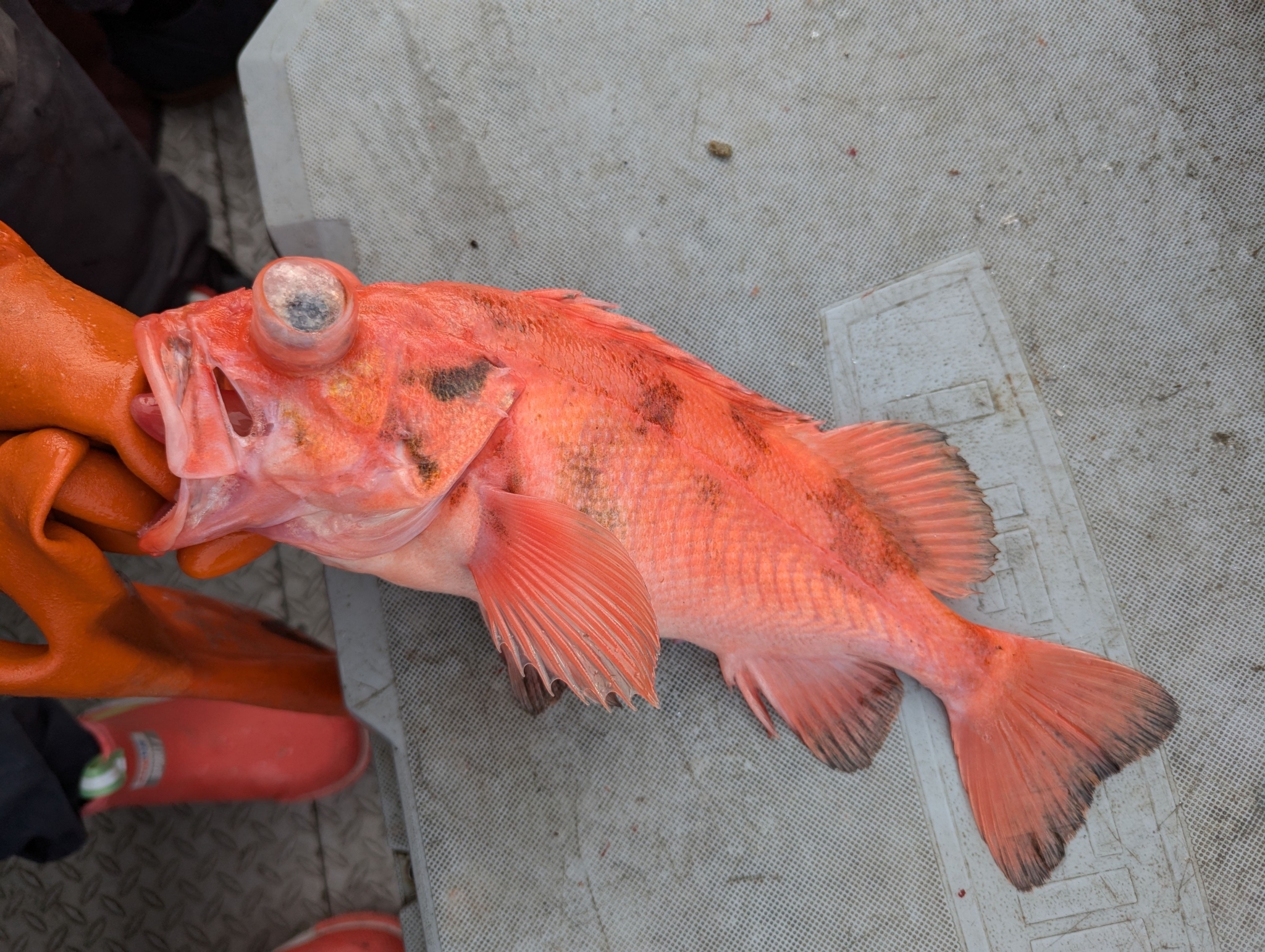
Dorsal fin with 12–14 spines and 14 soft rays, anal fin with 3 spines and 6–8 soft rays, 27 vertebrae and 29–34 gill rakers. The head carries eight strong spines and at least two infraorbital spines, the most reliable way to separate it from S. melanostictus. The body is pale and the spinous dorsal membrane has no distinct spots; the first and fourth dorsal spines are short for the genus and the gill rakers are few and short. Maximum length is 97 cm TL, maturity comes near 47 cm, and the oldest recorded fish reached 205 years. The pale body and unspotted spinous dorsal fin also help in dull light, and the short first dorsal spine separates it from darker, longer-spined relatives.
Habitat and behaviour
It ranges from Japan through the Bering Sea and the whole Aleutian chain south to San Diego, California. The species is demersal on deep slopes, canyon walls and hard rubble, recorded from 25 to 900 m, and it also shows up around sponge and coral cover. Stomach contents include squid, fish, amphipods, crabs and isopods. GBIF holds 3741 records, 3522 of them from the United States and 134 from Canada. Slow growth and a long life mean removed fish are replaced slowly. It shares those ledges with shortraker and other deep rockfish, so mixed catches are common.
Seasonal window
FishBase documents spawning in April off British Columbia only. Southeast Alaska places the species in the slope non-pelagic group, with 1 fish per day and 2 in possession during the bottomfish season. British Columbia keeps rockfish open through the year at 3 per day, with Area 29 closed to all rockfish. The practical window runs late spring into early autumn; winter weather and poor deep-release survival make cold-season trips a poor target. No usable water-temperature series exists, so temperature is not part of planning here.
Gear and approach
A medium-heavy boat rod, braided main line and a carbon leader that tolerates rock are enough. Pick lead by current and depth so the rig holds bottom with a light tap instead of the heaviest weight on the boat. Wide-gap circle hooks set easily at depth and reduce gut hooking. Before release, look at the fish at the rail; any fish with a swollen belly or bulging eyes goes back down on a descending device to its original depth. Braided line cuts current drag and keeps the rig vertical at depth.
Edibility and regulations
Flesh is firm and wet, good steamed, pan-fried or in soup; bleed, gill and chill the fish at once because deep-water quality drops quickly. Alaska: slope non-pelagic rockfish, 1 per day and 2 in possession, and a deep-release device must be aboard. British Columbia: rockfish other than yelloweye, 3 per day, with Area 29 closed entirely. Washington: coastal rockfish 7 in total, yelloweye closed. California: 10 fish in the RCG aggregate and a descending device on board. IUCN has not assessed the species; it is not listed by CITES or CMS.
Where to look
Work steep slope edges, canyon rims and hard rubble with sponge or coral in 25 to 900 m. Outer-coast trips timed with manageable tides produce most encounters, and this is an old fish that rewards release. GBIF records cluster in Alaska and British Columbia, while iNaturalist photos are few, so confirm the head spines and gill rakers before recording a catch. Because the species lives for centuries, a released fish is worth more than an extra one kept. Charter boats in southeast Alaska and British Columbia run these trips, and many crews now release the largest fish by choice.
How to catch it
Boat bottom fishing
Fished with the listed approach, matched to the recorded depth and size.
Slow pitch jigging
Fished with the listed approach, matched to the recorded depth and size.
Where these facts come from
Check these pages before you rely on a size, range or protection status.
- FishBase — Sebastes aleutianus — FishBase · T2
- GBIF — Sebastes aleutianus occurrence records — GBIF · T2
- IUCN Red List — Sebastes aleutianus — IUCN · T1
- Photo record — iNaturalist — iNaturalist · T3
Fish in the same water
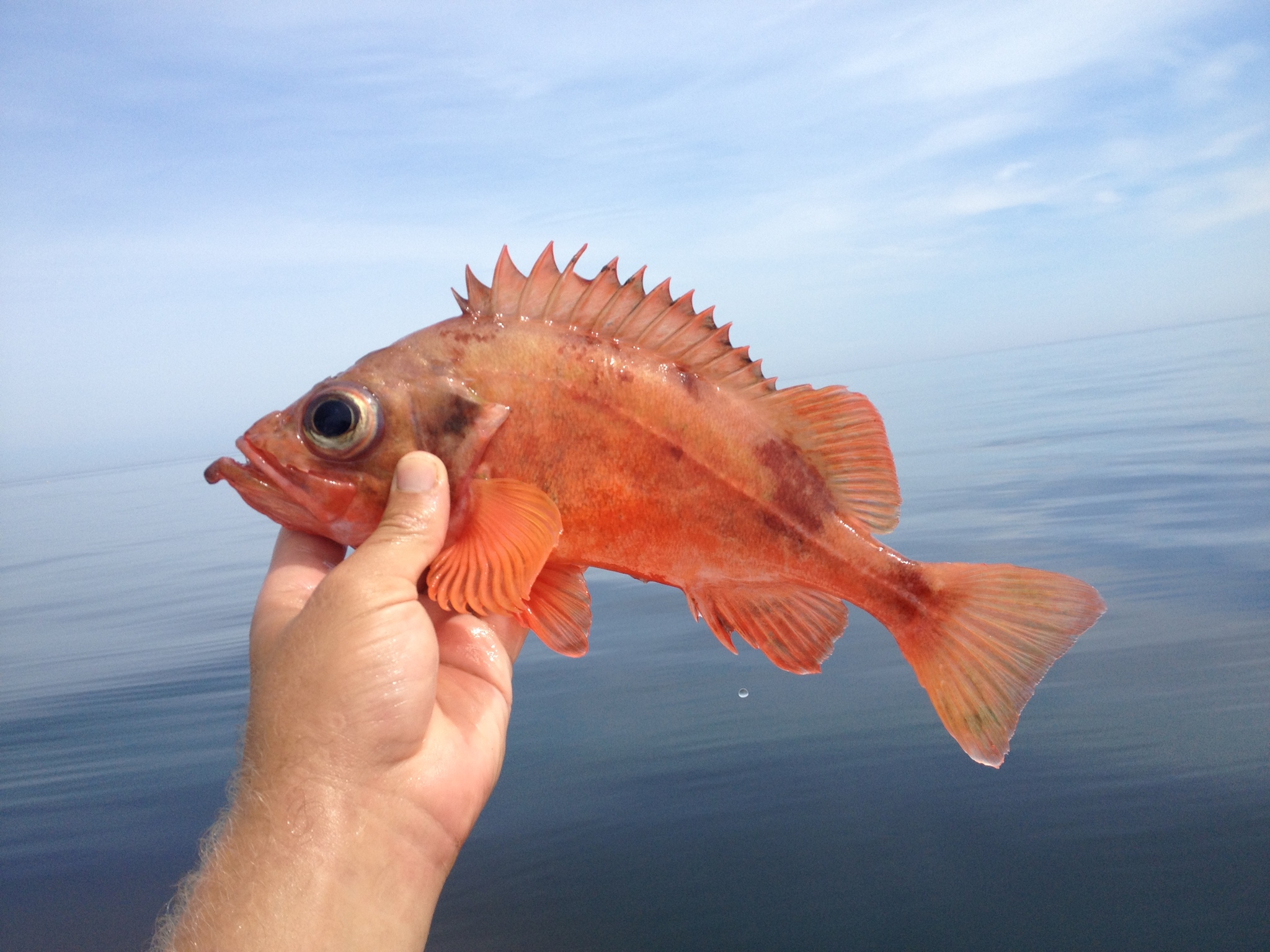
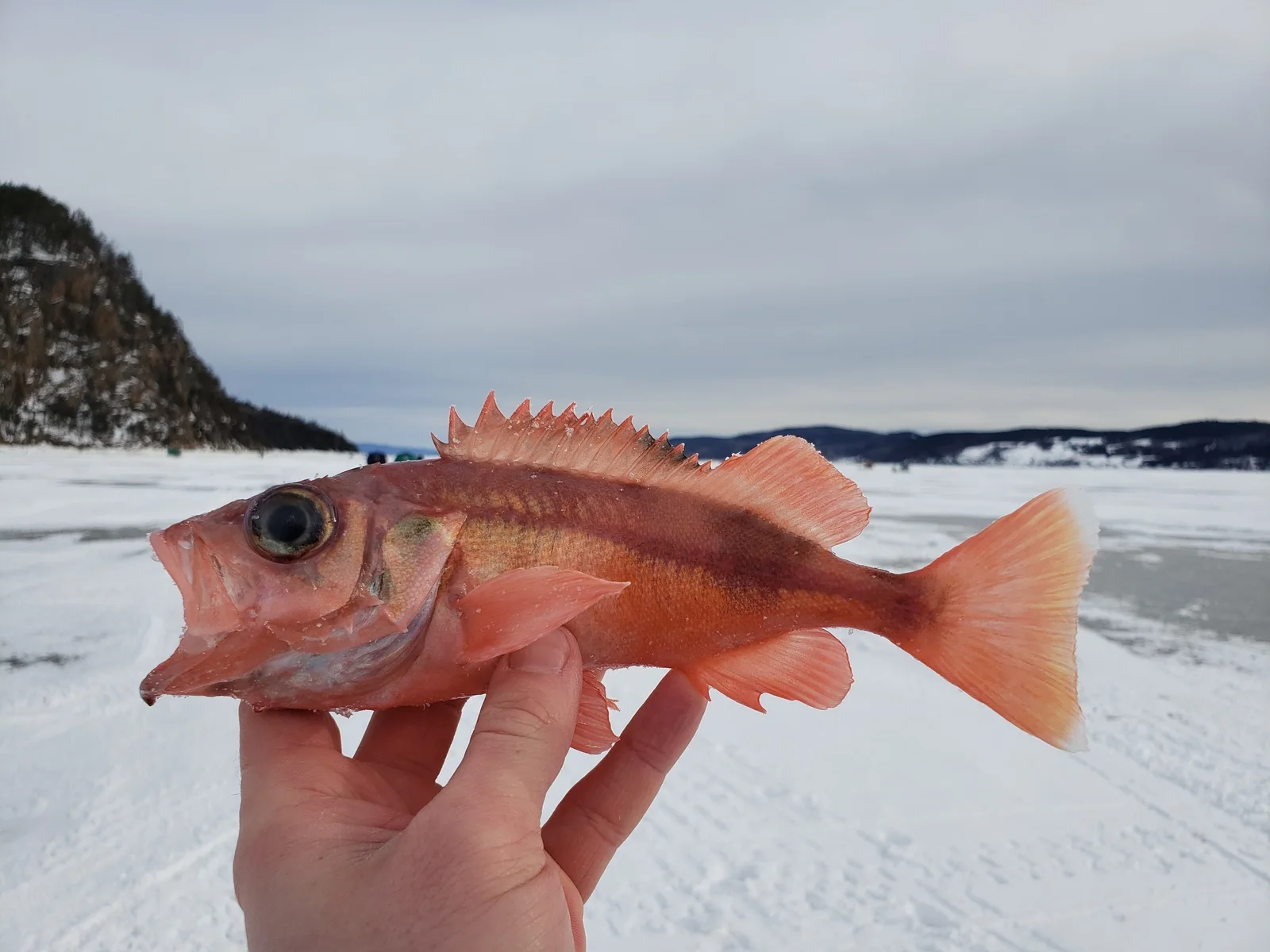
These fish live in the same place.

Guides for this water
Technique, gear and safety guides that fit Rougheye rockfish.