
Beaked redfish
Beaked redfish is a deep-water rockfish of the North Atlantic on both sides, from the Norwegian Sea and the Iceland–Faroes Ridge across to Baffin Bay and Nova Scotia. It lives mostly between 350 and 500 m, down to 1,441 m, and grows slowly: the maximum recorded length is 77.5 cm and the oldest fish reached 75 years.
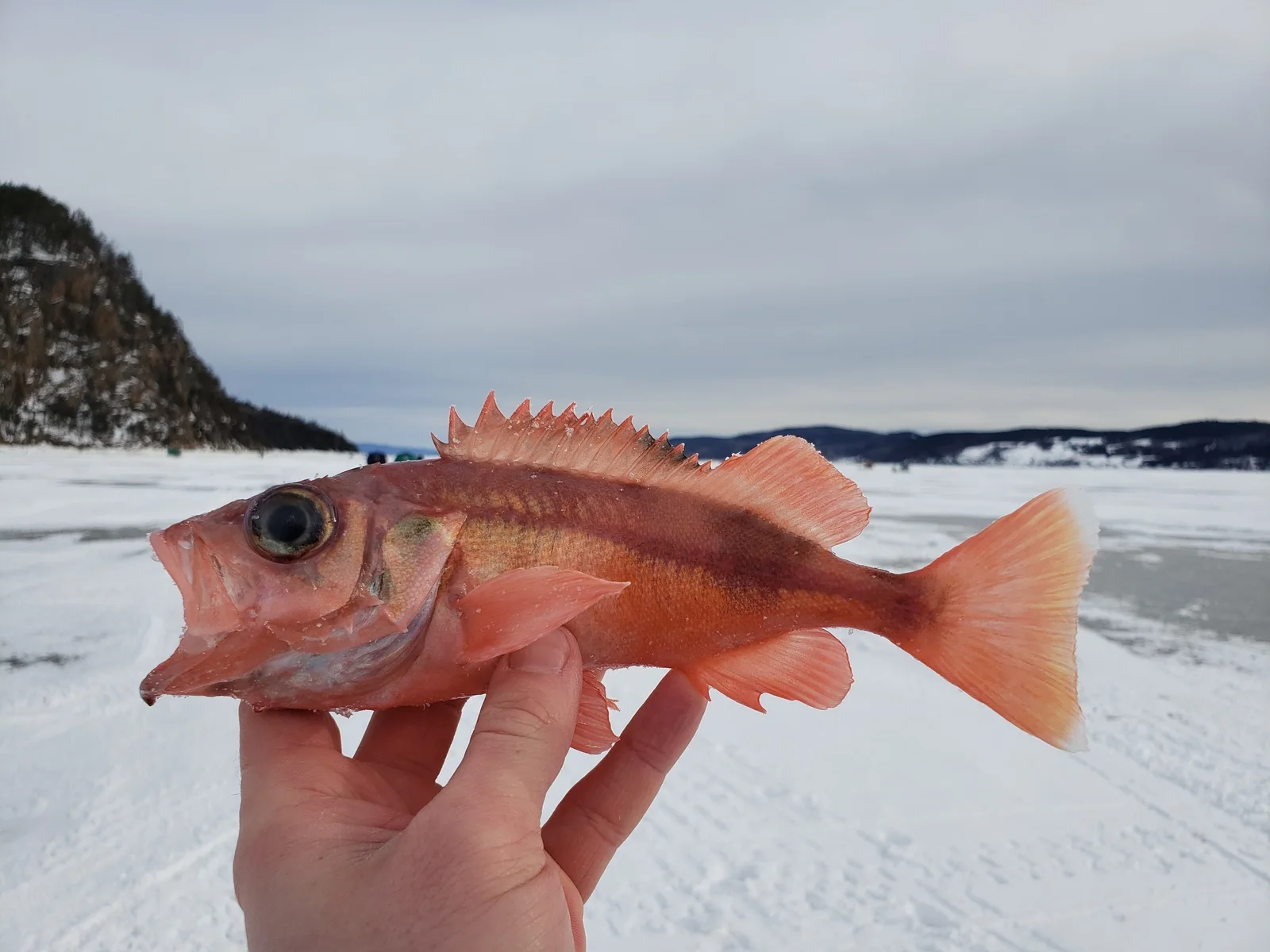
A deep-water rockfish of the family Sebastidae, the beaked redfish roams the North Atlantic on both sides, from the Norwegian Sea and the Iceland–Faroes Ridge across to Baffin Bay and Nova Scotia. It lives mostly between 350 and 500 metres, well below the reach of shore gear, and grows slowly: the maximum recorded length is 77.5 cm and the oldest fish reached 75 years. This is a commercial trawler species, not a recreational target — FishBase records no gamefish use — so anglers are more likely to meet it as bycatch or not at all. Its IUCN status is Least Concern, last assessed in 2009.
A redfish with borrowed names
FishBase separates three English names by country: Beaked redfish in Canada and in the FAO list, Deepwater redfish in Canada and in the AFS list, Deepwater rosefish in Britain, and plain Redfish in Canada. Wikipedia opens with a longer string — beaked redfish, deepwater redfin, ocean perch, Atlantic redfish, Norway haddock, red perch, golden redfish and hemdurgan. Several of those are names also used for other redfishes, so the alias list is wider than the species. iNaturalist prefers Deepwater Redfish. Chinese gives and , the same word with two character variants.
Seventy-five years under a 77.5 cm ceiling
Maximum length is 77.5 cm total length; first maturity is 43.1 cm, with no recorded range; maximum reported age is 75 years; no maximum weight was captured. The age is the outlier in this set of pages. A fish that matures above half its maximum length and can reach 75 years is slow on both counts, and the missing weight leaves the body mass unquantified. With no growth curve in the capture, the route from 43 cm to 77.5 cm cannot be dated. The missing weight is not a small gap either: redfishes are stout-bodied, and a length-only figure leaves the mass unknown at both ends of the size range.
Two basins and one ridge
The eastern range runs from the Lofoten Islands north to the western and northern coasts of Spitsbergen, with the southern Barents Sea rarely reaching 35°E, then the Iceland–Faroes Ridge, Iceland and Greenland. The western range runs from Baffin Bay to Nova Scotia. The ridge is the connecting feature, not a continuous coastline. Eight countries are listed as native — Canada, the Faroe Islands, Greenland, Iceland, Norway, Russia, Saint Pierre and Miquelon, and Svalbard and Jan Mayen — and none as introduced. Two of those entries are territories rather than sovereign states — Svalbard and Jan Mayen, and Saint Pierre and Miquelon — so the eight-row table mixes countries and dependencies.
Three hundred metres, bathypelagic
Depth is 300–1441 m, usually 350–500 m. The environment line calls the species bathypelagic and oceanodromous, not demersal, which separates it from the soft-bottom scorpionfishes: this is a fish of the deep water column. The coordinate box runs 79°N–41°N and 67°W–35°E, covering both basins and reaching north of Spitsbergen. The usual 350–500 m band is well below the 300 m top, so the shallow end is an exception even before the 1441 m bottom.
One spawning row, and it is in the west
The spawning table carries a single row: Gulf of St Lawrence, April–June. Nothing is recorded for the Norwegian Sea, the Barents Sea, Iceland, Greenland or the Iceland–Faroes Ridge, which is where most of the range lies. A one-row table is not a season for the species; it is a season for one western population. The 43.1 cm maturity length is the only other reproductive figure, and it comes without a range. For an angler the consequence is concrete: the only dated window in the record is Canadian, and a Norwegian or Barents trip has no month to plan around.
No fin counts to identify it by
Every meristic field is empty: no dorsal spines, no soft rays, no anal counts, no vertebrae, no body shape, no cross-section. Identification in the record rests on the name, the maximum length, the depth and the two-basin range. GBIF carries 13 distribution rows, twelve without a country and one for Norway; iNaturalist holds 133 observations. For a commercial deepwater fish, those numbers say more about sampling access than about abundance. The same problem applies to identification: without counts or a photograph-based diagnosis, a redfish at 400 m has to be separated from its congeners by range and by the local name list, not by a key in this capture.
Commercial, assessed long ago
The human-use line is commercial only, with no gamefish entry and no aquaculture entry. The FishBase page links to a FAO species profile and to stock-assessment sources, which is what a managed commercial stock looks like in metadata. IUCN status is Least Concern, assessed 29 January 2009, the oldest assessment in this group of pages; a 2009 category is a historical statement as much as a current one. The absent gamefish entry is the useful negative: a fish landed by trawlers is not, in this record, a fish that anglers go looking for.
Where to look
Work the 350–500 m band, in the water column rather than on the bottom, and treat 300 m as the shallow exception. This is deep boat territory; shore gear does not reach it. No temperature is recorded either, so the page cannot narrow the water further than depth and basin. No method is recorded and there is no gamefish tick, so the page cannot supply a technique. Regulation is not part of the capture; where a commercial stock is managed, size and season are set nationally or regionally, and must be checked. Least Concern from 2009 is a conservation category, not a landing rule.
Where these facts come from
Check these pages before you rely on a size, range or protection status.
- FishBase — Sebastes mentella — FishBase · T2
- GBIF — Sebastes mentella occurrence records — GBIF · T2
- IUCN Red List — Sebastes mentella — IUCN · T1
- Photo record — iNaturalist — iNaturalist · T3
Fish in the same water
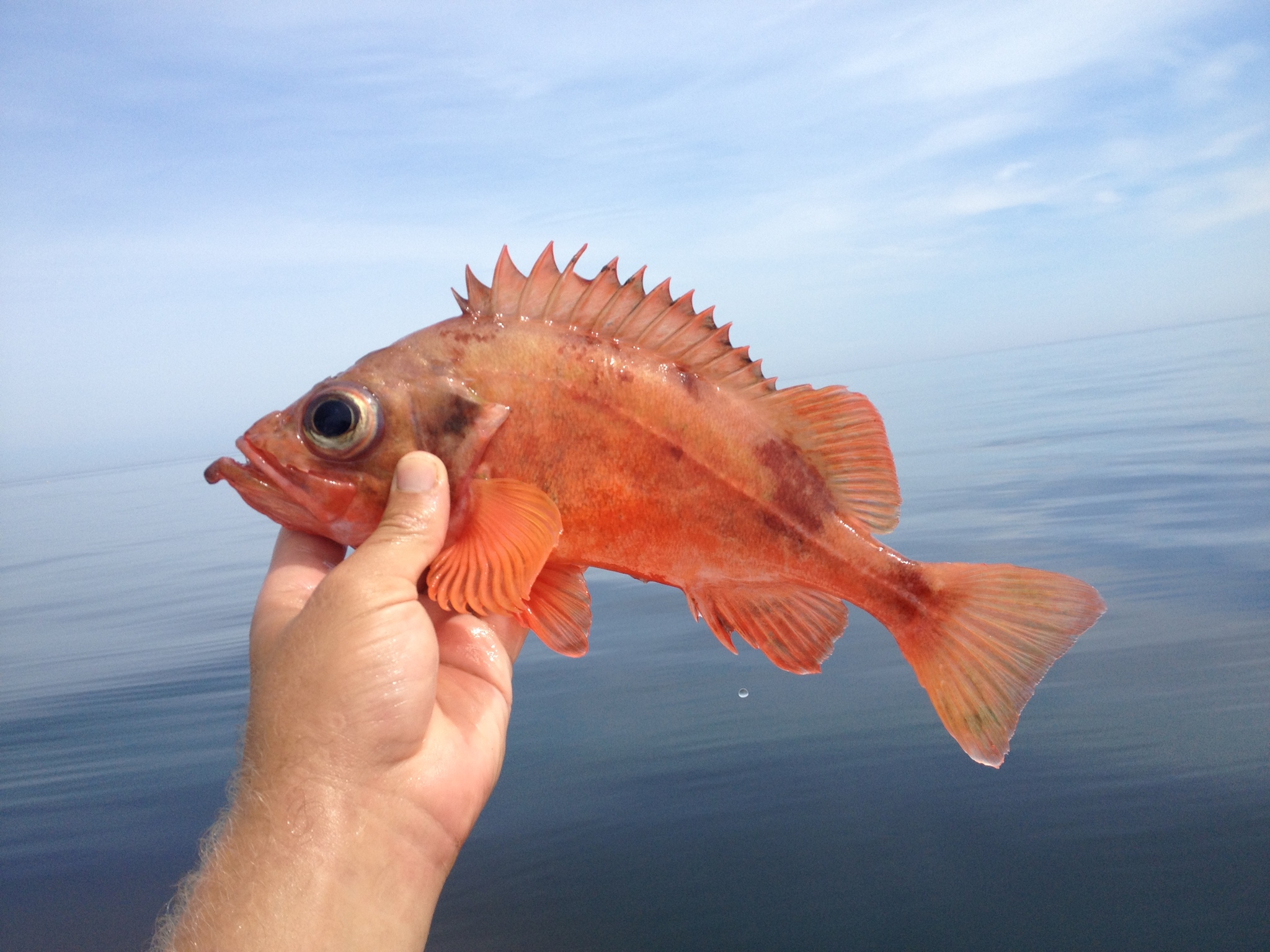
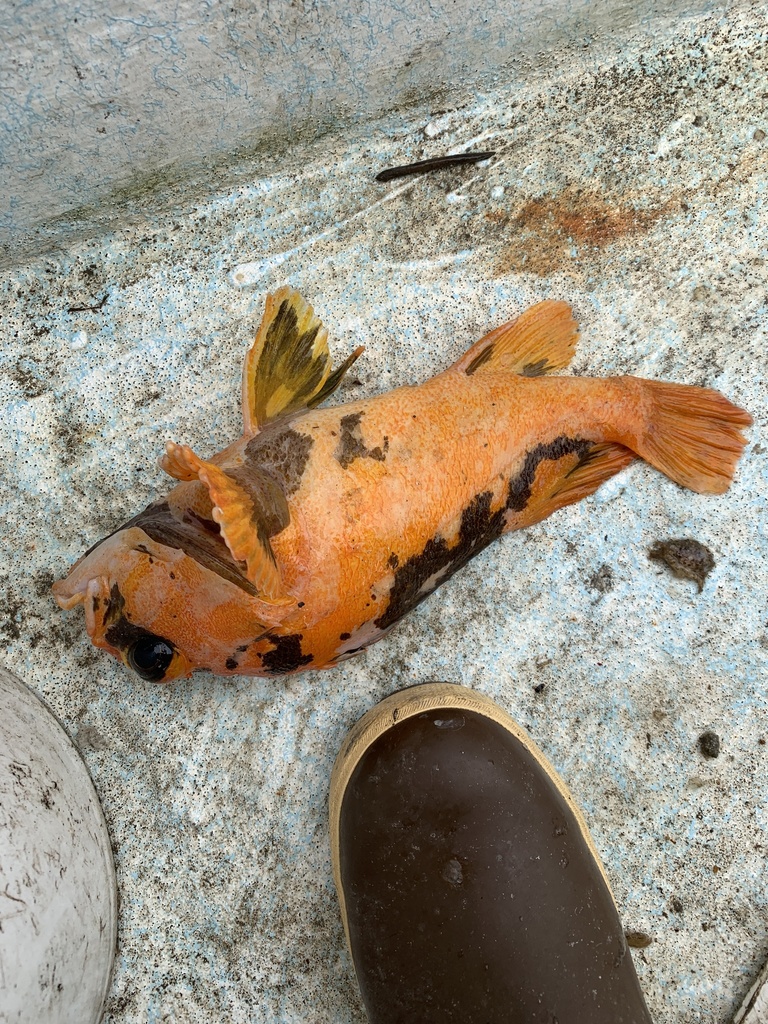
These fish live in the same place.

Guides for this water
Technique, gear and safety guides that fit Beaked redfish.