
Pacific ocean perch
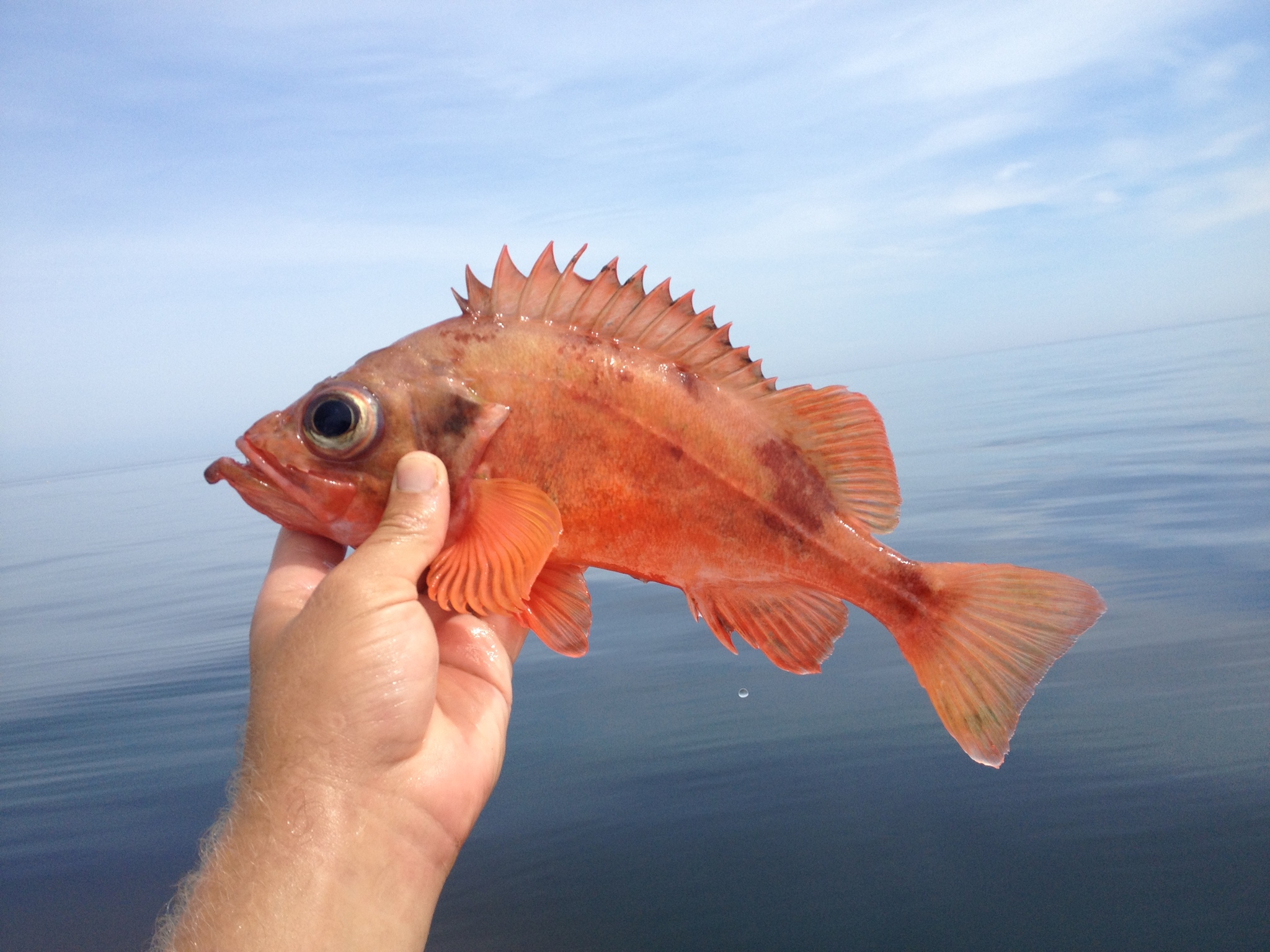
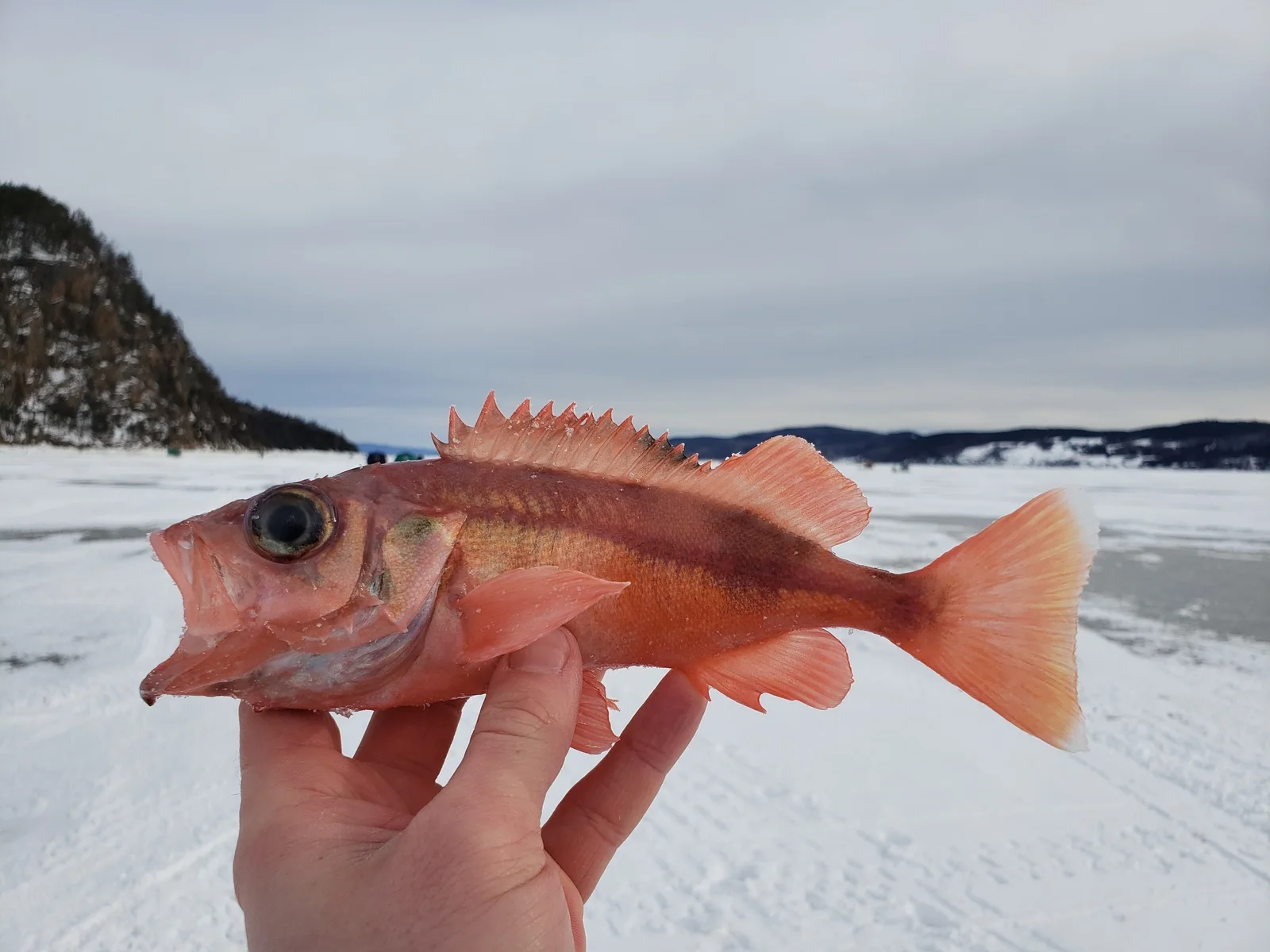
Dorsal fin with 13 spines and 14–17 soft rays, anal fin with 3 spines and 6–9 soft rays, and 26 vertebrae. Head spines are weak and the coronal spine is absent; the lower jaw is long and carries a forward symphyseal knob. Colour is bright to light red with dark dorsal markings, sometimes dark stippling on the sides and a dark blotch on the caudal peduncle.

Dorsal fin with 13 spines and 14–17 soft rays, anal fin with 3 spines and 6–9 soft rays, and 26 vertebrae. Head spines are weak and the coronal spine is absent; the lower jaw is long and carries a forward symphyseal knob. Colour is bright to light red with dark dorsal markings, sometimes dark stippling on the sides and a dark blotch on the caudal peduncle. Maximum length is 53 cm TL, maturity is near 33.2 cm and the recorded maximum weight is 2.1 kg. The long lower jaw and the forward knob on the chin are visible at the rail even on a fish that has been iced.
Habitat and behaviour
It occurs from Honshu, Japan, to Cape Navarin in the Bering Sea, along the Aleutians and south to La Jolla, California. The stock is demersal on slope ground, usually 165–293 m and recorded from the surface down to 825 m. Diet includes squid, fish, amphipods, shrimp and snails. GBIF holds 89400 records, 84519 of them from Canada and 4722 from the United States. Heavy commercial fishing caused a severe population decline in the past. Slope trawling once targeted this species heavily, and the stock has recovered slowly under tighter management.
Seasonal window
Spawning records run from January to June, with an April record in the Aleutians and a January to June series in Queen Charlotte Sound. Southeast Alaska manages it as slope non-pelagic rockfish at 1 per day and 2 in possession. British Columbia allows 3 rockfish per day but closes Area 29 to all rockfish. Late spring to early autumn is the practical window; cold-season trips are poor because deep-release survival falls. No usable temperature series exists for planning. In practice, trips are planned around settled weather rather than a spawning calendar, because the documented months cover only part of the range.
Gear and approach
A medium-heavy boat rod with braided main line and a rock-resistant carbon leader covers most days. Match lead to current so the rig taps bottom without dragging; too little lead drifts off the slope and too much jams into crevices. Wide-gap circle hooks hold well and are easy to remove at the rail. Fish showing barotrauma go back on a descending device to the depth they came from. A short leader also keeps the hook close to the lead and reduces the chance of fouling on the retrieve.
Edibility and regulations
Flesh is pale and soft with little fat, best steamed or used in soup; bleed, gill and ice immediately to protect texture. Alaska: Pacific ocean perch falls in the slope non-pelagic group, 1 per day and 2 in possession. British Columbia: 3 rockfish per day, Area 29 closed. Washington: coastal rockfish 7 in total, yelloweye closed. California: 10 fish in the RCG aggregate, descending device required. IUCN Not Evaluated; no CITES or CMS listing. Fillets are soft, so they are usually cooked the same day rather than frozen for long storage.
Where to look
Look for slope edges and hard bottom in the usual 165–293 m band, and work along the contour rather than straight down. Records concentrate in British Columbia and Alaska, and iNaturalist photos are few, so check the weak head spines and long lower jaw before confirming the identification. Old fish dominate the population, so releasing large individuals matters. The species is now managed as part of a mixed slope assemblage, not as a single-species target. The stock is shared across borders, so local rules are only part of the picture.
How to catch it
Boat bottom fishing
Fished with the listed approach, matched to the recorded depth and size.
Slow pitch jigging
Fished with the listed approach, matched to the recorded depth and size.
Where these facts come from
Check these pages before you rely on a size, range or protection status.
- FishBase — Sebastes alutus — FishBase · T2
- GBIF — Sebastes alutus occurrence records — GBIF · T2
- IUCN Red List — Sebastes alutus — IUCN · T1
- Photo record — iNaturalist — iNaturalist · T3
Fish in the same water
These fish live in the same place.

Guides for this water
Technique, gear and safety guides that fit Pacific ocean perch.