
Redbanded rockfish
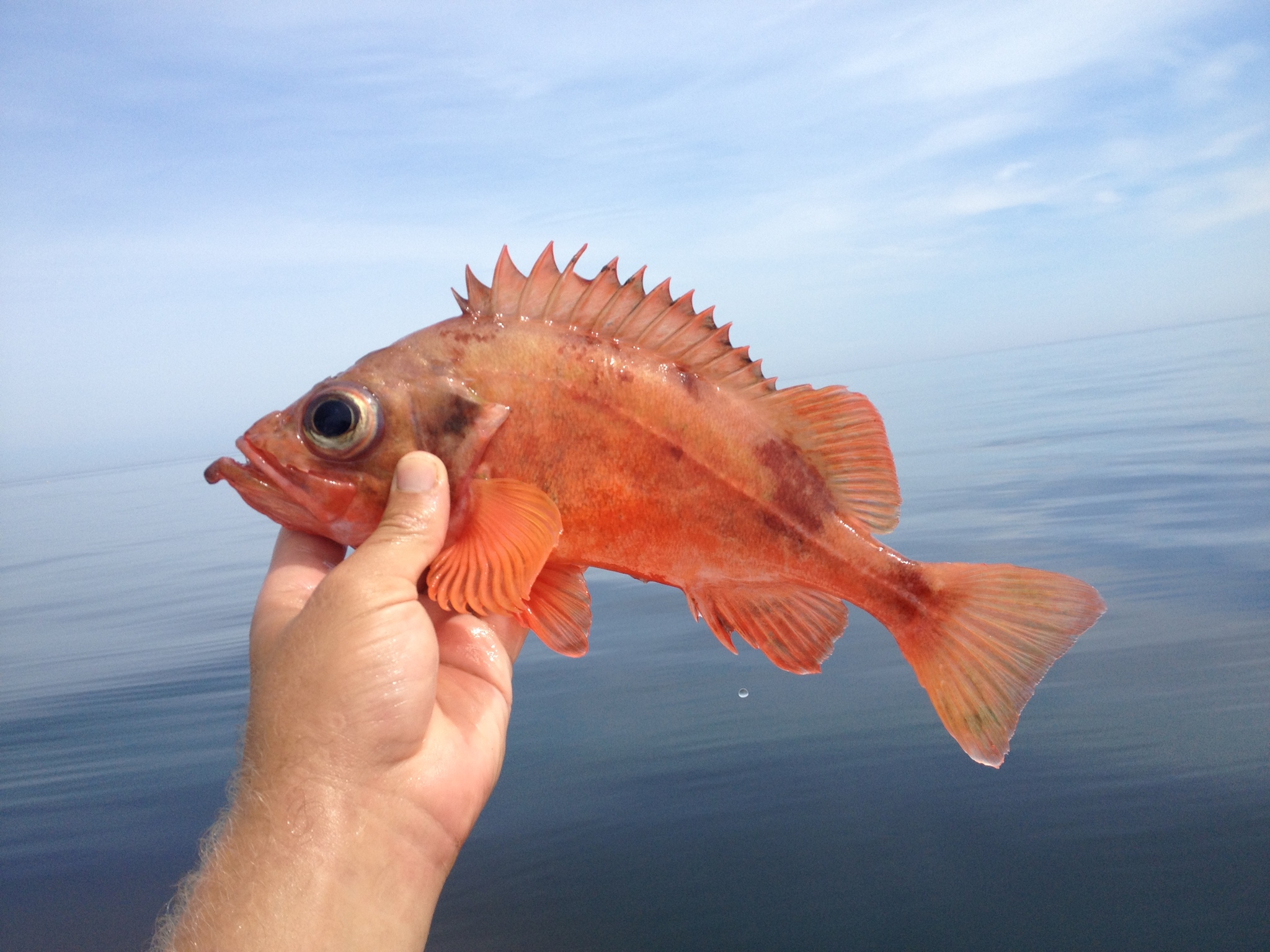
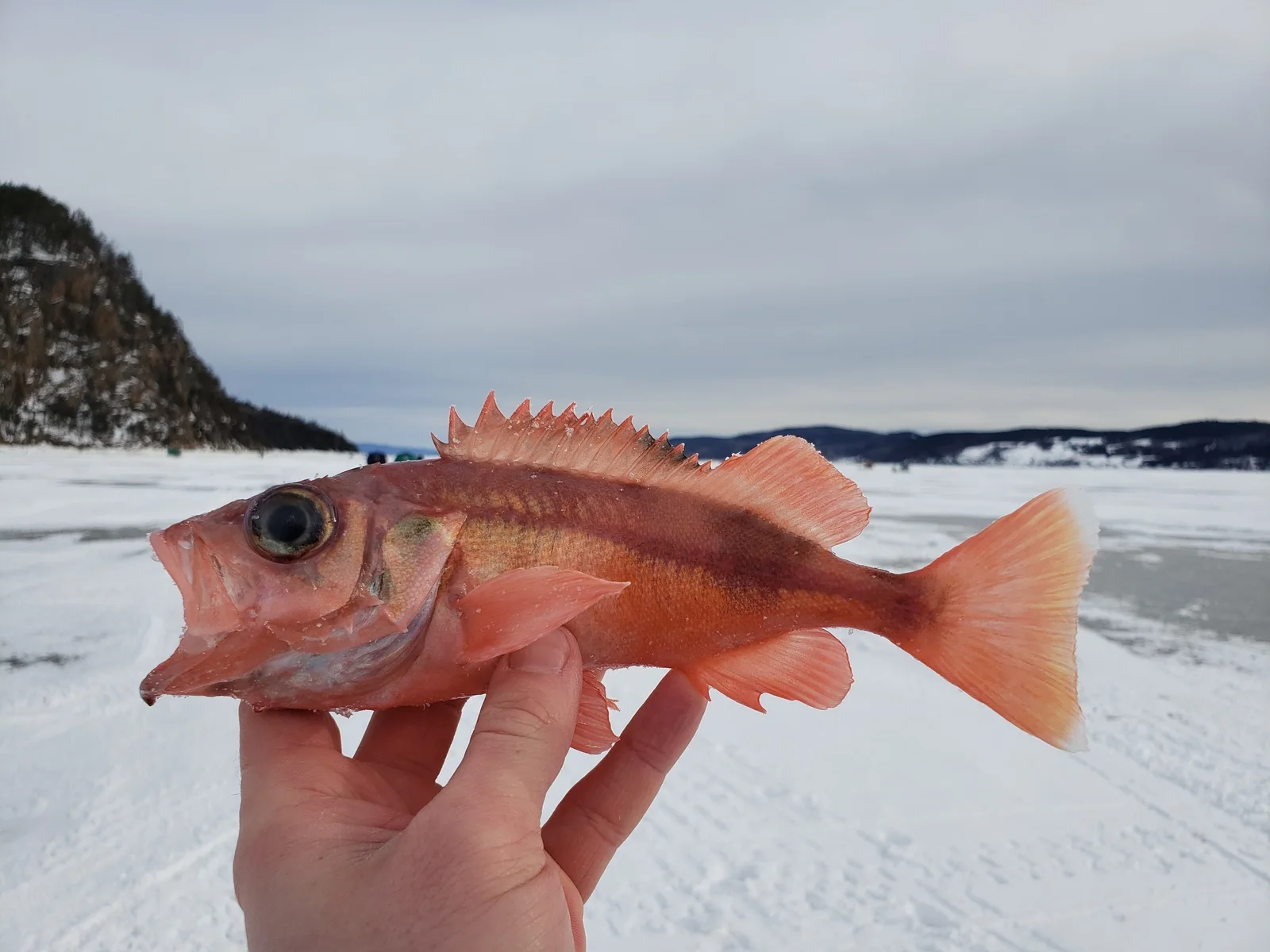
Dorsal fin with 13 spines and 13–15 soft rays, anal fin with 3 spines and 6–7 soft rays, and 30–31 vertebrae. The second anal spine is longer than the third and the caudal margin is almost straight. Colour is light pink to red with 4 darker red vertical bars, more obvious on small fish, and one dark bar radiates from each eye.

Dorsal fin with 13 spines and 13–15 soft rays, anal fin with 3 spines and 6–7 soft rays, and 30–31 vertebrae. The second anal spine is longer than the third and the caudal margin is almost straight. Colour is light pink to red with 4 darker red vertical bars, more obvious on small fish, and one dark bar radiates from each eye. Maximum length is 64 cm TL, maturity is near 38.5 cm and the recorded maximum weight is 4.4 kg. Small fish show the pattern most clearly and are the easiest to identify with confidence. The 4 bars fade with size, so large fish show only a hint of banding and are easy to confuse with other red rockfish.
Habitat and behaviour
The range runs from Zhemchug Canyon in the Bering Sea and Amchitka Island in the Aleutians south to San Diego, California. It is demersal on slope ground from 49 to 625 m, over hard bottom and rubble. GBIF holds 30782 records, 29646 from Canada and 1101 from the United States. Commercial landings are minor and most sport catches come from deep slope water. Its depth band overlaps deeper shortraker grounds and shallower shelf species, which narrows the range worth fishing. Hard rubble edges produce more fish than soft mud, and the largest specimens come from the steepest sections.
Seasonal window
Spawning is documented in May off north-central California. British Columbia allows 3 rockfish per day with yelloweye closed, and Area 29 is shut to all rockfish. Southeast Alaska classifies it as slope non-pelagic rockfish, 1 per day and 2 in possession. Late spring to early autumn is the main window, and winter trips are not worth targeting this deep-water fish. No water-temperature data are available for this species. The single May record leaves the rest of the year unstudied, so anglers should not assume a narrow spawning window. Summer and early autumn give the most stable weather for the long run offshore.
Gear and approach
A medium-heavy boat rod, braided main line and carbon leader handle the depth. Set lead by current and depth so the rig just touches bottom; the mouth is large, so leave a wide hook gap. Keep leaders short, because tangles at depth are hard to clear. Check each fish at the rail and send bloated individuals back down on a descending device. A short, stiff leader helps when the bottom is jagged and the fish must be lifted clear quickly. A dropper loop above the weight keeps the bait off the bottom and away from snags.
Edibility and regulations
White flesh with a mild taste, good steamed, fried or in soup; bleed and ice the fish promptly. Alaska: slope non-pelagic rockfish, 1 per day and 2 in possession. British Columbia: 3 per day, yelloweye closed, Area 29 closed. Washington: coastal rockfish 7 in total, yelloweye closed. California: 10 fish in the RCG aggregate, descending device required. IUCN Not Evaluated; no CITES or CMS listing. Because commercial landings are small, most fish reach the table through sport catch.
Where to look
Fish hard rubble and slope edges between 49 and 625 m, and keep the bait moving along the contour. GBIF records are overwhelmingly Canadian, and iNaturalist images are limited, so count the vertical bars and the head spines before confirming a catch. Larger fish are old and slow to replace. Bars, eye stripes and the straight tail margin are the quickest field marks on a fish held over the gunwale. Records from Canada dominate, so most of what is known comes from the northern part of the range. A fish lifted from deep water is often the only one seen from a school, so the release matters.
How to catch it
Boat bottom fishing
Fished with the listed approach, matched to the recorded depth and size.
Slow pitch jigging
Fished with the listed approach, matched to the recorded depth and size.
Where these facts come from
Check these pages before you rely on a size, range or protection status.
- FishBase — Sebastes babcocki — FishBase · T2
- GBIF — Sebastes babcocki occurrence records — GBIF · T2
- IUCN Red List — Sebastes babcocki — IUCN · T1
- Photo record — iNaturalist — iNaturalist · T3
Fish in the same water
These fish live in the same place.

Guides for this water
Technique, gear and safety guides that fit Redbanded rockfish.