
Gopher rockfish
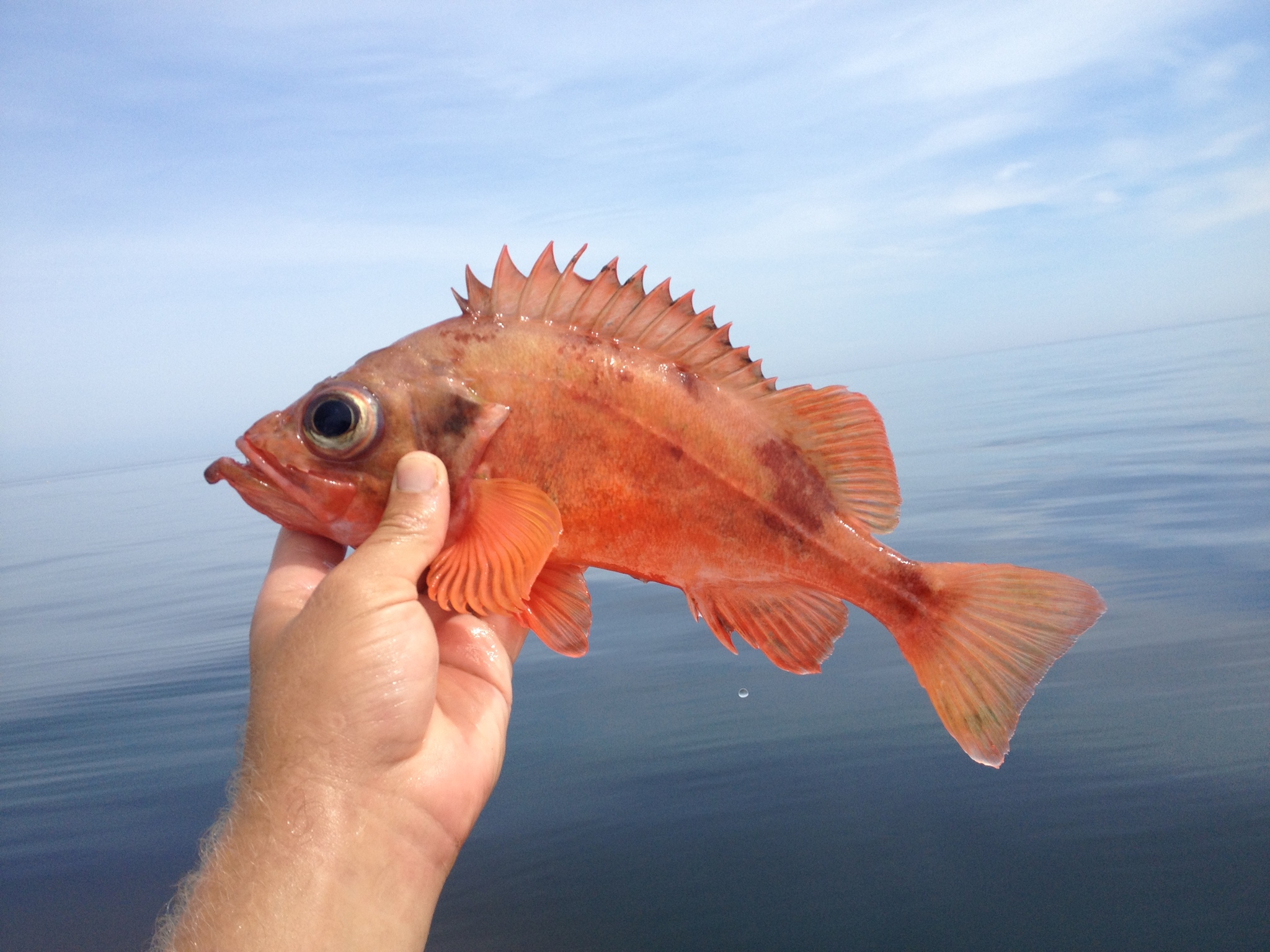
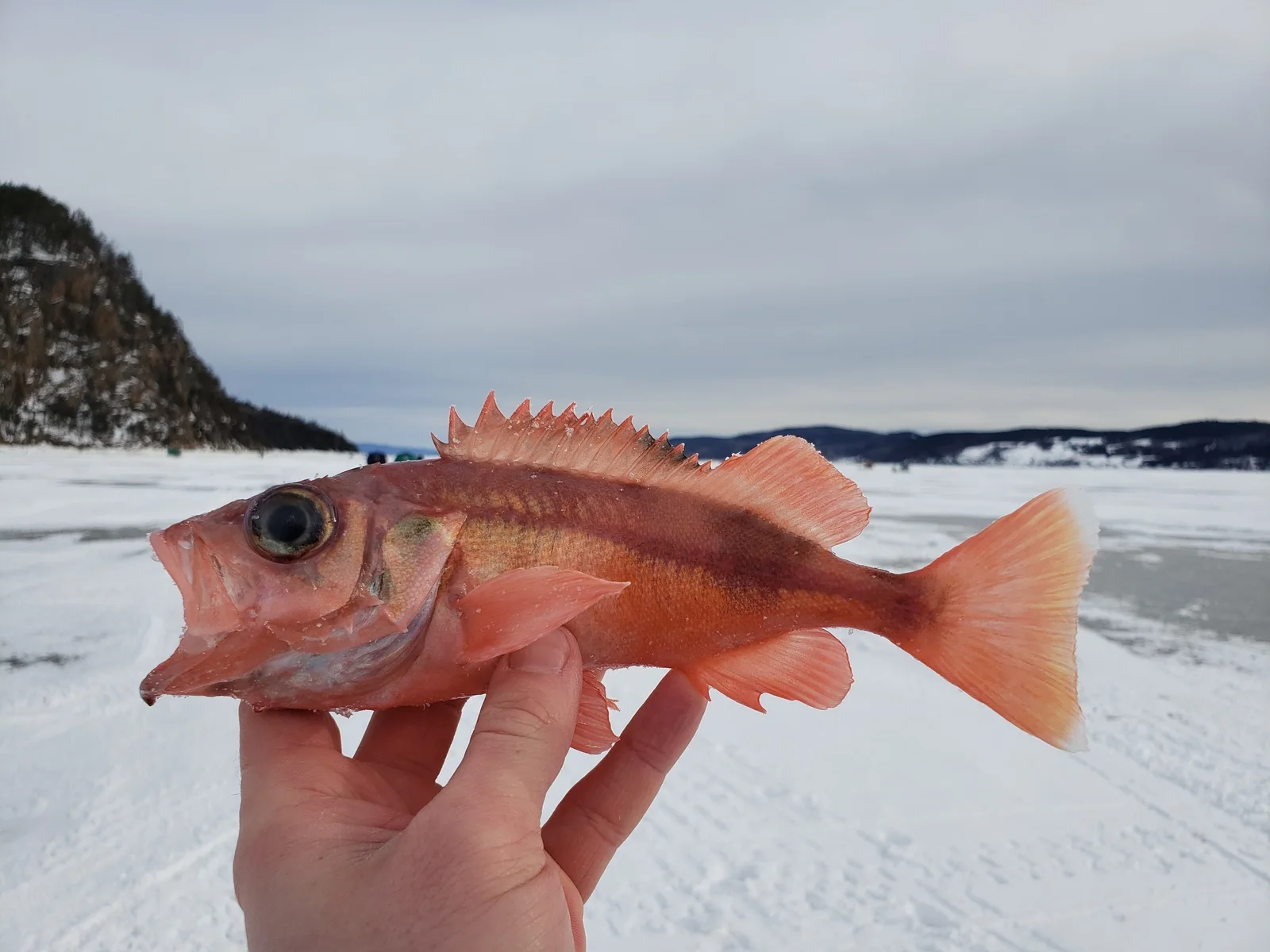
Gopher rockfish has 13 dorsal spines, 12–14 dorsal soft rays, 3 anal spines and 5–7 anal soft rays, with 26 vertebrae and 7 branchiostegal rays. The head carries strong spines and the caudal fin is rounded. Maximum total length is 39 cm, and maturity is reached near 17 cm. Colour is brown to pinkish brown with darker mottling, which separates it from the black-and-yellow rockfish at the same sites.

Gopher rockfish has 13 dorsal spines, 12–14 dorsal soft rays, 3 anal spines and 5–7 anal soft rays, with 26 vertebrae and 7 branchiostegal rays. The head carries strong spines and the caudal fin is rounded. Maximum total length is 39 cm, and maturity is reached near 17 cm. Colour is brown to pinkish brown with darker mottling, which separates it from the black-and-yellow rockfish at the same sites. The colour note comes from field observation; the FishBase summary carries no colour description.
Habitat and behaviour
Eastern Pacific from Eureka in northern California to central Baja California, Mexico. It is demersal, recorded from 9 to 55 m and mostly between 15 and 55 m, over rocky reef, boulders and kelp edges. GBIF holds 85770 records, 85716 from the United States and 45 from Mexico, so the sample is heavily Californian. iNaturalist lists 548 observations, many from divers and shore anglers. The diet includes squids, fishes, crabs, isopods and other benthic crustaceans. It stays close to cover and rarely crosses open sand, so a reef edge with boulders and kelp is a better mark than a flat bottom.
Seasonal window
Spawning is recorded from March to May in the California Current region. FishBase gives no temperature range, so the fishing window here comes from the open season and the spawning block rather than from measured water temperature. The California RCG complex is open year round, with fish gathering in shallower water in spring and settling deeper in autumn. Dirty water after a big swell usually shuts the bite down; that is an editorial observation rather than a logged result. Outside the short spawning block the fish spread along the reef and take more searching.
Gear and approach
Use a medium-heavy boat rod stiff enough to lift a fish away from rock, braided main line and an abrasion-resistant fluorocarbon leader. Circle hooks or jigheads with a wide gap suit the hard mouth. Weight follows depth and current; in broken bottom, go heavier and shorten the leader instead of fishing light. A short, moderately strong leader is a better compromise than a long fine one in broken rock. Wind fast after the hookset and keep the fish from turning back into a crevice.
Edibility and regulations
The flesh is white and firm, good steamed, pan-fried or in soup; bleed, gill and ice the fish promptly. Alaska: the species is outside its range and has no specific rule, so check the current announcement. British Columbia: rockfish other than yelloweye, 3 per day; Area 29 is closed to all rockfish. Washington: the coastal bottomfish season runs from the second Saturday of March to the third Saturday of October, 7 rockfish per day in aggregate, yelloweye prohibited; this species is not on the Puget Sound keep list. California: RCG complex 10 per day in aggregate, no minimum size for rockfish, bronzespotted, cowcod, quillback and yelloweye prohibited, and a descending device must be on board. IUCN Not Evaluated; CITES and CMS Not Evaluated.
Where to look
Work rocky points, isolated pinnacles and kelp edges in 15–55 m. Kelp beds near Monterey and the central California coast hold good numbers, matching the dense GBIF cluster there. Look for reef that rises off flat sand, and check the lee side when swell is running. Deep marks fish best on slack water; shallow marks fish best at first light. A mark that produced once is worth repeating, because the fish moves little. If the swell is up, fish the protected side of the headland and let the current carry the scent away from the rock.
How to catch it
Boat bottom fishing
Fished with the listed approach, matched to the recorded depth and size.
Shore fishing
Fished with the listed approach, matched to the recorded depth and size.
Jigging
Fished with the listed approach, matched to the recorded depth and size.
Where these facts come from
Check these pages before you rely on a size, range or protection status.
- FishBase — Sebastes carnatus — FishBase · T2
- GBIF — Sebastes carnatus occurrence records — GBIF · T2
- IUCN Red List — Sebastes carnatus — IUCN · T1
- Photo record — iNaturalist — iNaturalist · T3
Fish in the same water
These fish live in the same place.

Guides for this water
Technique, gear and safety guides that fit Gopher rockfish.