
Chilipepper
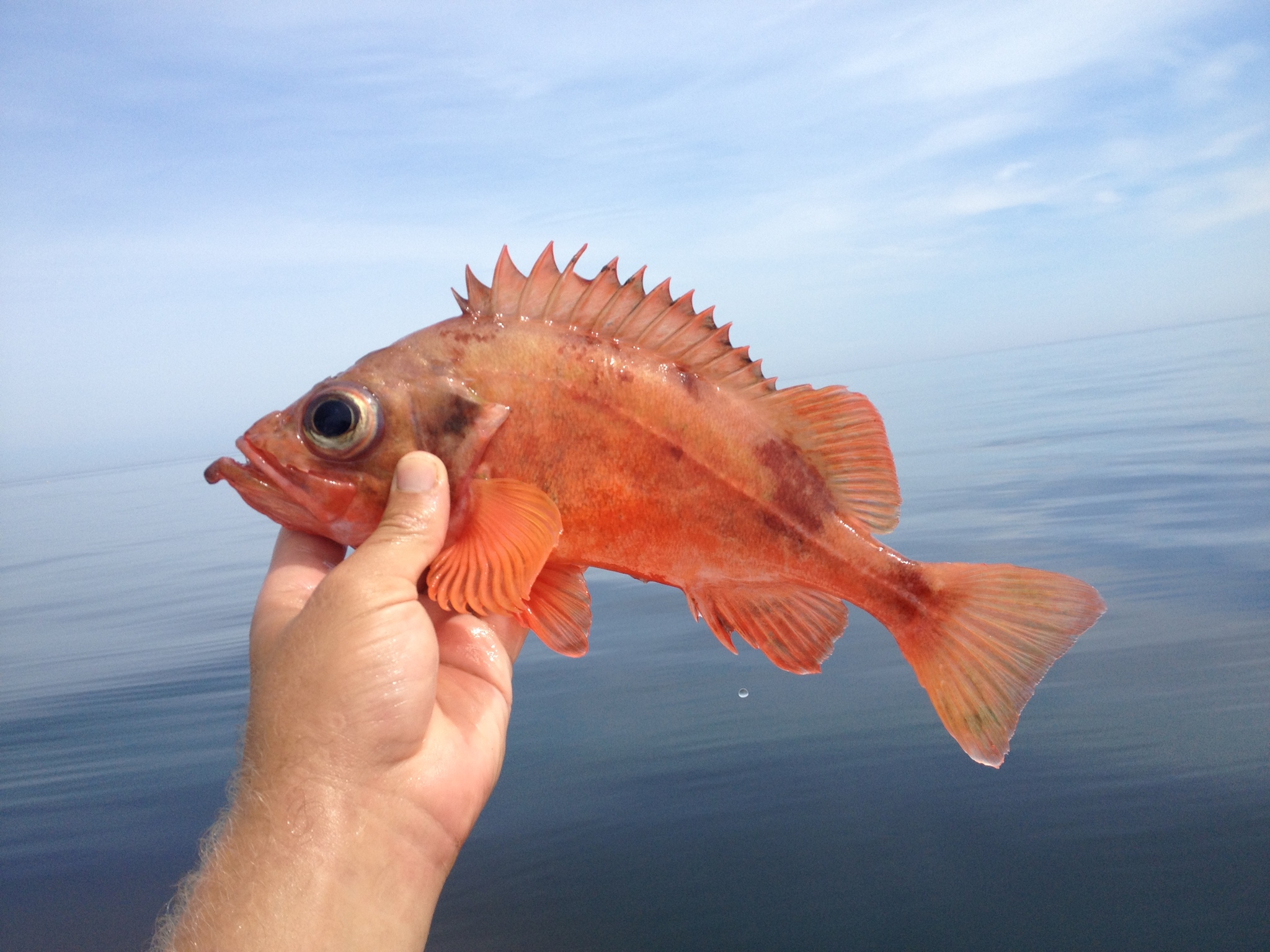
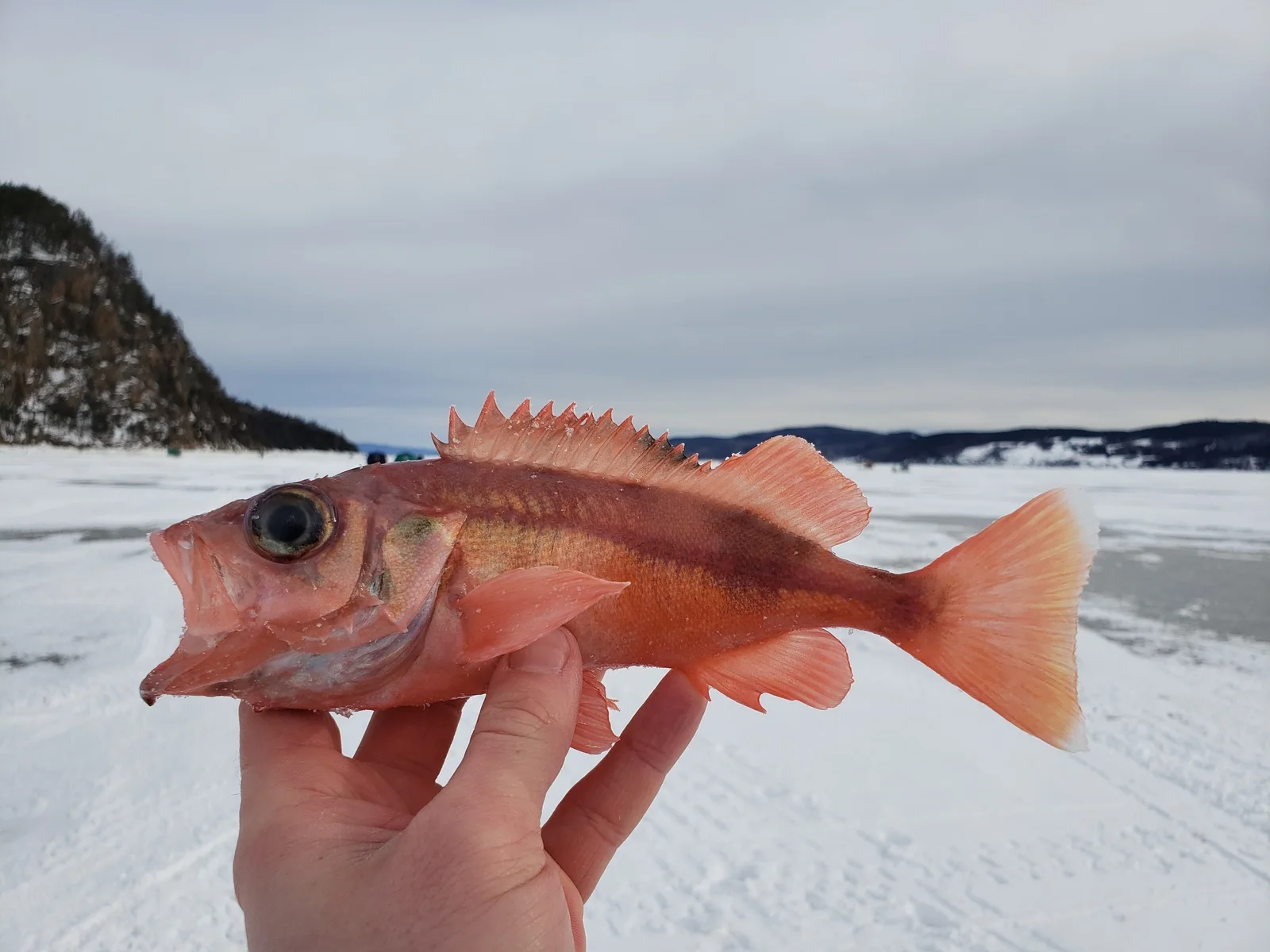
Chilipepper is slender, with 13 dorsal spines, 13–16 dorsal soft rays, 3 anal spines and 7–9 anal soft rays, and 26 vertebrae. The head spines are very weak: preocular spines are present, while nasal, supraocular and parietal spines are usually absent; the chin projects and the anal fin is small with a slanted rear edge. Colour is pinkish red to copper pink, white below, with a bright red lateral-line zone and a dusky caudal fin.
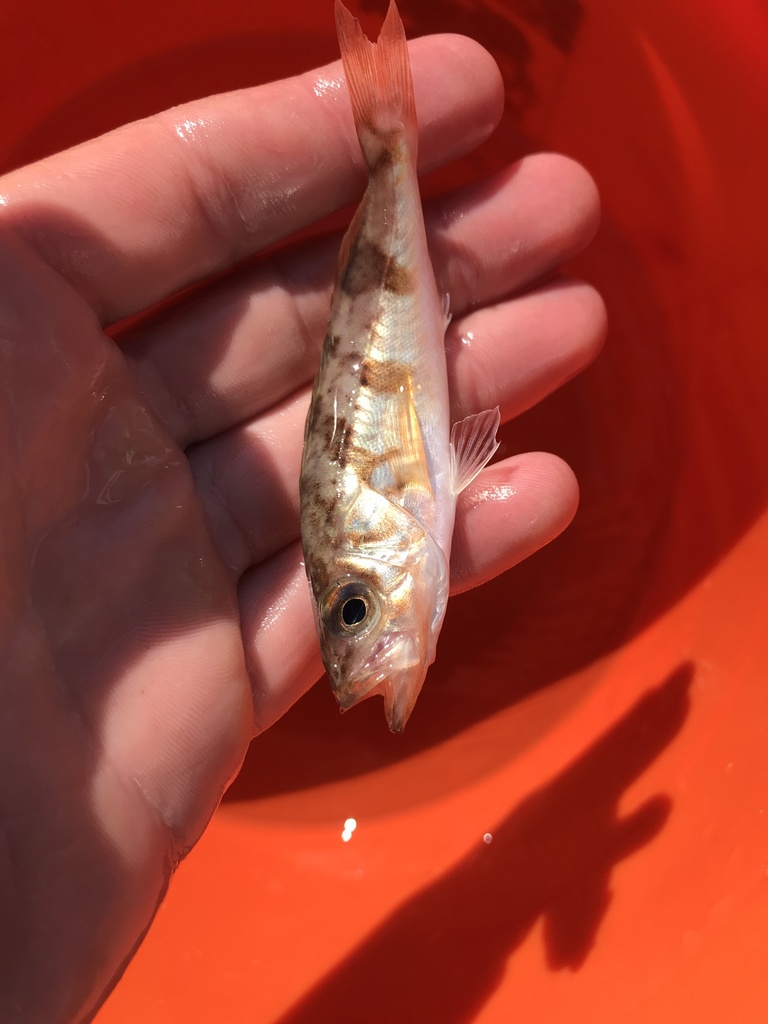
Chilipepper is slender, with 13 dorsal spines, 13–16 dorsal soft rays, 3 anal spines and 7–9 anal soft rays, and 26 vertebrae. The head spines are very weak: preocular spines are present, while nasal, supraocular and parietal spines are usually absent; the chin projects and the anal fin is small with a slanted rear edge. Colour is pinkish red to copper pink, white below, with a bright red lateral-line zone and a dusky caudal fin. Maximum total length is 56 cm, maximum weight 1.5 kg, and the recorded age is 35 years. The weak head spines and the projecting chin are the quickest field checks.
Habitat and behaviour
Queen Charlotte Sound in British Columbia, Canada, to Magdalena Bay in Baja California Sur, Mexico. Demersal from the surface to 425 m, from nearshore water to the slope. GBIF holds 2298 records, 2174 from the United States, 71 from Canada and 32 from Mexico. iNaturalist lists 123 observations. The diet is squid, small fish, zooplankton and krill, and the fish often rises off the bottom to feed. Because the fish suspends, a mark that shows nothing on the bottom can still produce on the sounder.
Seasonal window
Spawning is recorded from January to June and from October to December; California Current records cover January–June and October–December. FishBase gives no temperature range, so the window follows the spawning blocks and the open season. British Columbia allows 3 rockfish per day with Area 29 closed, and California keeps the RCG complex open all year. Deep fish need time for a descending release, so plan the day around that. Deep marks are less affected by surface swell, so the season there is limited by wind rather than by the spawn.
Gear and approach
A medium-heavy rod with enough backbone for deep water, braided main line and a fluorocarbon leader. Wide-gap hooks and heavy weight to reach the bottom quickly in current. A heavy jig and a short leader keep the rig vertical in current. A slow, steady wind beats a fast retrieve in deep water. Keep the leader moderate to limit tangles. Wind steadily after the hookset; a pause often loses the fish, and a fish pulled from deep water needs a descending device if it is released.
Edibility and regulations
The flesh is white and fine, good steamed or pan-fried; bleed, gill and ice the fish promptly. The fillets hold together well and are easy to skin. Alaska: outside the range, no specific rule, so check the current announcement. British Columbia: rockfish other than yelloweye, 3 per day; Area 29 is closed to all rockfish. Washington: coastal season from the second Saturday of March to the third Saturday of October, 7 rockfish per day in aggregate, yelloweye prohibited. California: RCG 10 per day in aggregate, no minimum size, bronzespotted, cowcod, quillback and yelloweye prohibited, descending device on board. IUCN Not Evaluated; CITES and CMS Not Evaluated; harmless to humans.
Where to look
Look from nearshore water to the slope, 0–425 m, with fish often suspended off the bottom. GBIF records are concentrated in the United States, with a smaller Canadian cluster. Start on a deep edge and watch the sounder for fish above the bottom. Fish the top of the tide for the cleanest drift, and note that a long soak in deep water is hard on released fish. Work the upcurrent side of a deep edge first, then drift back over the mark. A second pass over the same edge often picks up fish that followed the jig up without taking. Plan two drifts rather than one.
How to catch it
Boat bottom fishing
Fished with the listed approach, matched to the recorded depth and size.
Drift fishing
Fished with the listed approach, matched to the recorded depth and size.
Jigging
Fished with the listed approach, matched to the recorded depth and size.
Where these facts come from
Check these pages before you rely on a size, range or protection status.
- FishBase — Sebastes goodei — FishBase · T2
- GBIF — Sebastes goodei occurrence records — GBIF · T2
- IUCN Red List — Sebastes goodei — IUCN · T1
- Photo record — iNaturalist — iNaturalist · T3
Fish in the same water
These fish live in the same place.

Guides for this water
Technique, gear and safety guides that fit Chilipepper.