
Hubbs' rockfish
Hubbs' rockfish is a 15.6 cm northwest Pacific rockfish with no directed fishery and very little published biology. It lives on the bottom off Japan and South Korea, and the practical answer is to fish small baits or lures tight to the recorded ground. What the record does not say — diet, season, local abundance — is exactly what makes this a low-information target.
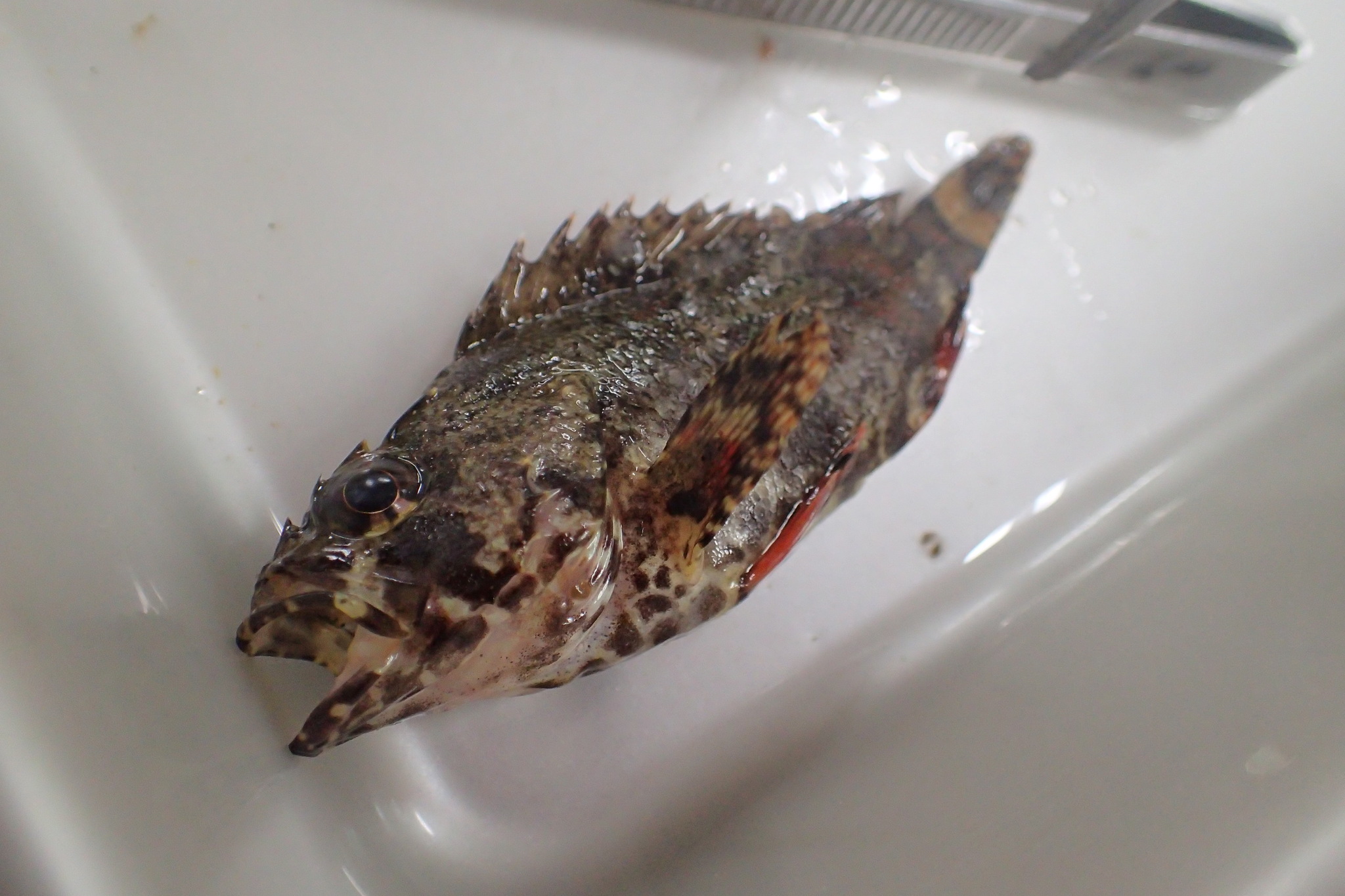
Hubbs' rockfish is a palm-sized rockfish of the northwest Pacific, recorded from Japan and South Korea, that reaches 15.6 cm standard length. It lives on the bottom, it supports no directed fishery, and almost everything a public database can say about it stops at the name, the range and the maximum size — which is itself the most useful thing to know before you go looking for one.
A rockfish known mostly by its name
Sebastes hubbsi was described by Matsubara in 1937 and belongs to the rockfish subfamily Sebastinae. FishBase files it under the family Sebastidae; several other taxonomic services, including the iNaturalist backbone and the English Wikipedia entry, keep the Sebastinae inside Scorpaenidae. The disagreement is about rank rather than about which fish is meant, but it does mean a name search can land in two different families depending on the database you use.
The Chinese vernacular names are and , and the Japanese name is ヨロイメバル. Those names matter more than usual here: with so little published morphology, the fastest way to confirm you are looking at the right fish is to match a regional name against a photograph from the same coast. The name itself is stable — WoRMS carries it as an accepted species under AphiaID 274801.
Identification stops at subfamily characters
FishBase's record for this species carries no fin formula, no body proportion and no colour description. That is unusual for a rockfish and it changes how identification works in practice. You fall back on the characters shared across the Sebastinae — a spiny, heavy head, a long dorsal fin whose anterior rays are stiffened into spines, a stout body — and then on size.
Adults stop at about 15.6 cm standard length, measured to the end of the hypural plate rather than to the tip of the tail. A fish that reads 18 cm on a ruler laid along the whole body, caudal fin included, is therefore still inside the recorded range. Anything finer — spine counts, the shape of the interorbital space, how the colour shifts with depth — needs a specimen key or a good photograph, not a summary page.
Range, and the shape of the evidence
FishBase gives Japan and South Korea as the whole of the range. The preserved-record picture points the same way but adds a sense of proportion: of 380 GBIF occurrences, 279 come from Japan and 82 from South Korea, with no confirmed records anywhere else. Two iNaturalist observations exist for the taxon, which tells you how rarely it is photographed, let alone targeted.
The species is demersal, and that is the entire habitat record: no depth band, no temperature range and no substrate note is published. The climate field reads "tropical", which sits awkwardly with a fish recorded only from temperate Japan and Korea; treat that field as inherited from the source database rather than as an ecological statement.
The fields that are empty, and why
There is no spawning season, no maturity length, no age estimate and no diet composition in the sources used here. For a small, non-commercial rockfish this is a normal state of affairs rather than a failure of the record: specimens arrive as by-catch, few reach a laboratory, and the otolith and gonad work that would fill those fields has not been published in an accessible form.
The honest consequence is that this page leaves those fields blank instead of borrowing them from better-studied congeners. Rockfish life histories vary too much between species — some mature at three years and live a decade, others take twice as long — for a borrowed number to be anything other than a guess dressed as a fact.
Finding them without trying
Hubbs' rockfish is not a species anyone sets out to catch. It turns up on small baits worked tight to the bottom, usually while the boat is anchored or drifting slowly over inshore structure for larger rockfish and flatfish.
The search problem is therefore unusual: you are not looking for the fish, you are looking for the bottom that keeps them. Inshore rock and mixed ground is where the file records sit, and with no published depth band the sounder does the work a literature search would normally do — find the hard edge, drop the bait on it, and let the by-catch arrive.
Rig and release
Because the adult size is small, the terminal tackle that produces accidental catches is the light end of a standard bottom rig: a short leader, a small wide-gap hook, and a strip of shrimp or fish cut thin enough that a 15 cm fish can take it in one motion. A heavy rod and a large bait will simply miss it. The bite is quick and the fish is small, so the rod tip is a better indicator than the line.
Handle them wet and return them if they are not being kept. A fish this size has no fillet worth the knife, and the species has no commercial value that would justify retaining it.
Food, rules and status
FishBase's human-use record lists no fisheries, aquaculture, gamefish or aquarium entry for the species. The IUCN Red List category is Not Evaluated, the species is recorded as harmless to humans, and neither CITES nor CMS lists it.
No size limit or bag limit specific to Hubbs' rockfish is published in the sources used here. General national and local rules on inshore reef fish still apply, and because the species is unassessed, nothing in its status prevents a jurisdiction from tightening those rules later. Check the current rules for the coast you are fishing before keeping anything.
What is still unknown
Anyone using this page for a real decision should know exactly where the record ends: the depth band, substrate preference, diet, spawning period, age and growth, larval description and population trend of Sebastes hubbsi are all unpublished in the accessible literature. The species is best treated as an incidental catch of inshore bottom fishing, identified by name and size, and released.
How to catch it
Boat bottom fishing
Anchored or drifting boat, bait or lure worked near the recorded bottom.
Where these facts come from
Check these pages before you rely on a size, range or protection status.
- FishBase — Sebastes hubbsi — FishBase · T2
- GBIF — Sebastes hubbsi occurrence records — GBIF · T2
- IUCN Red List — Sebastes hubbsi — IUCN · T1
- Photo record — iNaturalist — iNaturalist · T3
Fish in the same water
These fish live in the same place.

Guides for this water
Technique, gear and safety guides that fit Hubbs' rockfish.