
China rockfish
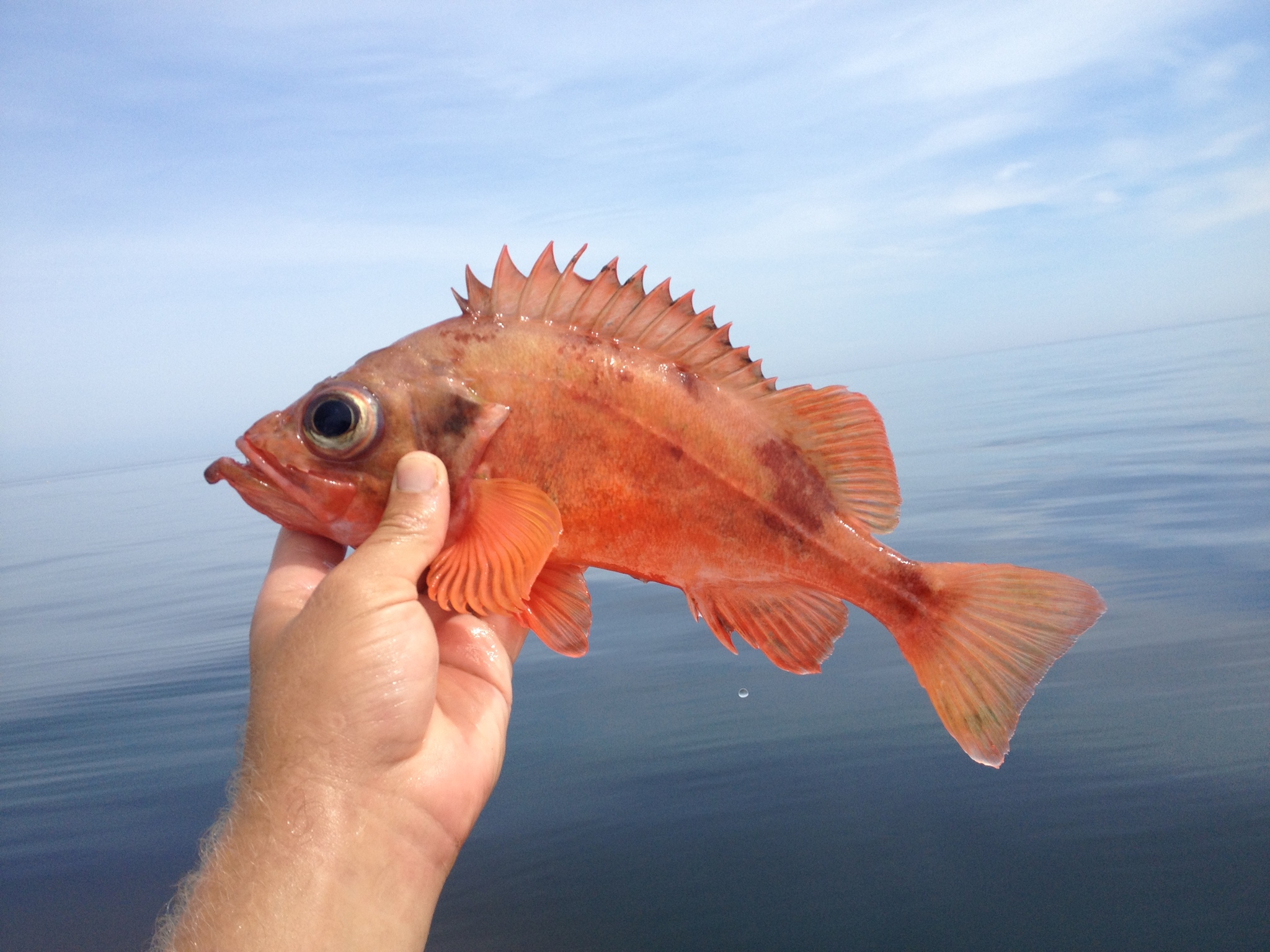
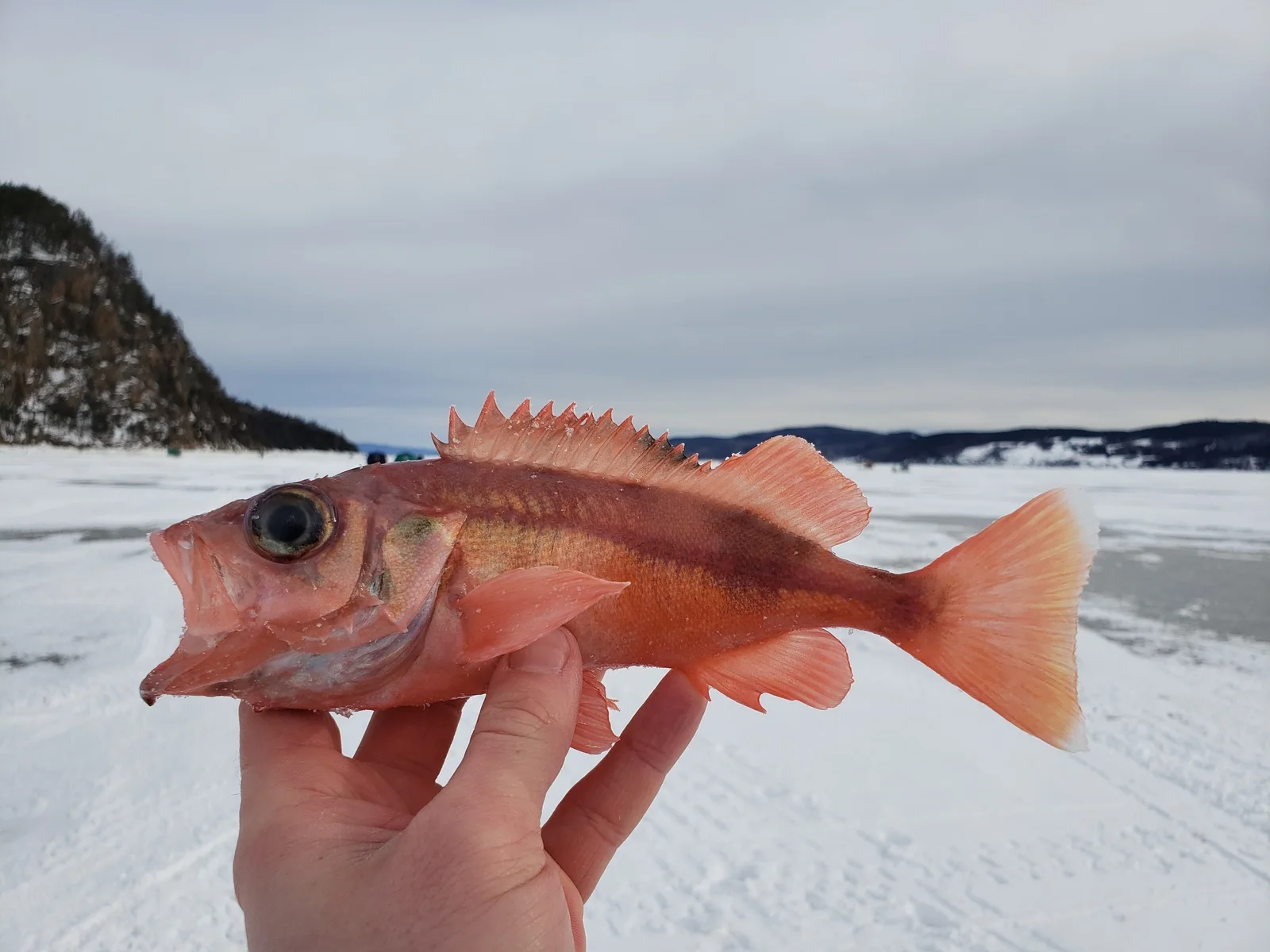
China rockfish has 13 dorsal spines, 13–14 dorsal soft rays, 3 anal spines and 6–8 anal soft rays, with 27–31 vertebrae. The head spines are strong: nasal, preocular, postocular, tympanic and parietal spines are present, while supraocular, coronal and nuchal spines are absent. The body is blue or black mottled with yellow, some fish are white below, and a broad yellow stripe runs from the third dorsal spine into or along the lateral line.

China rockfish has 13 dorsal spines, 13–14 dorsal soft rays, 3 anal spines and 6–8 anal soft rays, with 27–31 vertebrae. The head spines are strong: nasal, preocular, postocular, tympanic and parietal spines are present, while supraocular, coronal and nuchal spines are absent. The body is blue or black mottled with yellow, some fish are white below, and a broad yellow stripe runs from the third dorsal spine into or along the lateral line. Maximum total length is 45 cm, maximum weight 1.7 kg, and the recorded age reaches 79 years.
Habitat and behaviour
Southeast Alaska to Redondo Beach and San Miguel Island in southern California. It is reef-associated from 3 to 128 m, mostly on rocky reef and walls. GBIF holds 75965 records, 72419 from the United States and 3537 from Canada. iNaturalist lists 482 observations. The small mouth fits a diet of shrimps, crabs, squid and small fish taken close to the rock. It holds tight to structure and rarely wanders over open bottom. Walls with ledges and boulder piles hold the most fish, and the small mouth means the bait must be presented close to the rock.
Seasonal window
Spawning is recorded from January to June, with north-central California records in the same block. FishBase gives no temperature range, so the season is set from the spawning window and the open season. In Southeast Alaska the species is classed as demersal shelf rockfish, and nonresidents may fish that group only from 1 July to late August, which fixes the practical window there. California is open all year, with fish shallower in spring and deeper in autumn. Outside the spawn the fish are still on structure, so the season is limited more by weather than by the spawning block.
Gear and approach
A medium-heavy boat rod, braided main line and an abrasion-resistant fluorocarbon leader. Small to medium wide-gap hooks, weight sized to depth and current, heavier near walls. Keep the leader short to limit snagging. Short lifts feel the bottom without burying the hook in kelp. Check the hook point often; a dull point will not turn in the bony mouth. Lift steadily after the hookset and do not pause halfway up the wall, because a stopped fish works the hook loose.
Edibility and regulations
The flesh is firm and clean tasting, good steamed or in soup; bleed, gill and ice promptly. Ice it well and keep the fillets dry. Alaska: demersal shelf rockfish, residents 1 per day and 2 in possession; nonresidents only 1 July to late August, 1 per day, 1 in possession and 1 per year, with a harvest record. British Columbia: rockfish other than yelloweye, 3 per day; Area 29 closed. Washington: coastal season from the second Saturday of March to the third Saturday of October, 7 rockfish per day in aggregate, yelloweye prohibited; not on the Puget Sound keep list. California: RCG 10 per day, no minimum size, bronzespotted, cowcod, quillback and yelloweye prohibited, descending device on board. IUCN Not Evaluated, CITES and CMS Not Evaluated; dorsal spines are venomous.
Where to look
Look for high-relief rock, walls and boulder piles from 3 to 128 m. The GBIF cluster in the United States and the Canadian records match the range from Southeast Alaska south. Fish the base of a wall on slack water and the top of a pinnacle at first light. Because the fish holds tight to structure and lives long, a mark that produces once usually produces again. On a big tide, fish the slack before the change; the window is short but the drift is clean and the bait stays in contact with the wall.
How to catch it
Boat bottom fishing
Fished with the listed approach, matched to the recorded depth and size.
Jigging
Fished with the listed approach, matched to the recorded depth and size.
Drift fishing
Fished with the listed approach, matched to the recorded depth and size.
Where these facts come from
Check these pages before you rely on a size, range or protection status.
- FishBase — Sebastes nebulosus — FishBase · T2
- GBIF — Sebastes nebulosus occurrence records — GBIF · T2
- IUCN Red List — Sebastes nebulosus — IUCN · T1
- Photo record — iNaturalist — iNaturalist · T3
Fish in the same water
These fish live in the same place.

Guides for this water
Technique, gear and safety guides that fit China rockfish.