
Golden redfish
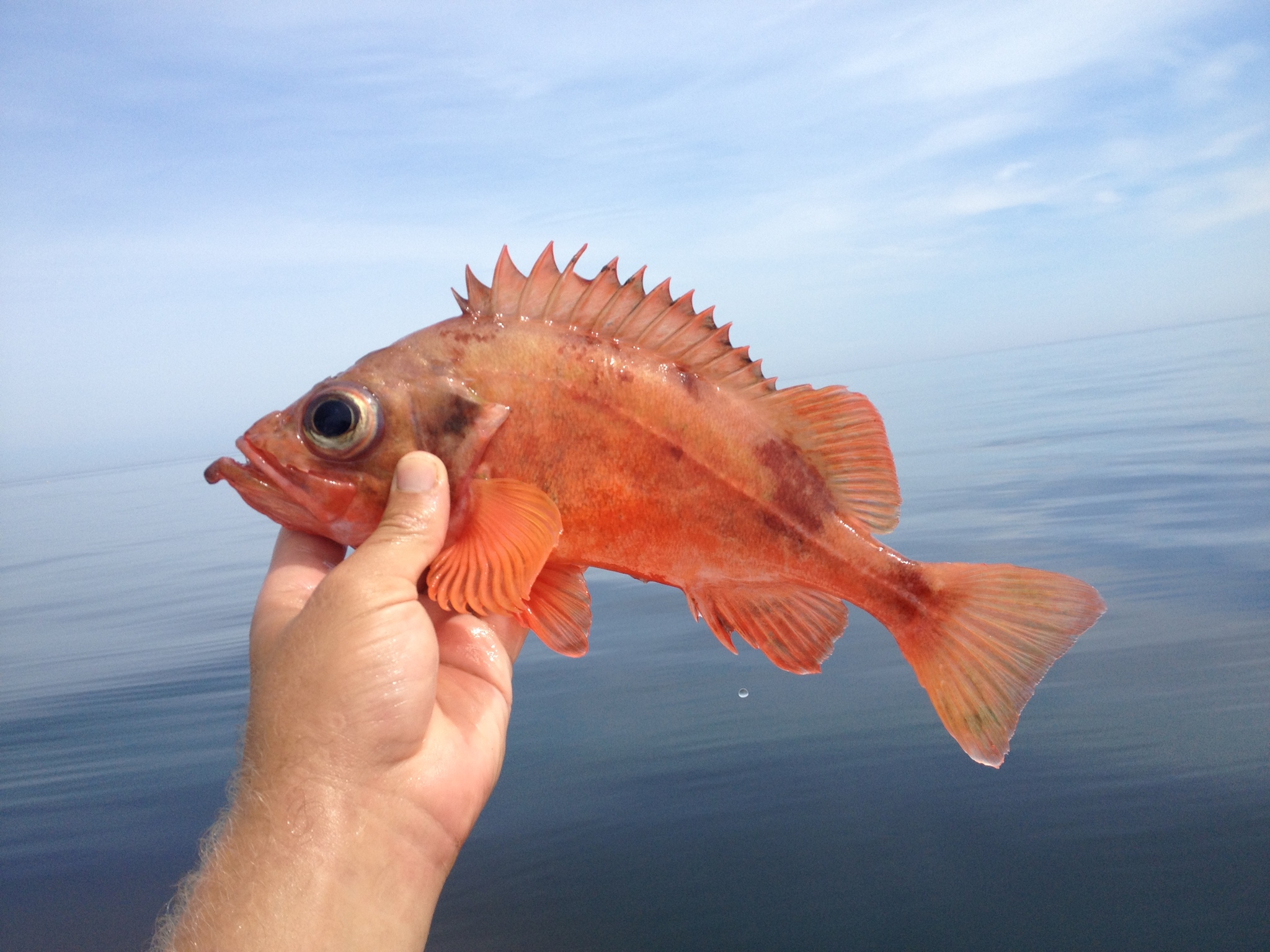
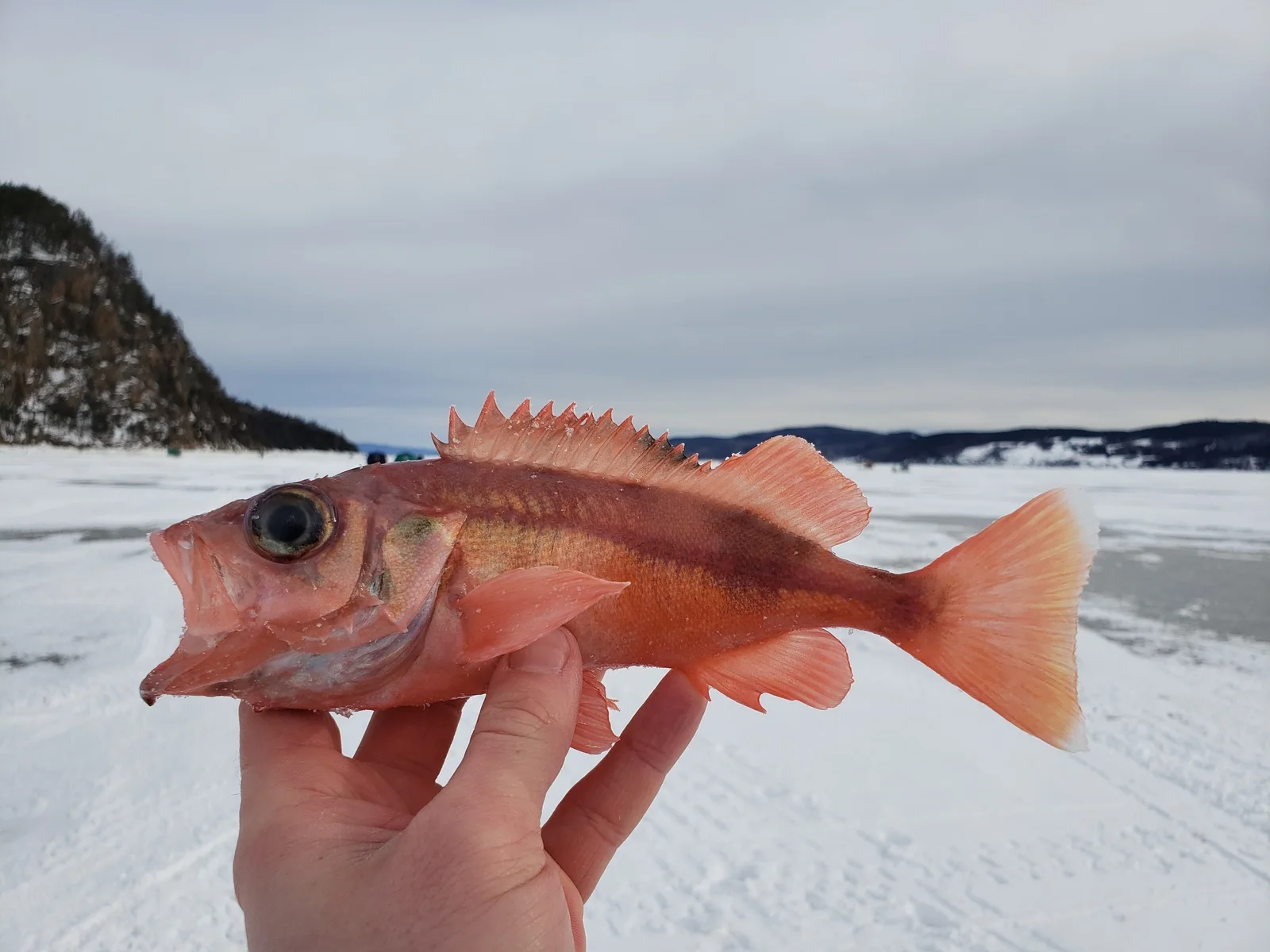
Golden redfish is a cold-water rockfish of the northeast Atlantic, from the Kattegat and North Sea north to Spitsbergen and the Barents Sea, east to the Kanin Banks and Novaya Zemlya, Iceland and eastern Greenland included. It is an orange-red fish with large eyes and a spiny skull, living from 100 to 1,000 m in water of 3 to 7 degrees C. Adults reach 100 cm TL and 15 kg and can live 60 years.

Golden redfish (Sebastes norvegicus) is a fish of the family Sebastidae. FishBase gives its range as: Eastern Atlantic: Kattegat and North Sea, northward to Spitsbergen, southern part of Barents Sea eastward to Kanin Banks and Novaya Zemlya, rare in White Sea, Iceland and eastern Greenland. Western Atlantic: Greenland and southeastern Labrador in Canada to New Jersey in USA. It is recorded from 100 to 1000 m, in temperate water at 3–7 °C. The recorded maxima are 100 cm TL, 15 kg, 60 years. IUCN status: Least Concern (LC). Chinese name: .
The slope is the address
A Norway redfish is not a flat-ground fish. FishBase gives a depth range of 100–1,000 m with 100–500 m as the usual band. The Norwegian Institute of Marine Research puts the working depth at 100–500 m from the North Sea through the Barents Sea, and notes the species also enters Norwegian fjords. Those are slope and bank-edge numbers, not basin numbers. GBIF's distribution file puts all ten of its rows in Denmark, Norway and Sweden, which is the same northeast Atlantic shelf edge seen from a different direction.
Read the three depths together: 100 m is the shallow limit, 500 m is where most of the fishing happens, 1,000 m is a record. A boat anchored on flat mud at 150 m can be in the right depth and still in the wrong place. What you are looking for is a break where the bank falls away, because that is where the fish can sit above the bottom and still be near it.
Two family names for one fish
FishBase files the species in Sebastidae; the Norwegian page lists it under Scorpaenidae. The animal is the same either way, but a search is not. A regulation or a survey written under one family name may not appear under the other, and both names sit close to other redfish. The Latin binomial is the only string that returns the same result in every catalogue.
Three to seven degrees is the whole envelope
FishBase gives 3–7 °C and a range from 79°N to 39°N. The distribution text runs from the Kattegat and North Sea north to Spitsbergen and the southern Barents Sea, with Greenland and southeastern Labrador on the western side. The fifteen country entries reach Canada, Greenland, Iceland and the United States, while the GBIF rows stop at three Nordic countries. The difference is not a contradiction: one list is a literature range, the other is what a distribution table happens to hold.
The temperature band is narrow. A bottom reading of 12 °C is outside the page, and a bank that warms past 7 °C in late summer is not where this fish concentrates. That one number rules out more water than the depth range does.
April and May on three named banks
FishBase leaves the spawning months empty; the Norwegian source fills them. Females release live young of 4–6 mm in April–May, mating takes place in autumn, and because the two events are separated by months, the spring spawning grounds can hold almost nothing but females. The grounds named on that page are Vesterålen, Haltenbanken and Storegga.
For an angler this is a grouping fact rather than a curiosity. In April the fish are concentrated and mostly female; by late summer the same bank is spread out again. A mark that produced three fish in one drift in spring may produce one pass through the same water in August, and that is a change in behaviour, not a change in stock size.
A 45 cm common fish behind a 100 cm record
FishBase lists a maximum of 100 cm TL, a common length of 45 cm TL, 15 kg, and a maximum reported age of 60 years. Maturity is given as 38.9 cm, with a range of 38–41 cm. The Norwegian page rounds the same animal to a metre and more than 15 kg, with a lifespan over 60 years.
The gap between 45 and 100 is not a growth rule. It is the distance between what a survey usually sees and what a record book keeps. The number that changes handling is 38–41 cm: below that band the fish has not spawned, above it the size argument no longer applies. A 45 cm fish is a normal catch; a 90 cm fish is an old one, and old fish of a slow-growing species are the ones worth putting back.
The tag says pelagic, the depth says slope
FishBase labels the species pelagic-oceanic and oceanodromous, which reads like a midwater fish. The Norwegian page places it at 100–500 m over banks and fjord slopes. Both can be true: the tag describes the water mass it lives in, while the depth figure describes where the fish is caught. In practice the offering has to reach the slope, and the drift has to run along the contour rather than across it.
A heavy jig or a baited paternoster works because it can be felt on a 300 m line; a light lure cannot. Redfish eat plankton in their first years and larger plankton and fish afterwards, so a fish-flesh bait or a slim metal jig is closer to the diet than a bulky soft plastic. The retrieve is a lift and drop along the break, not a vertical pump. On a long line a snag costs the whole rig, so a weak link at the sinker is cheaper than a locked drag.
Sixty-nine observations against ten rows
iNaturalist holds 69 observations of the species; GBIF's distributions endpoint returns ten rows, all in Denmark, Norway and Sweden. Neither number measures abundance. The 69 is a count of people with cameras in cold water; the ten rows are eight PRESENT records, one IRREGULAR record and one row without a status, all compiled from other databases.
What the two files do show is agreement on the centre of gravity: the observed and the asserted range both sit in the northeast Atlantic. If you are planning a trip from Britain or Canada, the same files say the species is listed there but give you no local density. Presence is the only claim either file supports.
Golden redfish, ocean perch, and one warning
The English names run from Bream, Brim and Brin to Golden redfish, Norway haddock, Ocean perch, Pinkbelly rosefish and Sébaste. "Redfish" also names a scorpionfish relative and a Gulf drum, so a rulebook search on the common name can land on the wrong animal. Use Sebastes norvegicus.
FishBase records reports of ciguatera poisoning for this species. That is a report, not a guarantee that every fish is toxic, but it is a reason to treat a large old specimen as a question rather than a default meal. The IUCN listing is Least Concern, assessed 27 March 2024; that is a judgement on the species across its range, and it says nothing about the bank you are drifting over.
Where these facts come from
Check these pages before you rely on a size, range or protection status.
- FishBase — Sebastes norvegicus — FishBase · T2
- GBIF — Sebastes norvegicus occurrence records — GBIF · T2
- IUCN Red List — Sebastes norvegicus — IUCN · T1
- Photo record — iNaturalist — iNaturalist · T3
Fish in the same water
These fish live in the same place.

Guides for this water
Technique, gear and safety guides that fit Golden redfish.