
Redstripe rockfish
Redstripe rockfish has XIII dorsal spines and 13–15 soft rays, III anal spines and 6–7 soft rays, and 36–43 vertebrae. Head spines are weak: supraocular, coronal and nuchal spines are absent. The dorsal notch is shallow, the second anal spine is equal to or shorter than the third, and the caudal fin is moderately indented.

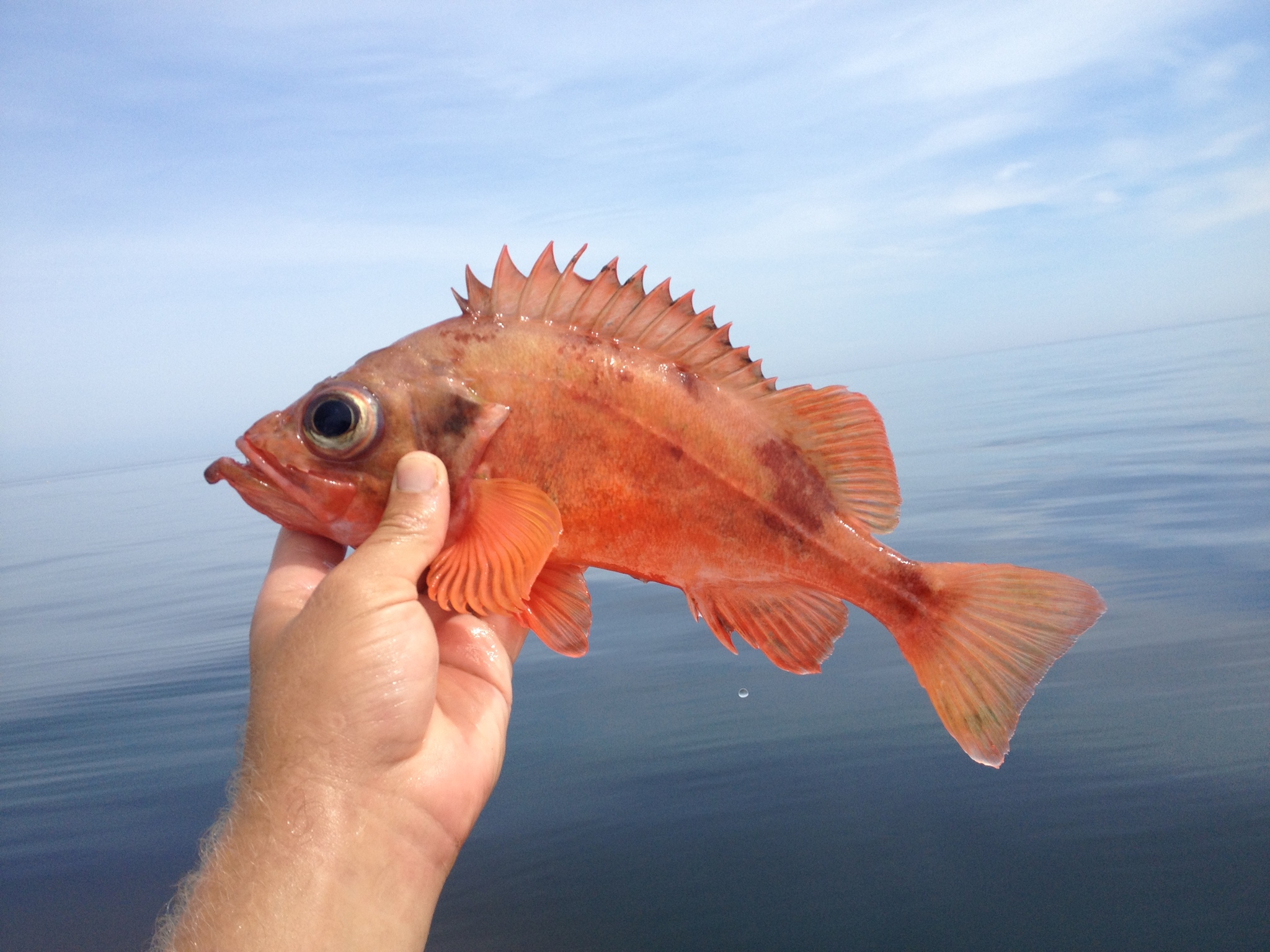
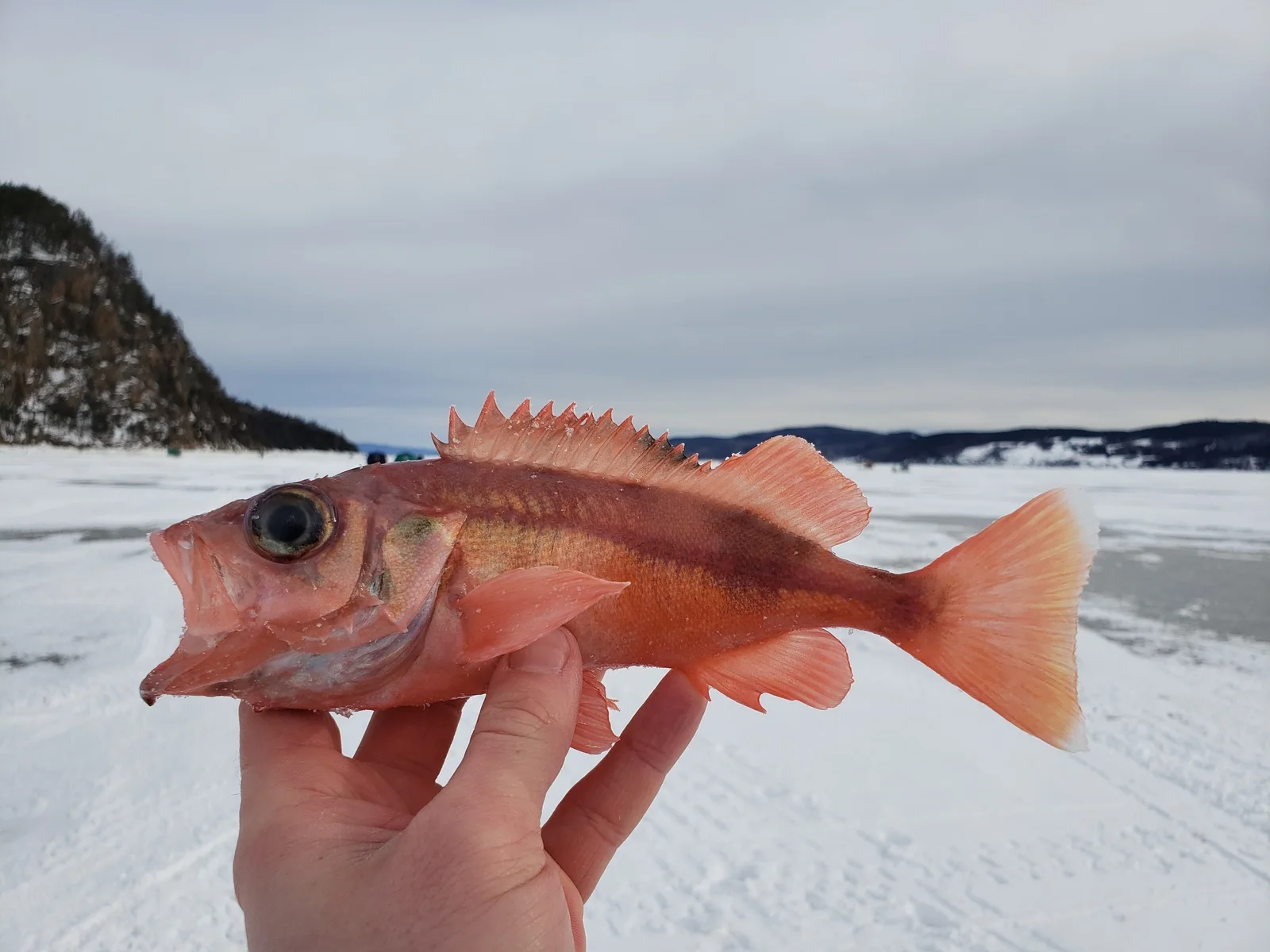
Redstripe rockfish has XIII dorsal spines and 13–15 soft rays, III anal spines and 6–7 soft rays, and 36–43 vertebrae. Head spines are weak: supraocular, coronal and nuchal spines are absent. The dorsal notch is shallow, the second anal spine is equal to or shorter than the third, and the caudal fin is moderately indented. The body is light red, mottled with olive above, yellow on the lower sides, with a light red stripe along the lateral line, black lips, and red fins tinged green or yellow. Maximum length is 61 cm TL and no age is recorded. The species is harmless to humans and is rated highly vulnerable.
Habitat and behaviour
The range runs from Pribilof Canyon in the Bering Sea and Amchitka Island in the Aleutians to San Diego, California. The country table lists Alaska, Canada and the contiguous United States. It is demersal from 12 to 425 m, usually 183–274 m, on deep reef slopes. GBIF holds 27036 records, 26375 from Canada, 630 from the United States and 1 from Costa Rica; iNaturalist has 83 observations. The Canadian concentration follows deep trawl survey coverage more than an uneven range. It is a commercial species and also a gamefish.
Seasonal window
Spawning is recorded from July to August, with matching records from north-central California. Southeast Alaska does not list the species separately, so it falls under nearshore rockfish and the current announcement. British Columbia allows 3 rockfish a day except yelloweye. Washington's coastal bottomfish season runs from the second Saturday in March to the third Saturday in October. California allows 10 fish a day in the RCG complex. Spawning is midsummer and deep water is weather-limited, so late spring to early autumn is the steadier window. No temperature range is recorded, so none is given. In practice the deep drop is limited by wind and swell more than by the calendar.
Gear and approach
At 61 cm maximum, deep fishing calls for a medium-heavy boat rod with mid-section power and a tip that still shows the bottom. Braid needs enough capacity for a drop past 274 m, with an abrasion leader on the end. Use circle hooks or strong single hooks, and choose lead by depth and current rather than a fixed size. Carry a descending device for release, as Alaska and California require for rockfish. Wind steadily rather than fighting the fish against the drag. A reel with a reliable drag and a line counter helps repeat the same drop.
Edibility and regulations
The flesh is white and moist, good steamed, pan-fried or in soup; bleed, gill and ice the fish on the boat. Southeast Alaska does not list the species, so it is managed with other nearshore rockfish and the Alaska entry here is an inference. British Columbia: 3 rockfish a day except yelloweye. Washington coast: 9 bottomfish and 7 rockfish a day, and the Puget Sound keep list does not include this species. California: 10 fish a day in the RCG complex, no minimum size. IUCN Not Evaluated; CITES and CMS Not Evaluated.
Where to look
FishBase supplies taxonomy, morphology, distribution, spawning and use; GBIF supplies occurrences; iNaturalist supplies observations and images. Regulations come from the four agencies' public summaries, and the Alaska entry is an inference. The usual depth of 183–274 m comes from FishBase and is not the same as the full 12–425 m range. The seasonality curve is an editorial judgement, not catch data.
How to catch it
Deep bottom fishing
Fished with the listed approach, matched to the recorded depth and size.
Jigging
Fished with the listed approach, matched to the recorded depth and size.
Where these facts come from
Check these pages before you rely on a size, range or protection status.
- FishBase — Sebastes proriger — FishBase · T2
- GBIF — Sebastes proriger occurrence records — GBIF · T2
- IUCN Red List — Sebastes proriger — IUCN · T1
- Photo record — iNaturalist — iNaturalist · T3
Fish in the same water
These fish live in the same place.

Guides for this water
Technique, gear and safety guides that fit Redstripe rockfish.