
White-edged rockfish
A mid-sized rockfish of Hokkaido and Tohoku, usually 20 to 30 cm, often sold simply as mebaru. It lives on rock and artificial reef from a couple of metres down to 355 m, is ovoviviparous, and is rated the best-eating fish among those the market groups as soi.
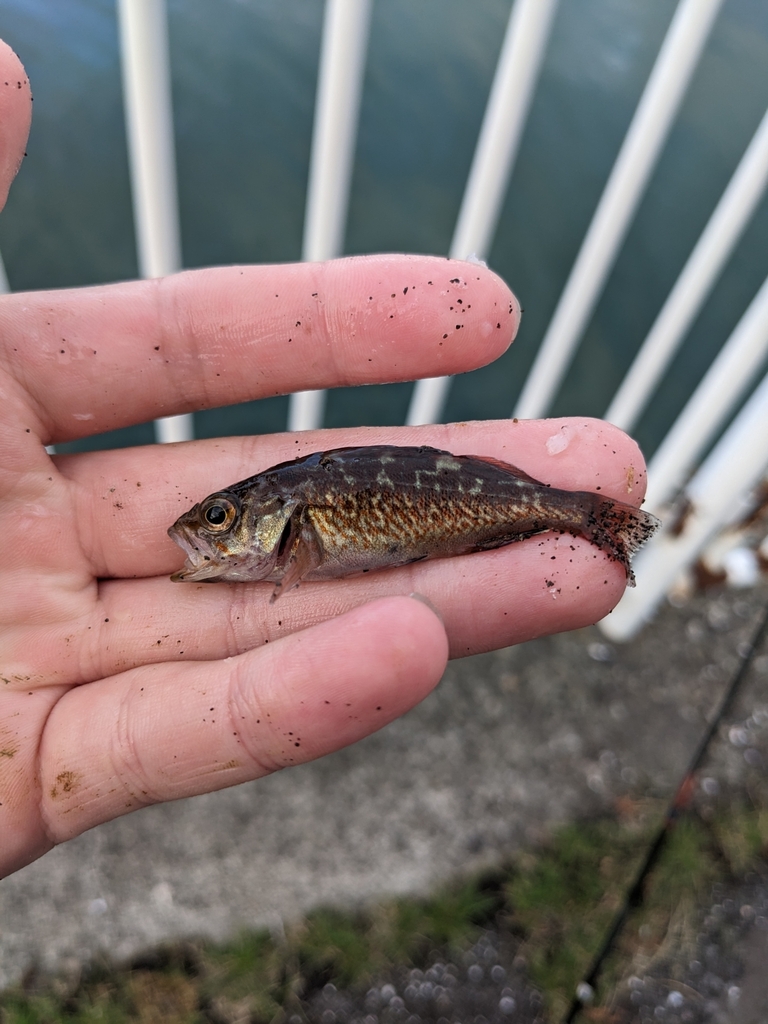
A mid-sized rockfish of Hokkaido and Tohoku, usually 20 to 30 cm, often sold simply as mebaru. It lives on rock and artificial reef from a couple of metres down to 355 m, is ovoviviparous, and is rated the best-eating fish among those the market groups as soi.
Thick-bodied, short, and not a black rockfish
Sebastes taczanowskii is a compressed, slightly deep-bodied rockfish with a large head, a large mouth and protruding eyes. The dorsal spines are well developed and the fin membrane between them is notched. Colour is variable — grey-brown, dark red-brown or black-brown, with irregular blotches on the flank. Against the mebaru and the black rockfish it has a thicker body, and the band on the lachrymal bone below the eye is less marked than in the black rockfish. That is the species it is most often confused with: Sebastes schlegelii is darker and reaches 40 to 50 cm as an adult, while this fish is usually 20 to 30 cm. The ranges overlap, but this one is more a Hokkaido and Tohoku fish, and the market often sells it simply as mebaru. FishBase carries no length field for the species, so no maximum is invented here.
A wide depth band on rock and artificial reef
FishBase records it from Iwate and Hokkaido to Primorsky Krai, with a record from Korea. The Japanese account lists the Okhotsk coast of Hokkaido, the Japan Sea coast from Hokkaido to Ishikawa, the Pacific coast from Hokkaido to Miyagi, and the central east coast of the Korean peninsula through the Mamiya Strait to the west, south and southeast coasts of Sakhalin and the Kurils. Depth is usually less than 200 m, sometimes 355 m, and the fish also turns up in water around 2 m deep. It prefers rock and the structure around artificial reefs. That is why the fishing ground can be rubble at the foot of a breakwater or a reef taken from a boat, with a very wide depth span between them.
Autumn mating, early-summer birth, unsettled season
Reproduction is ovoviviparous. Mating happens in autumn, sperm is stored through the winter, the eggs develop inside the female and the young are born in early summer. The Japanese account gives no precise birth month or temperature, saying only that the eggs enlarge in spring and the young arrive in early summer; those blanks are left blank. The diet is fish, shrimp and krill. The market season is written as summer to winter, but the same entry admits the season has not really been pinned down, and notes that fat begins to fall in December when ovaries or testes are present. This is a cold-temperate species with Hokkaido and Tohoku as its main ground. It remains catchable in winter, with the schools sitting deeper.
Rubble from shore, reef from a boat
Hokkaido treats this as a representative shallow-water sport fish, and both bait and lures work. From shore it can be taken by casting, float fishing or dropping into holes among the rocks; with lures, a 6 ft rockfish rod, 8 lb nylon, a 2 g jighead with a 2-inch soft plastic, or a 5 cm popper, covers the rubble ground. From a boat, a branch rig with saury, mackerel or squid strips works, and a whole small fish is also used. After the lead reaches bottom, lift, drop, slacken and tighten slowly so the bait keeps moving. After a bite, wait a second or two for the fish to hold before lifting into it; striking at once tends to hook only the lip or lets the fish get back into the rocks.
Abrasion resistance matters more than finesse
The shore lure rod is 1.8 to 2.1 m, with nylon main line around 8 lb and a 3 to 4 leader. For bait, a 2.7 to 3.3 m casting rod with a 15 to 25 lead, 2 to 3 main line, 1.5 to 2 leader and maruseigo 10 to 12. The boat rod is 1.8 to 2.1 m rated 30 to 50, with PE 1 to 2 and a 2 to 3 leader. Around rock, the leader has to resist abrasion, and the lead should be heavier rather than lighter, since a lead that drags is a lead that finds a crevice and stays there.
The best-eating fish in its group
The Japanese account rates this as the best-eating fish of the soi group. The flesh is white and moderately firm, the blood line pale red, and it suits simmering, butter sauté, salt-grilling, miso soup, sashimi and a lightly seared preparation. The liver tastes good and gives a strong stock. A fish under 20 cm can be deep-fried whole. Japan has no nationwide recreational size or closed season; sea fishing follows prefectural fishery adjustment rules and cooperative angling rules. Whether the rules of Hokkaido and Aomori, the main producing areas, set a species-level limit for this fish was not checked one by one here, and is marked deferred.
Where each fact came from, and one extraction error
Taxonomy, distribution and depth come from FishBase. The Japanese distribution, ovoviviparity, diet, fishing method, market position and cooking come from the ezomebaru entry of the market encyclopedia. During data collection the black rockfish page was taken by mistake; it was checked and fully replaced. Because FishBase has no length field for this species, the body sizes of the black rockfish were not used as a substitute.
How to catch it
Rock fishing
Fished with the listed approach, matched to the recorded depth and size.
Shore casting
Fished with the listed approach, matched to the recorded depth and size.
Boat bottom fishing
Fished with the listed approach, matched to the recorded depth and size.
Where these facts come from
Check these pages before you rely on a size, range or protection status.
- FishBase — Sebastes taczanowskii — FishBase · T2
- GBIF — Sebastes taczanowskii occurrence records — GBIF · T2
- IUCN Red List — Sebastes taczanowskii — IUCN · T1
- Photo record — iNaturalist — iNaturalist · T3
Fish in the same water
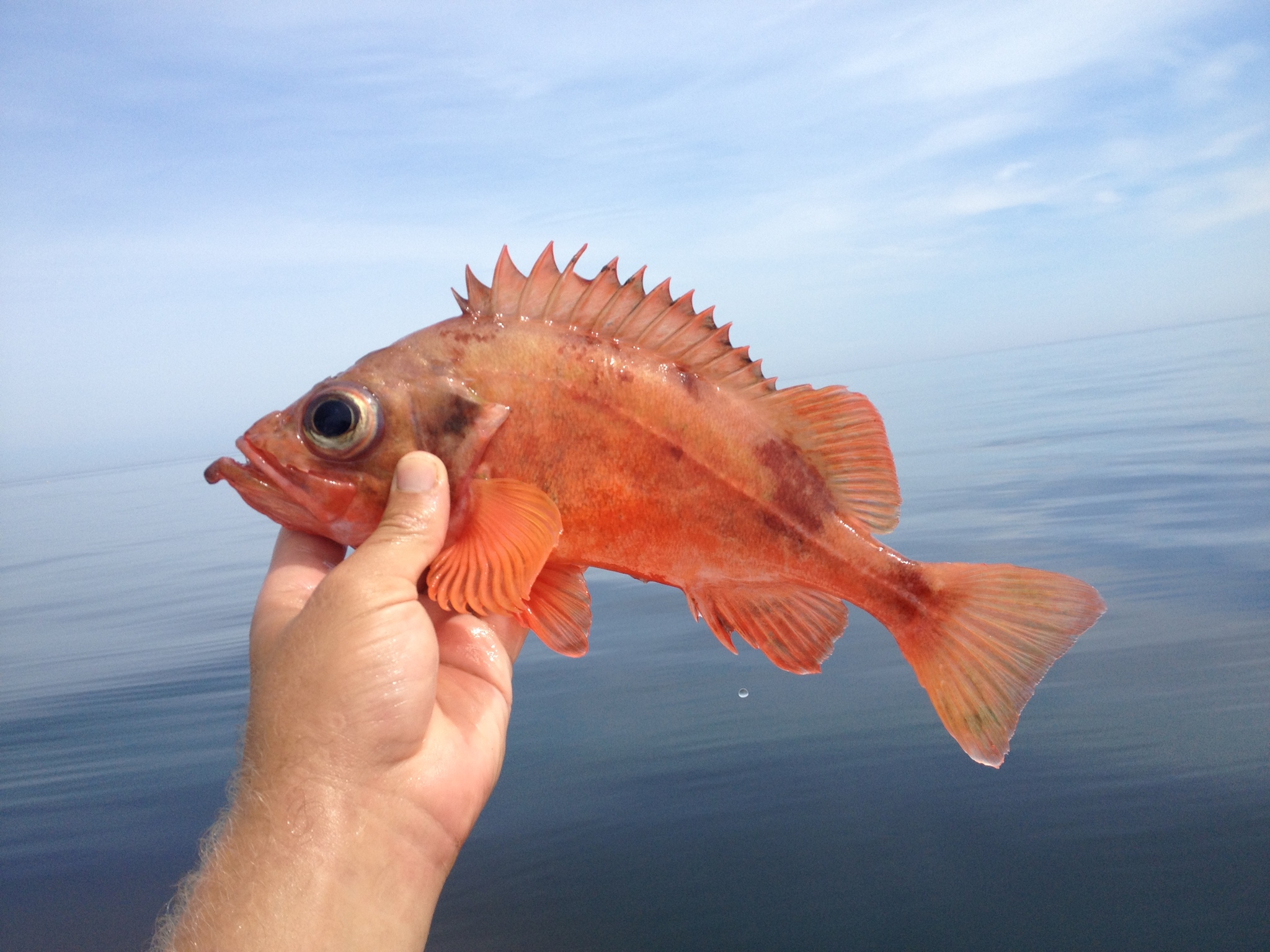
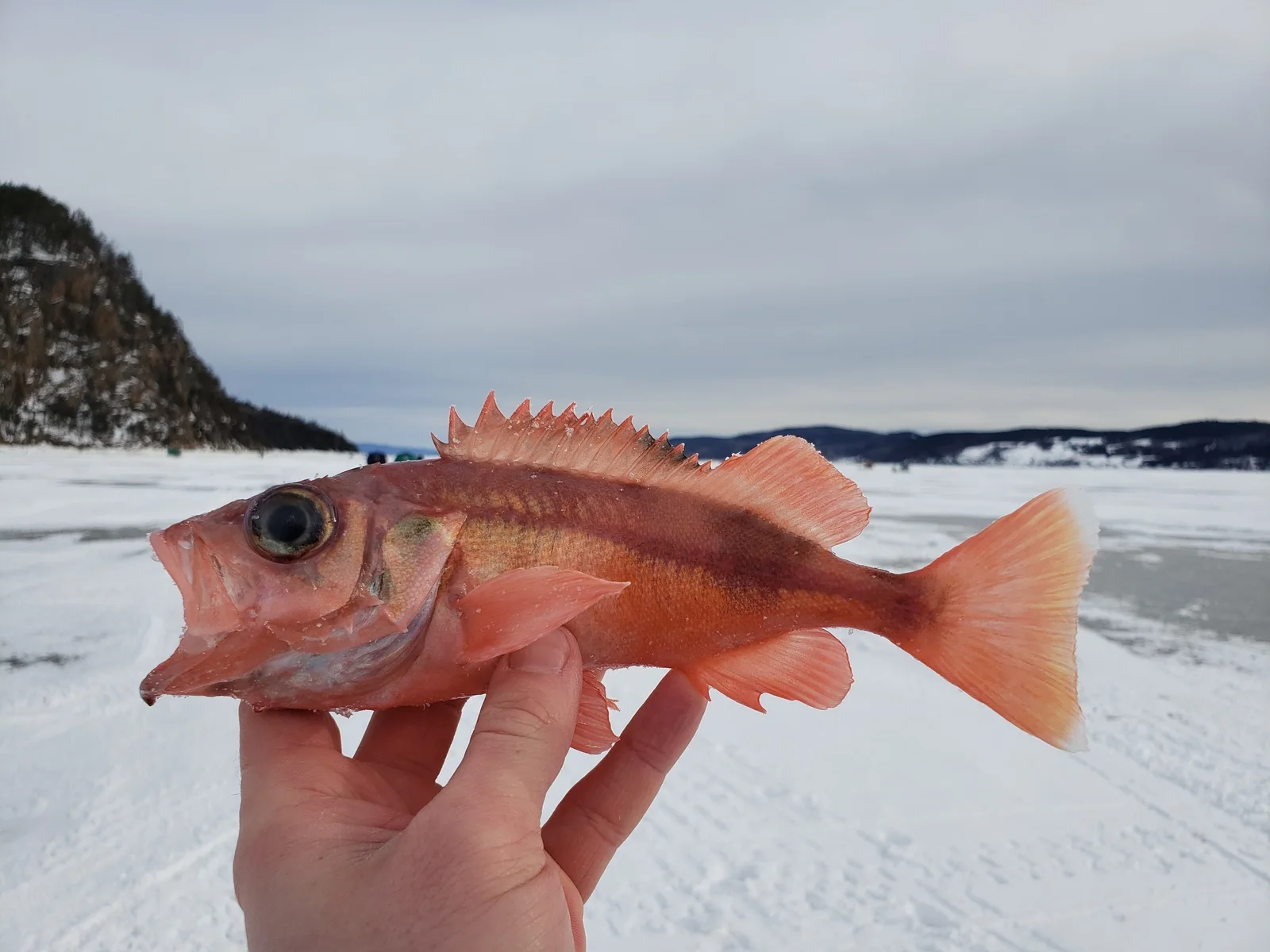
These fish live in the same place.

Guides for this water
Technique, gear and safety guides that fit White-edged rockfish.