
False kelpfish
Every label on this fish points a different direction. FishBase calls the climate tropical; the distribution text begins at southern Hokkaido, north of the Tropic of Cancer. FishBase puts the fish in Sebastidae; Wikipedia puts it in Scorpaenidae. None of these is a typo; they are different kinds of records.
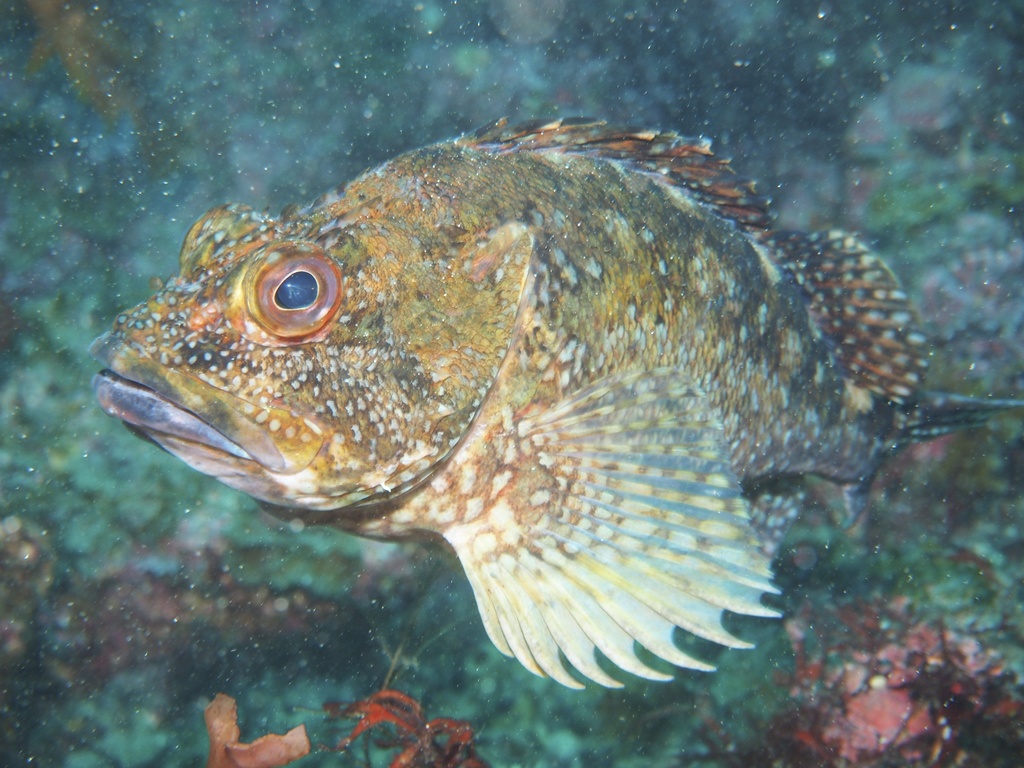
Every label on this fish points a different direction. FishBase calls the climate tropical; the distribution text begins at southern Hokkaido, north of the Tropic of Cancer. FishBase puts the fish in Sebastidae; Wikipedia puts it in Scorpaenidae. The depth field is blank. None of these is a typo; they are different kinds of records.
Tropical, but Hokkaido is not
The environment line reads "Tropical". The distribution line reads "southern Hokkaido, Japan to the Philippines". Southern Hokkaido lies north of the Tropic of Cancer, so the two statements describe different maps: one is a climate class, the other a range.
The climate field is a single label, not a gradient. The page gives no temperature values, no depth, and no preferred range. The rest of the environment line supplies no temperature figure either, so the tropical label stands alone. That makes it a classification rather than a measurement, and it cannot be used to rule out the northern end of the range.
Two families for one fish
FishBase places Sebastiscus marmoratus in the family Sebastidae, order Perciformes/Scorpaenoidei. Wikipedia places it in the subfamily Sebastinae, part of the family Scorpaenidae. The two sites have chosen different ranks and different family boundaries.
For a reader, the practical consequence is that a search by family name can miss the species. The binomial is stable; the family is a classification decision. Record the binomial in the log and treat the family as a filing system.
The name on the rulebook
FishBase and Wikipedia between them attach several English labels to this fish—common rockfish, false kelpfish, filefish, marbled rockfish, rockfish, scorpionfish, sea ruffe, dusky stingfish—and the Chinese and Japanese names are different again. None of these is a legal name. For a size check or a closed-area query, quote Sebastiscus marmoratus; a counter clerk working from "rockfish" may open a different entry.
36.2 cm, 2.8 kg, and a maturity range starting at 8
The length ceiling is 36.2 cm TL and the heaviest published specimen weighed 2.8 kg. Neither a common length nor a maximum age appears. The maturity estimate is printed as "?"; only the 8 cm lower bound of its range is given.
A release decision therefore cannot be tied to a biological threshold. If you want to protect spawners, put back the small fish and rely on the local minimum for the rest.
Demersal, with the depth field empty
Rock is the one ground clue on the page. No depth is recorded, so the vertical position has to come from how you fish the rock: cast tight to structure, let the bait fall along the face, and cover the whole column until the fish show. Without a diet keyword, match the local prey rather than trusting a national list.
Native from Japan to the Philippines, three sightings in Australia
The distribution text runs from southern Hokkaido to the Philippines. FishBase's country table marks Australia as native, along with China, Hong Kong SAR, Japan, both Koreas, the Philippines, Taiwan region and Vietnam. The country table therefore runs to nine territories while the distribution text names only the two endpoints. Wikipedia says the species has been sighted three times in Australia. Those two statements are not the same claim: a country table entry and three sightings describe different levels of evidence.
GBIF adds five distribution statements: two place the species in Oslofjorden as INTRODUCED, one places it in the North Sea under an introduced-species register, one is PRESENT with no locality, and one Swedish record is ABSENT. The introduced records are not part of the native range; they are a separate label attached to the same name.
Spawning around the New Year
The spawning table marks January–March and October–December. The regional rows are Japan, Gokasho Bay, January–February and October–December; Hong Kong SAR, January–February and December; and Hong Kong SAR again, January–March and December.
The union is six months split across the year-end. The two Hong Kong SAR, China rows overlap but are not identical, and the page does not explain why. For a local trip, the regional row is the usable one; the union is a summary, not a season.
Venomous, commercial, farmed
FishBase marks the species venomous, and that is the first operational fact on the page: the dorsal, anal and pelvic spines can inject venom, so a fish on deck is handled with a wet cloth and pliers, not a bare hand. The same record lists commercial fishing, commercial aquaculture and a gamefish use. Two supply routes—wild capture and farmed fish—mean market availability says nothing about local abundance. The 1,084 iNaturalist observations show that reef regulars meet this fish often enough to photograph it, which fits a shallow rock species rather than a rare one.
No Red List assessment exists for this species. For a rock-reef angler that is not a footnote: there is no conservation reference to fall back on, and no national size or bag rule follows from the page. The rules that do apply come from the prefectural or municipal fishery association that manages the reef where you fish, and they have to be checked on the spot. The binomial is what you quote when you ask; the local name, Kasago or , may point to a different entry in the same rulebook.
Where these facts come from
Check these pages before you rely on a size, range or protection status.
- FishBase — Sebastiscus marmoratus — FishBase · T2
- GBIF — Sebastiscus marmoratus occurrence records — GBIF · T2
- IUCN Red List — Sebastiscus marmoratus — IUCN · T1
- Photo record — iNaturalist — iNaturalist · T3
Fish in the same water
These fish live in the same place.
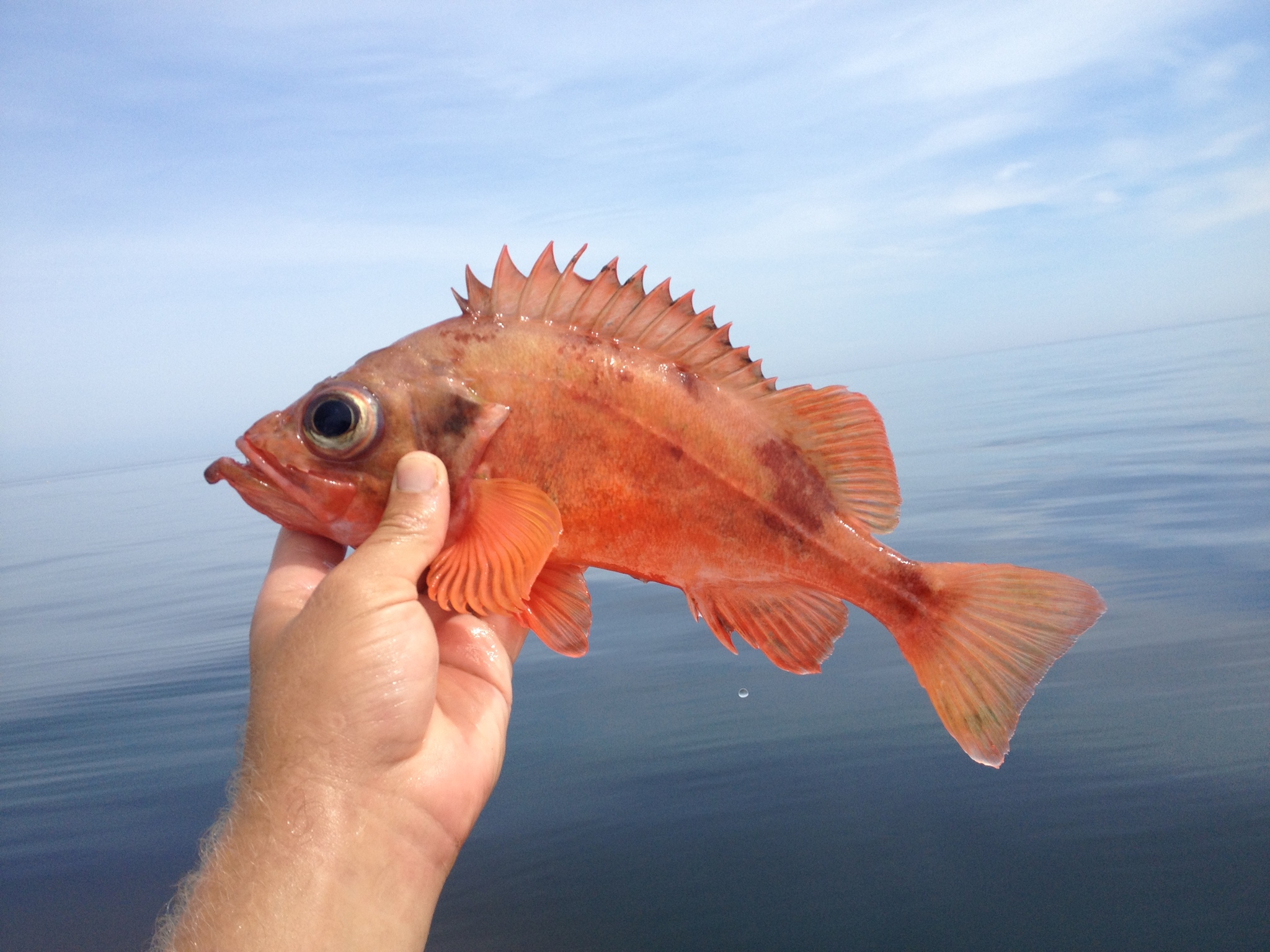
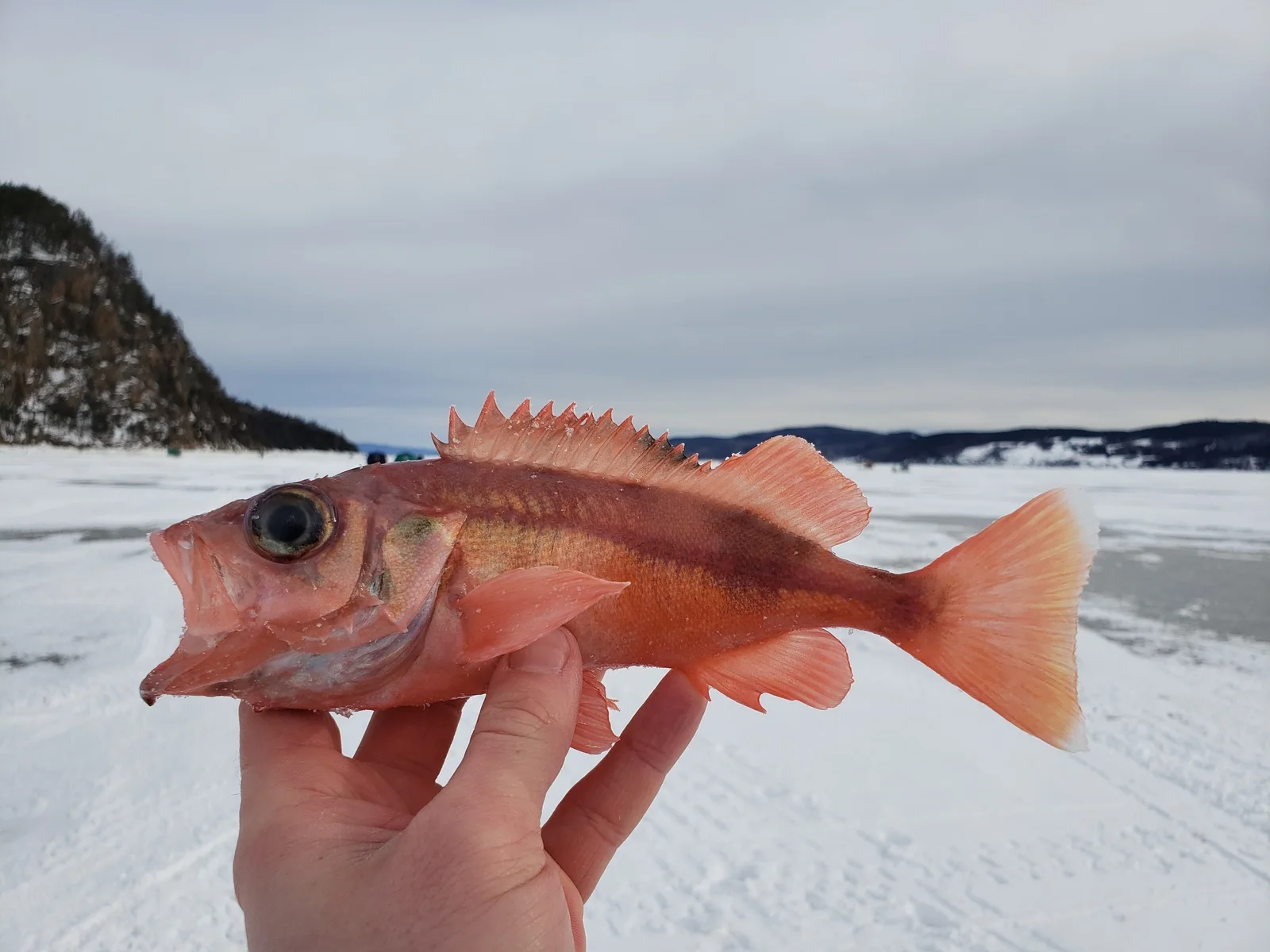

Guides for this water
Technique, gear and safety guides that fit False kelpfish.