≥27 cm
Australia — New South Wales · AU-NSW
New South Wales sets a 27 cm minimum legal length for sand whiting.
Whiting (sand only) 27 cm 20 in total*

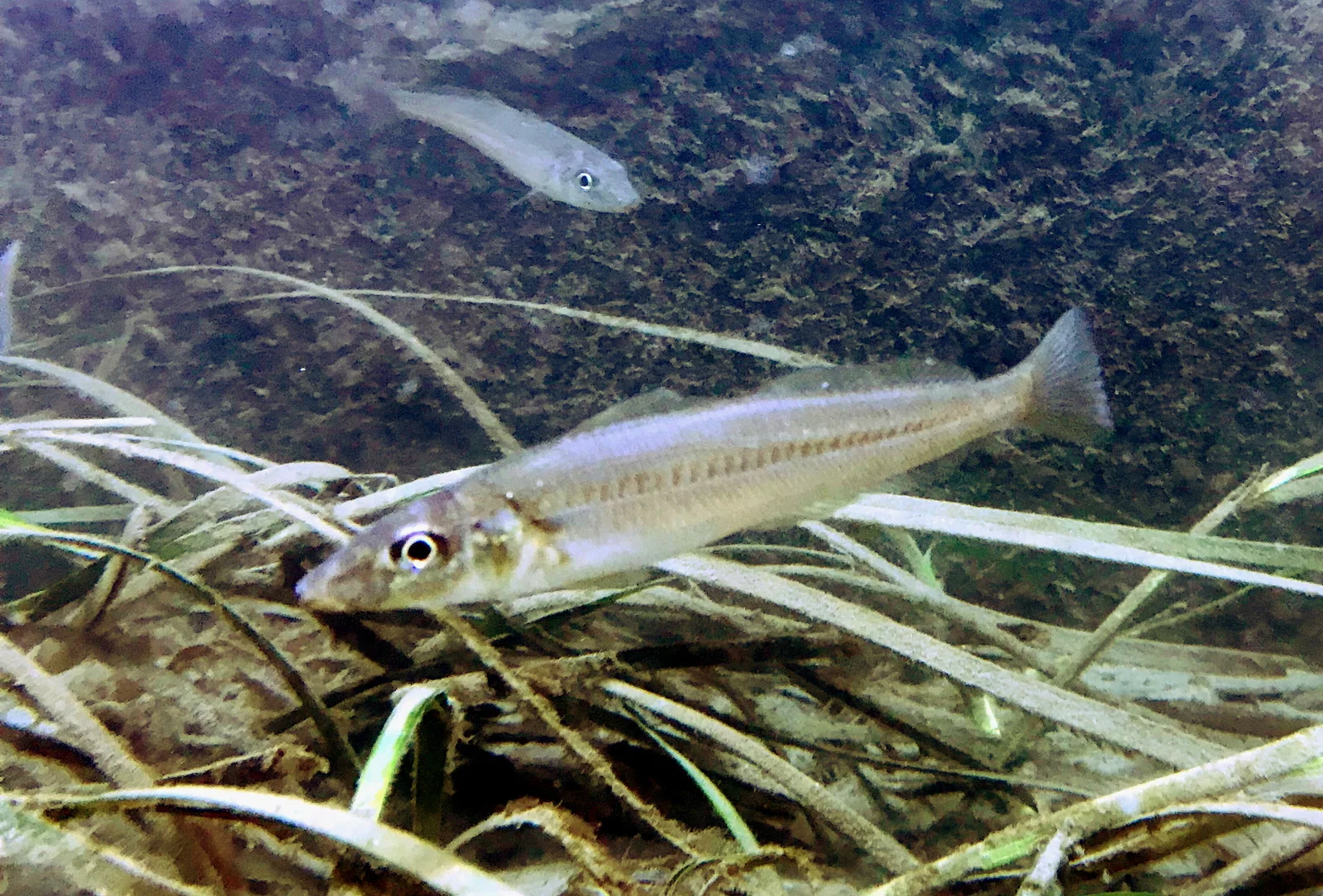
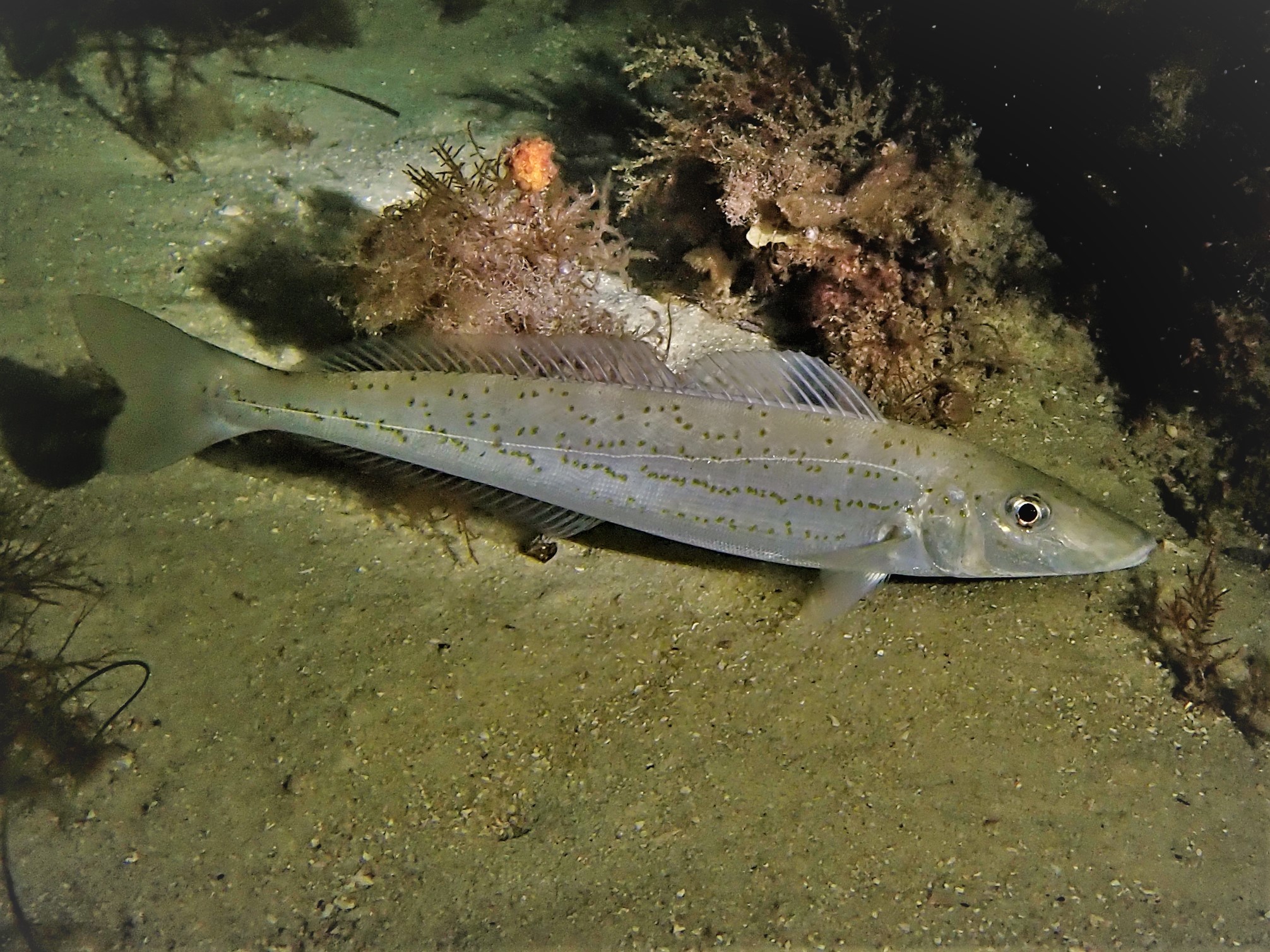
Sand whiting, a member of the family Sillaginidae, is found across the Western Pacific, from east coast of Australia from Cape York (rare) and the Great Barrier Reef, Queensland to eastern Victoria, Ulverstone on northeast coast of Tasmania. Its depth range is from 0 to 46 m, in tropical seas. It grows to 51 cm TL and 1.4 kg, with a diet of crustaceans and worms. Anglers target it by shore casting or boat fishing.

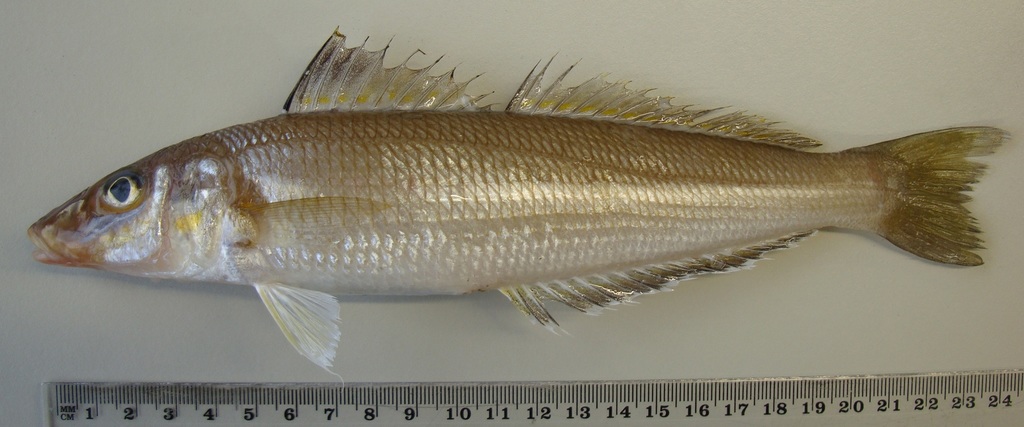
Sand whiting (Sillago ciliata) is a fish of the family Sillaginidae. FishBase gives its range as: Western Pacific: east coast of Australia from Cape York (rare) and the Great Barrier Reef, Queensland to eastern Victoria, Ulverstone on northeast coast of Tasmania; Lord Howe Island, New Caledonia, Woodlark Islands, and Papua New Guinea. Bleeker's records from Batavia and Java were in error. It is recorded from 0 to 46 m, in tropical water. The recorded maxima are 51 cm TL, 1.4 kg, 22 years. Diet includes crustaceans and worms. IUCN status: Least Concern (LC). Chinese name: .
The full range is wide: 0 to 46 m, in tropical water from 9°S to 45°S and 142°E to 170°E. The usual band is narrow: 20 to 22 m. A narrow usual band inside a wide range is not a contradiction; it says the records cluster where the sampling gear worked. Trawl and research hauls are more likely to sample 20 m than the white water of a beach, so the usual figure may reflect effort as much as preference. The habitat keywords keep the shallow end alive: sand, estuary, seagrass, coast.
The 20 to 22 m band is then the offshore centre of the record, while the 0 m end is the surf and estuary margin. A boat angler can treat the usual band as a starting depth; a beach angler is fishing the thin edge the depth record barely samples. Which end of that range holds more fish is unanswered in the record; no percentage will be invented here.
On a sand beach, the productive structure is not the open flat but the gutter behind the first bar, the edge where the bar drops away, and the channel that drains the beach at low tide. Whiting eat crustaceans and worms in that sand, and moving water concentrates both. The recorded diet is exactly those two groups, so a worm or small prawn fished slowly along the bottom is the natural presentation.
The tide controls where that edge sits. On a rising tide the fish follow the wash up the bar; on the fall they retreat into the gutter and channel. A long cast into flat water beyond the bar is often a cast past the fish. Shore casting and boat fishing are the approved methods, and the beach half is a walking fishery: find the gutter, cast across it, move with the tide.
The spawning table is split. For Australia it divides into a January–April block and a September–December block, with sub-entries for February in Botany Bay, January–April and December in New South Wales, and January, February plus September–December on the north-eastern coasts. The result is two windows separated by a closed stretch, not one continuous season. In the southern hemisphere the September-to-April span covers spring, summer and early autumn, and the winter months are missing.
Two windows matter because they create two periods when fish may aggregate, and closures are often written around aggregation. Botany Bay contributes a solitary historical entry rather than a coastal survey. A local whiting closure is more likely to sit inside one of these windows than between them. Nothing in the table claims good fishing in those weeks; it records spawning.
Its ceiling is 51 cm total length and 1.4 kg, and the age record reaches 22 years. Maturity is recorded at 24 cm. Most keepable fish sit between those figures, and the 22-year lifespan makes the upper end old rather than typical. A common length is absent, so the average surf-caught whiting has no stated size.
For tackle, this is a light fish with a soft mouth. A 1.4 kg whiting is a good fish, not a heavy one; a stiff rod and a locked drag will tear hooks out of a mouth built for sucking worms from sand. A long, soft tip, a small hook and just enough lead to hold in the wash do the work. The 24 cm maturity mark doubles as the release guide: anything shorter is still pre-spawn.
Several Sillago species look alike; the distinguishing counts here are 16–18 soft rays in the dorsal fin, 15–17 in the anal fin behind two spines, and 32–34 vertebrae. The outline is fusiform, its section circular. No lateral-line scale count appears on the checked page, leaving a photograph plus fin counts as the field evidence.
Wikipedia's lead names Sillago analis as the nearest relative and says that spine, ray and lateral-line scale counts are all needed to separate the two. On a beach where both share a gutter, that makes the lateral line a third check alongside the fin rays.
That matters on a beach where two whiting species share the same gutter. Do not identify a fish by the name on the bucket; count the soft rays if you plan to keep it, and release anything that does not fit. The source's photographs show the live colour, but colour fades fast after death, and the counts do not.
The distribution text runs along the eastern Australian coast from Cape York and the Great Barrier Reef to eastern Victoria and Tasmania, then adds Lord Howe Island, New Caledonia, the Woodlark Islands and Papua New Guinea. It also says that Bleeker's records from Batavia and Java were in error. The occurrence data still contains three Indonesian records, plus single records from the Philippines and Papua New Guinea.
Those three records do not reopen Java. They are the kind of residue that survives in a database after a literature error has been corrected, and the source itself has already labelled the older records wrong. For a trip, the Australian east coast and the island groups are the usable range; the Indonesian points are a reminder that a dot on a map is not a verified population.
The use record calls it highly commercial, adds experimental aquaculture, and notes gamefishing plus public-aquarium display. Its Red List status is Least Concern, from an assessment dated 5 March 2015. That rating fits a high-volume beach and estuarine fishery rather than a trophy fishery; the commercial value is in numbers, not individual size.
That 2015 verdict is a point-in-time snapshot, and no rule text accompanies it. The biology is specific: a 22-year fish that matures at 24 cm loses more when small fish are removed than when one big fish is. That supports a personal size rule even where the local limit is lower.
Of 23,299 preserved GBIF records, 23,246 are Australian, followed by New Caledonia at 20 and Indonesia at 3. iNaturalist carries 1,343 observations. The numbers are a map of sampling and photography, not a fishing guide. Let them narrow the coastline, then pick between two approaches: walk a surf beach and read the gutters, or take a boat to the 20 to 22 m band the source calls usual.
Cast from shore or a breakwater, within reach of the recorded inshore range.
Fished from a boat, with the approach adjusted to the recorded depth.
These are the published regulations for this fish. Read the number first. The notice below it is the actual regulation.
New South Wales sets a 27 cm minimum legal length for sand whiting.
Whiting (sand only) 27 cm 20 in total*
Queensland sets a 23 cm minimum size for sand (summer) whiting.
Sand (summer) whiting | Min: 23cm | Combined limit: 30 in total of sand, goldenline and northern whiting
New South Wales allows 20 whiting per person per day as a whiting-group bag limit; the 27 cm minimum applies to sand whiting.
The 20-fish limit covers the whiting group, not sand whiting alone.
Whiting (sand only) 27 cm 20 in total*
Every record above names its source and the date it was retrieved. See the regulation register for the full list, or how to read these regulations.
Check these pages before you rely on a size, range or protection status.
These fish live in the same place.
Technique, gear and safety guides that fit Sand whiting.