FishBase gives this species two depth figures, and the distance between them is the article. The recorded range runs from 0 to 60 m; the usual depth runs from 0 to 2 m. One number describes what the fish can survive, the other describes where the records actually put it. For anyone fishing from a beach, only the second number comes with a casting range attached.
Two depth figures, two different questions
A 60 m mark belongs to a boat angler working a drop-off. A 2 m mark belongs to someone standing in the shore break with wet boots. Both appear in the same environment line, and neither cancels the other: the species is recorded as marine and brackish, amphidromous, reef-associated and tolerant of a wide depth span, but the reference attached to the usual range is a shallow-water one. The wide range answers "how deep can it go". The narrow range answers "where is it, most of the time".
What the usual band looks like
The record says sandy bottom and open water, and the source does not map bars or gutters, so this section is a reading of the depth figure rather than a source claim. On a sandy shore the first two metres are rarely flat. There is the shore break, the trough behind the first bar, a gutter running parallel to the beach, and at low water the small channels that drain the sand. Those features hold water of roughly this depth and change position as the beach moves. That is why a mark that produced fish last month can be dry this month, and why a sounder reading of 1.5 m over sand is worth more than a landmark on the horizon.
The tide moves the band, not the fish
Because the band is defined by depth, the tide shifts it up and down the beach instead of sending the fish far. On a rising tide the water climbs and the trough moves inshore; on a falling tide the same ground drains. The source supplies no tide data for this species, so the timing here is inference from the depth record, not a quoted finding. The practical consequence is that you follow the waterline rather than a fixed coordinate: fish the band where it is now, not where it sat on your last visit.
Where the cast should land
If the fish lives in the first two metres, distance is not the objective. A long cast that clears the bar puts the bait in deeper, emptier water. The better target is the gutter or the edge of the trough, reached with a short cast or a lob and held there long enough for the bait to travel with the wash. A heavy lead anchors the rig and drags it out of the band; a very light one is pushed up the beach. The adjustment that matters is lead weight against the strength of the wash, not extra distance.
The fish you actually meet
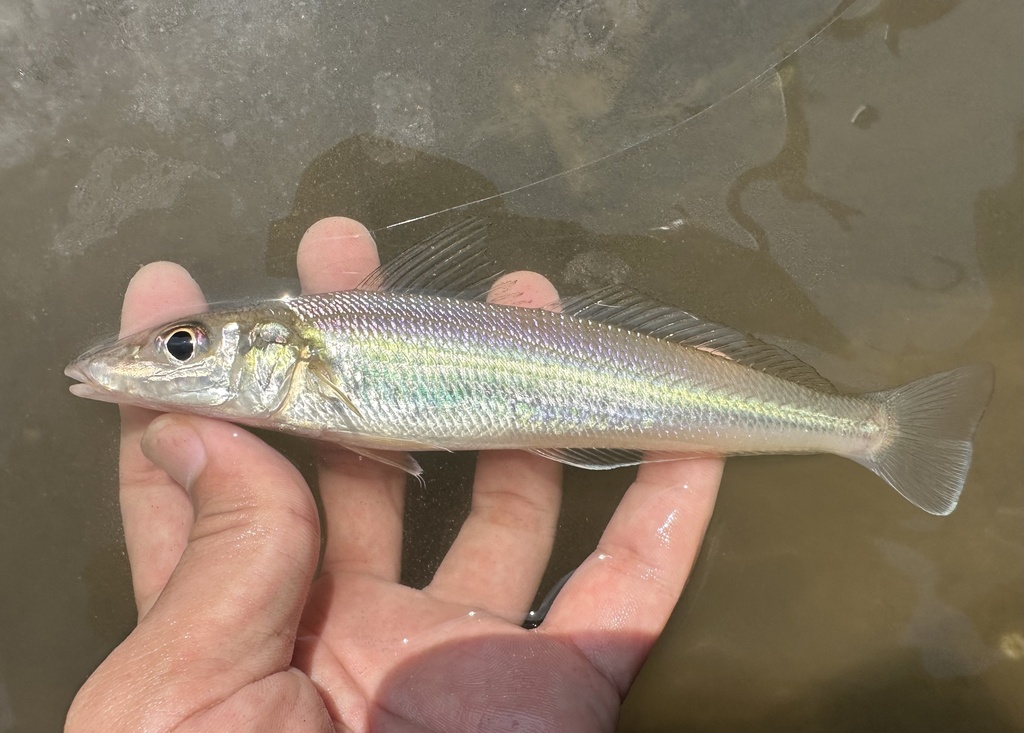
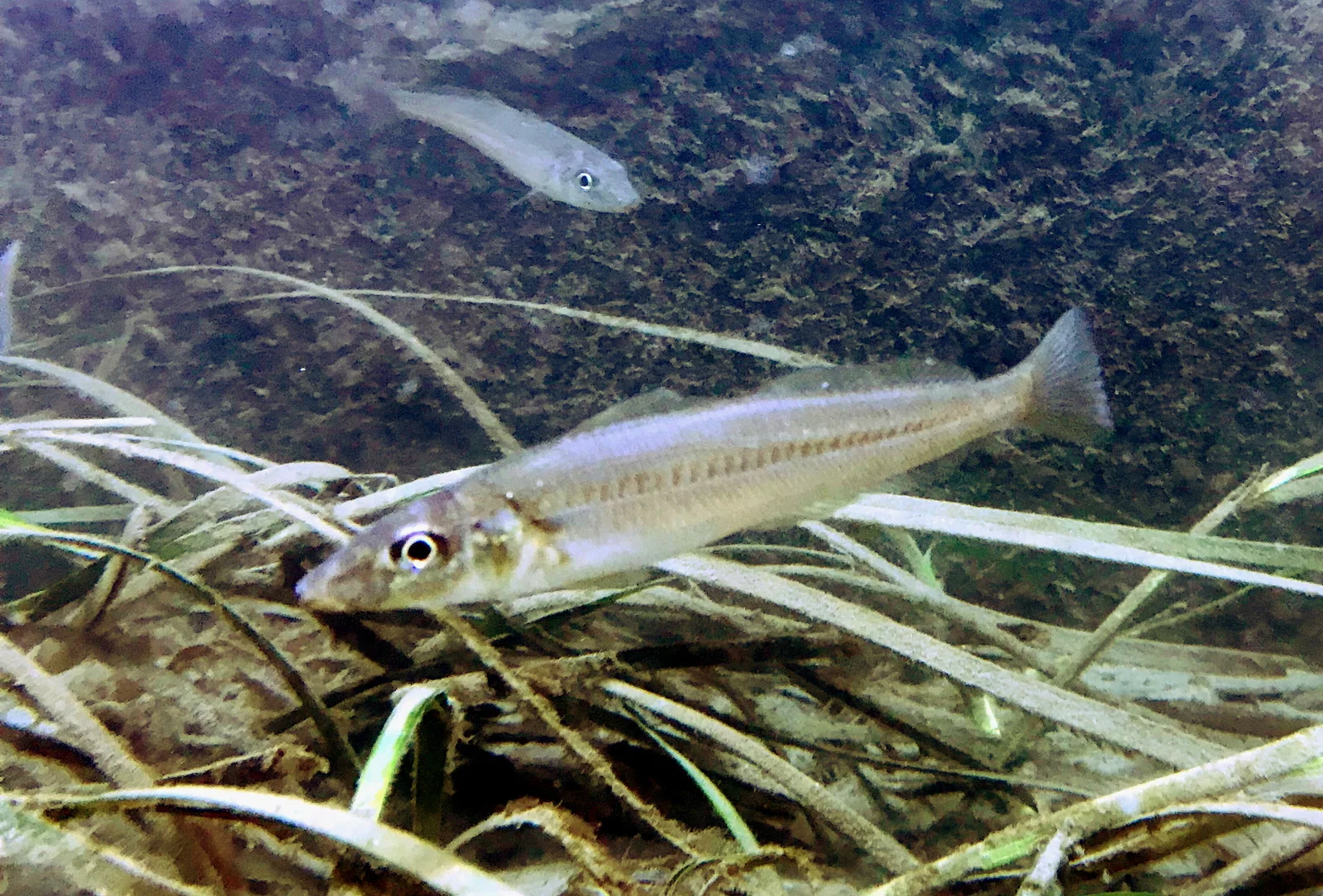
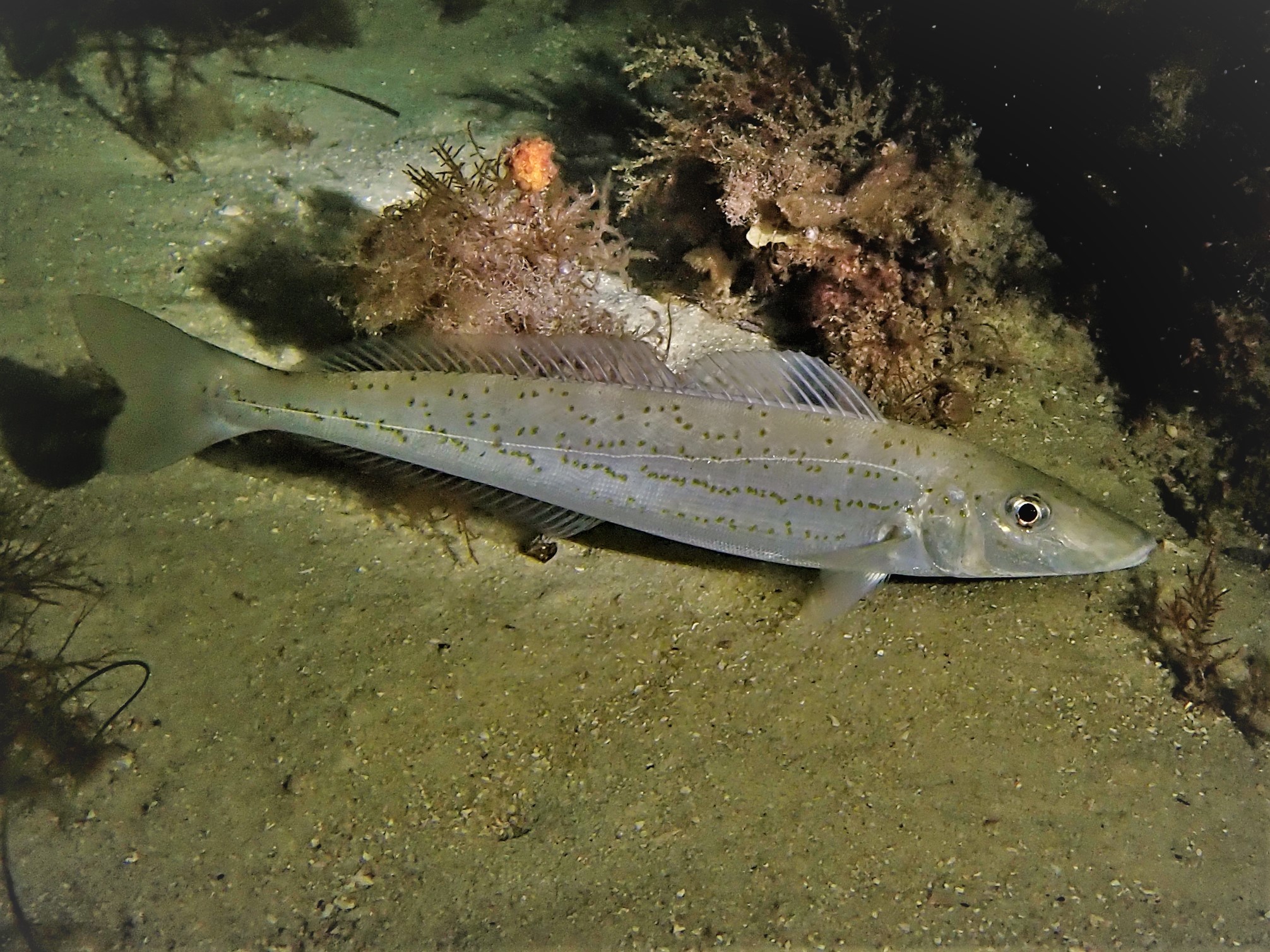
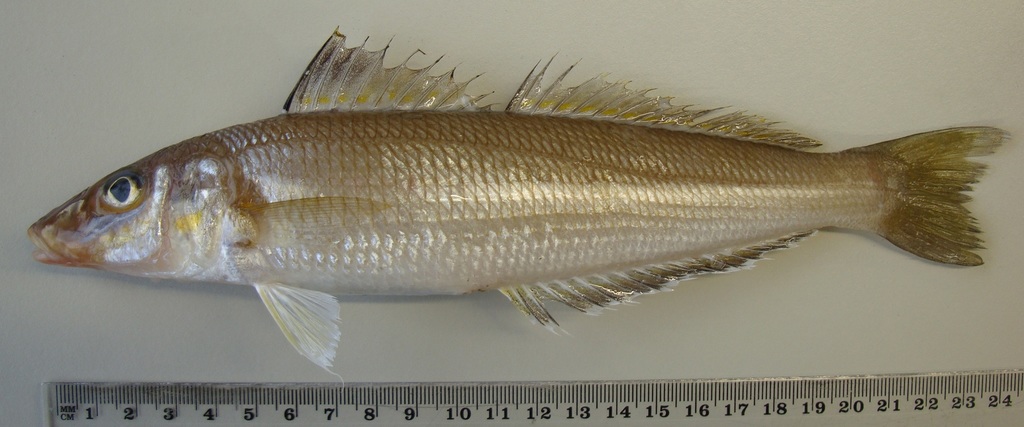
The maximum recorded length is 31 cm (SL), the common length is 20 cm, and maturity begins at 16.7 cm, inside a recorded span of 13–19.1 cm. That combination deserves a pause: the common fish is already at or past maturity, so a 20 cm capture is not a juvenile. No maximum weight is recorded for the species, which means any "average weight" figure in circulation is not from this source. Identification rests on fin counts rather than colour: 11–13 dorsal spines, 20–23 soft dorsal rays, 2 anal spines and 18–23 soft anal rays, on an elongated body with a circular cross-section.
The distribution note adds a warning that belongs with identification. In Japan the name has often been applied to Sillago japonica, and the species has also been confused with S. lutea and S. vincenti. A catch logged as silver sillago in Japanese waters may therefore be a different fish, and the fin counts are the cheapest check to make before the record is written down.
What it eats in the wash
The diet keywords are zooplankton and worms. That is a small-prey list, and it fits the band: the wash lifts plankton and exposes worms in the sand, so a fish holding in two metres of moving water feeds on things measured in millimetres. Bait and lure size should follow that. A large lure worked fast is a poor imitation of the food the record describes; a small piece of worm or a slim soft plastic moved slowly through the trough is closer to the listed diet.
A warm-water core
The recorded temperature range is 26–29 °C, and the species is listed as tropical. The distribution reaches Japan at 41 °N, but of GBIF's 6,586 preserved occurrences, Mozambique alone supplies 3,305, followed by Australia (675), Taiwan region (339), Thailand (203) and China (191). The record weight sits in the warm southwest Indian Ocean, not at the northern edge of the range. The temperature band and the occurrence pattern say the same thing: this is a warm-water fish whose northern records are thin. A cold current or a winter drop puts the band outside the recorded preference even where the depth is right.
The clock is the tide, not the calendar
The spawning table is not a season. Aggregated, it lists every month of the year, but the entries behind that total are local: eight Indian localities with windows such as November–February or August–October, and one Philippine row that lists all twelve months under a locality still marked "to be filled". No single locality is year-round; the twelve-month bar is a union, not a run. That weakens the month as a planning tool and strengthens the tide: the same two metres of beach are fishable on the right stage of the tide in almost any month, subject to local rules and water temperature.
The tide table, the local size rule and the current closure list are the three things worth checking before a session. The depth figure only tells you where to stand.
How to catch it
Shore casting
Cast from shore or a breakwater, within reach of the recorded inshore range.
Boat fishing
Fished from a boat, with the approach adjusted to the recorded depth.
Regulations before you keep it
These are the published regulations for this fish. Read the number first. The notice below it is the actual regulation.
Minimum size1
≥23 cm
Australia — Queensland · AU-QLD
Queensland sets a 23 cm minimum size for northern whiting.
Queensland also applies a combined possession limit of 30 across sand, goldenline and northern whiting.
Northern whiting | Min: 23cm | Combined limit: 30 in total of sand, goldenline and northern whiting
Every record above names its source and the date it was retrieved. See the regulation register for the full list, or how to read these regulations.
Where these facts come from
Check these pages before you rely on a size, range or protection status.
-
FishBase — Sillago sihama
— FishBase · T2
-
GBIF — Sillago sihama occurrence records
— GBIF · T2
-
IUCN Red List — Sillago sihama
— IUCN · T1
-
Photo record — iNaturalist
— iNaturalist · T3