
Guachanche barracuda
Guachanche barracuda is a schooling coastal sphyraenid from Massachusetts and the northern Gulf through the Caribbean to Brazil, and from Senegal to Angola in the east. It lives from the surface to 100 m over muddy bottoms and around estuaries, reaches a common 70 cm, and feeds on small fish and squid.
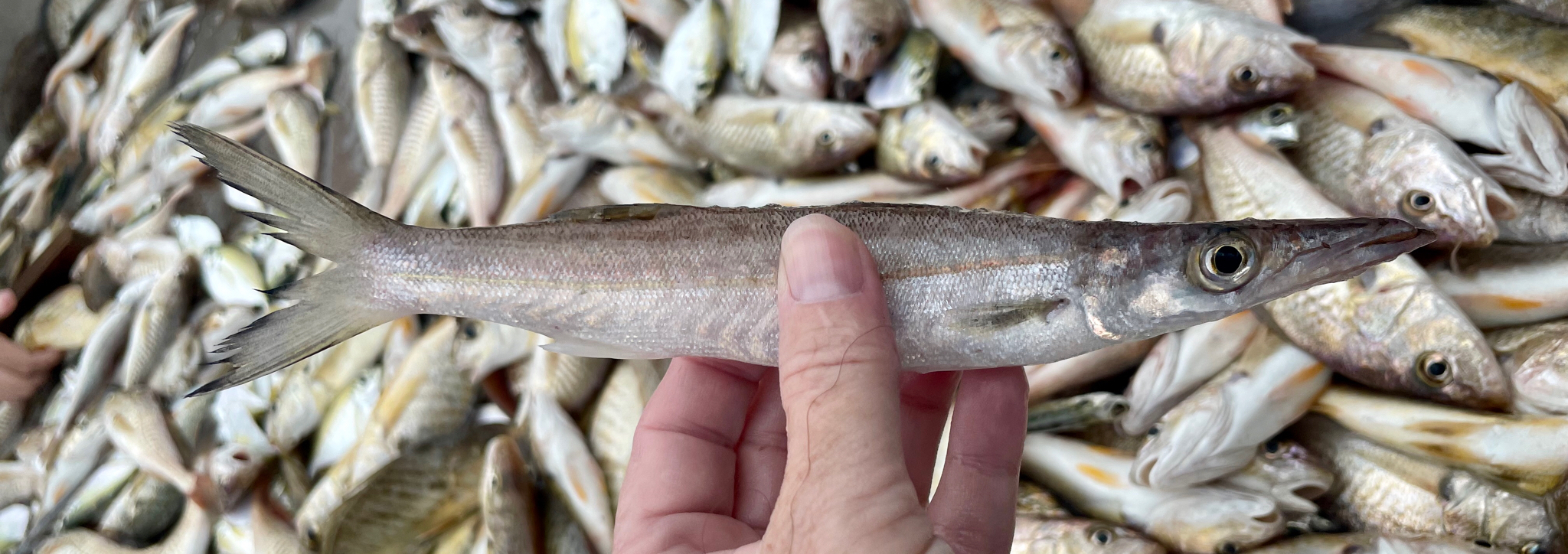
Guachanche barracuda is a schooling coastal sphyraenid from Massachusetts and the northern Gulf through the Caribbean to Brazil, and from Senegal to Angola in the east. It lives from the surface to 100 m over muddy bottoms and around estuaries, reaches a common 70 cm, and feeds on small fish and squid.
Identification
A slender, cylindrical barracuda with a pointed snout, a projecting lower jaw and a silver body marked by a visible lateral line. Adults generally lack the dark blotches that mark a great barracuda, and the usual size is around 70 cm. FishBase lists a maximum of 200 cm total length but omits the published weight because it is inconsistent with that length, so the upper figure is treated with caution here.
Distribution and Habitat
The western Atlantic range runs from Massachusetts and the northern Gulf of Mexico through the Caribbean to Brazil, with a separate eastern Atlantic population from Senegal to Angola. It is a coastal, often brackish species, found from the surface to 100 m over muddy bottoms, around river estuaries and inside bays, and it schools rather than holding alone.
Habits and Diet
The diet is mainly small fish of the families Engraulidae, Clupeidae, Lutjanidae and Synodontidae, plus loliginid squid. FishBase records spawning in June to August for Cuba, which is the only monthly spawning window recorded for the species. The species is a fast, mid-water hunter that uses shallow turbid water as cover.
Fishing Methods and Gear
Fish live pilchards or mullet on a 40 lb wire trace, either slow-trolled along a bay mouth or drifted with the tide at an estuary mouth. Casting a silver spoon or slim minnow and retrieving fast also works when fish are chasing bait at the surface. A 7 ft medium rod, a 4000 to 6000 size reel and 20 to 30 lb braid are enough; the wire matters more than the rod, because the teeth cut mono cleanly.
Seasonal Window
Warm months are the window, with summer the most consistent along the Gulf coast. Moving water at a pass or river mouth concentrates bait and fish, and the first hours of a tide out-fish the slack. Dawn and late afternoon are better than bright midday, when the fish sit deeper or become wary in clear water.
Edibility and Handling
The flesh is white and fairly firm and is good fried or grilled, but barracuda of the tropical reef zone carry a ciguatera risk, and large individuals should not be a regular meal. Bleed and ice the fish at once, cut away the dark muscle, and avoid eating large specimens raw. Small fish from open bay water are the safer choice.
Regulations and Conservation
There is no federal bag or size limit for guachanche barracuda in the Gulf EEZ, and it is not on the federal reef-fish table. Florida treats it as an unlisted species under the default rule of 100 lb or 2 fish per person per day, whichever is greater. Louisiana, Mississippi, Alabama and Texas do not list it and set no species-specific size or bag limit. Coastal fishing and bycatch are the main pressures, but the wide range and the Least Concern assessment suggest no immediate concern. The IUCN Red List lists it as Least Concern, assessed 29 January 2013. Rules change yearly; confirm the current state notice before keeping fish.
How to catch it
Drift fishing
Lure fishing
Chumming a pass
Where these facts come from
Check these pages before you rely on a size, range or protection status.
- FishBase — Sphyraena guachancho — FishBase · T2
- GBIF — Sphyraena guachancho occurrence records — GBIF · T2
- IUCN Red List — Sphyraena guachancho — IUCN · T1
- Photo record — iNaturalist — iNaturalist · T3
Fish in the same water
These fish live in the same place.

Guides for this water
Technique, gear and safety guides that fit Guachanche barracuda.