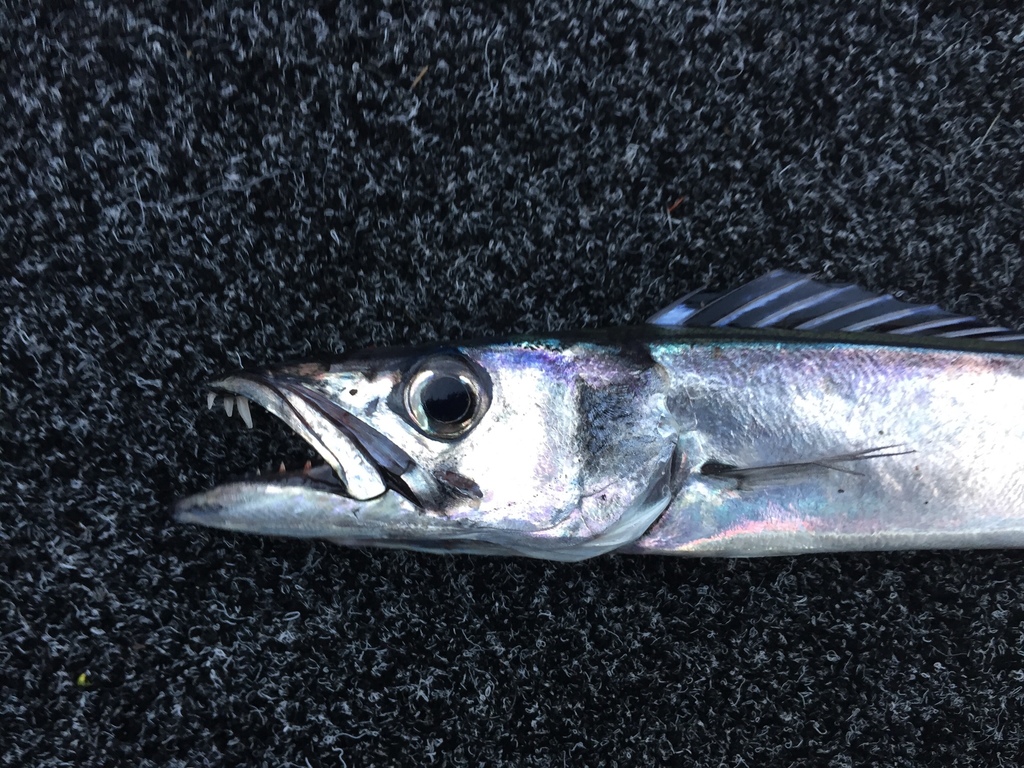
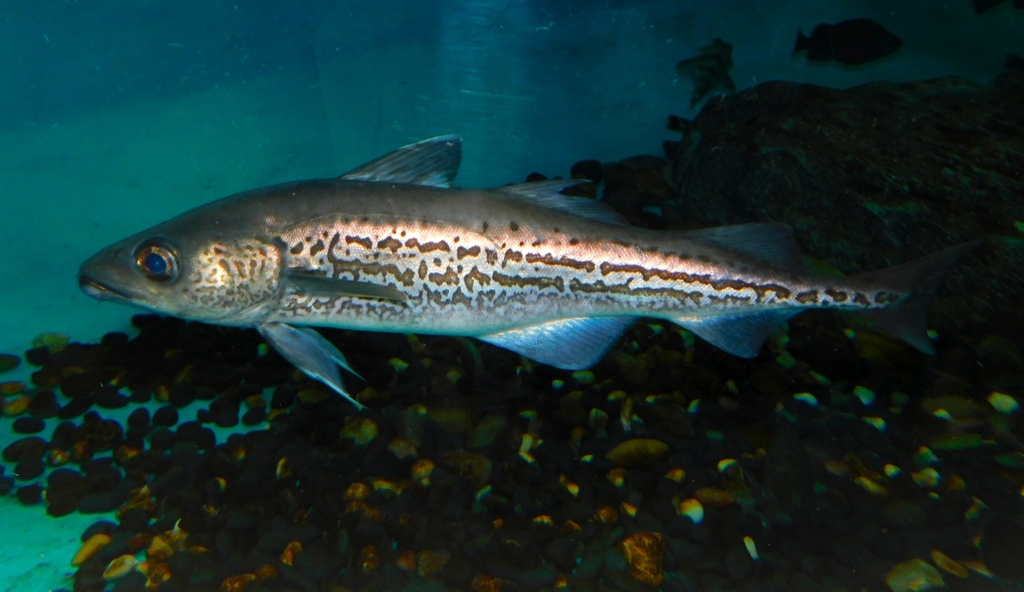
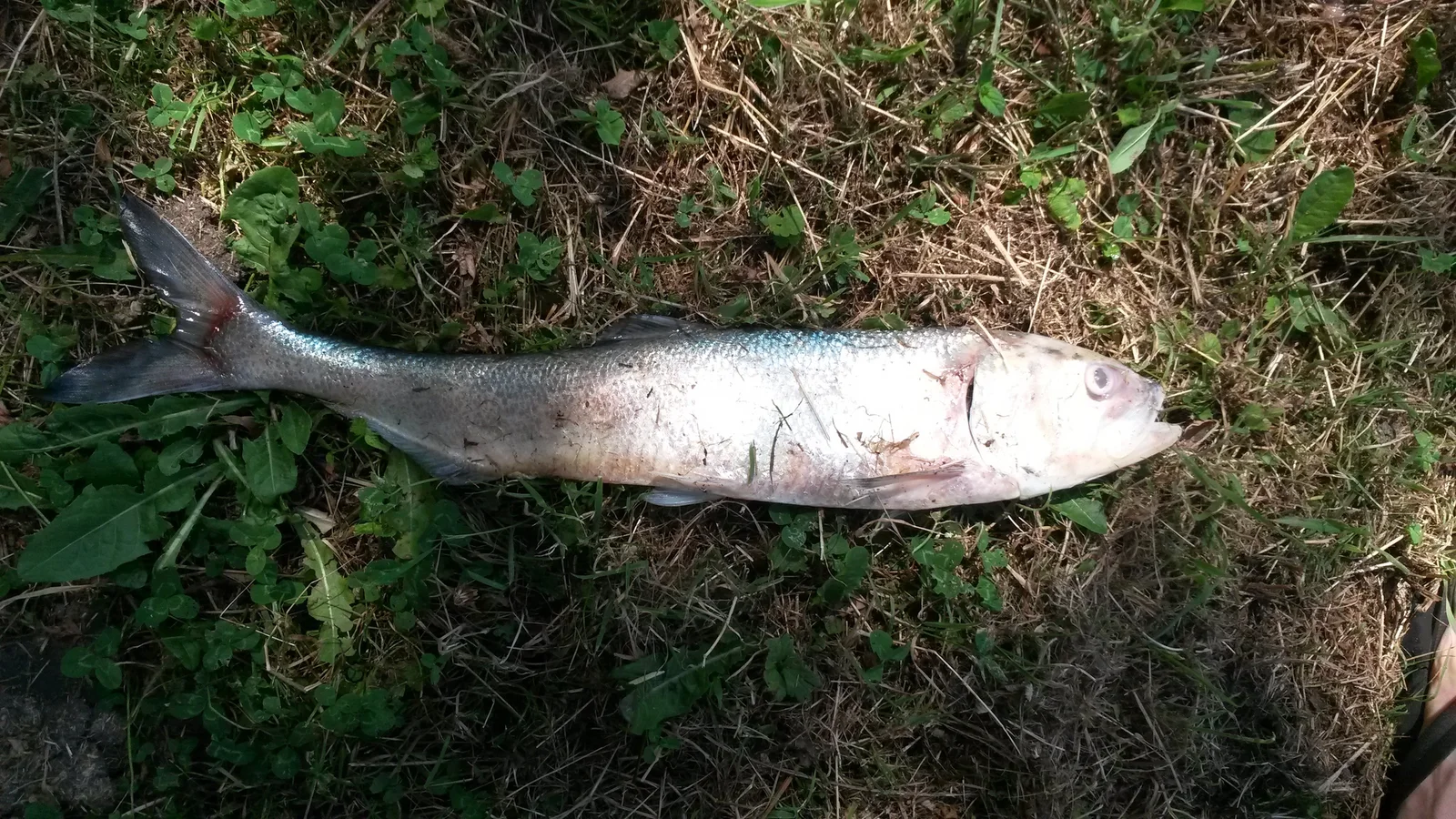
Barracouta (Thyrsites atun) is a fish of the family Gempylidae. FishBase gives its range as: Southwest Atlantic: Uruguay, Argentina and Tierra del Fuego. Eastern Atlantic: Tristan da Cunha and South Africa. It is recorded from 0 to 550 m, in subtropical water at 13–18 °C. The recorded maxima are 200 cm SL, 10 years. Diet includes crustaceans, fishes and molluscs. IUCN status: Not Evaluated (NE). Chinese name: .
The two numbers
Maximum length: 200 cm SL. Common length: 75 cm SL. Maturity: 55 cm, range 50–60 cm. Those three figures are enough to see the shape of the problem. A 200 cm specimen is almost four times the length at which the species matures; the common fish is just above it. The record calls both of them the same animal, and it is right about that, but it does not pretend they are the same experience.
The weight the page refuses to print
The source line reads maximum published weight 6.0 kg. The derived fact sheet flags that value as inconsistent with the recorded maximum length and drops it, leaving the weight field empty with a stated reason. Six kilograms is far too light for a 200 cm fish of this build. Rather than print a number that cannot be true, the page keeps the gap visible.
That is the page's most useful admission. A reader who wants a big-fish story can quote 200 cm; a reader who wants a fishing plan needs a weight, and the record refuses to supply one. The refusal is the warning: do not pair the maximum length with a body mass, because the source would not.
What ten years explains
The oldest reported age is ten years. The body is elongated and compressed, with 35 vertebrae, 19–21 dorsal spines, 11–13 dorsal soft rays, one anal spine and 10–12 anal soft rays. This is a slender, fast fish with a short life by the standards of the flatfishes on this site. A 75 cm fish is a mature adult; a 200 cm fish is an old outlier, not the next size class.
Twelve months appear in the spawning table, but the records behind it are southern-hemisphere studies from New Zealand, New South Wales and Victoria, South Africa, South Australia and Western Australia, and Tasmania. A twelve-month union is not a global season, and none of those localities is in the northern hemisphere.
The usual band is deep
Depth reaches from the surface to 550 m; the usual working band is 100–500 m. Temperature is 13–18°C, the milieu is benthopelagic, and the species is recorded from brackish water as well as seawater. Trolling and boat fishing are the listed methods.
A trolling spread and a usual band of 100–500 m do not describe the same water, and the page does not reconcile them. The practical reading is to treat the deep band as the fish's working range and the surface as the occasional edge, then let the sounder and the temperature break decide which one you are fishing.
The record's centre of gravity
FishBase lists thirteen territories, from Uruguay and Argentina through South Africa to Australia and New Zealand. The occurrence index totals 48,076 preserved records: Chile 26,373, New Zealand 11,885, Australia 9,000, South Africa 580, Namibia 95, Argentina 31. iNaturalist has 245 observations.
The distribution is southern and weighted toward Chile and New Zealand. That matters for the maximum: a 200 cm figure is likely to come from one of those long-established southern fisheries, where a large specimen was measured and published. The number is a record of an event, not a description of the population.
Wikipedia supplies the working names behind those records: snoek along the west and south-west coast of South Africa, where it is a common food fish, and barracouta in Australasia. Despite that name it is a snake mackerel, not a barracuda, so a rule written for either common name may still be a rule for this fish.
Gear for the common fish
Seventy-five centimetres is the working size. Build the rig around that: a rod that casts or trolls a 75 cm fish comfortably, a leader that survives the teeth, and a drag set for the size actually on the line. The 200 cm figure should not enter the tackle decision at all, because the page gives no weight to go with it and no evidence that such a fish is a realistic target.
What the maximum is good for
A maximum has two legitimate uses: identification and record-keeping. It tells you how large the species can get and what a once-in-a-decade specimen looks like. It does not tell you what to expect on a given day, and on this page it comes with a missing weight that makes the difference explicit.
The fish you will actually meet
Most of the fish will sit near the common length, above the 55 cm maturity mark, in water between 13 and 18°C, over the 100–500 m band. That is the target. Anything approaching 200 cm is a record, not a plan, and the page's own omitted weight is the reason to say so.
How to catch it
Trolling
Trolled from a moving boat; suits roaming or pelagic species.
Boat fishing
Fished from a boat, with the approach adjusted to the recorded depth.
Regulations before you keep it
These are the published regulations for this fish. Read the number first. The notice below it is the actual regulation.
Bag limit2
15 fish per day · 30 in possession
Australia — Tasmania · AU-TAS
Tasmania allows 15 barracouta per day and 30 in possession, with no minimum size.
Barracouta | 15 | 30 | - | -
20 fish per person per day · no minimum size
Australia — Victoria · AU-VIC
Victoria allows 20 barracouta per person per day with no minimum size.
Minimum legal size | no minimum; Bag limit | 20
Every record above names its source and the date it was retrieved. See the regulation register for the full list, or how to read these regulations.
Where these facts come from
Check these pages before you rely on a size, range or protection status.
-
FishBase — Thyrsites atun
— FishBase · T2
-
GBIF — Thyrsites atun occurrence records
— GBIF · T2
-
IUCN Red List — Thyrsites atun
— IUCN · T1
-
Photo record — iNaturalist
— iNaturalist · T3