
Norway pout
Norway pout is a small gadid, a member of the cod family, widespread in the Northeast Atlantic from the southwest Barents Sea south to the English Channel and Bay of Biscay, with Iceland and the Faroes included. It is an open-water fish of 50–300 metres, most often 100–200, and seldom exceeds 35 cm; 19 cm is a normal adult size.
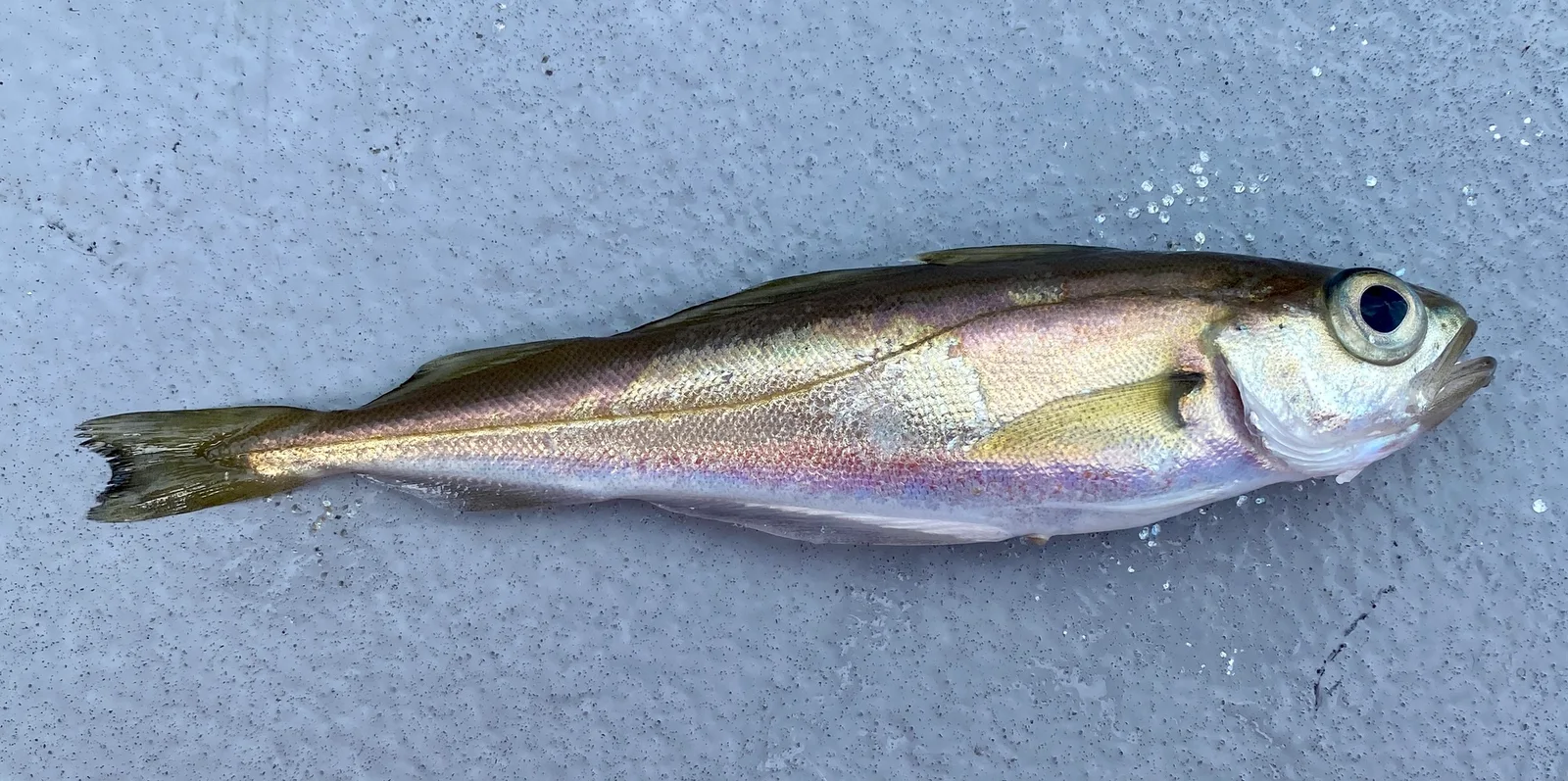
Norway pout is a small gadid, a member of the cod family, widespread in the Northeast Atlantic from the southwest Barents Sea south to the English Channel and Bay of Biscay, with Iceland and the Faroes included. It is an open-water fish of 50–300 metres, most often 100–200, and seldom exceeds 35 cm; 19 cm is a normal adult size. FishBase records it as highly commercial but gives no gamefish use, so it belongs to the commercial fishery rather than the sport sector. It is assessed as Least Concern.
Identification
Norway pout is a small gadid: 35.0 cm total length maximum, 19.0 cm common length, first maturity 14.0 cm (range 11–15), and five years is the maximum age. No weight is recorded. The maturity point sits well below the common length, so an average fish is already adult; a 35 cm individual is a large one and rare.
The fin counts are mostly absent: dorsal rays, anal rays and vertebrae are all empty, and only the anal spine count of zero is given. Body shape is fusiform with a circular cross-section, which separates it from the laterally compressed clupeids but not from its congeners. Three Trisopterus species share the north-east Atlantic, and the capture offers no key.
English is Norway pout, Chinese , and iNaturalist taxon 320793 uses the same common name. The genus sits in Gadidae, order Gadiformes.
Habitat and distribution
The range is the north-east Atlantic: the south-west Barents Sea, sometimes Bear Island, south to the English Channel and the Bay of Biscay, with Iceland and the Faroes. Fifteen country entries are all native. The text describes a band along the continental shelf edge rather than a coastal range.
The environment line is marine, benthopelagic, oceanodromous, 50–300 m with a usual 100–200 m, 79°N–48°N and 27°W–30°E. Diet is listed as crustaceans, fishes and zooplankton, with muddy and open-water as the two habitat keywords. The usual depth band matters more than the extremes: 100–200 m is where the fishery and most records sit.
GBIF holds 9 distribution rows, four without a country code; Sweden 2 and Denmark, Great Britain, Norway one each. iNaturalist has 16 observations. Sixteen is the smallest count among the eight species here — a fish that is heavily fished but almost never photographed by the public.
Season and fishing approach
Six spawning rows are carried. Faroes, northern Scotland, the Orkneys and Shetland January–March; the north-eastern Atlantic January–July; the Norwegian and Barents seas north to Lofoten April–May. The pattern is a winter-spring spawn, with the northern grounds later.
The use line is a single tick: highly commercial. There is no gamefish field — it is listed among the missing values — and no method. This is an industrial species, taken in volume for reduction, not a rod-and-line quarry; the 16 iNaturalist observations support that reading. A reader looking for a technique will not find one, and the capture should not be made to supply it. What it does supply is the depth band and the bottom type: 100–200 m over mud.
Edibility and regulations
The capture is thin on edibility: no weight, the common length is only 19 cm, and the sole fisheries tick is highly commercial. IUCN is Least Concern, assessed 18 October 2013. No size, season or bag rule appears. For a stock fished at industrial scale, quota and bycatch rules are the relevant instruments, and they are absent from this page.
Wikipedia describes the species as a cod-family fish of the Barents, North Sea and Baltic, preferring 100–200 m, which matches the environment line. It does not add a landing figure or a regulation.
Where these facts come from
Check these pages before you rely on a size, range or protection status.
- FishBase — Trisopterus esmarkii — FishBase · T2
- GBIF — Trisopterus esmarkii occurrence records — GBIF · T2
- IUCN Red List — Trisopterus esmarkii — IUCN · T1
- Photo record — iNaturalist — iNaturalist · T3
Fish in the same water
These fish live in the same place.
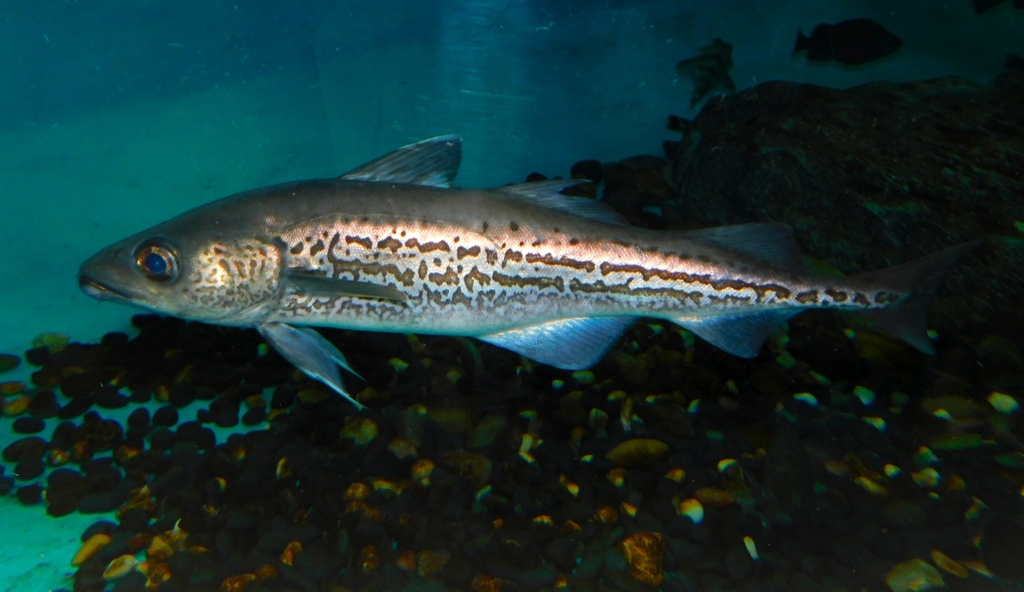
Alaska pollock
- Family
- Gadidae
- Depth
- 0–1280 m
- Season
- Jan, Feb, Mar, Apr, May, Jun, Jul, Aug
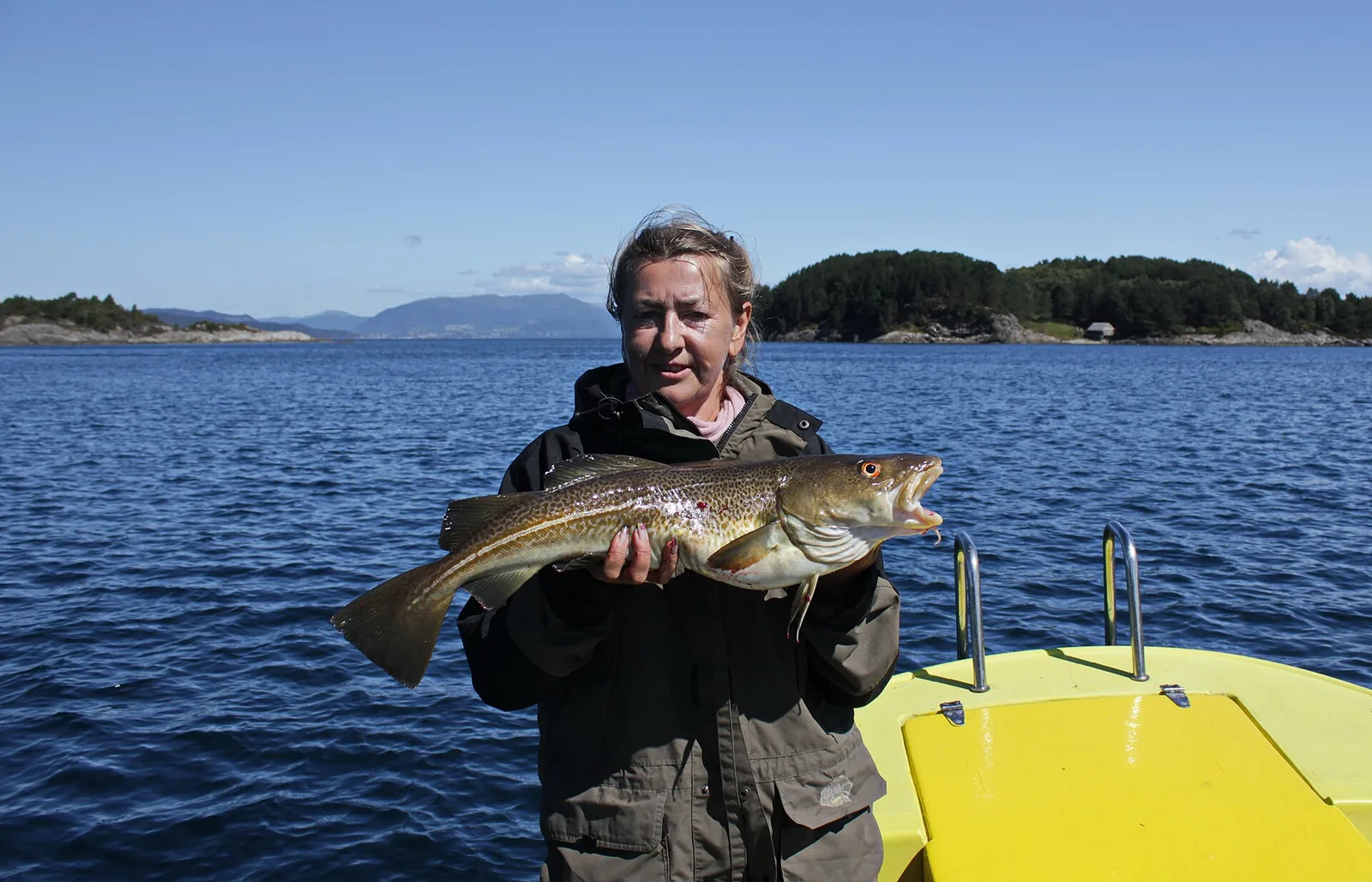
Atlantic cod
- Family
- Gadidae
- Depth
- 0–600 m
- Season
- Jan, Feb, Mar, Apr, May, Jun, Jul, Aug, Sep, Oct, Nov, Dec

Atlantic pollock
- Family
- Gadidae
- Depth
- 40–200 m
- Season
- Jan, Feb, Mar, Apr, May
Guides for this water
Technique, gear and safety guides that fit Norway pout.