
Poor cod
Poor cod is a small gadid of the northeast Atlantic and Mediterranean, from Trondheim Fjord and the Faroes down to Portugal and the Atlantic coast of Morocco. It works 1 to 440 m in temperate water on crustaceans, fish and worms. Adults reach 40 cm TL and live about five years. The season runs December through May, which is a winter and spring window rather than a full year.

Poor cod (Trisopterus minutus) is a fish of the family Gadidae. FishBase gives its range as: Northeastern Atlantic: Trondheim Fjord and the Faeroe Islands to Portugal and along the Atlantic coast of Morocco. Not present in the Mediterranean. Both are small gadids of similar colour over sand and mud. It is recorded from 1 to 440 m, in temperate water. The recorded maxima are 40 cm TL, 5 years. Diet includes crustaceans, fishes and worms. IUCN status: Not Evaluated (NE). Chinese name: .
Identification
The record gives 40 cm TL maximum and 20 cm TL common, with a maximum reported age of five years. Maturity is spread across 10–26 cm, so length alone cannot tell you whether a fish has spawned; the 20 cm common length is the ordinary adult.
Poor cod and pouting share the same ground and are routinely confused. Both are small gadids of similar colour over sand and mud. If you are counting fish for a survey or a bag, look at the chin barbel before you write the name down.
Habitat and distribution
This is where the record splits. The distribution sentence runs from Trondheim Fjord and the Faeroes to Portugal and the Atlantic coast of Morocco, then states that the species is not present in the Mediterranean. The rest of the page disagrees. The country table includes Egypt; the spawning table has İzmir Bay, a row labelled simply Mediterranean, and the northern Tyrrhenian; and GBIF's national checklists include Greece.
A dated spawning sample is harder evidence than a range summary, so treat the species as present in the Mediterranean but local. Fish it as an Atlantic shelf fish and do not build a trip around it in the Mediterranean.
Depth is 1–440 m with a usual band of 15–200 m. Wikipedia puts it at 10–300 feet, a shallower band. The statements agree at the shallow end, so work the top of the usual band and ignore the extremes. GBIF's 19 rows are mostly northern European checklists, and iNaturalist holds 201 observations.
Season and fishing approach
Spawning runs from December to May, with local rows: İzmir Bay January to April plus December, the English Channel February and March, the southern North Sea February to April, the northern Tyrrhenian March to May, and off Spain January to March plus December. Late winter into spring is the window, and the further south you go the earlier it starts.
Fish small. A two-hook flapper or a fish-finder rig with small hooks, a light rod and just enough sinker to hold bottom covers the ground. Baits are ragworm, small crab or a sliver of fish, which matches what the record says it eats: crustaceans, worms and fishes. The species is non-migratory, so a mark that produces keeps producing. It is also a bait thief: when the small fish arrive, move rather than re-bait.
Edibility and regulations
FishBase records commercial landings, while Wikipedia calls it a mini species of little commercial value. Both can be true of a fish landed as bycatch rather than targeted. It is listed as NE on the Red List. WoRMS lists it against EU Marine Strategy Framework Directive indicators, which is a monitoring obligation rather than a bag limit.
For a keeper rule, read the coastal state's recreational regulation. The fish is small enough that most jurisdictions treat it as bycatch, and the limit that applies is often written for the gadid group rather than for this species.
Where these facts come from
Check these pages before you rely on a size, range or protection status.
- FishBase — Trisopterus minutus — FishBase · T2
- GBIF — Trisopterus minutus occurrence records — GBIF · T2
- IUCN Red List — Trisopterus minutus — IUCN · T1
- Photo record — iNaturalist — iNaturalist · T3
Fish in the same water
These fish live in the same place.
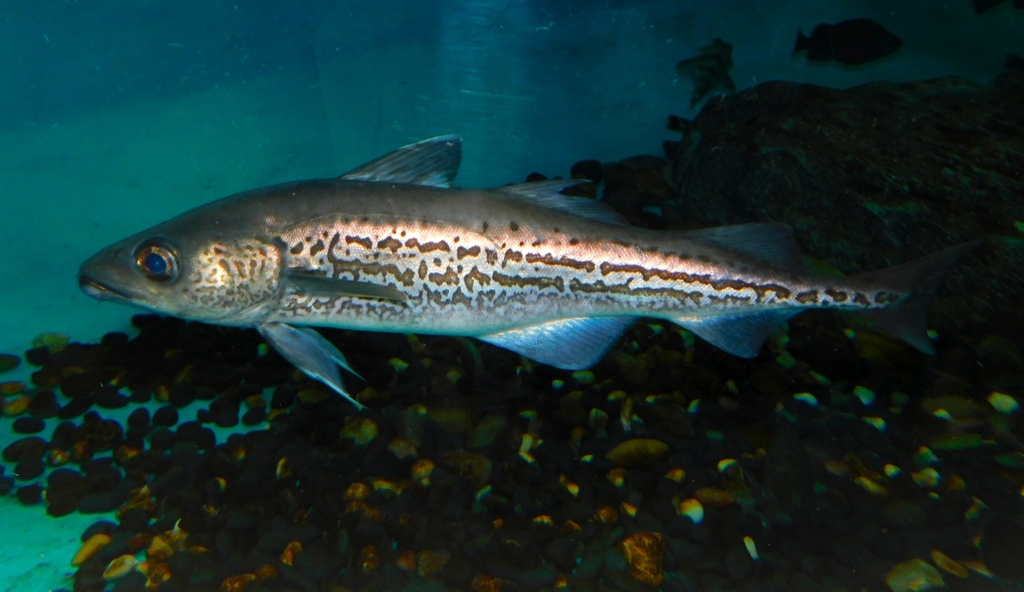
Alaska pollock
- Family
- Gadidae
- Depth
- 0–1280 m
- Season
- Jan, Feb, Mar, Apr, May, Jun, Jul, Aug
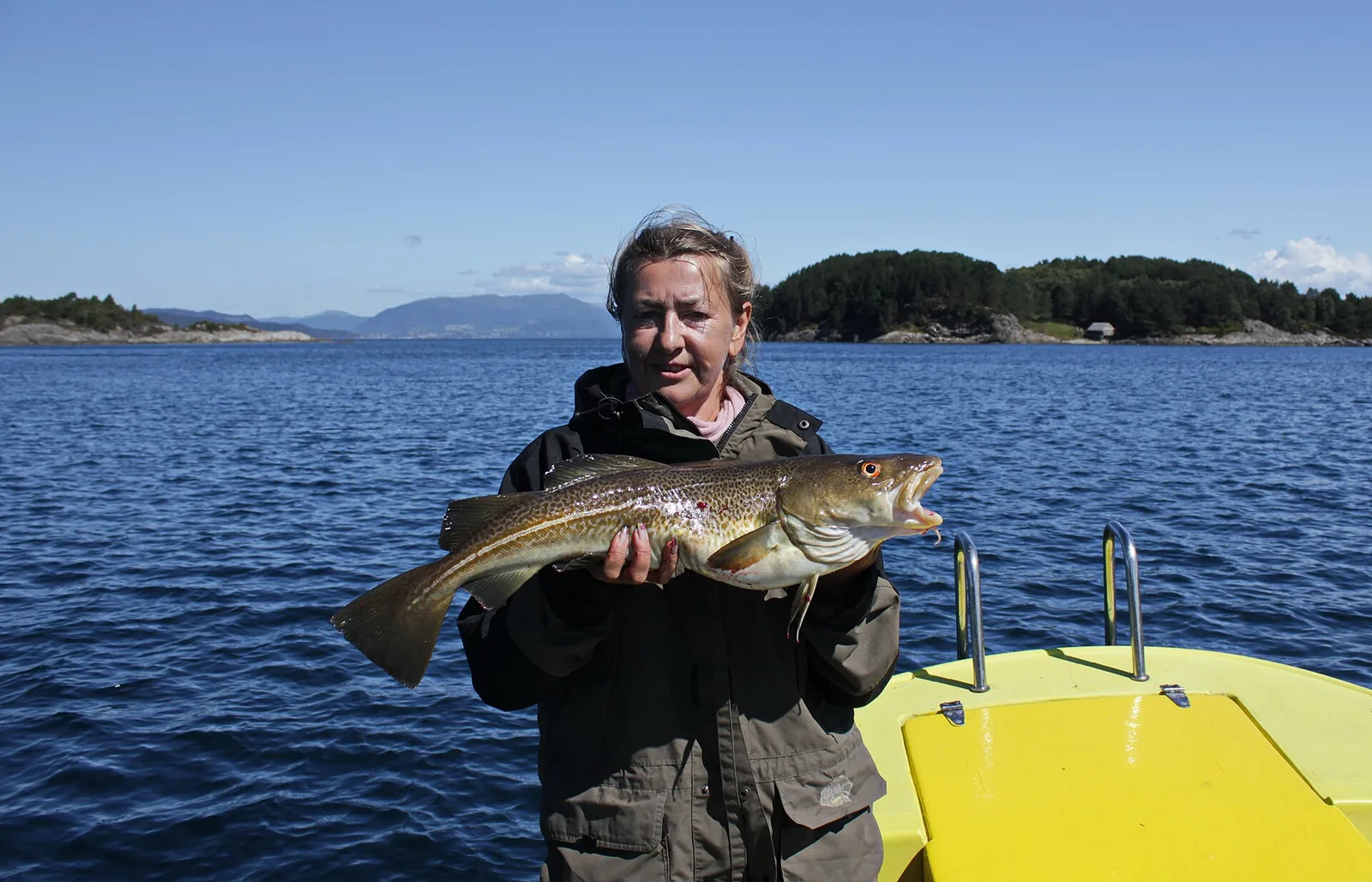
Atlantic cod
- Family
- Gadidae
- Depth
- 0–600 m
- Season
- Jan, Feb, Mar, Apr, May, Jun, Jul, Aug, Sep, Oct, Nov, Dec

Atlantic pollock
- Family
- Gadidae
- Depth
- 40–200 m
- Season
- Jan, Feb, Mar, Apr, May
Guides for this water
Technique, gear and safety guides that fit Poor cod.