
Eelpout
The eelpout is an elongate, bottom-hugging fish of the family Zoarcidae, found in the northeast Atlantic from the White Sea and Murmansk south to the English Channel, with populations in the North Sea and Baltic. It stays shallow, usually between 2 and 20 m and never deeper than about 40 m. At a common length of 30 cm it is large for a shallow-water bycatch, and it gives birth to live young rather than spawning.
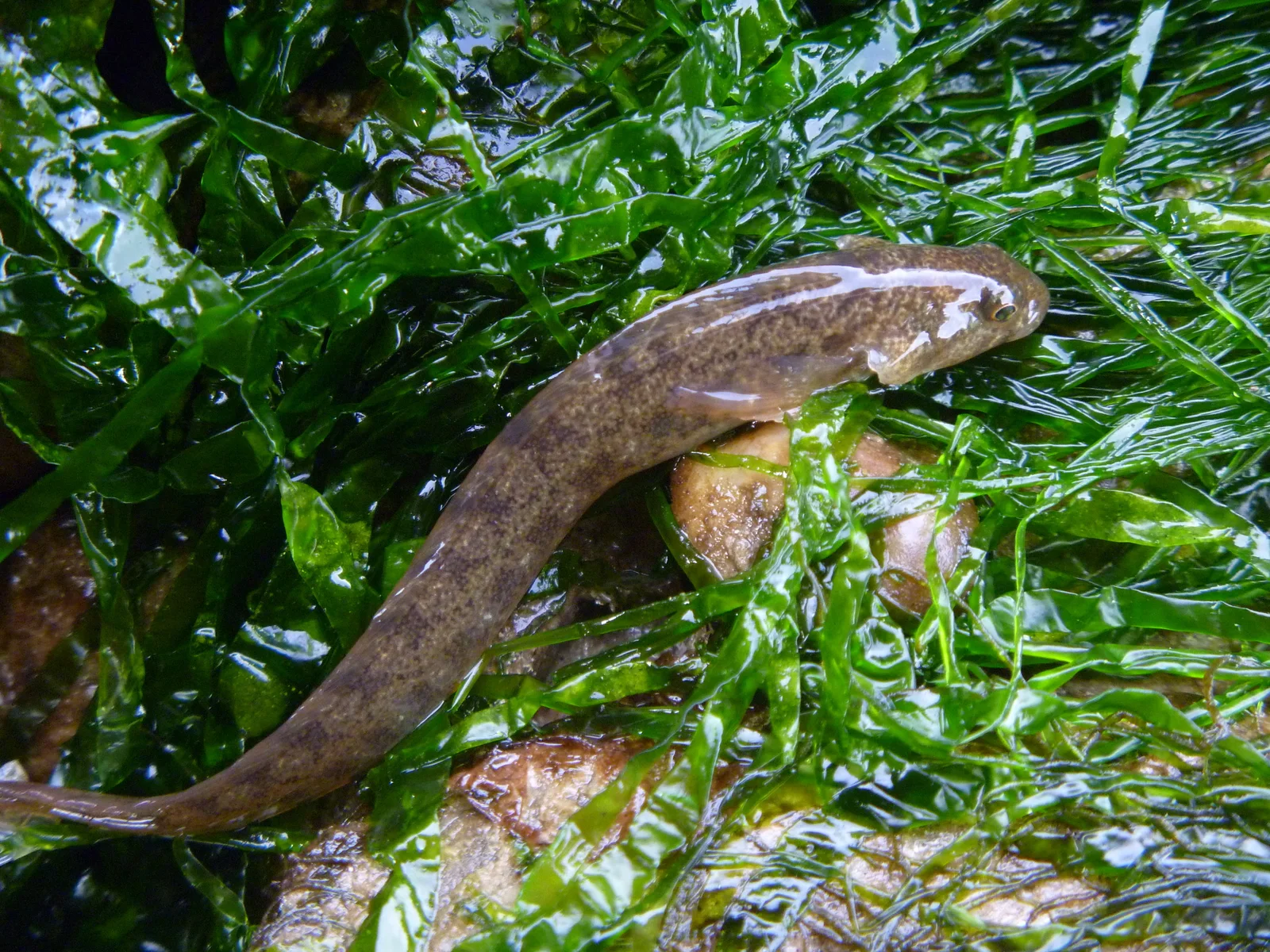
The eelpout is an elongate, bottom-hugging fish of the family Zoarcidae, found in the northeast Atlantic from the White Sea and Murmansk south to the English Channel, with populations in the North Sea and Baltic. It stays shallow, usually between 2 and 20 m and never deeper than about 40 m. At a common length of 30 cm it is large for a shallow-water bycatch, and it gives birth to live young rather than spawning. Landings are classed as minor commercial; anglers rarely pursue it, though it turns up in nets and on baited bottom rigs.
Identification
The eelpout is a shallow-water fish whose name describes its breeding rather than its shape. FishBase's English list gives Eelpout as the principal, with Viviparous blenny and Viviparous eelpout as alternatives; iNaturalist prefers Viviparous Blenny. Chinese has , with the simplified as a variant. The epithet viviparus and the English "viviparous" point to the same fact.
The size table runs from a 17.0 cm length at first maturity, range 16–18 cm, to a 52.0 cm maximum total length, a 30.0 cm common length, 510 g maximum weight and 10 years maximum age. Maturity sits close to the common length; a 52 cm individual is exceptional. No meristic data were captured — no fin counts, no vertebrae, no body-shape note. The family is Zoarcidae, in the order recorded as Perciformes/Zoarcoidei.
Habitat and distribution
The range is the north-east Atlantic and its shelf seas: the White Sea and the Murmansk coast south to the English Channel at the River Somme, the east coasts of Scotland and England, the Irish Sea, Orkney and Shetland, and the shallow North Sea and Baltic. Seventeen country entries are all native, from Belgium and France through the Baltic states to Sweden and Norway.
The environment line is marine and brackish, demersal, depth 0–40 m with a usual 2–20 m, temperate, 72°N–49°N and 11°W–52°E. A fish that lives between two and twenty metres, and tolerates brackish water, is a coastal and estuarine species rather than an offshore one; the Baltic entries in the country table follow from that tolerance. The habitat keyword is rocky, and the diet is crustaceans, fishes and algae. Algae in the diet suggests grazing as well as predation.
GBIF returns 36 rows: 16 without a country code, Belgium 7, the Netherlands 5, France 2, Sweden 2, and Denmark, the United Kingdom, Norway and Poland one each. Thirty-one rows mark the taxon present and three native. iNaturalist holds 307 observations.
Season and fishing approach
The spawning list is empty. That absence needs care, because this species does not spawn in the ordinary fish sense: Wikipedia describes it as ovoviviparous, giving birth to live larvae. A database table built around spawning records has nothing to list for a live-bearer, and the missing months should be read as a mismatch between the table and the biology, not as an unknown season.
Wikipedia gives no birth month and the capture no temperature threshold, so the reproductive season cannot be dated. What remains certain is that fertilisation is internal and the young are born live.
Human use is recorded as minor commercial and public aquariums, with no gamefish flag. The depth band, 2–20 m, and the rocky keyword are the practical facts: this is a fish of shallow rock and weed, reachable from shore, though the record does not say with what.
Edibility and regulations
Wikipedia adds two food notes: the species is described as a common soup ingredient in Mediterranean countries, and the bones are greenish from a harmless pigment. The first sits awkwardly against the distribution, which stops at the English Channel and does not include the Mediterranean. Either the sentence refers to a wider culinary tradition than the range, or it describes another eelpout; the page reports both claim and conflict.
IUCN has not assessed the species — Not Evaluated. No size, season or bag rule is captured, and the minor-commercial label does not imply a management regime. An angler keeping one for the pot should check the local rule, and should expect the green bones.
Where these facts come from
Check these pages before you rely on a size, range or protection status.
- FishBase — Zoarces viviparus — FishBase · T2
- GBIF — Zoarces viviparus occurrence records — GBIF · T2
- IUCN Red List — Zoarces viviparus — IUCN · T1
- Photo record — iNaturalist — iNaturalist · T3
Fish in the same water
These fish live in the same place.
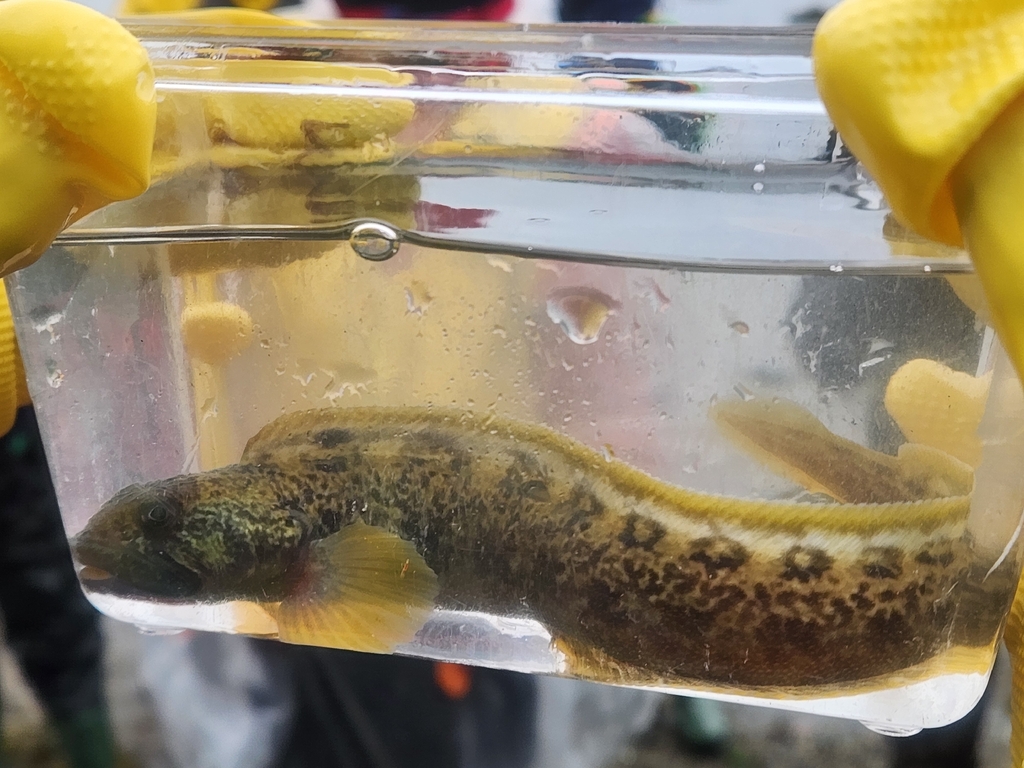
Ocean pout
- Family
- Zoarcidae
- Depth
- 0–388 m

Acoupa weakfish
- Family
- Sciaenidae
- Depth
- 1–20 m
- Season
- Jan, Feb, Mar, Apr, May, Jun, Jul, Aug, Sep, Oct, Nov, Dec

American angler
- Family
- Lophiidae
- Depth
- 0–800 m
- Season
- Mar, Apr, May, Jun
Guides for this water
Technique, gear and safety guides that fit Eelpout.