
Silver kob in South Africa: 50 cm minimum · 5 fish per person per day, of which only 1 may exceed 110 cm — South African waters, boat-based between Cape Agulhas and the Umtamvuna River.
Kob caught from a boat at sea (Cape Agulhas to Umtamvuna River) Argyrosomus spp. 50 cm 5 but may only land or be in possession of one kob > 110 cm per day
Quoted from Regulations in terms of the Marine Living Resources Act, 1998 — Annexure 7
Size is total length. The boat-based rule applies between Cape Agulhas and the Umtamvuna River; a stricter 60 cm / 1 fish limit applies in estuaries and from the shore east of Cape Agulhas.
Regulation guide
Official sourcesHow South Africa manages kob
Kob are managed nationally under the Marine Living Resources Act 18 of 1998 and the regulations made under it, published as GNR 1111 of 2 September 1998. The Department of Forestry, Fisheries and the Environment (DFFE) administers the rules for both commercial linefishing and recreational angling.
The recreational table works at the level of Argyrosomus spp. rather than a single species. That matters for identification: the table's kob entries cover the genus, so the silver kob stock in South African waters is governed by the same line as the other kob.
The regulations have been amended many times. DFFE's consolidated version records amendments up to Government Gazette 51715 of 6 December 2024, so the current consolidated table, not an old brochure or a summary, is the version to check.
Source: DFFE: Regulations in terms of the Marine Living Resources Act, 1998 (GNR 1111, consolidated)
The 50 cm minimum and how it is measured
For kob taken from a boat at sea between Cape Agulhas and the Umtamvuna River, the recreational table sets a minimum size of 50 cm. The same row carries the daily bag of five and the restriction on large fish.
Size is measured in a straight line from the tip of the snout to the extreme end of the tail, which is total length rather than fork length. DFFE's linefish permit conditions repeat that definition, so a fish measured to the fork of the tail will read short of the legal figure.
Source: DFFE: Regulations in terms of the Marine Living Resources Act, 1998 (GNR 1111, consolidated) · DFFE: Permit Conditions, Commercial Traditional Linefish, Zone B 2025/2026
Five fish a day, but only one over 110 cm
The boat-sector bag is five kob per person per day, with a cap on large fish: only one kob longer than 110 cm may be landed or held in possession per day. The rule is written as a landing and possession limit, so it applies at the boat and on the way home, not only at the moment of capture.
The allowance is per person, not per boat. A party of four fishing legally can therefore hold twenty kob, provided that no individual exceeds five and that only one of the twenty is over 110 cm.
A second large fish cannot be justified by the fact that the smaller fish were released. The cap is one fish over 110 cm per person per day, whatever the rest of the bag looks like.
Source: DFFE: Regulations in terms of the Marine Living Resources Act, 1998 (GNR 1111, consolidated)
The limit changes with area and sector
The 50 cm and five-fish line is not the only kob rule. The same table applies a 60 cm minimum to kob caught in estuaries and from the shore east of Cape Agulhas, and a 50 cm minimum to kob caught west of Cape Agulhas.
That means the same fish can be legal in one place and illegal in another. An angler in an estuary east of Cape Agulhas, or fishing from the shore there, should apply the 60 cm line, while a boat fishing the Agulhas to Umtamvuna sector uses the 50 cm line and the five-fish bag.
The table's structure is deliberate: it separates boat-based fishing at sea from shore and estuary fishing, and it separates the coast west of Cape Agulhas from the coast to the east. The area is part of the rule, not a background detail.
Source: DFFE: Regulations in terms of the Marine Living Resources Act, 1998 (GNR 1111, consolidated)
Permits, sale and landing
Recreational angling in South African marine waters requires a recreational fishing permit, obtained from an office authorised by the Minister on payment of the prescribed fee. The permit does not allow the holder to sell fish caught under it.
Fish must be landed whole, with head and tail intact, although they may be gutted. That rule exists so that an inspector can establish both the species and the length; a filleted kob cannot be measured against the 50 cm line.
The same framework applies to other linefish, including geelbek, so a mixed bag has to be sorted by species before it reaches the slipway. A kob measured and counted correctly is the only one that can lawfully be kept.
Source: DFFE: Regulations in terms of the Marine Living Resources Act, 1998 (GNR 1111, consolidated)
Commercial and recreational tables are separate
DFFE publishes separate permit conditions for the commercial traditional linefish sector. The Zone B conditions for 2025/2026, covering Cape Infanta to Port St Johns, list kob at 50 cm with an area note of west of Cape Agulhas only and no bag limit.
Those conditions do not authorise a recreational angler to keep unlimited kob. The recreational limits come from Annexure 7 of the regulations, and the commercial table is relevant to recreational anglers only as a reminder that the two systems use different instruments.
This separation is why a recreational angler should not rely on a commercial landing figure seen at a harbour or quoted by a skipper. The permit in the angler's pocket, and the table attached to it, set the limit that applies.
Source: DFFE: Permit Conditions, Commercial Traditional Linefish, Zone B 2025/2026 · DFFE: Regulations in terms of the Marine Living Resources Act, 1998 (GNR 1111, consolidated)
Closed areas and what to check
The regulations contain a separate chapter on closed seasons and closed areas, so a legal size and a legal bag do not make every fish legal in every place. Marine protected areas and other closed areas override the recreational table.
Before keeping a kob, confirm the area you are fishing, measure the fish from snout to tail, count the day's catch against five per person, and check that no more than one fish exceeds 110 cm. If any of those points is uncertain, the fish should go back.
A kob caught in an estuary or from the shore east of Cape Agulhas is judged against 60 cm, not 50 cm. Applying the wrong row is one of the easiest ways to turn a legal trip into a contravention.
Source: DFFE: Regulations in terms of the Marine Living Resources Act, 1998 (GNR 1111, consolidated)
Official pages: DFFE: Regulations in terms of the Marine Living Resources Act, 1998 (GNR 1111) · DFFE: Commercial Traditional Linefish Permit Conditions, Zone B 2025/2026 · DFFE: Recreational fishing permits
Silver kob regulations at a glance
1 jurisdictions| Jurisdiction | Area | Size | Bag | Season / closure | Closed area | Other |
|---|---|---|---|---|---|---|
| South Africa | South African waters, boat-based between Cape Agulhas and the Umtamvuna River | — | 50 cm minimum · 5 fish per person per day, of which only 1 may exceed 110 cm | — | — | — |
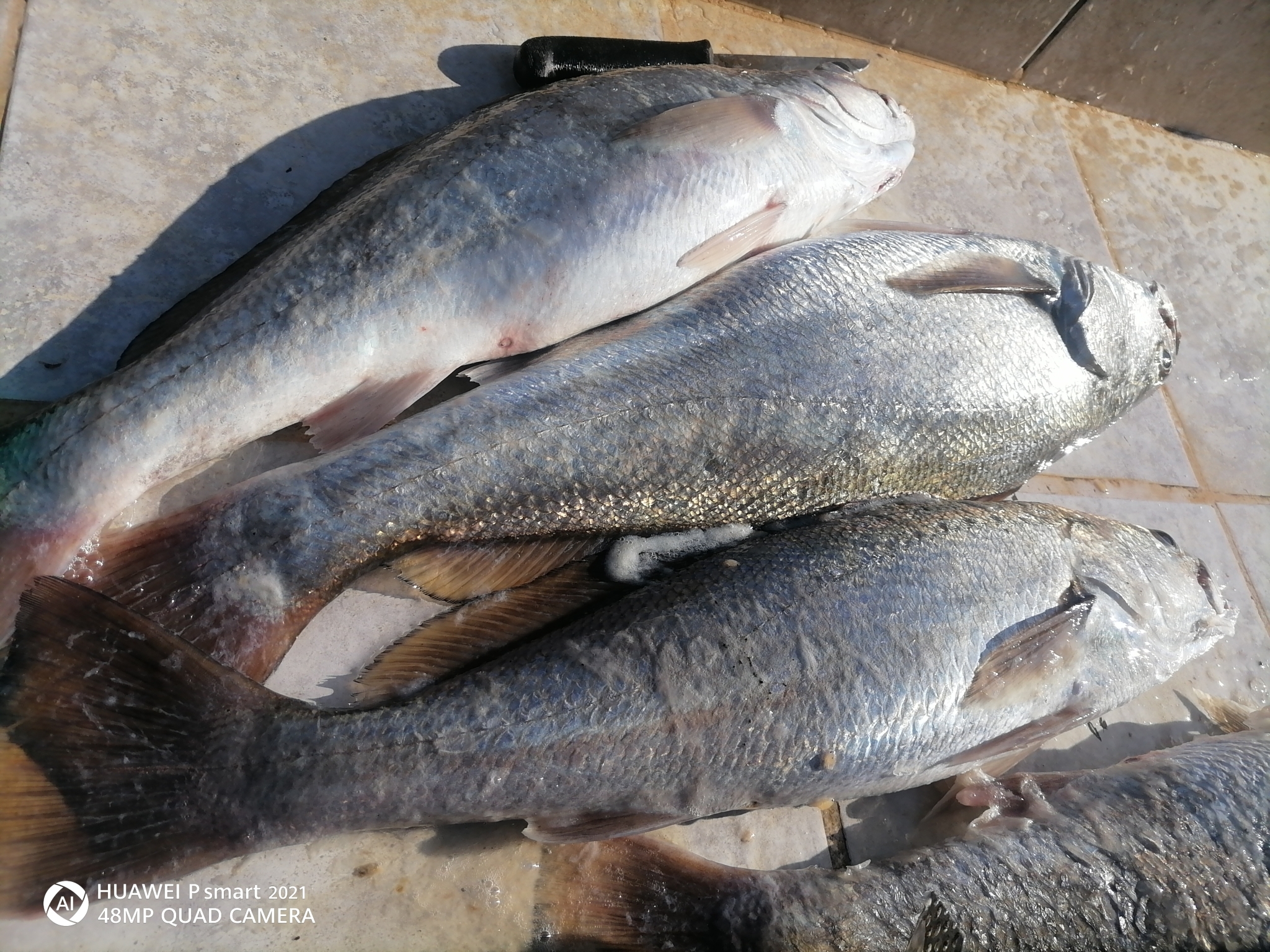
Silver kob
Argyrosomus inodorus · Sciaenidae
FishBase records *Argyrosomus inodorus* at 145 cm TL maximum, 115 cm TL common, 36.3 kg published weight and first maturity at 34.4 cm. It is a Southeast Atlantic fish, running from Namibia around the Cape of Good Hope and north again to at least the Kei River, and the IUCN assessed it as Vulnerable on 9 November 2018.
- Family
- Sciaenidae
- Max length
- 145 cm TL
- Max weight
- 36.3 kg
- Depth
- 1–100 m
- IUCN
- VU
- Climate
- Subtropical
FishBase records *Argyrosomus inodorus* at 145 cm TL maximum, 115 cm TL common, 36.3 kg published weight and first maturity at 34.4 cm. It is a Southeast Atlantic fish, running from Namibia around the Cape of Good Hope and north again to at least the Kei River, and the IUCN assessed it as Vulnerable on 9 November 2018. This page covers two things a kob page usually blurs: which species the word kob is standing for, and the four-part South African rule that decides whether a fish goes in the bag.
Techniques
- Boat bottom fishing —
- Shore casting —
Seasonality
Other ZA regulations
Same jurisdictionBefore you keep a fish
- Read the recorded value. It is copied from the notice; if the number and the notice disagree, the notice wins.
- Check the area. Federal, state and local waters can set different limits for the same fish.
- Check the date. Seasons, quotas and closures change; confirm the current notice before you go.
Common questions
- What is the bag limit for Silver kob in South Africa?
- 50 cm minimum · 5 fish per person per day, of which only 1 may exceed 110 cm
- Where does this regulation apply?
- South African waters, boat-based between Cape Agulhas and the Umtamvuna River
- When was it checked?
- 2026-11-18, against Regulations in terms of the Marine Living Resources Act, 1998 — Annexure 7.