
Angler in France: ≥50 cm — France — North Sea, Channel and Atlantic.
| LOTTE | Lophius piscatorius | 50 cm |
Quoted from Légifrance — Arrêté du 26 octobre 2012 (annexe I)
The arrêté sets the minimum sizes applicable to recreational sea fishing (pêche maritime de loisir).
Regulation guide
Official sourcesHow monkfish is managed in France
Monkfish (Lophius piscatorius), lotte in French, is covered by the French recreational framework. France regulates recreational sea fishing through the rural and maritime fishing code and through the 2012 ministerial order that sets minimum sizes and weights.
The code defines recreational sea fishing as a non-commercial fishery whose product is for the exclusive consumption of the fisher and family and may not be sold, offered for sale or bought. That definition applies to monkfish as much as to any other species.
The size rule sits in the 2012 order. It applies to recreational fishing from vessels that do not hold a commercial fishing permit, to spearfishing and to fishing on foot on the public maritime domain, and it applies to French-flag pleasure vessels wherever they fish.
Source: Code rural et de la pêche maritime, article R921-83 · Arrêté du 26 octobre 2012 déterminant la taille minimale ou le poids minimal de capture (pêche maritime de loisir)
50 cm in the Atlantic, Channel and North Sea
Annex I of the 2012 order sets lotte (Lophius piscatorius) at 50 cm in the table for the North Sea, Channel and Atlantic. That is the figure for those areas.
The 50 cm entry does not appear in the Mediterranean table of the same order. The Mediterranean table lists other species and does not repeat Lophius piscatorius at 50 cm, so the French Atlantic figure should not be carried into Mediterranean waters without checking the applicable measure.
The order applies without prejudice to stricter international, EU or national rules. Where a stricter rule applies, the stricter rule governs, so 50 cm is a floor for the areas covered by the French table.
The entry is species-specific
The table names Lophius piscatorius, not the genus Lophius. That matters because the black-bellied angler, Lophius budegassa, is a different species and is not covered by the same line in the order.
An angler who catches an anglerfish should therefore confirm which species is in hand before applying the 50 cm threshold. The rule is written for the species named in the table, not for every fish that anglers call an anglerfish.
If the identification is uncertain, the cautious course is to treat the fish as unidentified and release it rather than assuming that the 50 cm entry covers every anglerfish caught in the area.
How a monkfish is measured
The 2012 order sets the measurement method by reference to the EU technical rules reproduced in its Annex II. The relevant basis for a fish is total length, from the tip of the snout to the extreme end of the tail fin.
The order does not create a special measurement for monkfish. The measurement therefore runs from the front of the head to the end of the tail fin, with the fish laid flat and the tail extended naturally, rather than from the lure or from the mouth.
Do not stretch the fish or use the length of the lure as part of the measurement. A specimen that only reaches 50 cm when the tail is pulled should be released.
Bag limits, sale ban and registration
The 2012 order fixes a minimum size for monkfish but does not set a daily bag limit in the table. The catch is controlled through the size rule, the non-commercial definition in the code and any local measures that apply to the area fished.
Recreational catch may not be sold, offered for sale or bought. The code states that the product is for the exclusive consumption of the fisher and family, so a monkfish kept under a recreational trip cannot be used as a commercial product.
France's annual RECFishing registration applies to recreational fishers aged 16 or over who target certain sensitive species: pollack, sea bass, bluefin tuna, pink sea bream and mackerel. Monkfish is not on that list, so the registration requirement is not triggered by monkfish alone.
Source: Arrêté du 26 octobre 2012 déterminant la taille minimale ou le poids minimal de capture (pêche maritime de loisir) · Code rural et de la pêche maritime, article R921-83 · DIRM NAMO: synthèse de la réglementation pêche de loisir, septembre 2026
Before you keep one
Measure the fish first and check the area second. The 50 cm rule comes from the Atlantic table, so confirm that the fish was taken in the North Sea, Channel or Atlantic zone covered by that table rather than assuming the figure applies everywhere.
Check local closures and marine protected area rules for the mark you are fishing. The national size rule operates alongside local measures, and a mark can be closed to recreational fishing or to particular gear even where the species itself is open.
Keep the fish for personal use only and do not sell it. If the species identification is uncertain, release the fish rather than relying on the 50 cm figure for a species the order does not name.
Source: Arrêté du 26 octobre 2012 déterminant la taille minimale ou le poids minimal de capture (pêche maritime de loisir) · Code rural et de la pêche maritime, article R921-83 · DIRM NAMO: synthèse de la réglementation pêche de loisir, septembre 2026
Official pages: Arrêté du 26 octobre 2012: tailles minimales, pêche maritime de loisir · Code rural et de la pêche maritime, article R921-83 · DIRM NAMO: synthèse de la réglementation pêche de loisir, septembre 2026
Angler regulations at a glance
1 jurisdictions| Jurisdiction | Area | Size | Bag | Season / closure | Closed area | Other |
|---|---|---|---|---|---|---|
| France | France — North Sea, Channel and Atlantic | ≥50 cm | — | — | — | — |
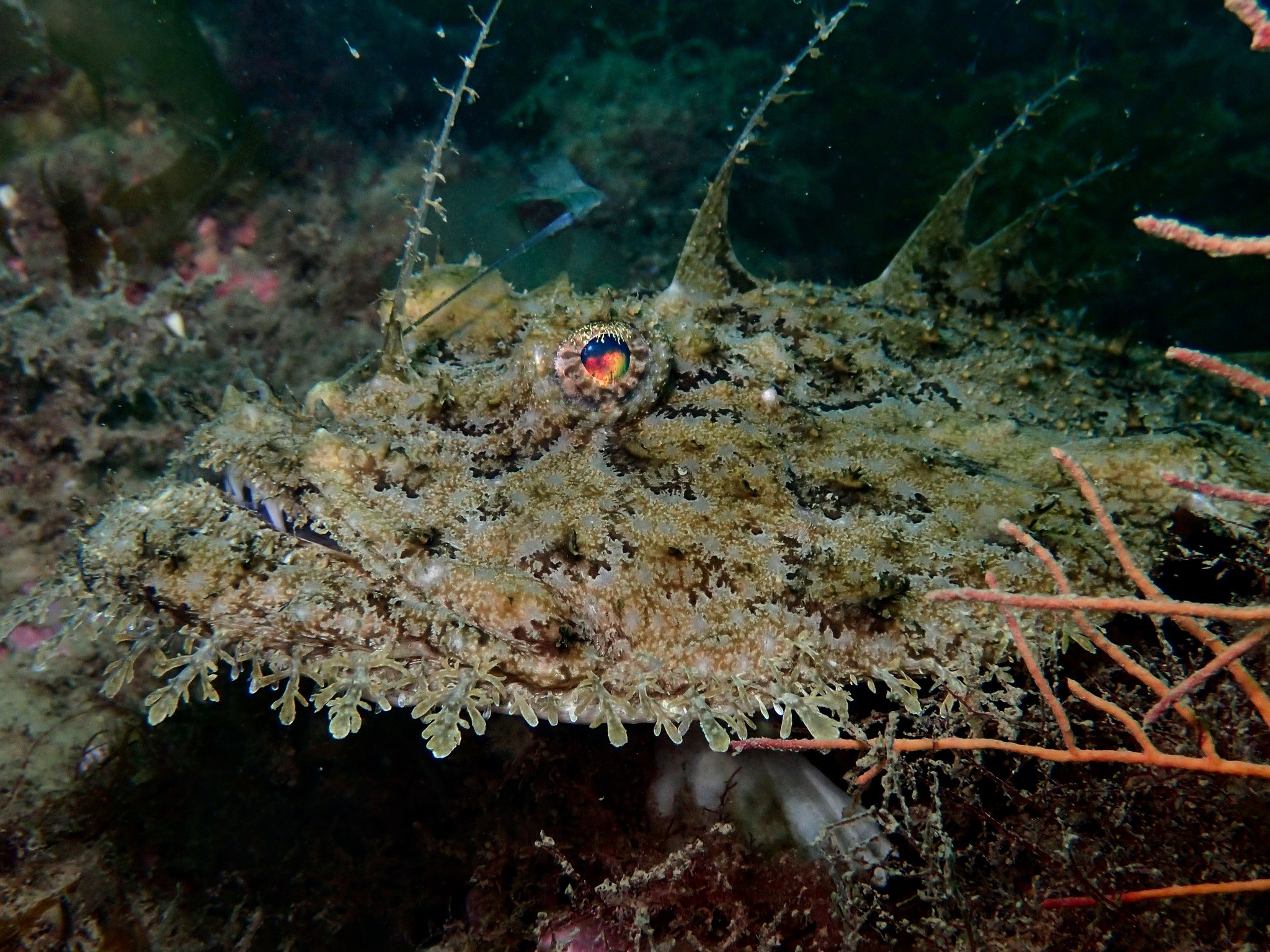
Angler
Lophius piscatorius · Lophiidae
The record for this fish lists three kinds of bottom — rock, sand and mud — and that list is the most useful thing in it. A fish that appears over all three is not fussy about geology. It is fussy about one narrow requirement: a patch soft enough to sink into, with something solid nearby to brace against when the mouth opens. Read the bottom that way and the fishing follows.
- Family
- Lophiidae
- Max length
- 200 cm SL
- Max weight
- 57.7 kg
- Max age
- 24 years
- Depth
- 20–1000 m
- IUCN
- LC
- Climate
- Deep-water
- Diet
- fishes
The record for this fish lists three kinds of bottom — rock, sand and mud — and that list is the most useful thing in it. A fish that appears over all three is not fussy about geology. It is fussy about one narrow requirement: a patch soft enough to sink into, with something solid nearby to brace against when the mouth opens. Read the bottom that way and the fishing follows.
Seasonality
Other FR regulations
Same jurisdictionBefore you keep a fish
- Read the recorded value. It is copied from the notice; if the number and the notice disagree, the notice wins.
- Check the area. Federal, state and local waters can set different limits for the same fish.
- Check the date. Seasons, quotas and closures change; confirm the current notice before you go.
Common questions
- What is the minimum size for Angler in France?
- ≥50 cm
- Where does this regulation apply?
- France — North Sea, Channel and Atlantic
- When was it checked?
- 2026-11-18, against Légifrance — Arrêté du 26 octobre 2012 (annexe I).