
Acadian redfish in United States — federal (Atlantic): ≥9 in · unlimited possession · all year — Federal Atlantic waters (Greater Atlantic).
Redfish (Ocean Perch) Open season: All year Minimum size: 9 inches Possession limit: Unlimited
Quoted from Recreational Fishing Regulations by Species
Regulation guide
Official sourcesHow Acadian redfish is managed
Acadian redfish (Sebastes fasciatus), called redfish or ocean perch in New England, is one of thirteen species in the Northeast multispecies complex. NOAA Fisheries and the New England Fishery Management Council manage a single U.S. stock under the Northeast Multispecies Fishery Management Plan, which sets separate measures for recreational vessels.
The species is slow-growing and long-lived. NOAA reports that redfish mature at five to six years, can live 50 years or more, and give birth to live young, all of which makes the minimum size the main conservation lever in the recreational fishery.
The 2025 stock assessment found the stock not overfished and not subject to overfishing. The recreational rule is correspondingly simple: one minimum size, no bag limit, and an open season all year.
Source: NOAA Fisheries: Acadian Redfish species profile · NOAA Fisheries: Recreational Fishing Regulations by Species (New England/Mid-Atlantic)
Federal waters: 9 inches, no bag limit, all year
In federal waters of the Greater Atlantic region, redfish has an open season all year, a minimum size of 9 inches and an unlimited possession limit. NOAA's species profile puts the same rule in one sentence: recreational regulations for redfish are limited to a minimum fish size in federal waters.
The minimum is measured as total length, not fork length. That distinction is stated in the federal table's footnote and repeated in the Maine summary, and it is the measurement an angler should use on both sides of the three-mile line.
Because the possession limit is unlimited, there is no daily count to track. The binding rule is the size of each fish, which is why the measurement method matters more for this species than for a fish with a small bag.
Source: NOAA Fisheries: Recreational Fishing Regulations by Species (New England/Mid-Atlantic) · NOAA Fisheries: Acadian Redfish species profile
Measuring and filleting a redfish
Total length is the straight-line distance from the tip of the snout to the tip of the tail. For a redfish the tail is small and rounded, so the measurement is taken to the end of the caudal fin rather than to a fork.
Filleting at sea is allowed for redfish in federal waters. The federal table requires that fillets have some skin left on and that they be consistent in size with fillets taken from a legal-sized fish, which allows an angler to process the catch aboard without creating a fillet that could not have come from a 9-inch fish.
Those conditions apply while the fish or its parts are possessed on board. A fillet without skin, or a fillet larger than a legal fish would produce, does not satisfy the rule even if the whole fish was legal when it was caught.
Source: NOAA Fisheries: Recreational Fishing Regulations by Species (New England/Mid-Atlantic)
Maine: 9 inches and no bag limit
Maine's 2026 saltwater recreational summary lists Acadian redfish with a minimum size of 9 inches and no bag limit, and refers the method of take to the general guidelines. The summary states that all Maine minimum lengths are total length, not fork length.
The general guidelines allow a person to take fish by speargun, harpoon, minnow trap, hand dip net or hook and line unless a species entry says otherwise, and only for personal use. For redfish the entry adds no further gear restriction.
The Maine figure matches the federal minimum, so a redfish that is legal in federal waters is legal in Maine territorial waters on the same measurement. The state does not add a season or a bag limit on top of the federal rule.
Source: Maine DMR: 2026 Maine Saltwater Recreational Fishing Regulations
The Whaleback closure still applies
The federal redfish entry carries a note that recreational vessels remain subject to the Whaleback Cod Spawning Protection Area. The note sits on the redfish line because redfish are often taken while fishing the same grounds as cod.
This is the main way a permissive redfish rule can still produce a violation. The bag limit is unlimited and the season is open, but fishing inside a closed spawning protection area is prohibited regardless of the target species.
Anglers should check the current groundfish closure areas before setting up on a piece of bottom, particularly in the western Gulf of Maine where the Whaleback area lies.
Source: NOAA Fisheries: Recreational Fishing Regulations by Species (New England/Mid-Atlantic) · NOAA Fisheries: Northeast Multispecies (Groundfish) Recreational Fishing
Registration, sale and before keeping
Maine requires most anglers to register annually with the Maine Saltwater Recreational Fishing Registry before fishing, and proof of registration or of an exemption must be carried while fishing or transporting fish. The exemptions include anglers under 16 and registered anglers from another state.
The sale of fish by recreational anglers is prohibited in Maine, and the federal recreational rule likewise does not permit a redfish taken under recreational limits to enter commerce. A catch kept for personal use is covered; a catch kept for sale is not.
Before keeping a redfish, confirm that the fish reaches 9 inches total length, that the fillets carry skin if the fish is processed at sea, and that the boat is not inside a closed groundfish area. Those three checks cover the rules that actually apply to this species.
Source: Maine DMR: Saltwater Recreational Fishing Registry · Maine DMR: 2026 Maine Saltwater Recreational Fishing Regulations · NOAA Fisheries: Recreational Fishing Regulations by Species (New England/Mid-Atlantic)
Official pages: NOAA Fisheries: Recreational Fishing Regulations by Species · NOAA Fisheries: Acadian Redfish · Maine DMR: 2026 Saltwater Recreational Fishing Regulations · Maine DMR: Saltwater Recreational Fishing Registry
Acadian redfish regulations at a glance
2 jurisdictions| Jurisdiction | Area | Size | Bag | Season / closure | Closed area | Other |
|---|---|---|---|---|---|---|
| United States — Maine | Maine territorial waters | ≥9 in · no bag limit | — | — | — | — |
| United States — federal (Atlantic) | Federal Atlantic waters (Greater Atlantic) | ≥9 in · unlimited possession · all year | — | — | — | — |
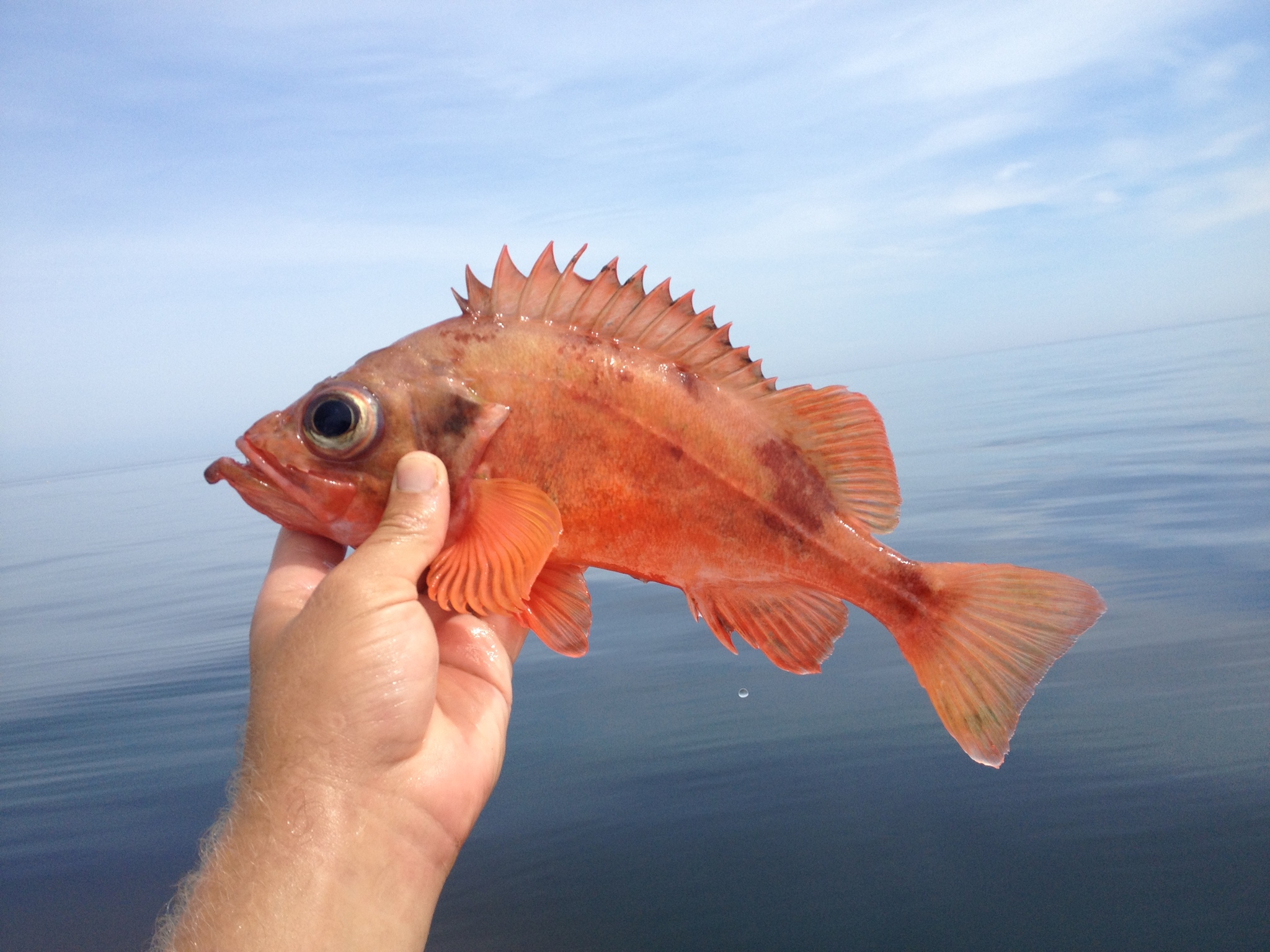
Acadian redfish
Sebastes fasciatus · Sebastidae
Acadian redfish is a deep-water rockfish of the northwest Atlantic, centred on the Gulf of St Lawrence and the Maine ground. It is a thick-set, orange-red fish recorded from 70 to 592 m in temperate water, and it feeds on fish. Adults reach 47 cm TL. IUCN lists it as Endangered, which matters as much as any of the size or depth figures here.
- Family
- Sebastidae
- Max length
- 47 cm TL
- Depth
- 70–592 m
- IUCN
- EN
- Climate
- Temperate
- Diet
- fishes
Acadian redfish (Sebastes fasciatus) is a fish of the family Sebastidae. FishBase gives its range as: Northwest Atlantic: Gulf of St. Lawrence to shelf waters of Nova Scotia in Canada. Northeast Atlantic: off Iceland and western Greenland. It is recorded from 70 to 592 m, in temperate water. The recorded maximum is 47 cm TL. Diet includes fishes. IUCN status: Endangered (EN). Chinese name: .
Seasonality
Other US-FED-ATL regulations
Same jurisdictionBefore you keep a fish
- Read the recorded value. It is copied from the notice; if the number and the notice disagree, the notice wins.
- Check the area. Federal, state and local waters can set different limits for the same fish.
- Check the date. Seasons, quotas and closures change; confirm the current notice before you go.
Common questions
- What is the minimum size for Acadian redfish in United States — federal (Atlantic)?
- ≥9 in · unlimited possession · all year
- Where does this regulation apply?
- Federal Atlantic waters (Greater Atlantic)
- When was it checked?
- 2026-11-18, against Recreational Fishing Regulations by Species.
- Do other jurisdictions set different limits?
- Yes. This register lists 2 jurisdictions for Acadian redfish; compare them in the table above.