
River bream
River bream is a sparid of the western Indian Ocean, from South Africa and Mozambique through the Red Sea and Persian Gulf to India and Malaysia. It lives in the top 50 m of tropical water, matures at about 21 cm and reaches 90 cm TL and 3.2 kg, with a maximum age of 14 years. Bait, lures and drift fishing all appear among the methods used for it.
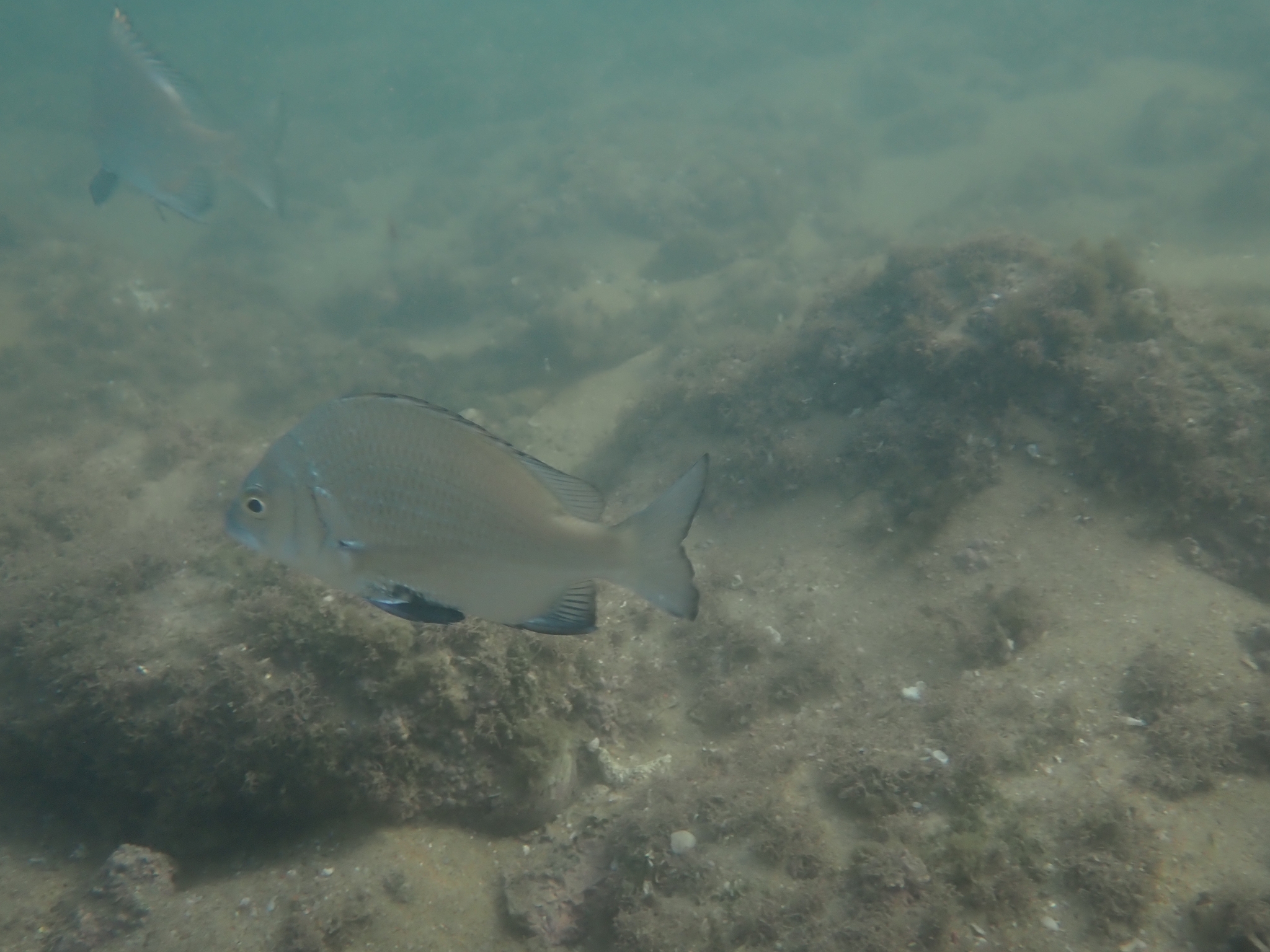
Acanthopagrus berda, the river bream, is a sparid of the western Indian Ocean, recorded from South Africa and Mozambique through the Red Sea and Persian Gulf to India and Malaysia. FishBase gives a maximum of 90 cm total length and 3.2 kg, with maturity at about 21 cm and a maximum age of 14 years. It is common in estuaries and only occasional in fresh water, feeds on worms, molluscs, crustaceans, echinoderms and small fish, and breeds at sea in winter. It is a protandrous hermaphrodite that changes sex at about 19 cm.
Identification
A moderately deep sparid with 11 to 12 dorsal spines and 10 to 13 soft rays, and three anal spines with 8 to 9 soft rays. The second anal spine is distinctly longer than the third, with a ratio of 1.23 to 1.50, and there are 42 to 44 pored lateral-line scales.
It differs from congeners in having 3.5 scale rows between the fifth dorsal-fin spine base and the lateral line, plus a strongly curved concavity on the ventral edge of the first two infraorbitals.
Body colour is silvery grey to olive-brown with dusky fins. FishBase gives 90 cm total length, a common length of 35 cm, 3.2 kg and a maximum age of 14 years; maturity is at about 21 cm.
Distribution and Habitat
Indian Ocean: South Africa, Mozambique, the Red Sea, the Persian Gulf, India and Malaysia. FishBase notes that western Pacific records under this name refer to Acanthopagrus pacificus.
Marine, brackish and freshwater; demersal and oceanodromous; depth from the surface down to about 50 m. It is common in estuaries and relatively uncommon in fresh water.
For anglers that means tidal creeks, river mouths, bridge pilings, mangrove edges and sand-mud channels rather than open reef. The fish moves with the tide and can be found well upstream while the water is salty.
Habits and Diet
FishBase records a diet of worms, molluscs, crustaceans and echinoderms, plus small fish. It is a bottom grubber that works soft ground and structure edges.
It is a protandrous hermaphrodite, maturing as male and changing to female at about 19.1 cm; breeding is at sea in winter, so ripe fish are absent from upper estuaries.
Estuary fish are used to turbid water and current, so they hold close to structure. A bait that sits still in slack water is usually ignored; one that moves with the tide gets picked up.
Fishing Methods and Gear
Light estuary tackle: a 7 ft rod, a 2500 size spinning reel, 10 to 15 lb braid and a 20 lb fluorocarbon leader. Size 4 to 1/0 hooks, small running sinkers and a long-ish leader let the bait move naturally.
Sandworm, prawn, crab or squid all work. Cast close to pilings and mangrove roots, then let the current carry the bait a few metres.
Small soft plastics take fish in clear water; work them slowly along the bottom and expect a soft tap.
Seasonal Window
Spawning happens at sea in winter; FishBase does not give monthly spawning data for the species. In the estuaries the fish are present year-round, with the warm months and good tidal exchange producing the most consistent fishing.
The last two hours of the push and the first hour of the ebb are the best window in most systems, because bait and smaller fish are moving with the tide. Dawn and late afternoon are more comfortable and usually more productive than midday.
After heavy rain, wait for the flood tide to push clean salt water back in.
Edibility and Handling
FishBase describes the flesh as excellent and the fish is sold fresh in markets. It is good steamed, pan-fried or in soup, and the bones are manageable.
Bleed, gill and ice promptly; estuary fish can carry a muddy taste that this removes within minutes.
Handle with wet hands; dry towels strip the slime layer. Return undersized fish quickly.
Regulations and Conservation
South Africa: river bream (Acanthopagrus berda) has a 25 cm total-length minimum and a bag limit of five per person per day under the recreational linefish regulations. A recreational permit is required, and estuarine fishing may also be subject to a separate estuary-specific permit.
Mozambique and Kenya: a recreational licence is required, but no species-specific size or bag limit was located; treat both as unverified.
IUCN: Least Concern, assessed on 28 June 2016.
How to catch it
Bait fishing
Lure fishing
2–3
Drift fishing
Where these facts come from
Check these pages before you rely on a size, range or protection status.
- GBIF — Acanthopagrus berda occurrence records — GBIF · T2
- IUCN Red List — Acanthopagrus berda — IUCN · T1
- Photo record — iNaturalist — iNaturalist · T3
Fish in the same water
These fish live in the same place.
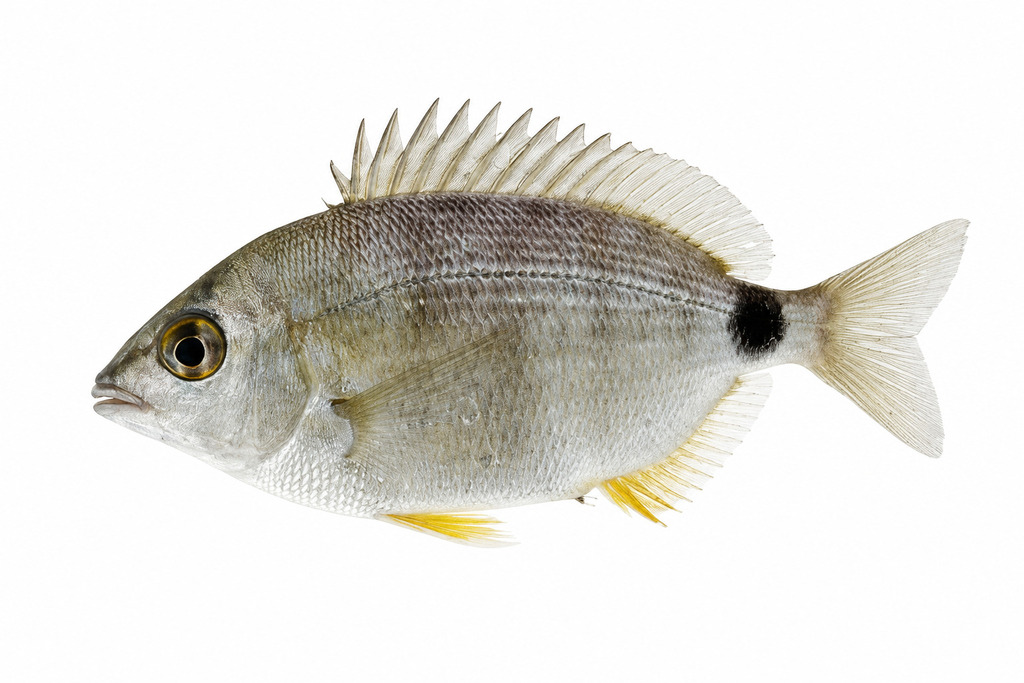
Annular seabream
- Family
- Sparidae
- Depth
- 0–90 m
- Season
- Jan, Feb, Mar, Apr, May, Jun, Jul, Aug, Sep
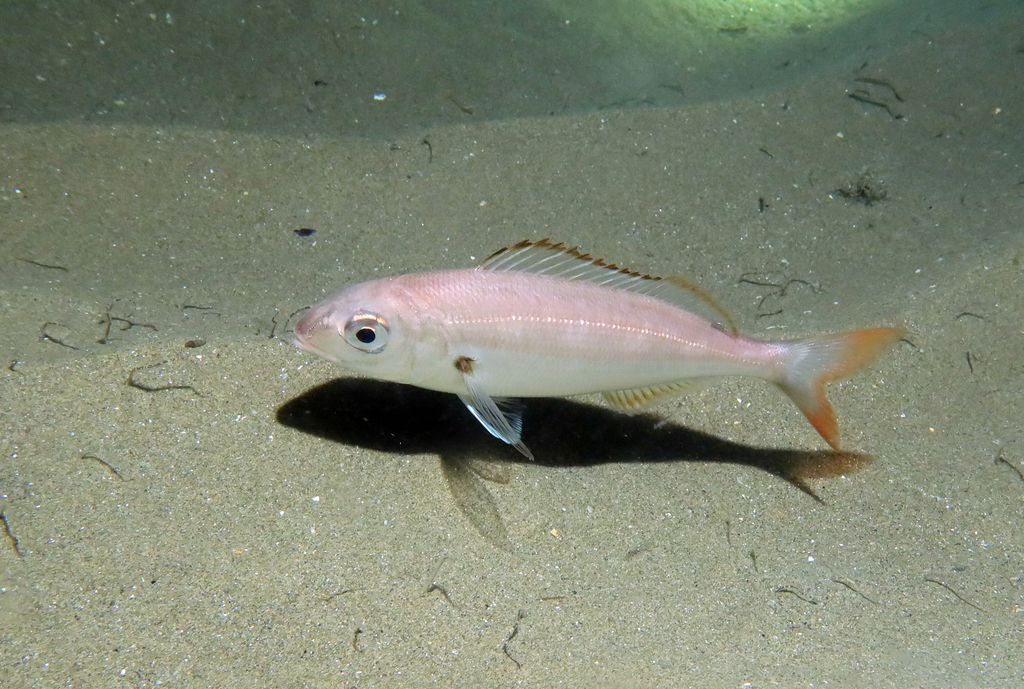
Axillary seabream
- Family
- Sparidae
- Depth
- 0–500 m
- Season
- Jan, Feb, Mar, Apr, May, Jun, Jul, Aug, Sep, Oct, Nov, Dec
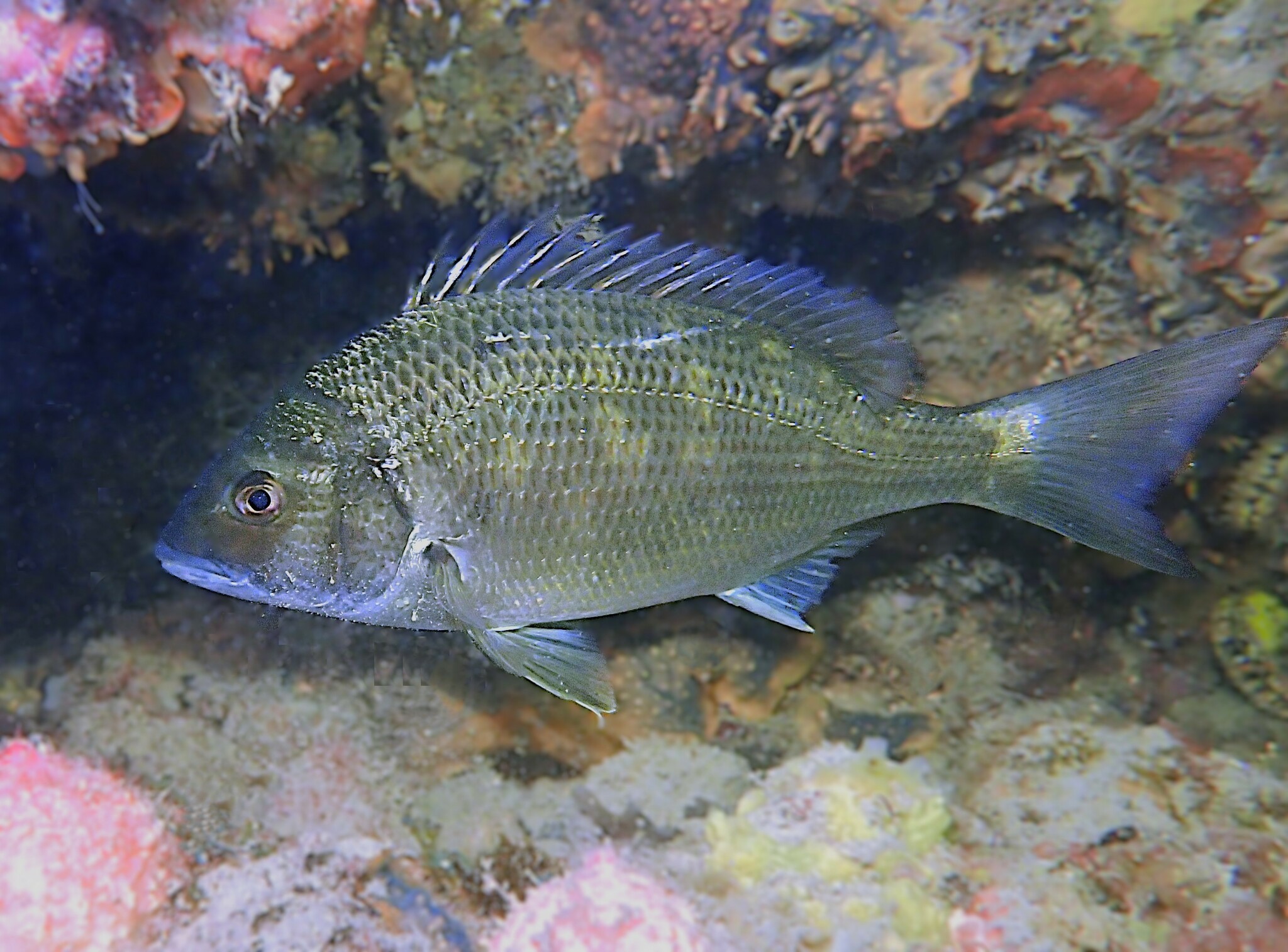
Black bream
- Family
- Sparidae
- Season
- Jan, Feb, Jul, Aug, Sep, Oct, Nov, Dec
Guides for this water
Technique, gear and safety guides that fit River bream.