≥25 cm
Australia — New South Wales · AU-NSW
Black bream must be at least 25 cm in New South Wales.
The bream and tarwhine row lists 25 cm for black/southern bream.
25 cm

Across the Indo-Pacific, from endemic to southern Australia, Black bream represents the family Sparidae. It lives in subtropical water. Adults run to 60 cm TL and 4 kg and prey on crustaceans, fishes, algae and worms. The usual approach is shore casting or boat fishing. The season runs January to December.
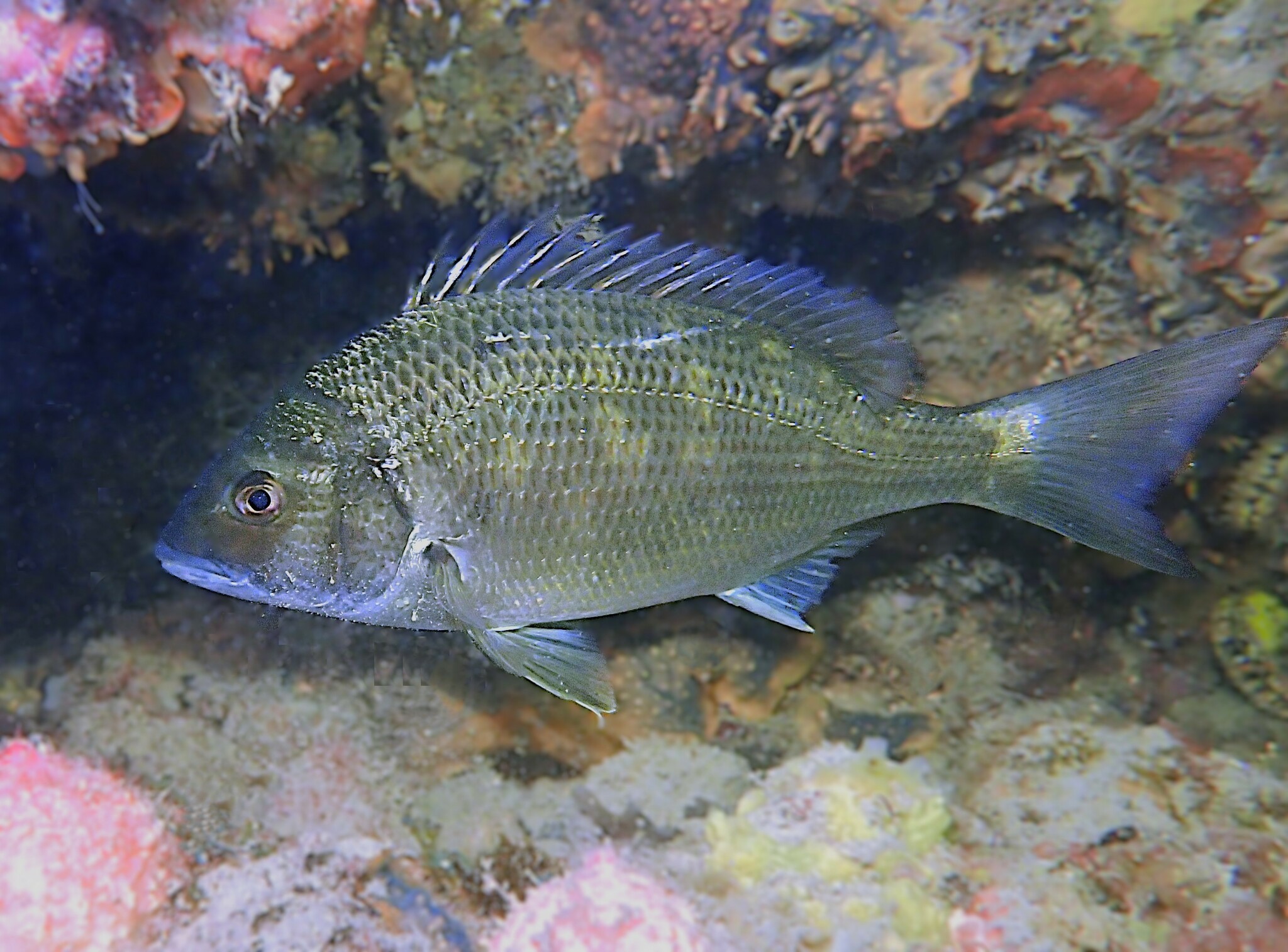
Black bream (Acanthopagrus butcheri) is a fish of the family Sparidae. FishBase gives its range as: Indo-Pacific: endemic to southern Australia. It is recorded in subtropical water. The recorded maxima are 60 cm TL, 4 kg, 29 years. Common length is recorded at 24 cm. Diet includes crustaceans, fishes, algae and worms. IUCN status: Least Concern (LC). Chinese name: .
The species belongs to the family Sparidae. FishBase's morphology record gives 10-13 dorsal spines and 10-13 soft dorsal rays; 3 anal spines and 8-10 soft anal rays; a fusiform / normal body; a compressed cross-section. These are identification aids rather than a complete diagnosis; the accompanying photographs show the live colour pattern.
It is recorded in marine and brackish and freshwater water, with a demersal mode, no depth range record and a subtropical climate. Habitat notes mention estuary, coastal, seagrass, brackish. Diet records mention crustaceans, fishes, algae, worms. These are source records, not a guarantee that the same habitat exists at every local mark.
FishBase's spawning table lists records in Jan, Feb, Jul, Aug, Sep, Oct, Nov, Dec for Australia. This is a spawning record, not a fishing-season forecast; check the local season, weather and regulations before planning a trip.
Match hook, leader and drag to a fish that can reach 60 cm and 4 kg. No exact gear ratings are published here because they are equipment choices, not source facts. Adjust the terminal tackle to the bait or lure you can obtain locally.
FishBase's human-use record lists Fisheries use: commercial; gamefish: yes. The species is marketed as food. The IUCN Red List category is LC (Least Concern), assessed 04 December 2009. Threat to humans: Harmless. CITES: Not Evaluated; CMS: Not Evaluated. No official regulation text was verified for this draft. Check the current national and local fisheries rules, size limits and closed seasons before keeping catch.
For trip planning: GBIF holds 5,382 preserved occurrence records for the matched taxon; the largest country counts are AU (5,334), ZZ (16), BD (5); FishBase territories include Australia; the sea regions represented are Indo-Pacific, Southern Australia; habitat keywords point to estuary, coastal, seagrass. These are distribution and habitat signals, not spot coordinates; use them to narrow the search, then check local access and conditions.
Cast from shore or a breakwater, within reach of the recorded inshore range.
Fished from a boat, with the approach adjusted to the recorded depth.
These are the published regulations for this fish. Read the number first. The notice below it is the actual regulation.
Black bream must be at least 25 cm in New South Wales.
The bream and tarwhine row lists 25 cm for black/southern bream.
25 cm
Victoria, Australia: bream (all species, including tarwhine) have a minimum legal size of 28 cm and a combined daily bag limit of 10; in the Gippsland Lakes and its tributaries a 38 cm maximum size applies and the black bream bag limit is 7.
Victoria requires black bream to leave the water whole or as a trunk; filleting on the water is not allowed.
Minimum legal size: 28cm / A combined total of 10 for one or more species of bream and tarwhine, except in the Gippsland Lakes and its tributaries, where a bag limit of 7 black bream applies.
Victoria allows a combined bag of 10 bream and tarwhine; in the Gippsland Lakes and tributaries the limit is 7 black bream, with a 38 cm maximum size.
Black bream cannot be filleted in or on Victorian waters; keep it whole or in carcass form until you are away from the water.
Bag limit: A combined total of 10 for one or more species of bream and tarwhine, except in the Gippsland Lakes and its tributaries, where a bag limit of 7 black bream applies.
Every record above names its source and the date it was retrieved. See the regulation register for the full list, or how to read these regulations.
Check these pages before you rely on a size, range or protection status.
These fish live in the same place.

Technique, gear and safety guides that fit Black bream.