
Black musselcracker
Black musselcracker is a monotypic South African sparid recorded from Natal to the Cape. It has a heavy body, a steep forehead and a swollen, fleshy snout, and adults run from dark grey-brown to almost black. It is recorded from 1 to 80 m, reaches 150 cm TL and 34.4 kg, matures at about 53 cm fork length and can live 45 years. Boat bottom fishing and bait are the methods listed.

Cymatoceps nasutus, the black musselcracker, is a monotypic South African sparid recorded from Natal to the Cape. It has a heavy body, a steep forehead and a fleshy, swollen snout, and adults are dark grey-brown to almost black. FishBase gives a maximum of 150 cm total length and 34.4 kg, a depth range of 1 to 80 m, first maturity at about 53 cm fork length and a maximum age of 45 years. It crushes crabs, crayfish and sea urchins and takes almost any bait, which makes it a favourite shore target and also an easy one to overfish.
Identification
A monotypic sparid genus: Cymatoceps contains only this species. The body is deep and heavy, the forehead steep, and the snout fleshy and swollen, which is what the name nasutus refers to. Adults are dark grey-brown to almost black; juveniles are lighter and mottled.
FishBase gives a maximum of 150 cm total length and 34.4 kg, while the ORI fact sheet quotes about 110 cm fork length, so the two figures use different measures. First maturity is about 53 cm fork length at 10 years, sex change about 70 cm fork length at 18 years, and all fish over 95 cm fork length are male.
It shares the name musselcracker with Sparodon durbanensis, the white musselcracker. This species is the darker fish with the more bulbous snout; at night check the head shape rather than the colour.
Distribution and Habitat
Endemic to South Africa, from Natal to the Western Cape, roughly 22°S to 35°S. FishBase records it as marine and brackish, demersal, from 1 to 80 m, and notes that it rarely enters estuaries.
The fishing ground is shallow rocky coast: reef edges, boulder fields, gullies and surge zones. Smaller fish sit in broken shallow ground; the largest come from deep ledges within reach of a long cast or a short boat run.
The whole range lies in one country, so the state of the South African stock is the state of the species.
Habits and Diet
FishBase records a diet of crabs, crayfish, sea urchins and other hard-shelled animals, with a trophic level of 3.6. This is a crusher, not a chaser: it works the bottom slowly and crushes what it finds, and it takes almost any bait.
That willingness to eat anything makes it easy to overfish: K of 0.05, a maximum age of 45 years, very low resilience and a vulnerability score of 74 out of 100.
Because the species is protogynous, removing a fish over 95 cm fork length removes a male that has already changed sex and cannot be replaced quickly.
Fishing Methods
Heavy bottom bait is standard: whole squid, crab, octopus or a fish head on a large circle hook, pinned down with enough lead to hold in surge. Bites are usually a slow pull rather than a run, so watch the rod.
From the rocks, the local slide-bait method sends a large bait out along the main line to a deep gully. From a boat, drift slowly over reef with the lead ticking bottom until a fish commits.
Do not strike the first tap; wait until the weight comes on, then tighten and lift, or the circle hook will just pull the bait.
Gear and Approach
A heavy 12 to 14 ft shore rod, a multiplier reel with 30 to 40 lb mono or 80 lb braid, and a 1.0 to 1.5 mm leader are the local baseline. Hooks are large, 10/0 circle or equivalent, because the bait is large and the mouth is hard.
Set the drag near locked and turn the fish on the first run. A fish that reaches a ledge will cut the leader, and a long fight on light gear usually ends that way. Keep a landing mat and release tools on hand.
Release fish over about 95 cm fork length; those are males and the slowest to replace.
Seasonal Window
Spawning takes place from May to October in Transkei and KwaZulu-Natal, and reproductively active adults are absent from the Western Cape, which suggests a north-easterly movement up the coast before spawning.
For shore anglers the core window is winter and early spring, when the water is colder and the swell bigger. Dawn, dusk and the first hours of a rising tide after calm weather are best.
Summer fish are more scattered; night sessions work with a headlamp and a planned exit route.
Edibility and Handling
An important food fish, with firm white flesh; the head is considered a delicacy in some areas, which is a strong incentive to keep fish that should be released.
Bleed immediately, gut large fish at sea, and store them in a slurry of ice and seawater. A 20 kg fish will not cool in a dry box.
For a Vulnerable, slow-growing species, release the large males and keep a smaller fish if one is wanted.
Regulations and Conservation
South Africa: the Marine Living Resources Act recreational linefish regulations set a 50 cm total-length minimum and a bag limit of one poenskop (Cymatoceps nasutus) per person per day. A recreational permit is required, boat-based fishing needs a vessel licence, and recreational catch may not be sold.
The species is listed as Vulnerable (A2bd) on the IUCN Red List, assessed on 11 July 2024. South African linefish assessments have long flagged it as over-exploited, and slow growth, late maturity and sex change leave little room for error.
The 50 cm minimum sits close to the 53 cm fork length at first maturity, so retaining an undersized fish removes it before it has spawned once.
How to catch it
Boat bottom fishing
Bait fishing
Boat bottom fishing
Where these facts come from
Check these pages before you rely on a size, range or protection status.
- GBIF — Cymatoceps nasutus occurrence records — GBIF · T2
- IUCN Red List — Cymatoceps nasutus — IUCN · T1
- Photo record — iNaturalist — iNaturalist · T3
Fish in the same water
These fish live in the same place.
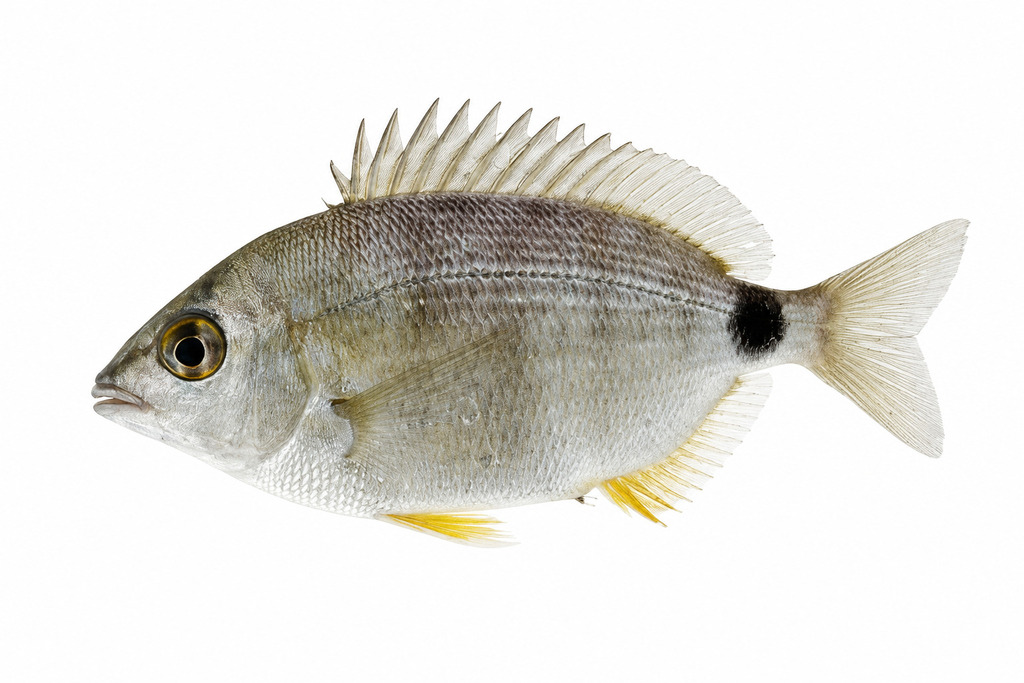
Annular seabream
- Family
- Sparidae
- Depth
- 0–90 m
- Season
- Jan, Feb, Mar, Apr, May, Jun, Jul, Aug, Sep
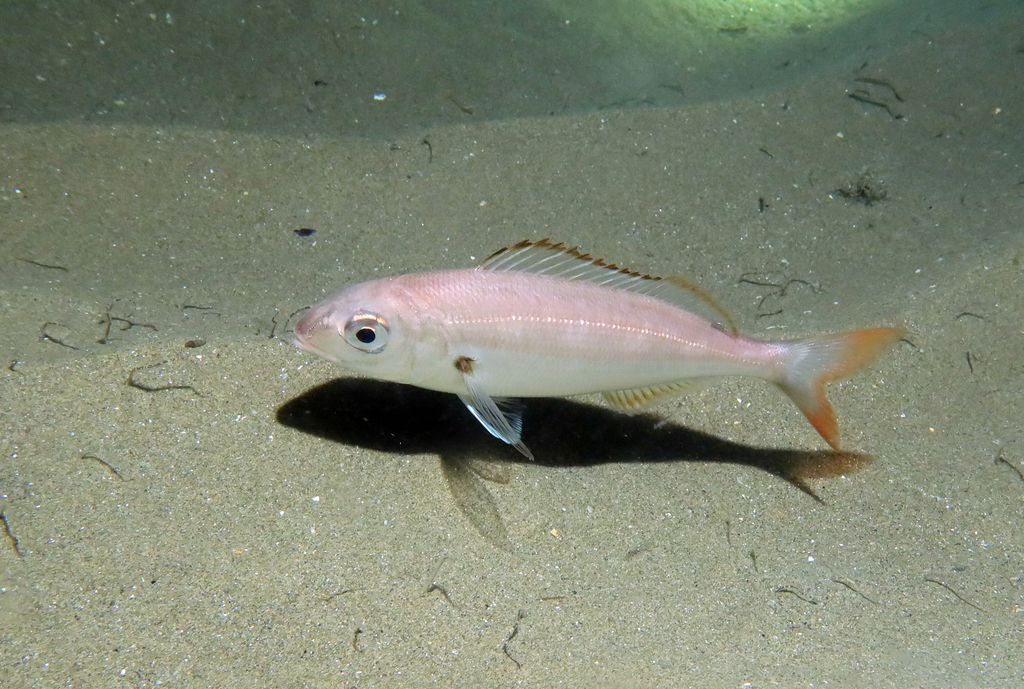
Axillary seabream
- Family
- Sparidae
- Depth
- 0–500 m
- Season
- Jan, Feb, Mar, Apr, May, Jun, Jul, Aug, Sep, Oct, Nov, Dec
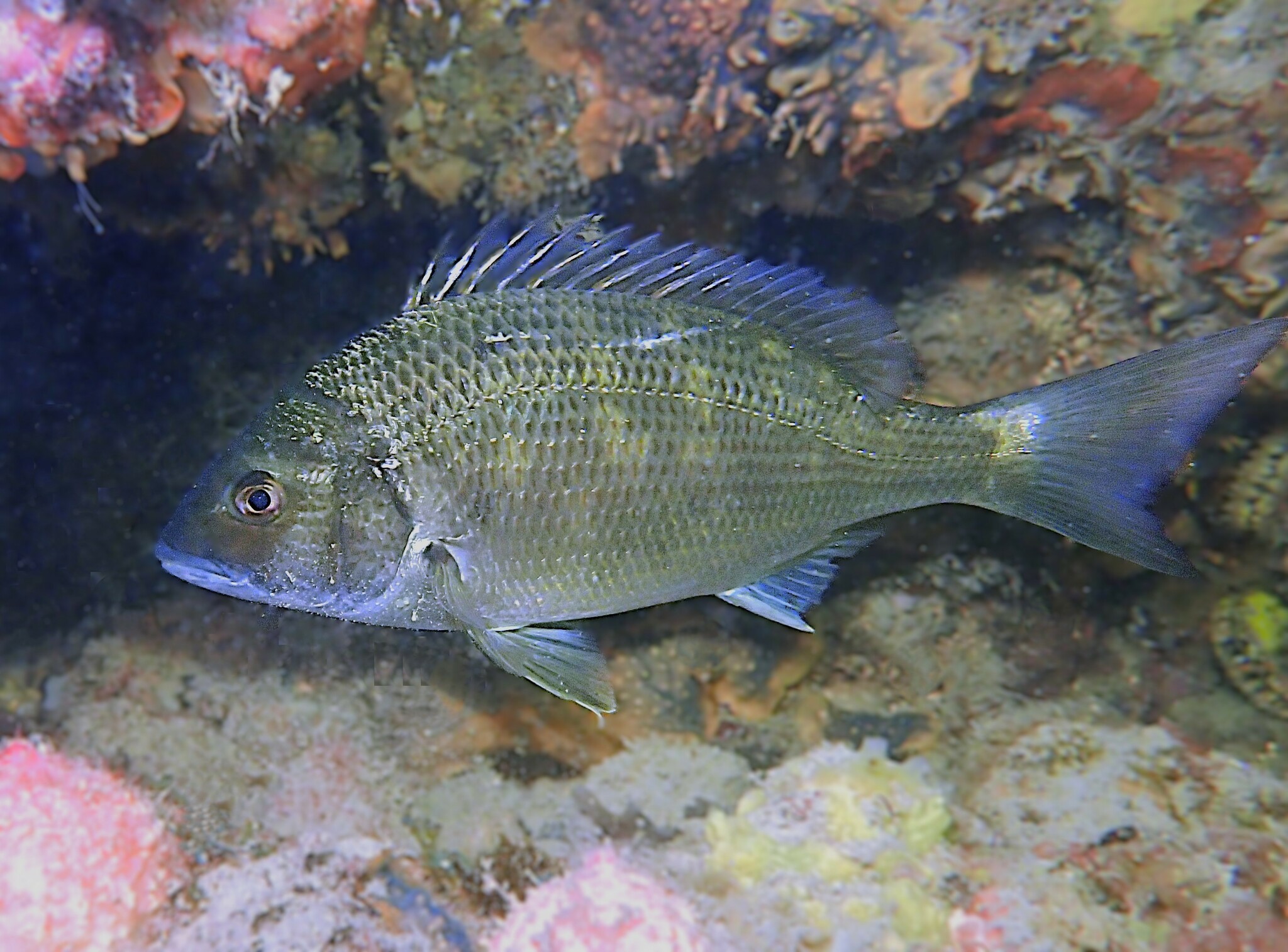
Black bream
- Family
- Sparidae
- Season
- Jan, Feb, Jul, Aug, Sep, Oct, Nov, Dec
Guides for this water
Technique, gear and safety guides that fit Black musselcracker.